第1章
The Philosophical Imperative for Business Leaders
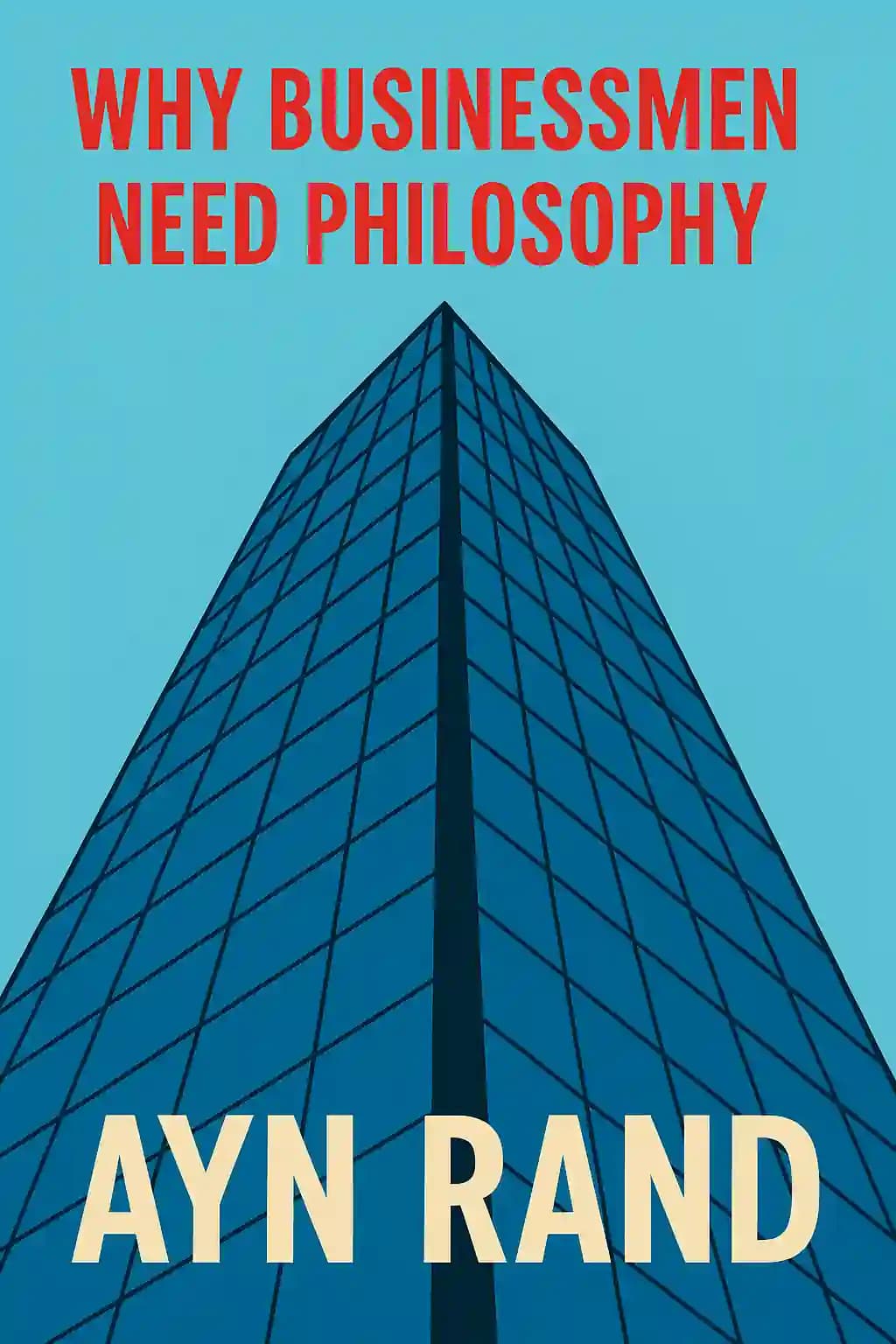
In the corridors of corporate America, a book sits on the desks of some of the most influential business leaders of our time - from PayPal co-founder Peter Thiel to former BB&T CEO John Allison. "Why Businessmen Need Philosophy" has become something of a secret weapon for executives seeking deeper meaning in their work beyond quarterly profits. While mainstream business literature focuses on tactics and strategies, this collection of essays tackles the fundamental questions that determine whether businesses thrive or collapse: What is the moral foundation of business? Why are businessmen vilified despite creating unprecedented prosperity? How should business leaders respond to philosophical attacks on their very existence?
The book's cultural impact extends far beyond boardrooms. Its ideas have influenced tech entrepreneurs in Silicon Valley, Wall Street financiers, and even Hollywood productions that challenge the typical portrayal of businesspeople as villains. As America grapples with questions about capitalism's future, this collection offers a provocative alternative to both progressive critiques and conservative defenses of business, presenting a vision where profit-seeking isn't merely tolerated but celebrated as a moral achievement.
第2章
The Mind as the Ultimate Source of Wealth
The fundamental premise underlying this collection is that wealth creation begins not with physical resources or labor but with human thought. This insight stands in stark contrast to the prevailing view that treats businesspeople as mere "exploiters" rather than creators.
Consider the steel industry. Before Bessemer's converter or open-hearth furnaces, steel was prohibitively expensive. What transformed it into an abundant material that built modern civilization? Not the iron ore that had existed for millennia, but the mental breakthroughs of inventors and entrepreneurs who discovered how to process it efficiently. The businessman's role is to recognize potential value where others see none, organize resources effectively, and create products that enhance human life.
This explains why identical natural resources yield dramatically different outcomes in different societies. Venezuela sits atop the world's largest oil reserves yet suffers economic collapse, while resource-poor Japan and Singapore thrive. The difference isn't in physical assets but in the freedom given to entrepreneurial minds.
As Leonard Peikoff explains in his essay "Why Businessmen Need Philosophy," the businessman epitomizes the productive mind in action. Like great artists, scientists, or inventors, successful entrepreneurs are driven by personal passion for their work. They seek profit not through exploitation but by creating value through voluntary exchange. When Steve Jobs developed the iPhone, he didn't take wealth from others-he created something new that enriched both Apple shareholders and millions of customers who willingly purchased his products.
This understanding of wealth creation directly challenges the zero-sum mentality that dominates political discourse. If wealth is created by thought rather than seized from a fixed pie, then the success of one person doesn't come at another's expense. The Industrial Revolution demonstrated this conclusively, as capitalism generated unprecedented prosperity across all economic classes-not by redistributing existing wealth but by creating new abundance through human ingenuity.
第3章
The Philosophical War Against Business
Why, then, are businesspeople so frequently vilified in our culture? The answer lies not in economics but in philosophy-specifically, in the moral framework that judges human actions.
Throughout history, selfishness has been universally condemned while self-sacrifice has been praised as the highest virtue. This moral code-altruism-declares that serving others rather than oneself constitutes moral goodness. Under this framework, businesspeople who openly pursue profit are automatically deemed immoral, regardless of how much value they create for others.
This creates an impossible situation for businesspeople. If they acknowledge their self-interested motives, they're condemned as selfish. If they claim altruistic intentions, they appear hypocritical. Either way, they lose moral standing and become perfect scapegoats for society's problems.
The philosophical attack goes deeper than just condemning selfishness. Businesspeople are also attacked for being "worldly" and "materialistic" in a culture influenced by supernaturalist philosophies that devalue physical existence. Their commitment to reason and facts contradicts those who claim superior insight through mystical revelation or emotional intuition.
These philosophical premises manifest in concrete political actions against business. Antitrust laws, for example, create a legal no-man's-land where businesses can be prosecuted whether they charge prices too high, too low, or the same as competitors. Unlike criminal law where specific actions are prohibited, antitrust establishes a regime where businesspeople are presumed guilty of being insufficiently "competitive" against some theoretical ideal.
The result is a double standard in American justice: accused murderers receive the presumption of innocence and detailed procedural protections, while successful businesspeople face automatic suspicion simply for being businesspeople. When executives from General Electric were sentenced to jail in 1961 for price-fixing, their lawyers couldn't defend them on objective grounds but could only plead for mercy by citing their charitable works-not their productive achievements or rights.
第4章
The Moral Case for Profit-Seeking
The essays in this collection don't merely criticize anti-business philosophies-they present a positive alternative that defends profit-seeking as morally praiseworthy.
This alternative begins by rejecting the false dichotomy between selfishness and altruism. True self-interest isn't about exploiting others (which destroys trust and long-term success) or sacrificing oneself (which is self-defeating). Instead, it's about creating win-win relationships based on mutual benefit-what Ayn Rand called "the trader principle."
Consider Hank Rearden from Atlas Shrugged, who spent ten years developing Rearden Metal. His achievement required mastering chemistry, physics, mathematics, and engineering while simultaneously running efficient steel mills and managing complex operations. This wasn't mere physical labor but demanding mental work where "every inch of its course, every pound of its pressure and every molecule within it, were controlled and made by a conscious intention."
Rearden's purpose wasn't exploitation but creation. When his metal succeeded, he felt pride not in its financial return but in having made "the best rail ever produced." The profit motive didn't corrupt his work but incentivized excellence by rewarding his productive achievement.
This perspective reframes business success as a moral achievement rather than a necessary evil. The businessman who creates valuable products through voluntary exchange isn't merely "not guilty" of exploitation-he's actively virtuous for using his mind to enhance human life. As Rand explains through Francisco d'Anconia's "money speech" in Atlas Shrugged, money represents "the material shape of the principle that men who wish to deal with one another must deal by trade and give value for value."
第5章
The Destructive Power of Philosophical Compromise
If businesspeople are moral creators rather than exploiters, why do so many accept attacks on their profession? Why do they fund universities that promote anti-capitalist ideas while persecuting advocates of reason and capitalism? The answer lies in what Rand calls "the sanction of the victims"-businesspeople's acceptance of their enemies' moral premises.
Many businesspeople believe they can succeed through pragmatic compromise without worrying about abstract philosophical principles. This approach fails because, as Rand explains in "The Anatomy of Compromise," there are three crucial rules about principles:
1. In conflicts between parties sharing the same principles, the more consistent one wins
2. In collaborations between parties with different principles, the more evil or irrational one wins
3. When opposing principles are clearly defined, it benefits the rational side; when hidden or evaded, it benefits the irrational side
These rules explain why conservatives consistently fail to limit government growth despite their rhetoric. By accepting altruism as the moral ideal while advocating capitalism, conservatives create an unsustainable contradiction. When crises occur, they revert to government controls-following George W. Bush's example of "abandoning free market principles to save the free market system."
The pattern repeats across issues. Conservatives can't effectively oppose welfare spending because doing so would conflict with altruism's demand to help those in need. They can't defend moneylending because they accept the centuries-old moral condemnation of charging interest as exploitative. They can't counter environmentalist demands because they share the premise that human needs should sometimes be sacrificed for other values.
True integrity consists not of loyalty to subjective whims but of loyalty to rational principles. Without principles, one cannot set long-range goals or evaluate concrete alternatives. The businessman who attempts to operate without philosophical understanding becomes vulnerable to every passing intellectual fashion and political demand.
第6章
The Dollar and the Gun: Economic Power vs. Political Power
A critical distinction underlies many essays in this collection: the fundamental difference between economic power (the dollar) and political power (the gun). This dichotomy shapes not only economic systems but the very nature of human interactions and social organization.
Political power-government's monopoly on physical force-can compel obedience regardless of consent. This manifests in various forms: taxation, regulations, imprisonment, and in extreme cases, physical violence. A citizen cannot legally refuse to pay taxes or ignore government mandates without facing coercive consequences. This power operates through threat and force, requiring no voluntary participation from its subjects.
Economic power, by contrast, depends entirely on voluntary exchange and mutual benefit. A businessman can offer products for sale but cannot force anyone to buy them. His success depends on creating value that others willingly purchase. Consider a restaurant owner: no matter how excellent the food or attractive the prices, customers must choose to dine there. Similarly, employees must voluntarily agree to work terms, and investors must willingly risk their capital.
Those who equate these powers ignore that wealth is produced by individual thought and effort, not seized from others. Silicon Valley entrepreneurs, small business owners, and innovative manufacturers create new value rather than redistributing existing resources. They treat tax relief as government "benefits" rather than reduced penalties, and view business success as exploitation rather than creation. This misconception leads to harmful policies that stifle innovation and economic growth.
This equivocation appeals psychologically to what Rand calls "second-handers"-those who fear self-reliance and prefer social pressure to independent judgment. These individuals seek security through conformity rather than personal achievement. They often support policies that promise security through government intervention, even at the cost of economic freedom. It also serves political interests by justifying expanded government control over economic activity, from price controls to industry regulations.
The contrast between economic and political power is dramatically illustrated by refugee patterns. People flee from collectivist dictatorships toward capitalist nations, demonstrating that they instinctively recognize which power truly threatens human life. Historical examples abound: the flow of refugees from East to West Germany during the Cold War, the Cuban exodus to Florida, and the ongoing migration from Venezuela to neighboring countries. These patterns consistently show people moving from areas of high political control to regions of greater economic freedom.
Modern examples further reinforce this distinction: the success of economic zones with minimal government intervention, the prosperity of nations that protect property rights and economic freedom, and the consistent failure of command economies that rely on political power to direct economic activity.
第7章
The Philosophical Assault on Energy and Production
The philosophical attack on business extends beyond general condemnation of profit-seeking to specific industries and activities. Environmentalism, for example, has evolved from reasonable concern about pollution into an anti-human philosophy that places nature above human life. This transformation can be traced through various environmental movements, from early conservation efforts to modern-day climate activism that often advocates for dramatic reductions in human industrial activity.
At its core, environmentalism opposes man's fundamental relationship with nature-his need to transform the environment to support human life. Every human advancement, from agriculture to medicine to transportation, requires altering the natural world. The development of modern agriculture transformed wild landscapes into farmland, mining extracts essential minerals for technology, and urban development creates living spaces for billions. As Ayn Rand noted, human life depends on "remaking the earth in the image of one's values." This process of transformation has been essential to human progress throughout history, from the first farming settlements to modern industrial civilization.
This explains why environmentalists oppose not specific energy sources but any practical method of producing industrial-scale energy. Nuclear power, despite its minimal carbon footprint, faces fierce opposition. Hydroelectric dams are criticized for disrupting river ecosystems. Even solar and wind farms face resistance due to their impact on wildlife and natural landscapes. Their objection isn't to pollution but to human flourishing at nature's "expense." As Paul Ehrlich declared, "giving society cheap, abundant energy at this point would be the moral equivalent of giving an idiot child a machine gun." Similar sentiments appear in the writings of prominent environmentalists like Bill McKibben and Deep Ecology founder Arne Naess.
The environmentalist position ultimately rests on altruism-the doctrine that man has no moral right to exist for his own sake. While traditional altruism demanded sacrifice for other humans, environmentalism extends this to demand human sacrifice for the nonhuman world. This philosophy manifests in calls for "degrowth," population reduction, and the deliberate limitation of human development to preserve "untouched" nature. Organizations like Earth First! explicitly prioritize wilderness preservation over human needs, while mainstream environmental groups increasingly advocate for policies that would significantly restrict economic development and human prosperity.
This philosophical framework has real-world consequences, influencing policies that restrict energy development, industrial growth, and technological progress. From blocking pipeline construction to opposing new manufacturing facilities, these actions impact human well-being by limiting access to affordable energy and economic opportunities, particularly in developing nations seeking to industrialize.
第8章
The Moral Right to Exist and Profit
The collection concludes with a powerful call to action for businesspeople, urging them to defend capitalism not as a practical or economic issue, but proudly as a moral one. This moral defense is rooted in the fundamental right of individuals to pursue their own happiness and success through productive work.
In Hank Rearden's courtroom statement from Atlas Shrugged, he declares: "I work for nothing but my own profit-which I make by selling a product they need to men who are willing and able to buy it. I do not produce it for their benefit at the expense of mine, and they do not buy it for my benefit at the expense of theirs... We deal as equals by mutual consent to mutual advantage-and I am proud of every penny that I have earned in this manner." This statement encapsulates the essence of voluntary trade and highlights how genuine business transactions benefit all parties involved.
The moral defense extends beyond mere economic transactions. It recognizes that businesspeople have the right to exist for their own sake, not as sacrificial animals for others. This principle challenges the common narrative that profit-seeking is inherently selfish or harmful. Instead, it positions productive achievement as a noble pursuit that creates value for society through voluntary cooperation rather than coercion.
Throughout history, successful entrepreneurs have demonstrated how pursuit of profit leads to innovations that benefit humanity: Henry Ford made automobiles accessible to the masses, Thomas Edison illuminated cities, and modern tech entrepreneurs have revolutionized communication and commerce. Each acted primarily for their own benefit, yet their achievements enhanced countless lives.
The text rejects the premise that the "public good" requires victims or sacrifices, declaring instead that human prosperity comes from voluntary cooperation and exchange. This view challenges the false dichotomy between private profit and public benefit, showing how free market capitalism aligns individual interests with societal progress.
Businesspeople must stop apologizing for their ability and success or seeking validation through "public service" justifications. Their productive work - creating jobs, developing products, solving problems - is itself a moral achievement. Instead of defensive posturing, they should proudly proclaim their moral right to exist and profit based on the trader principle-giving value for value in voluntary exchange. This principle establishes that both parties in a transaction benefit, creating wealth rather than merely transferring it.
The moral defense of business requires rejecting the notion that profit is permission that must be granted by society. Rather, it is a right earned through productive achievement and voluntary trade. This perspective transforms the narrative from one of guilt and apology to one of pride in creating value and advancing human prosperity through free enterprise.
第9章
The Businessman as Intellectual Hero
Perhaps the most provocative idea in this collection is that the businessman represents not just a practical necessity but an intellectual and spiritual ideal, challenging centuries of cultural prejudice against commerce and industry.
Through characters like Hank Rearden and Dagny Taggart, Ayn Rand demonstrates that business requires profound intellectual ability - from strategic thinking to creative problem-solving. The businessman transforms abstract scientific discoveries into practical products that enhance human life, requiring a unique combination of conceptual and practical knowledge. Like historical industrialist James Watt, who commercialized the steam engine and launched the Industrial Revolution, the true businessman recognizes potential value, adapts innovations for commercial use, and expands markets. Similar examples include Thomas Edison, who not only invented but commercialized electrical power systems, and Henry Ford, who revolutionized manufacturing processes to make automobiles accessible to millions.
The businessman's spiritual motivation stems from creating values that improve human existence. As Rearden tells Francisco, he's proud of his Metal not primarily for its profit potential, but because it's the best rail ever made - a testament to human ingenuity and achievement. The financial rewards serve dual purposes: they measure his success objectively while enabling him to pursue other values and continue innovating. This profit motive, far from being base or materialistic, represents the practical recognition of value creation.
Business is spiritual precisely because it involves material products-the tangible manifestation of mind. The transformation of raw materials into useful products requires intellectual effort, creativity, and vision. Without the mind's spiritual investment - the dedication to excellence, the commitment to innovation, and the drive to create - no material wealth is possible; the two are indivisible. This unity is demonstrated in how great businessmen approach their work: with the same passion, dedication, and creative drive that artists bring to their craft.
This understanding of business as an intellectual and spiritual pursuit directly challenges the conventional view that divides the world into "spiritual" intellectual pursuits versus "materialistic" business activities. The self-proclaimed intellectuals consider their abstract, impractical ideas as spiritual, while dismissing business as merely materialistic because it deals with the tangible and concrete. This false dichotomy ignores how business integrates mind and matter, thought and action, vision and reality. The businessman emerges as a complete hero who bridges the gap between conception and execution, between spiritual values and material achievement.
The true businessman, in Rand's view, embodies the integration of mind and matter, demonstrating how human consciousness can reshape the physical world to serve human needs and aspirations. This achievement requires both intellectual vigor and spiritual dedication - making the businessman not just a practical necessity but a moral exemplar.
第10章
The Future of Business and Philosophy
The essays in this collection present a radical alternative to both progressive critiques and conservative defenses of business. They reject the notion that businesspeople must apologize for their success or justify their existence through charitable works. Instead, they offer a vision where profit-seeking is recognized as a moral achievement that enhances human life through innovation, job creation, and the development of products and services that improve people's standard of living.
This perspective has profound implications for how businesspeople approach their work and defend their profession. Rather than accepting the moral premises of their critics, they can proudly assert their right to pursue profit through production and trade. This means recognizing that creating value in the marketplace is inherently ethical when done honestly and through voluntary exchange. Successful entrepreneurs like Steve Jobs, Jeff Bezos, and Elon Musk demonstrate how pursuit of profit drives innovation and progress that benefits society as a whole.
The essays argue that rather than funding institutions that undermine capitalism, business leaders should support intellectual defenders of reason and individual rights. This includes backing think tanks, academic programs, and media outlets that promote free market principles and rational philosophy. The authors point to examples like BB&T's programs supporting the study of capitalism in universities and Koch Industries' support for economic education as models for positive engagement.
The ultimate message is that businesspeople cannot succeed by evading philosophy or compromising with their opponents' premises. They must understand the philosophical issues affecting them and arm themselves with the right foundational ideas. This requires grappling with fundamental questions about the nature of rights, the proper role of government, and the moral status of self-interest. Historical examples show how philosophical ideas, from Adam Smith's "invisible hand" to Marx's critique of capitalism, have shaped economic systems and business conditions.
As Ayn Rand concludes in her essay "An Answer for Businessmen," ideas are "the greatest and most crucially practical power on earth." This insight is demonstrated repeatedly throughout history, where philosophical movements have preceded and shaped major economic and political changes. Businesspeople who recognize this truth and engage with philosophical ideas will be better equipped to defend their profession and create the conditions for human flourishing. This means not only understanding and articulating the moral case for capitalism but also actively promoting these ideas in education, media, and public discourse.
The collection emphasizes that business leaders must move beyond purely pragmatic defenses of their activities and engage with deeper philosophical principles. This includes understanding and being able to articulate why productive achievement is moral, why voluntary trade benefits all parties, and why the pursuit of rational self-interest in business serves the greater good of society.