第1章
The Wake-Up Call: Unf*cking Your Life Starts Now
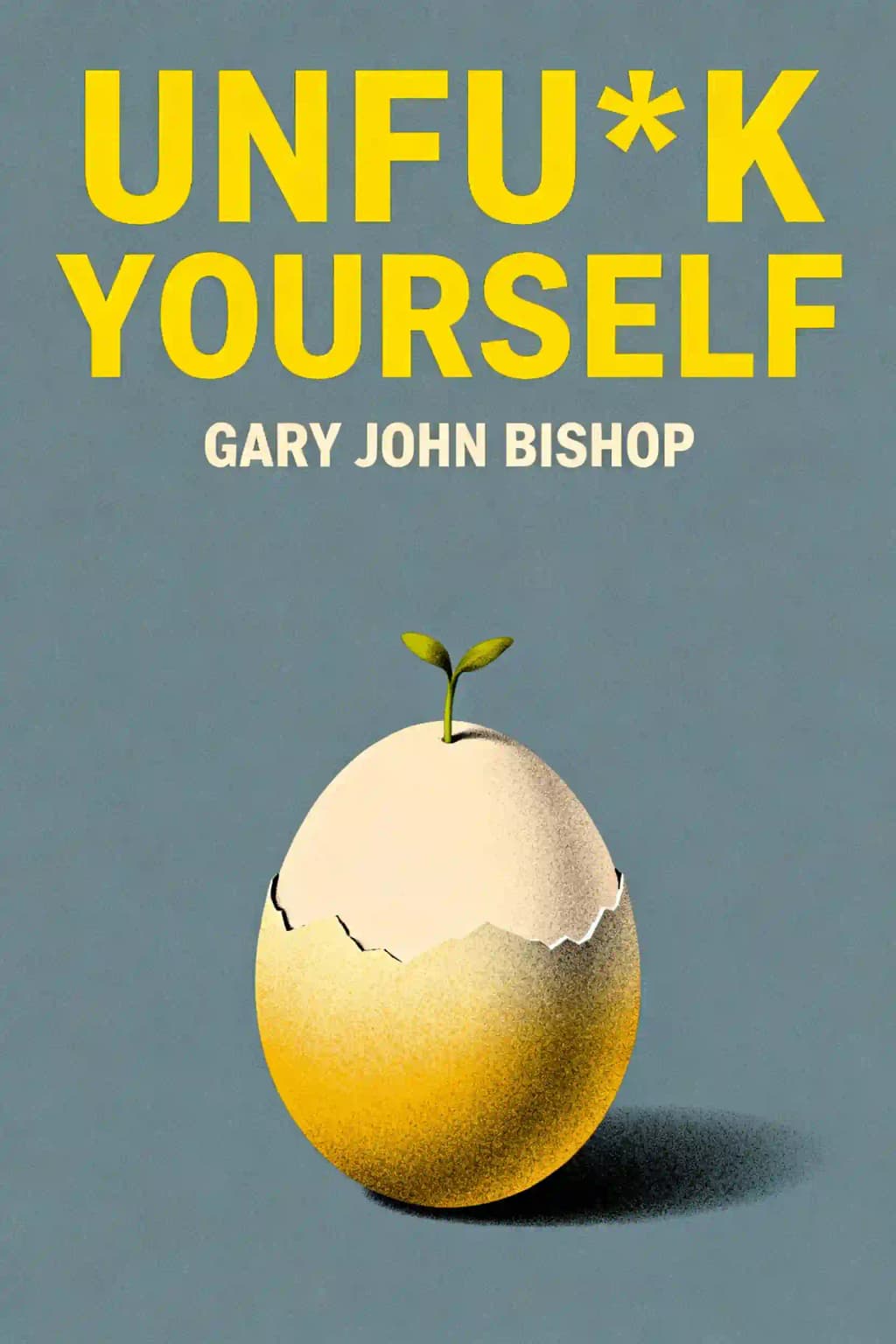
Have you ever felt like your life is a broken record, playing the same disappointing track day after day? You're not alone. Gary John Bishop's "Unfuk Yourself" has become a phenomenon precisely because it addresses this universal feeling of being stuck in our own mental quicksand. This isn't just another self-help book - it's a conversational slap from the universe, delivered with the no-nonsense attitude of a straight-talking Scottish mentor.
Since its publication, the book has gained a cult following, including celebrities like Tim Ferriss and Joe Rogan, who have praised its refreshingly direct approach. Unlike traditional personal development literature that often feels sanitized and distant, Bishop's work cuts through the noise with raw authenticity. The book has sold millions of copies worldwide and has been translated into over 20 languages, resonating with readers from diverse backgrounds who share one common desire: to get out of their own way.
What makes this book culturally significant is how it arrived at a perfect moment - when social media had amplified our tendency to compare, complain, and remain stuck in cycles of negative self-talk. In a world increasingly dominated by carefully curated online personas, Bishop's call to brutal self-honesty feels like a revolutionary act.
第2章
The Power of Self-Talk: Your Internal Dialogue Shapes Reality
Have you ever noticed how that voice in your head never seems to shut up? That ongoing commentary is more than just background noise - it's actively shaping your reality. The conversations we have with ourselves are perhaps the most influential dialogues we'll ever experience. These aren't just fleeting thoughts; they're the architects of our emotions, decisions, and ultimately, our lives.
Think about it: when you tell yourself "I can't do this" or "This always happens to me," you're not simply describing reality - you're creating it. These statements become self-fulfilling prophecies that limit what you believe is possible. Your brain doesn't distinguish between what's objectively true and what you've convinced yourself is true. It simply responds to the instructions you give it through your internal dialogue.
The science behind this is fascinating. Neuroplasticity - the brain's ability to reorganize itself by forming new neural connections - means that repeated thoughts actually carve pathways in your brain. The more you think a particular thought, the deeper that neural pathway becomes, making it easier for your brain to default to that pattern in the future. It's like walking through a meadow - the first time is difficult, but with each pass, the path becomes more defined and easier to follow.
This explains why negative thought patterns can be so difficult to break. When you've spent years telling yourself you're not good enough or that success isn't for people like you, those neural pathways become superhighways in your brain. The good news? You can build new roads. By consciously changing your self-talk, you begin creating alternative neural pathways that, with practice, can become your brain's new default routes.
The language you use matters tremendously. Notice how different "I am struggling with this" feels compared to "I am a failure." One acknowledges a temporary state; the other defines your entire identity. This distinction isn't just semantic - it fundamentally alters how you approach challenges and setbacks. Assertive, decisive language creates a proactive mindset, while wishy-washy, victim-oriented language reinforces helplessness.
What if you started speaking to yourself with the same compassion and encouragement you'd offer a friend? What if, instead of focusing on what went wrong, you asked yourself what you learned? These simple shifts in self-talk can transform not just how you feel in the moment, but who you become over time.
第3章
The Willingness Factor: The Gateway to Transformation
What are you willing to do to change your life? This question cuts straight to the heart of personal transformation. Willingness isn't about motivation or inspiration - those are fleeting emotions. Willingness is a decision, a stance you take toward your life that says, "I am ready to engage fully with whatever comes my way."
Consider this: everything you currently have in your life - your relationships, career, health, finances - exists because, on some level, you've been willing to accept it. That might be a tough pill to swallow, but it's also incredibly empowering. If your willingness created your current reality, it can also create a new one.
Willingness operates like a doorway. When you say "I am willing," you're opening yourself to possibilities that remain closed to those who aren't ready to step through. It's not about having all the answers or feeling completely confident - it's about being open to taking action despite uncertainty or fear. Think about the last time you learned a valuable skill or grew significantly as a person. Chances are, it began with a moment of willingness to try something new or difficult.
Interestingly, unwillingness can be equally powerful when used intentionally. Declaring "I am unwilling to continue living this way" or "I am unwilling to accept this treatment" can be the catalyst for profound change. These statements draw boundaries that protect your well-being and clarify your values. Sometimes knowing what you're unwilling to tolerate is just as important as knowing what you're willing to pursue.
The beauty of willingness is that it simplifies decision-making. When faced with a challenge or opportunity, you need only ask yourself: "Am I willing to do what this requires?" If the answer is yes, you move forward. If it's no, you can either adjust your approach or recognize that this particular goal doesn't align with your true priorities.
Breaking down large goals into smaller acts of willingness makes them more manageable. Instead of being overwhelmed by the thought of writing a book, focus on being willing to write one page today. Rather than fixating on losing fifty pounds, concentrate on being willing to make one healthy choice right now. These micro-commitments build momentum that carries you toward your larger objectives.
What would change if you approached each day with the question "What am I willing to give to this day, and what am I unwilling to accept?" This simple practice can transform how you engage with your work, relationships, and personal growth. Willingness isn't just about what you do - it's about how you show up for your life.
第4章
Wired to Win: Understanding Your Unconscious Success Patterns
Have you ever wondered why you keep experiencing the same problems over and over? Here's a mind-bending truth: you're succeeding perfectly at creating exactly the life you believe you deserve. Every outcome in your life - even the ones you label as "failures" - represents a win for your subconscious programming.
This isn't some mystical concept; it's how your brain operates. Your mind is constantly working to validate your deepest beliefs about yourself and the world. If you secretly believe you don't deserve success, your brain will find ingenious ways to sabotage opportunities. If you believe relationships always end in heartbreak, you'll unconsciously choose partners or behaviors that ensure that outcome.
Think about that promotion you didn't pursue, the relationship you sabotaged, or the health goals you abandoned. Were these really failures, or were they perfect expressions of what you truly believed was possible for you? Your subconscious mind doesn't distinguish between helpful and harmful beliefs - it simply works to prove all your beliefs correct.
Consider someone who grew up hearing they weren't smart enough. Despite having natural talents, they might consistently underperform academically or professionally, "winning" at confirming their belief in their own limitations. Or someone who witnessed tumultuous relationships in childhood might repeatedly find themselves in chaotic partnerships, "winning" at fulfilling their expectation that love equals drama.
The first step to changing these patterns is radical honesty. Look at the areas of your life where you struggle repeatedly and ask yourself: "What am I winning at here? What belief is this pattern confirming?" This isn't about blame or shame - it's about uncovering the unconscious programming that's been running your life on autopilot.
Once you identify these patterns, you can begin the work of rewiring them. This involves consciously challenging limiting beliefs and creating new evidence that contradicts them. If you believe you're bad with money, for example, start by making small, responsible financial decisions and acknowledging each success, no matter how minor. Over time, these new experiences create alternative neural pathways that can override your old programming.
Remember that your mind is infinitely adaptable. The same mechanism that has been working against you can be harnessed to work for you. By deliberately choosing empowering beliefs and taking actions that support them, you create a new set of unconscious success patterns - ones that move you toward the life you actually want, not just the one you've been programmed to accept.
What if you approached each challenge with the understanding that you're wired to win? How would your efforts change if you knew your brain would work just as hard to prove your capabilities as it has worked to prove your limitations?
第5章
"I Got This": Building Unshakable Self-Trust
Remember that time when everything seemed to be falling apart, but somehow, you made it through? That wasn't luck - it was evidence of your inherent capacity to handle life's challenges. The assertion "I got this" isn't empty motivation; it's a recognition of a fundamental truth about your resilience and capability.
We often lose perspective when facing problems, allowing immediate difficulties to eclipse our entire worldview. A work setback becomes career failure; a relationship conflict becomes evidence of unworthiness. This catastrophizing distorts reality and undermines our confidence. The antidote? Putting problems in perspective by zooming out to see the bigger picture.
Imagine your life as a railroad track stretching from birth to death. From this vantage point, today's crisis is just one tiny segment of a much longer journey. You've already successfully navigated countless challenges - some you probably don't even remember anymore because they've been integrated into the story of your life. This visualization exercise isn't about minimizing genuine difficulties; it's about contextualizing them within the broader scope of your existence.
Another powerful perspective shift comes from comparing your problems to the scale of human experience. As Socrates wisely observed, if everyone placed their troubles in a pile and could choose any set to take home, most would reclaim their own after seeing others' burdens. This isn't to engage in comparative suffering, but to recognize that struggle is universal and survivable.
The key to maintaining the "I got this" mindset is developing precision in how you define problems. Many of us create unnecessary suffering by allowing difficulties in one area to contaminate unrelated aspects of life. A financial setback doesn't mean you're failing as a parent; a health challenge doesn't diminish your professional competence. By containing problems to their actual domains, you prevent them from growing beyond their true proportions.
Building self-trust requires acknowledging your history of resilience. Think about the challenges you've already overcome - the heartbreaks, failures, losses, and setbacks that once seemed insurmountable but are now simply part of your story. Each of these experiences has equipped you with skills and insights that make you more capable of handling whatever comes next.
When facing a new challenge, try this: Instead of asking "Can I handle this?" (which invites doubt), state "I've handled difficult situations before, and I'll handle this too." This isn't blind optimism; it's an accurate assessment based on your demonstrated capacity for resilience. You've survived every single bad day you've ever had - that's a 100% success rate.
What would change if you approached each challenge with the quiet confidence of someone who trusts their ability to figure things out? How might your stress levels decrease if you truly believed "I got this" in the face of uncertainty?
第6章
Embracing Uncertainty: Where Possibility Lives
What if the very thing you've been trying to avoid - uncertainty - is actually the source of all possibility? We humans are hardwired to seek certainty. We want guarantees, assurances, and predictable outcomes. We create elaborate plans and expectations in an attempt to control the uncontrollable. But here's the paradox: this quest for certainty is actually limiting your potential.
Think about it - every major breakthrough, innovation, and growth opportunity exists in the realm of the unknown. If you only do what's certain, you'll only achieve what's already been done. The edge of your comfort zone is where expansion happens, where new neural pathways form, where life becomes vibrant rather than merely safe.
Consider the most successful people in any field. They didn't achieve greatness by clinging to certainty. They ventured into uncharted territory, took calculated risks, and embraced the possibility of failure. Thomas Edison's thousands of unsuccessful attempts at creating the light bulb weren't failures - they were explorations of uncertainty that eventually led to innovation. What if he had stopped after the first hundred attempts, seeking the comfort of certainty instead?
One of the biggest barriers to embracing uncertainty is the fear of judgment. We worry about looking foolish, being criticized, or facing rejection. But this concern about others' opinions keeps us trapped in a very small, predictable box. Ask yourself: whose life are you living? If your choices are dictated by avoiding judgment rather than pursuing growth, you've handed over the keys to your existence to others.
Uncertainty isn't just something to tolerate - it's something to actively seek out. When was the last time you did something completely new, something that made your heart race with a mixture of excitement and fear? These moments of stepping into the unknown are what make life rich and meaningful. They're the stories you'll tell years later, not the days spent safely within the confines of routine.
Practically speaking, embracing uncertainty means focusing on what you can control while releasing attachment to outcomes. You can control your effort, your attitude, and your responses - but not how others react, what opportunities arise, or exactly how things unfold. This distinction is liberating. Instead of wasting energy trying to predict or control the unpredictable, you can channel that energy into showing up fully for whatever is in front of you.
Start small if uncertainty feels overwhelming. Take a different route home. Try a food you've never eaten. Strike up a conversation with someone new. Each small step into the unknown builds your tolerance for uncertainty and expands your comfort zone. Over time, you'll find yourself more adaptable, more creative, and more alive.
What possibilities might be waiting for you just beyond the edge of certainty? What dreams have you abandoned because the path to achieving them wasn't clear? Perhaps it's time to step into that uncertainty, knowing that's precisely where your greatest potential resides.
第7章
Action Trumps Thought: Becoming What You Do
Have you ever noticed how many people talk about writing books but never write a word? Or discuss getting in shape while remaining on the couch? The gap between intention and action is where potential goes to die. You are not what you think or what you say - you are what you do, consistently, day after day.
This distinction is crucial. Your thoughts, no matter how brilliant or inspired, have no impact on the world until they're expressed through action. You can have the most detailed vision of your ideal life, but without corresponding behavior, it remains just that - a vision, a fantasy, a pleasant daydream that never materializes.
Consider this: if someone observed your life for a week without hearing your thoughts or intentions, what would they conclude about your priorities and values? Would they see someone actively pursuing their stated goals, or someone whose actions contradict their proclaimed desires? This isn't about judgment - it's about alignment between your inner world and your outer reality.
The beauty of this principle is that it works both ways. Just as inaction can undermine your intentions, consistent action can transform your identity, even when your thoughts are filled with doubt. You don't need to feel confident to act confidently. You don't need to feel motivated to take action. In fact, the relationship often works in reverse - action generates motivation, and behavior shapes feelings.
This explains why waiting until you "feel ready" is a recipe for stagnation. The feeling of readiness typically comes after you've started, not before. The first workout doesn't feel good - it's uncomfortable and challenging. But after several weeks of consistent training, your body and mind adapt, and the positive feelings follow. The same principle applies to any meaningful endeavor.
Discomfort is not a signal to stop - it's often a sign that you're growing. When you push through the initial resistance of a new behavior, you're literally rewiring your brain, creating new neural pathways that make the action easier over time. Each repetition strengthens these pathways until what once required immense effort becomes second nature.
This action-oriented approach also offers liberation from the tyranny of overthinking. How much energy have you wasted analyzing, planning, and worrying instead of simply doing? When caught in a spiral of rumination, the most effective intervention is often physical action - any action - that breaks the cycle and engages you with the external world.
Start treating your actions as votes for the person you want to become. Each time you make your bed, you're voting for order and discipline. Each time you speak up in a meeting, you're voting for confidence and leadership. Each time you choose the healthier option, you're voting for self-care and vitality. Over time, these votes accumulate to elect a new version of yourself - one defined not by fleeting thoughts but by consistent behaviors.
What one action, if taken consistently, would most transform your life? What's stopping you from taking that action today, right now, regardless of how you feel?
第8章
Relentless Pursuit: Breaking Through Barriers
What separates those who achieve extraordinary things from those who merely dream about them? One word: relentlessness. The willingness to persist beyond reasonable limits, to continue when others would quit, to push through discomfort toward a vision that others might not even see.
Relentlessness isn't about frantic activity or burnout-inducing hustle. It's about focused, determined action toward meaningful goals - action that continues despite setbacks, criticism, or slow progress. It's the quality that turns average talent into exceptional achievement through sheer persistence and refusal to accept limitations.
Consider the journey of Michael Phelps, the most decorated Olympian of all time. His coach Bob Bowman once said that what made Phelps extraordinary wasn't just natural talent but his willingness to do things other swimmers wouldn't. While competitors took holidays off, Phelps trained. When others completed their required sets, he did extra. This relentless commitment to excellence, day after day for years, transformed potential into historic achievement.
Or look at Malala Yousafzai, who continued advocating for girls' education even after surviving an assassination attempt. Her relentless pursuit of educational equality wasn't deterred by threats, violence, or being forced to leave her homeland. This quality of persistence in the face of extreme opposition changed not just her life but the lives of countless others.
Relentlessness requires challenging societal norms and expectations. The world is full of people who will tell you what's "realistic" or "practical" based on their own limitations and fears. Being relentless means developing selective hearing - listening to feedback that helps you improve while filtering out the noise of those who simply don't understand your vision or commitment.
The path of relentless pursuit isn't smooth or linear. It involves countless small actions, many of which may seem insignificant in isolation. Like a sculptor chiseling away at marble, each strike may remove only a tiny fragment, but the cumulative effect transforms a block of stone into a masterpiece. Similarly, your daily actions, performed with consistency and determination, gradually transform your circumstances and capabilities.
Obstacles on this path aren't roadblocks - they're stepping stones. Each challenge overcome not only brings you closer to your goal but also strengthens your capacity for future challenges. This perspective shift is crucial: seeing difficulties not as reasons to quit but as opportunities to prove your commitment and develop your abilities.
The good news is that relentlessness is not an innate trait but a choice - one you can make anew each day. It begins with clarity about what matters enough to pursue relentlessly, then continues with daily recommitment to that pursuit regardless of temporary setbacks or fluctuating emotions.
What would become possible in your life if you approached just one important goal with true relentlessness? What if you decided that failure simply isn't an option - not because success is guaranteed, but because you refuse to stop until you succeed?
第9章
Expect Nothing, Accept Everything: The Freedom of Radical Acceptance
Imagine approaching life without the burden of expectations - not lowering your standards or abandoning your goals, but releasing your attachment to specific outcomes. This mindset shift from expectation to acceptance doesn't diminish your ambition; it liberates your energy from the emotional rollercoaster of unmet expectations.
Expectations are often subtle demands we place on reality - that people should behave a certain way, that our efforts should yield specific results, that life should unfold according to our plans. When reality inevitably deviates from these expectations, we experience disappointment, frustration, and resistance. This gap between expectation and reality is the source of much unnecessary suffering.
Accepting everything doesn't mean approving of everything. It means acknowledging what is without wasting energy fighting against reality. When you accept the current moment exactly as it is - whether pleasant or painful - you gain clarity and power. From this place of clear seeing, you can respond effectively rather than react emotionally.
Consider how expectations create problems in relationships. When you expect your partner, friends, or colleagues to behave in specific ways without explicitly communicating these expectations, you're setting yourself up for disappointment. Each unmet expectation becomes evidence that the other person doesn't care enough, when in reality, they simply don't share your unspoken rulebook.
Even positive expectations can become problematic. Expecting a promotion, award, or recognition creates an emotional dependency on outcomes beyond your control. When you attach your happiness to specific results, you surrender your emotional well-being to external circumstances. Conversely, when you focus on giving your best effort while accepting whatever outcome emerges, you maintain your inner peace regardless of external events.
This philosophy extends to how you view your past and future. Expecting that your past "should have been" different keeps you trapped in regret and resentment. Accepting your history - including mistakes and painful experiences - allows you to integrate these events into your life story and extract their lessons without being defined by them.
Similarly, holding rigid expectations about your future creates anxiety and limits your ability to recognize unexpected opportunities. Life rarely unfolds exactly as planned, and often the most meaningful developments come from unanticipated directions. When you're fixated on a particular vision of success, you might miss the alternate paths that could lead to even greater fulfillment.
The practice of "expect nothing, accept everything" requires moment-to-moment awareness. When you notice yourself becoming upset, ask: "What expectation am I holding that reality isn't meeting?" This simple inquiry often reveals the hidden demands behind your distress and creates space to release them.
This approach doesn't mean becoming passive. You still set goals, work hard, and strive for excellence - but you do so from a place of engaged acceptance rather than rigid expectation. You plant seeds, tend them diligently, and then accept whatever harvest comes, knowing that some factors will always remain beyond your control.
How might your experience change if you approached today with open hands - giving your best effort while releasing your grip on specific outcomes? What freedom might you find in accepting life as it unfolds rather than demanding it conform to your expectations?
第10章
The Urgency of Now: Your Life Won't Wait
Here's an uncomfortable truth: you're going to die. Not eventually in some abstract future, but with absolute certainty, and possibly sooner than you imagine. This isn't meant to be morbid - it's meant to be motivating. The recognition of your mortality is perhaps the most powerful catalyst for meaningful action.
Imagine yourself at the end of your life, looking back on the path you've traveled. What would cause you more regret - the risks you took that didn't work out, or the opportunities you never pursued because of fear or procrastination? Almost universally, people report that their deepest regrets center not on actions taken but on chances never seized, words never spoken, and dreams never pursued.
This perspective shift changes everything. When you truly internalize the finite nature of your time, procrastination becomes absurd. Why postpone living fully when each day represents a non-renewable resource? Why defer your dreams to some imagined future that may never arrive?
The greatest obstacle to living with this urgency is our remarkable capacity for self-deception. We tell ourselves comforting stories about why now isn't the right time, why we need more preparation, why tomorrow will somehow be different. These narratives - what Bishop calls "buying yourself off" - provide temporary relief from the discomfort of action but ultimately rob you of your life's potential.
Every excuse, no matter how reasonable it sounds, serves the same function: to maintain the status quo and avoid the discomfort of growth. "I don't have enough time" really means "This isn't a priority." "I'm not ready yet" often translates to "I'm afraid to try." "I'll do it when conditions are better" usually means "I'm not willing to deal with imperfect circumstances."
Another form of self-deception is using your past as justification for inaction. While your history has certainly shaped you, it doesn't have to define your future unless you allow it to. Your past experiences may explain certain patterns or challenges, but they never remove your power to choose differently today. The moment you shift your focus from what happened to you to what's possible for you, everything changes.
The path to meaningful change involves two essential steps: stopping what doesn't serve you and starting what does. This sounds simple, but it requires brutal honesty about your habits, thought patterns, and behaviors. What activities, relationships, or beliefs are holding you back? What new practices would move you toward your aspirations? Making these assessments without self-judgment is crucial - you're not looking for reasons to criticize yourself but for opportunities to realign your life with your deepest values.
The ultimate message is clear: get out of your head and into your life. Thinking, planning, and analyzing have their place, but they can never substitute for direct engagement with reality. Your life is happening now, not in some hypothetical future when conditions are perfect. Every moment spent waiting for the right time is a moment lost forever.
What one action could you take today - right now - that would move you toward the life you truly want? What's stopping you from taking that action immediately? Remember, the clock is ticking, and unlike money or possessions, time once spent can never be recovered.