第1章
Unleashing Your Authentic Self: The Journey to the True You
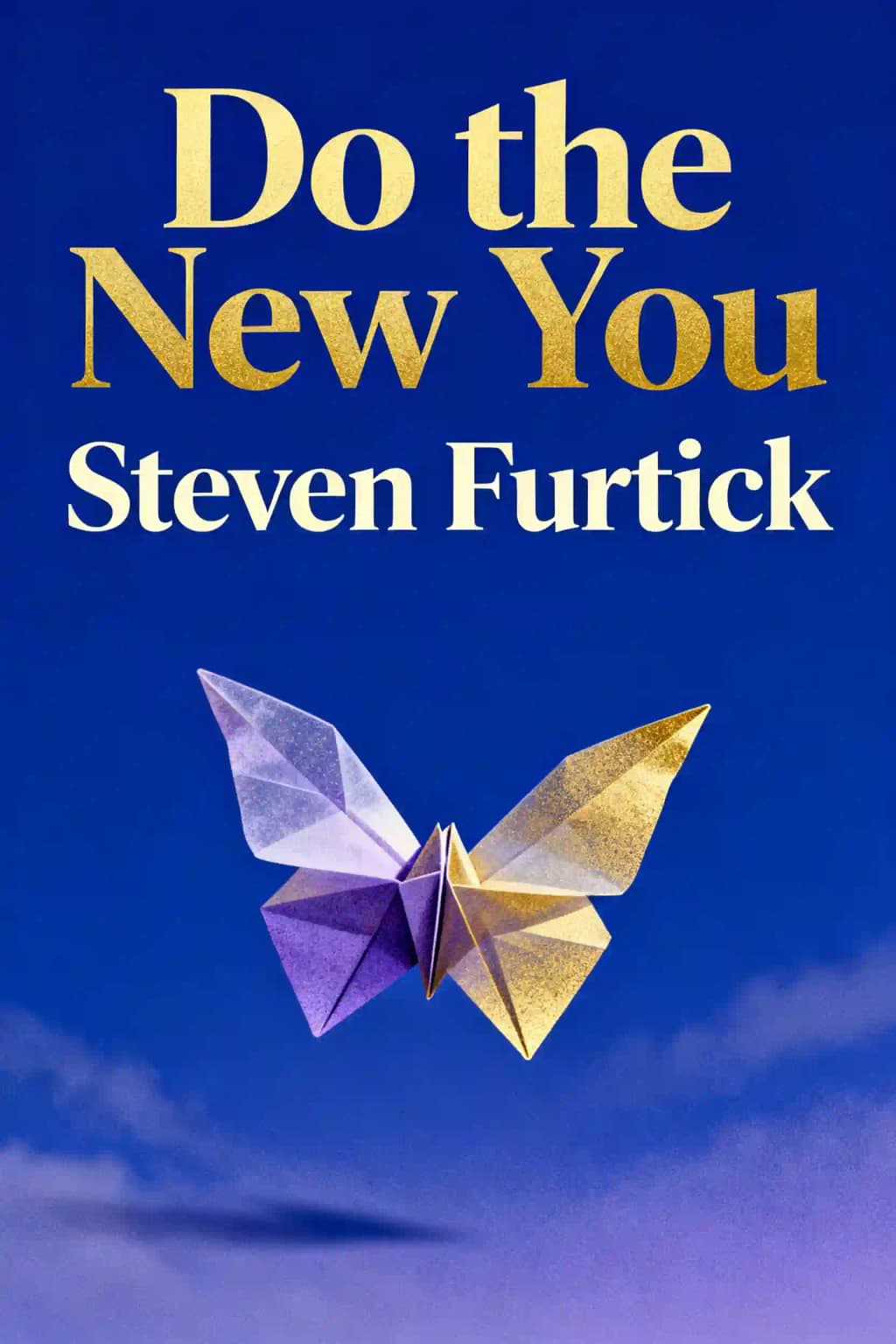
Steven Furtick's "Do the New You" has become a cultural phenomenon, resonating with millions seeking authentic transformation. The book has garnered praise from celebrities like Oprah Winfrey and Tim Tebow, who cite its practical approach to personal growth. Since its release, it has sparked countless social media challenges where followers document their journey of implementing Furtick's mindsets. As pastor of Elevation Church and a bestselling author, Furtick has built his reputation on making spiritual concepts accessible and actionable. This book represents his most personal work yet, offering a roadmap not to becoming someone new, but to discovering who you've been all along.
第2章
The Trap and the Treadmill: Finding Your True Self
Every morning begins with a cascade of decisions that ultimately boil down to one fundamental question: Which version of me will I be today? Will I bring my wisest self or my most reactive one? This choice faces us in every situation, relationship, and opportunity - from how we respond to a difficult coworker to how we handle disappointment or celebrate success. Each moment presents an opportunity to either default to our familiar patterns or step into something greater.
Most of us realize "just doing you" isn't enough, so we jump onto the "future you" treadmill - pursuing a perfect version of ourselves with greater faith, better relationships, and flawless execution. We set ambitious goals, create vision boards, download productivity apps, and constantly consume self-improvement content. This exhausting chase never ends because we're always pursuing an unattainable goal that often reflects others' highlight reels rather than authentic potential. We see someone's carefully curated social media presence or public success and think, "That's who I should be." While "doing you" traps you in stagnation, "future you" kills contentment by making you constantly dissatisfied with who you are today, creating a perpetual state of "not enough."
The answer lies in discovering the "true you" - the person God created you to be. God knew you before birth, before trauma, before mistakes, before achievements and failures shaped your self-perception. As He told Jeremiah, "Before I formed you in the womb I knew you." This isn't just poetic language - it's a profound truth about your identity. God's knowledge of you is infinitely specific, encompassing everything from the hairs on your head to your deepest purpose. He knows your natural gifts, your genuine passions, and the unique way you're designed to impact the world.
The new you isn't actually new at all - it's the authentic self God has always seen in you. Those breakthrough moments when you act with unexpected generosity, surprising wisdom, or natural compassion are glimpses of your true self emerging. Maybe it's when you instinctively know how to comfort a friend, or when you stand up for what's right despite fear, or when you pursue a calling that doesn't make sense on paper but feels deeply right. These moments are invitations from God saying, "I'm here. I'm ready. I'm waiting. Let's go!"
Becoming this true version requires seeing yourself as God sees you and making that vision your reality. It means letting go of both the limiting beliefs that keep you trapped in old patterns and the exhausting pursuit of perfection that keeps you running on the treadmill. Stop saying "This is who I am, so get used to it" and start saying "This is who I am so far, but God's not done yet." This transformation relies more on God's grace than your grit - He began the good work and will complete it. The journey isn't about becoming someone new, but about uncovering who you've been all along in God's eyes.
第3章
Progress Over Perfection: Breaking Free from Stagnation
When you're pinned down by life's heavyweight problems - impossible work demands, single parenthood, crushing debt, grief, addiction, or depression - the last thing you need is someone shouting simplistic advice from the sidelines. "Just get up!" they yell, as if you hadn't thought of that. These well-meaning but oversimplified solutions often add to our frustration rather than alleviating it, making us feel even more isolated in our struggles.
God doesn't yell at you from heaven to try harder. Instead, He jumps into the battle with you, offering mercy and grace in your time of need. He meets you exactly where you are, whether that's at rock bottom or somewhere in between. The old you might have seen "stuck" as a reason to stop trying, relying solely on your own strength. But the new you embraces a different mindset: "I'm not stuck unless I stop." This shift in perspective isn't about denying reality - it's about recognizing that even small movements forward count as progress.
This doesn't mean denying problems - it means refusing to surrender to disappointment. Sometimes progress looks like asking for help, like when Furtick reached out to a financially savvy friend who gave him a map forward. Other times, it might mean taking tiny steps: making one phone call, writing one paragraph, or saving one dollar. It's amazing how quickly you can go from exasperated to excited with just a glimpse of the next step. Even small victories can create momentum that carries you forward.
We often argue for our limitations out of loyalty to our past selves or fear of vulnerability. We might say things like "I've always been bad with money" or "I'll never be organized" as if these are unchangeable facts rather than learned behaviors. As motivational speaker Les Brown says, "If you argue for your limitations you get to keep them." But if we agree with God about our potential, we can grow into it. Our past failures and successes are part of who we are, but they don't determine who we'll become. The choice is ours: defend what we've always done or develop what God says we can do.
Transformation takes self-awareness, work, courage, humility and time. Though defying your default initially feels unnatural and awkward, like learning to write with your non-dominant hand, with the Holy Spirit as guide, growth becomes inevitable if you don't give up. Your default is not your destiny - it's just your starting point. Each day presents new opportunities to make different choices, establish new patterns, and move closer to becoming who you're meant to be. Remember that progress isn't always linear - sometimes it's three steps forward and two steps back, but as long as you're moving, you're growing.
The key is to celebrate progress rather than waiting for perfection. Every small win counts: a moment of patience instead of anger, choosing hope over despair, or taking action instead of procrastinating. These seemingly insignificant choices compound over time, creating lasting change and sustainable growth.
第4章
Finding Your Enough: Embracing Your Identity in Christ
Whether you're an Olympic athlete or facing everyday challenges, you must talk yourself out of doubt and into faith. We constantly wrestle with voices telling us to be stronger, smarter, funnier, prettier, thinner, richer - focusing on what we're missing rather than what we have. These voices come from social media, advertising, peer pressure, and often our own internal dialogue, creating a constant state of perceived insufficiency.
The danger comes when we jump from "I don't have enough" in certain situations to "I am not enough" as a person. We measure ourselves by our insufficiencies, turning lack into identity. A missed promotion becomes "I'm not successful enough." A failed relationship becomes "I'm not lovable enough." Even our victories and strengths won't make us feel "enough" for long - only God can do that. This cycle of inadequacy affects everything from our career choices to our personal relationships.
Jesus told his disciples, "I am in you" and "apart from me you can do nothing." His message wasn't demanding perfection but offering sufficiency through connection with him. You're more than what you're missing because Christ is in you. This truth transforms how we view our weaknesses - they become opportunities for God's strength rather than evidence of our inadequacy.
We easily slip into negative self-judgment, as when Furtick felt like "a bad dad" for never teaching his son to fish. We internalize failures and challenges as identity statements, turning temporary situations into permanent labels. A missed deadline becomes "I'm incompetent." A parenting mistake becomes "I'm failing my children." Instead of this self-condemnation, we need compassion and perspective, recognizing that our worth isn't determined by our performance or circumstances but by our identity in Christ.
At nine years old, Furtick traded a valuable Michael Jordan basketball card for a pack of ordinary cards, not understanding the true value of what he held. His mom recognized the unfair trade and marched back into the store to reclaim his card plus another pack. This childhood lesson mirrors how we often trade away our God-given identity because we don't know our worth. We believe lies that we're flawed, that our value lies in appearance, or that we're imposters. We exchange what truly matters - our character, calling, and confidence - for fleeting pleasures or popularity. Like trading a precious heirloom for costume jewelry, we devalue our true identity for temporary validation.
While accepting Jesus was relatively easy, accepting ourselves can be a lifetime journey. We live daily with our imperfections and shortcomings, facing moments of doubt, failure, and insecurity. Yet to accept Jesus but not accept ourselves misses the heart of salvation. You must accept your Self by faith, recognizing that you're valuable to God despite being a work in progress. This means embracing both your strengths and weaknesses, understanding that God's love isn't conditional on your performance but on His character and promises. Your identity in Christ isn't earned through achievement but received through grace.
第5章
Discovering Possibility: Finding God's Way Forward
Rick Beato's story exemplifies finding new possibilities when you think you're finished. At 54, Rick started a YouTube channel despite having no experience making videos. Though he'd been a behind-the-scenes music producer for decades, he reinvented himself when his intern suggested creating content. Now with over 3 million subscribers, Rick interviews famous guitarists and teaches music theory to millions. His success came from refusing to believe his story was over.
This mindset requires openness - being willing to let God reinvent you when opportunities arise. What stories have you told yourself about your limitations? God sees your continuation, not reinvention. When you lose hope, remember that God makes paths even when you can only make plans. He's the Waymaker who split the Red Sea, made highways through deserts, and brought water from rock.
Sometimes finding your way forward means simply moving, one step at a time. When the Israelites finished mourning Moses in Moab for a month, it was time for "No Mo" - no more Moses, no more mourning, no more camping in Moab hoping for the good old days. The time for mourning had to give way to movement.
Are you holding onto something that needs to rest in peace? Jesus said, "Follow me, and let the dead bury their own dead" - don't let what is dead stop you from living. For every "No Mo" in your life, God has prepared a "Now Joshua" - a new gift, a new opening where you see an ending. You're not finished because God isn't finished with you. You're not just going through a crisis; you're in a cocoon, transforming.
The mindset "With God there's always a way, and by faith I will find it" requires silencing your internal censor - that voice undermining your creativity, confidence, and courage. Great things rarely come easily or on the first try. As songwriter Tom Waits said, "Some songs don't want to be recorded... Some songs are only good to cut up as bait and use to catch other songs." Growth isn't linear - you often repurpose pieces of failure to frame your future.
第6章
God With You: Finding Confidence in Divine Partnership
When Furtick's seven-year-old daughter Abbey wanted to swim across the pool underwater, he taught her about the "lizard brain" - that primitive part that screams danger and fear when we attempt something challenging. Despite her initial fear, she made it across, proudly declaring afterward, "Man, that lizard is loud!" When asked what she told it, she replied, "Shut up, lizard! I'm doing this."
This powerful response works for all of us facing fears. The old you listens to that voice of limitation; the new you says, "Shut up, fear! I'm doing this!" Our minds can quickly escalate situations, painting worst-case scenarios that transport us back to lesser versions of ourselves. We must recognize these thoughts for what they are - fight-or-flight instincts spiraling out of control - and replace them with healthier affirmations.
The mindset "God is not against me, but he's in it with me, working through me, fighting for me" provides exactly what we need when fear overwhelms us. Each phrase carries profound meaning: He's not mad at my mistakes, He's doing this together with me, His power works through my efforts, and He's fighting battles on my behalf.
Gideon's story illustrates this perfectly. Found threshing wheat in a hidden winepress out of fear, he had shrunk himself into survival mode. When God called him "mighty warrior," Gideon could only see his limitations. Like a UFC champion might say, we must "survive the assault, work the cut" - endure difficult seasons but then recognize when it's time to go on offense. God wants to meet us in our "winepresses" of fear and anxiety, showing us doors of opportunity where we only see danger.
We make three common excuses that limit our potential: "I don't have it" (lack of resources), "I don't know how" (lack of knowledge), and "I'm not like them" (comparison). The old you accepts these excuses; the new you recognizes them as fear disguised as logic. The new you understands that God supplies what you need when you need it, that learning is lifelong, and that your uniqueness is your strength.
God often equips us precisely at the moment we step forward, not before. While walking toward freedom, recovery, service, purpose, or whatever God is calling you to, remember that faith isn't about certainty but action. When you don't know what to do, start doing what you would do if you knew God was working through you.
第7章
Owning Your Emotions: The Hard Work of Joy
God uses many tools to show us our blind spots - including trained professionals. Whether you use therapy or not, the key is that you must own your emotions. Understanding yourself - your upbringing, mental models, personality, and past trauma - is part of reclaiming the narrative of the new you.
Emotions are valuable signals that help you know when to rest or follow the Holy Spirit's prompting. But they shouldn't sit on the throne of your life - God belongs there. We tend to let our feelings dictate our actions, but feelings aren't meant to be followed blindly. They're meant to be conditioned and conformed to Christ's image.
To identify deceitful desires and walk in the new you, remember NEW:
• Notice your thoughts, reactions, feelings and fears
• Evaluate whether they align with what God says about you
• Walk In the person you're meant to be
When fear comes, frame it as "I'm feeling fear" rather than "I am afraid." This creates distance - the emotion is valid but temporary. It's like weather that will pass, not your identity.
NASCAR champion Joey Logano once invited Furtick's family to a race, where they received headsets to hear the crew chief and spotter communicating with him. His five-year-old daughter Abbey thought Joey could hear her too, calling "Joey Wogano, can you hear me?" through her headset. Of course, he couldn't - while racing at 185 mph, he only listens to his crew chief and spotter, not the thousands of fans.
Yet many of us live exactly this way, giving everyone a microphone to our thoughts: "Here you go, CNN. Here you go, Fox News. Here you go, Elon. Here you go, TikTok. Here you go, random internet troll." Often the loudest voice is the old self still trying to control your course.
If you're going to manage your joy, you must manage your focus. When Joshua took leadership after Moses died, God gave him specific advice about focus: "Be strong and courageous. Keep this Book of the Law always on your lips; meditate on it day and night... Do not be afraid; do not be discouraged."
You need a security checkpoint in your brain, a TSA agent telling certain thoughts, "You're not coming past this point." The Holy Spirit is your crew chief and spotter - listen to His voice above all others.
第8章
Embracing Your Season: Finding Sufficiency in the Now
Trenton, a twenty-three-year-old with cerebral palsy who serves as a greeter at Furtick's church, shared something profound. After hearing a sermon about Gideon going "in the strength you have," he realized that if you take the word "disable" and put "go" in front of it, it spells "God is able." Where others see his disability, Trenton sees God's ability.
This perspective embodies our final mindset: "God has given me everything I need for the season I'm in." Emphasize "everything" and "season" because those are the keys. You don't have everything you'll need for every season, but you have what you need for this one - so embrace your now.
Consider Ehud, who turned his left-handedness - seen as a weakness in his culture - into his secret weapon. He crafted an eighteen-inch blade, devised a brilliant escape plan through a toilet, and freed Israel from eighteen years of oppression. What genius lies within you? What could you accomplish if you redefined your quirks as qualities and applied Holy Spirit creativity to your challenges?
During a workout session with a bodybuilder, Furtick noticed something striking about his approach. When approaching his final reps on each set, he would tell his girlfriend who was spotting him, "Help me fail." Not "help me finish" or "help me get one more rep" - but specifically "help me fail."
This counterintuitive request reveals a profound truth: sometimes we need to reach the point of failure to stimulate growth. In resistance training, muscles grow when they're pushed to their limits, torn down, and rebuilt stronger. "Help me fail" meant "Help me get to the end of what I can do right now because that's where growth happens."
When facing crushing pressures in life, do you have faith that God could help you fail? While we typically pray for success rather than failure, God's definition of winning often differs from ours. For Him, character growth is a win. Perseverance is a win. Shedding old patterns of thinking is a win. And sometimes to win, you have to fail.
This connects directly to our mindset: "God has given me everything I need for the season I'm in." This doesn't mean you'll never fail; rather, it means God provides a safe place to fail. He's faithful to be with you, strengthen you, and deliver you. As Proverbs says, "Though the righteous fall seven times, they rise again."
第9章
Choosing Your True Self: The Daily Decision
Every day, we must decide which version of ourselves we're sending into the world. Will it be the version seeking immediate happiness at all costs, or the one making decisions our future self will thank us for? The foundation for doing the new you is choosing the new you - accepting who God made you and deciding daily to walk in that fullness.
But how do you choose the new you when you don't feel capable? When your weaknesses seem more apparent than your potential? It begins with this truth: God chose you in Christ before creation. He didn't just know you - he chose you, even knowing your flaws and failures. God has options, yet he hand-picked you as his vessel, cracks and all. Those very weaknesses are where his light shines through.
You must release all the reasons why God shouldn't have chosen you and reach for what he's given you. Choose to believe who God says you are. Choose to forgive, speak life, and move forward.
This isn't easy or instantaneous. We sometimes choose the horrible attitude, the gossip, the pettiness. But that's not who we want to be. We want to be bigger - to see people as people with pain and dreams, not problems to solve. We want to see others and ourselves as God sees us.
As you walk forward into the new you, remember that much depends on who you let into your head. Your stability and inner peace depend on whether you tune in to God's voice above the noise, or whether every rumor, threat, and vain imagination has access to your ear.
Let's review these mindsets one final time:
1. I'm not stuck unless I stop. (Action Step: Commit to progress.)
2. Christ is in me. I am enough. (Action Step: Accept your Self.)
3. With God there is always a way, and by faith I will find it. (Action Step: Focus on possibility.)
4. God is not against me, but he's in it with me, working through me, fighting for me. (Action Step: Walk in confidence.)
5. My joy is my job. (Action Step: Own your emotions.)
6. God has given me everything I need for the season I'm in. (Action Step: Embrace your now.)
These aren't just concepts - they're personal declarations to use daily when facing challenges. Sometimes they won't feel true. Sometimes they'll seem like wishful thinking. But these are God's words over your life, as true in the valley as on the mountaintop, as true in doubt as in certainty.
God is with you. God is for you. God chose you. Will you?