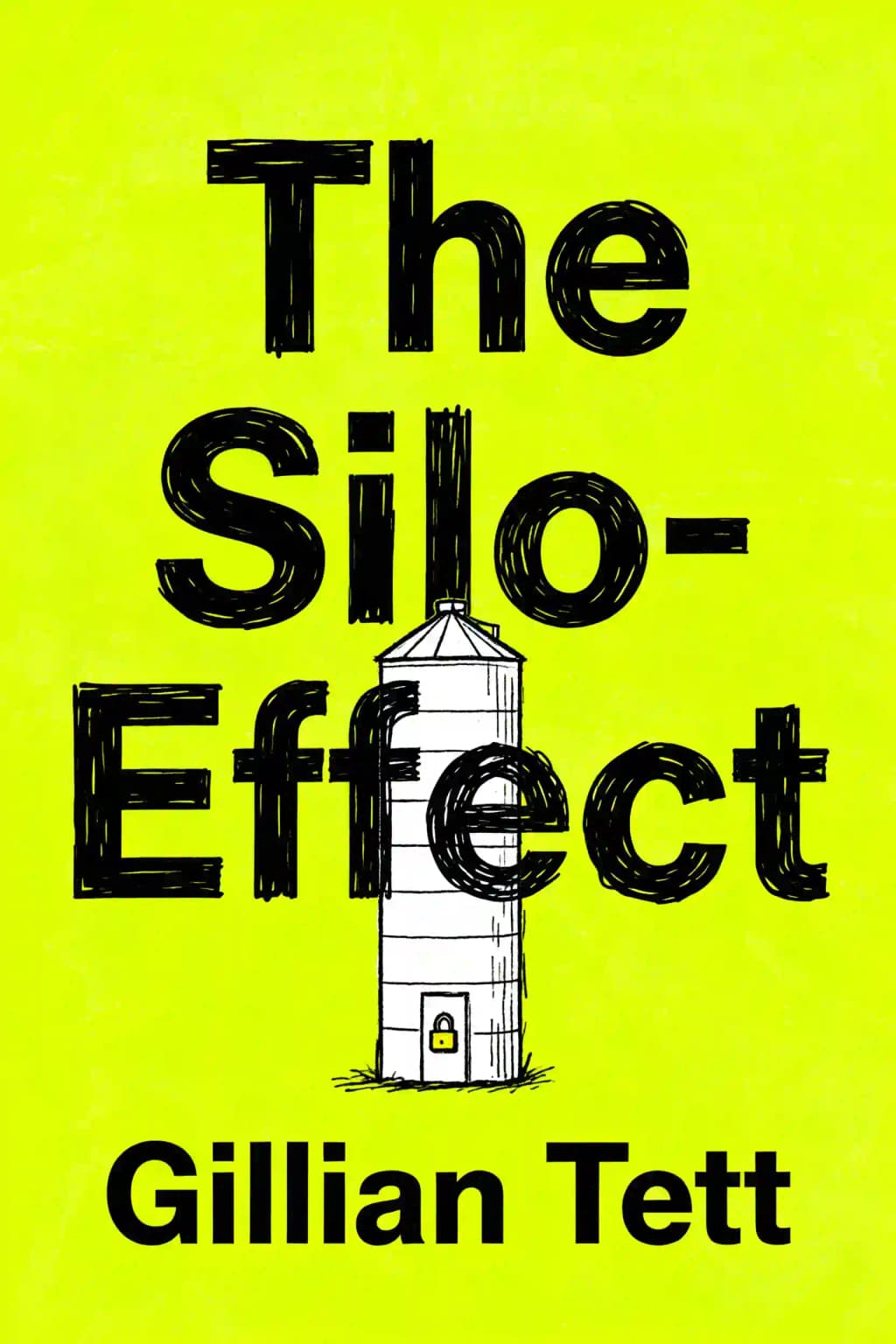
Anthropologist-turned-journalist Gillian Tett reveals how organizational silos destroy innovation and breed blindness. Praised by Wall Street Journal and adopted by Facebook executives, this book shows why the Cleveland Clinic's revolutionary restructuring around patients - not departments - sparked a global management revolution.
Gillian Romaine Tett OBE is an award-winning Financial Times columnist and anthropologist, acclaimed for her insightful analysis of global markets and organizational behavior.
A Cambridge-trained PhD in social anthropology, Tett uniquely applies anthropological principles to dissect financial systems and corporate cultures. Her book, The Silo Effect, examines how institutional silos impede innovation, drawing from her extensive experience as the FT’s US managing editor and Tokyo bureau chief.
Tett's bestselling book, Fool’s Gold (2009), is a definitive account of the 2008 financial crisis. It won the Spear’s Book Award and solidified her reputation as a prescient analyst of systemic risk. In her 2021 book, Anthro-Vision, she further explored the relevance of anthropology to the business world, earning the Porchlight Best Business Book Award.
Beyond her writing, Tett co-founded the FT’s Moral Money newsletter and currently serves as Provost of King’s College, Cambridge. She continues to advocate for interdisciplinary solutions to complex global challenges, and her work remains required reading at leading business schools and think tanks.
The Silo Effect examines how organizational and mental silos—rigid divisions between teams or disciplines—hinder innovation and risk management. Gillian Tett, an anthropologist and journalist, uses case studies like Sony’s decline and the 2008 financial crisis to show how silos lead to tunnel vision. She argues for breaking down barriers to foster collaboration and adaptability.
Executives, managers, and professionals in sectors like finance, healthcare, or tech will benefit from Tett’s insights. It’s also valuable for readers interested in organizational psychology, anthropology, or systemic risk. The book offers practical strategies for anyone seeking to combat inefficiencies caused by fragmented teams.
Yes. Praised by The Wall Street Journal and Financial Times, the book combines rigorous research with engaging storytelling. Tett’s anthropological lens provides a fresh perspective on universal business challenges, making it essential for understanding modern organizational pitfalls.
Key ideas include:
Case studies like the Cleveland Clinic’s restructuring illustrate these concepts.
Tett shows how silos persist in remote work, AI adoption, and corporate mergers. For example, she details how the Federal Reserve’s fragmented structure delayed its response to the 2008 crisis—a lesson for firms navigating rapid technological change today.
Tett’s PhD in social anthropology informs her analysis of organizations as cultural systems. She applies fieldwork methods—like studying Wall Street traders as a tribal group—to reveal how silos emerge from unspoken norms and hierarchies.
Tett suggests:
Unlike traditional management guides, Tett blends anthropology with journalism, offering a unique lens on organizational behavior. It complements strategy-focused works like Good to Great by addressing cultural barriers to change.
With AI and remote work accelerating specialization, Tett’s warnings about communication breakdowns remain urgent. Her framework helps organizations balance expertise with holistic thinking in an era of complex global challenges.
Some argue Tett oversimplifies silo solutions, as dismantling barriers can create chaos in large institutions. Others note her examples focus on extreme cases, though she acknowledges silos aren’t inherently harmful—only when they become rigid.
著者の声を通じて本を感じる
知識を魅力的で例が豊富な洞察に変換
キーアイデアを瞬時にキャプチャして素早く学習
楽しく魅力的な方法で本を楽しむ
Organizations are divided into departments that don't communicate.
Silos aren't inherently bad.
They had normalized their tribalism.
Jobs ran Apple as 'one cohesive and flexible company'.
People would say yes to me, but nothing would happen.
『Silo』の核心的なアイデアを分かりやすいポイントに分解し、革新的なチームがどのように創造、協力、成長するかを理解します。
『Silo』を素早い記憶のヒントに凝縮し、率直さ、チームワーク、創造的な回復力の主要原則を強調します。

鮮やかなストーリーテリングを通じて『Silo』を体験し、イノベーションのレッスンを記憶に残り、応用できる瞬間に変えます。
何でも質問し、声を選び、本当にあなたに響く洞察を一緒に作り出しましょう。

"Instead of endless scrolling, I just hit play on BeFreed. It saves me so much time."
"I never knew where to start with nonfiction—BeFreed’s book lists turned into podcasts gave me a clear path."
"Perfect balance between learning and entertainment. Finished ‘Thinking, Fast and Slow’ on my commute this week."
"Crazy how much I learned while walking the dog. BeFreed = small habits → big gains."
"Reading used to feel like a chore. Now it’s just part of my lifestyle."
"Feels effortless compared to reading. I’ve finished 6 books this month already."
"BeFreed turned my guilty doomscrolling into something that feels productive and inspiring."
"BeFreed turned my commute into learning time. 20-min podcasts are perfect for finishing books I never had time for."
"BeFreed replaced my podcast queue. Imagine Spotify for books — that’s it. 🙌"
"It is great for me to learn something from the book without reading it."
"The themed book list podcasts help me connect ideas across authors—like a guided audio journey."
"Makes me feel smarter every time before going to work"

Siloの要約をPDFまたはEPUBで無料でダウンロード。印刷やオフラインでいつでもお読みいただけます。
Why did Sony, the creator of the legendary Walkman, completely miss the digital music revolution while Apple swooped in with the iPod? How did UBS, Switzerland's most conservative bank with 3,000 risk managers, secretly accumulate $50 billion in toxic mortgage securities without anyone noticing until it was too late? These aren't stories of incompetence or conspiracy-they're examples of something far more insidious and common: the silo effect. Picture a family trapped in a burning Bronx apartment in 2011, killed not by the fire itself but by illegally constructed walls. Multiple city agencies had received warnings but never connected the dots because each operated in its own isolated bubble. This tragedy reveals a paradox of modern life: we're more connected than ever through technology and globalization, yet our organizations, minds, and societies remain dangerously fragmented. Silos aren't inherently evil-we need specialized departments and expertise to manage complexity. But when these divisions become too rigid, information bottlenecks, innovation stalls, and catastrophic blind spots emerge. The question isn't whether we need structure, but whether we can see beyond the walls we've built.