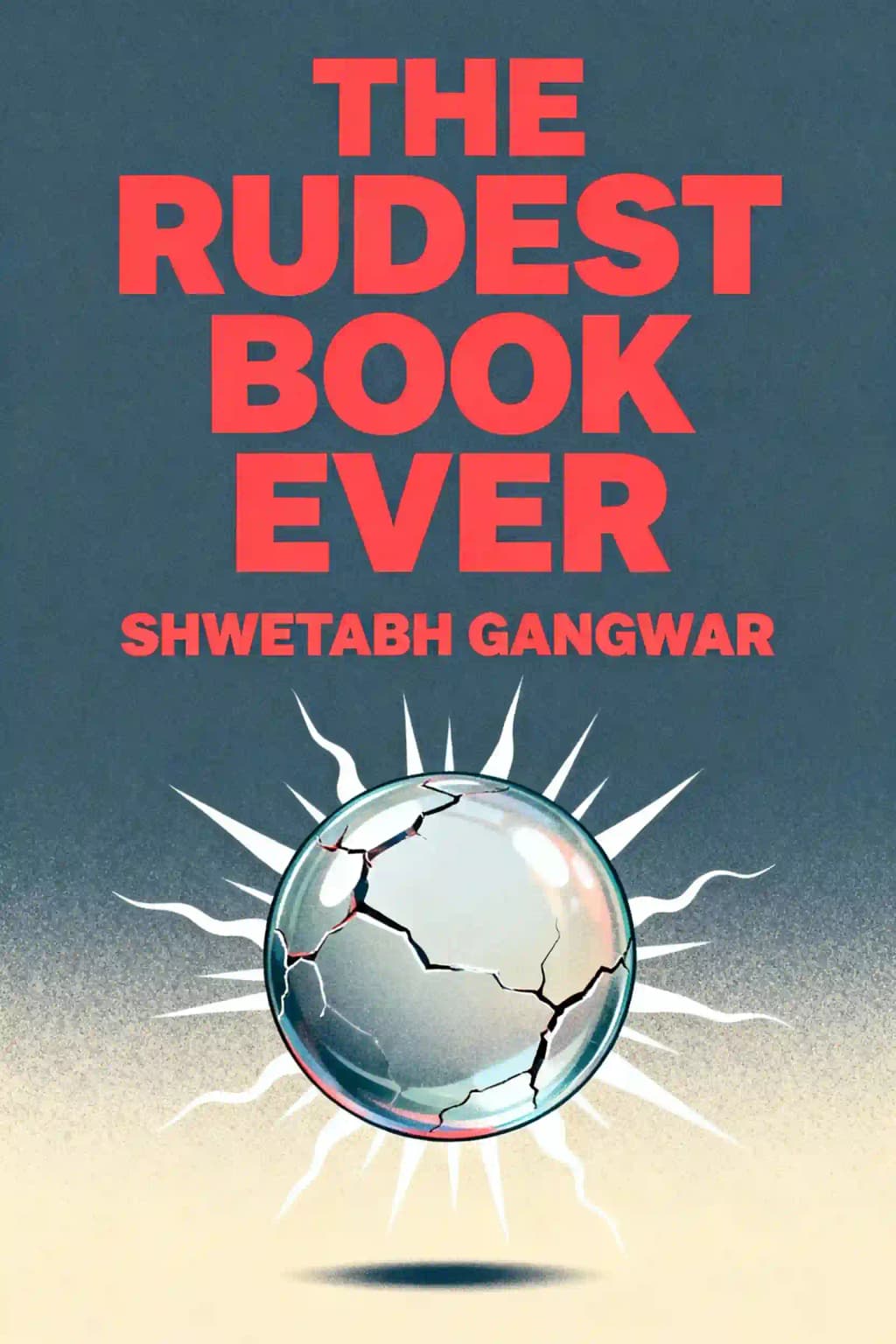
The Rudest Book Ever
『The Rudest Book Ever』の概要
"The Rudest Book Ever" delivers Shwetabh Gangwar's blunt truth bombs that shatter conventional self-help wisdom. With 2.5 million YouTube followers, this bestseller asks: Why chase happiness when satisfaction brings real fulfillment? Your social programming needs this ruthless reset.

『The Rudest Book Ever』の主要テーマ
- critical thinking skills
- external validation trap
- parental conditioning
- authentic identity
- merit-based self-esteem
『The Rudest Book Ever』の名言
The problem begins when we aren't taught how to think, only what to think.
They focus on status rather than personhood.
We all want to be special.
True greatness comes from proving yourself to yourself.
『The Rudest Book Ever』の登場人物
- Shwetabh GangwarAuthor and philosopher who challenges social norms
著者について
『The Rudest Book Ever』の著者について
Shwetabh Gangwar, bestselling author of The Rudest Book Ever, is a self-help expert, YouTuber, and motivational speaker known for his blunt, no-nonsense approach to personal growth.
Hailing from Lucknow, India, Gangwar’s work centers on critical thinking, self-awareness, and societal norms, themes shaped by his decade-long career solving real-world problems through his YouTube channels Mensutra (1.36M subscribers) and Shwetabh Gangwar (1.08M subscribers).
His candid style, honed via viral workshops and podcast With Shwetabh, challenges readers to prioritize logic over emotion. Gangwar’s debut, A Thousand Love Letters, and his Nielsen-rated #1 bestseller The Rudest Book Ever have cemented his status in India’s digital self-help space.
The latter, adapted into a Hindi, Telugu, and Tamil audiobook via Pocket FM, has expanded his reach to non-English audiences. With over 2 million combined followers, Gangwar remains a leading voice for Gen Z and millennials navigating modern life’s complexities.
The Rudest Book Everの要約をダウンロード
The Rudest Book Everの要約をPDFまたはEPUBで無料でダウンロード。印刷やオフラインでいつでもお読みいただけます。
この本に関するよくある質問
The Rudest Book Ever challenges societal norms and self-help clichés with blunt, practical advice on self-respect, critical thinking, and emotional resilience. It urges readers to reject baseless beliefs, prioritize logic over assumptions, and detach self-worth from external validation. Key themes include handling rejection, avoiding entitlement, and cultivating a data-driven mindset to navigate life’s "bullshit."
The book targets teens, young adults, and self-help beginners seeking unfiltered guidance. It’s ideal for those tired of sugarcoated advice, especially readers grappling with overthinking, people-pleasing, or societal pressures. Critics note it’s less suited for experienced self-improvement enthusiasts or those sensitive to confrontational language.
With a 3.9/5 rating, it’s praised for refreshing honesty but criticized for repetitive arguments and a patronizing tone. Worth reading if you want actionable steps to build self-awareness and resilience, but skip if you prefer evidence-based or nuanced philosophical approaches.
- Self-respect as currency: Treat yourself like a sovereign nation—prioritize boundaries and logic.
- Reject entitlement: Validate ideas through data, not hearsay or societal myths.
- Detach from outcomes: Separate your identity from success/failure to reduce emotional turbulence.
- Anti-happiness pursuit: Focus on satisfaction through growth, not fleeting joy.
- “Knowing yourself is the greatest superpower”: Emphasizes self-awareness as a tool to navigate manipulation and biases.
- “You aren’t special—make yourself special”: Rejects societal coddling, urging proactive self-definition.
Critics cite its condescending tone, overuse of anecdotes without data, and repetitive structure. Some call it “patronizing” for framing common sensical advice as revolutionary. However, fans appreciate its no-nonsense delivery for younger audiences.
Unlike Atomic Habits (process-focused) or The Subtle Art (humorous nihilism), Gangwar’s work prioritizes brutal honesty and logic-based frameworks. It’s closer to Mark Manson’s style but targets a younger, Indian demographic.
The book advises viewing rejection as neutral data, not a reflection of worth. For example, Gangwar dissects unrequited crushes by noting: “The person you obsess over barely notices you—just as you ignore others”, urging detachment from outcomes.
A YouTube-based problem-solver known for pragmatic life advice, Gangwar built a following by addressing real-world issues from relationships to career struggles. His writing mirrors his direct, conversational video style.
The title reflects its provocative tone, designed to jar readers awake from complacency. It’s not inherently rude but challenges sacred cows like societal myths about happiness, exceptionalism, and blind conformity.
Amid rising social media toxicity and misinformation, its focus on critical thinking, emotional detachment, and data-driven decisions remains timely. The book’s anti-entitlement messaging also resonates in economically turbulent times.
- Data > Assumptions: Dismantle beliefs by seeking evidence, not inherited narratives.
- Detachment protocol: Assess relationships/goals without emotional baggage.
- Self-audit loops: Regularly question if your habits align with logic or societal pressure.