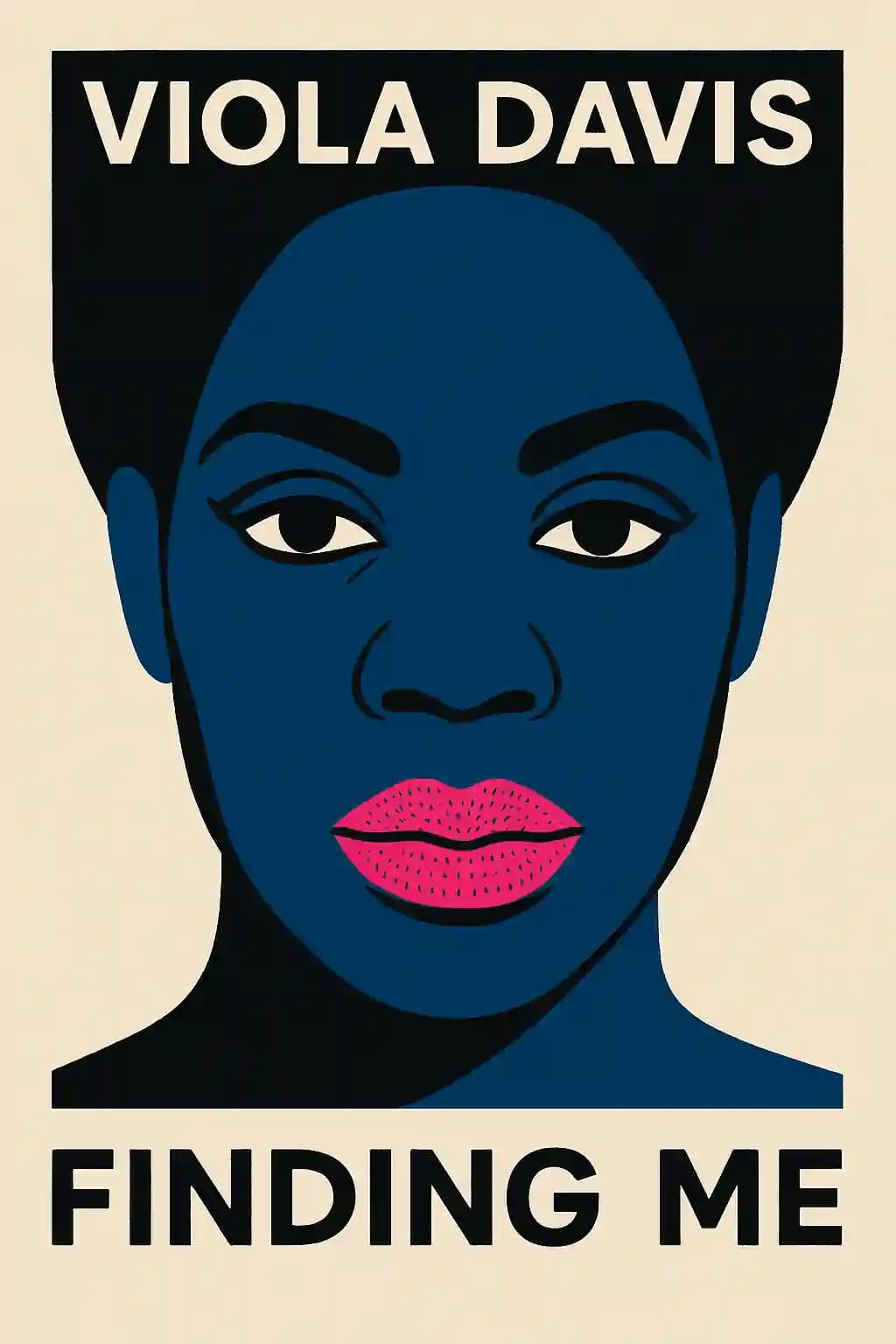
Viola Davis's raw memoir - a Grammy-winning, Oprah-endorsed journey from poverty to Oscar glory. Beyond celebrity confessions, this #1 NYT bestseller offers a masterclass in breaking cycles and embracing radical self-love that Brene Brown calls "transformative."
Viola Davis, Academy Award-winning actress and EGOT recipient, is the author of the memoir Finding Me, a raw exploration of resilience and self-discovery.
Born in 1965 in St. Matthews, South Carolina, Davis chronicles her journey from childhood poverty and racial trauma in Rhode Island to her groundbreaking career on stage and screen. The book intertwines her personal struggles with systemic racism, colorism, and sexual abuse with her rise to prominence through roles in The Help, Fences (for which she won an Oscar), and the series How to Get Away with Murder (earning her a historic Emmy).
A Juilliard-trained performer, Davis has also produced impactful projects like the documentary Giving Voice and starred in The Woman King (2022), further cementing her legacy. Her audiobook narration of Finding Me won a 2023 Grammy, making her one of fewer than 20 artists to achieve EGOT status.
The memoir, selected for Oprah’s Book Club, has been praised for its unflinching honesty and inspirational message of empowerment.
Finding Me chronicles Viola Davis’s journey from poverty in Central Falls, Rhode Island, to becoming an award-winning actor. It explores her childhood trauma, family struggles with abuse and racism, and her path to self-discovery through radical honesty and forgiveness. The memoir highlights her resilience in overcoming systemic barriers and finding her voice in a world that marginalized her.
This memoir resonates with memoir lovers, fans of Viola Davis, and anyone grappling with identity, trauma, or systemic adversity. It’s particularly valuable for those seeking inspiration to embrace authenticity, heal from past wounds, or understand the intersection of race, class, and personal growth.
Yes. A New York Times bestseller and Oprah’s Book Club pick, Finding Me is praised for its raw, unflinching storytelling. Davis’s vivid narration of her struggles with poverty, racism, and self-acceptance offers profound insights into resilience, making it a compelling read for personal and book club discussions.
Davis recounts childhood sexual abuse, her father’s violence, and systemic racism, framing forgiveness as essential for liberation. She details her therapy journey to reconcile with her past, emphasizing that self-love requires confronting pain rather than fleeing it.
The memoir traces Davis’s perseverance through rejection and typecasting, linking her acting depth to her lived experiences. She credits her survival instincts from childhood for fueling her determination to succeed in Hollywood despite racial and economic barriers.
Davis vividly describes living in rat-infested apartments, food insecurity, and wearing torn shoes. These experiences shaped her understanding of systemic inequality and fueled her drive to escape cycles of deprivation through education and artistic expression.
Therapy helps Davis process childhood trauma, confront her father’s abuse, and shed shame. She advocates for mental health support as critical to breaking generational cycles of pain and achieving emotional freedom.
Notable lines include:
These quotes encapsulate Davis’s message of radical self-acceptance.
While acclaimed for its rawness, some readers may find graphic accounts of abuse and racism emotionally intense. However, most critics praise Davis’s vulnerability as a strength, not a flaw.
Unlike polished autobiographies, Finding Me offers unfiltered introspection, prioritizing emotional truth over glamour. It’s often compared to Tara Westover’s Educated for its exploration of trauma and class mobility.
Its themes—resisting societal labels, advocating for equity, and healing through vulnerability—remain urgent amid ongoing conversations about race, mental health, and authenticity. Davis’s story inspires continued resilience in turbulent times.
Davis discusses adopting her daughter Genesis as part of her healing journey, contrasting it with her fractured childhood. She reflects on redefining family through love rather than blood ties.
著者の声を通じて本を感じる
知識を魅力的で例が豊富な洞察に変換
キーアイデアを瞬時にキャプチャして素早く学習
楽しく魅力的な方法で本を楽しむ
They were beyond poor-they were 'po'.
That moment marked a turning point-she realized her life would be a fight.
The invisibility of being both Black and poor was a double burden.
Acting allowed her to be 100% herself without hiding anything.
『Finding Me』の核心的なアイデアを分かりやすいポイントに分解し、革新的なチームがどのように創造、協力、成長するかを理解します。
『Finding Me』を素早い記憶のヒントに凝縮し、率直さ、チームワーク、創造的な回復力の主要原則を強調します。

鮮やかなストーリーテリングを通じて『Finding Me』を体験し、イノベーションのレッスンを記憶に残り、応用できる瞬間に変えます。
何でも質問し、声を選び、本当にあなたに響く洞察を一緒に作り出しましょう。

"Instead of endless scrolling, I just hit play on BeFreed. It saves me so much time."
"I never knew where to start with nonfiction—BeFreed’s book lists turned into podcasts gave me a clear path."
"Perfect balance between learning and entertainment. Finished ‘Thinking, Fast and Slow’ on my commute this week."
"Crazy how much I learned while walking the dog. BeFreed = small habits → big gains."
"Reading used to feel like a chore. Now it’s just part of my lifestyle."
"Feels effortless compared to reading. I’ve finished 6 books this month already."
"BeFreed turned my guilty doomscrolling into something that feels productive and inspiring."
"BeFreed turned my commute into learning time. 20-min podcasts are perfect for finishing books I never had time for."
"BeFreed replaced my podcast queue. Imagine Spotify for books — that’s it. 🙌"
"It is great for me to learn something from the book without reading it."
"The themed book list podcasts help me connect ideas across authors—like a guided audio journey."
"Makes me feel smarter every time before going to work"

Finding Meの要約をPDFまたはEPUBで無料でダウンロード。印刷やオフラインでいつでもお読みいただけます。
A little girl runs barefoot through Rhode Island snow, holes in her shoes exposing frozen toes, while rocks and racial slurs fly at her back. This wasn't a scene from a movie-this was Viola Davis at eight years old, living in what her family called "Hell": 128 Washington Street in Central Falls. Born on a South Carolina plantation in 1965, delivered by her grandmother when the midwife ran late, Davis entered a world where joy existed in stolen moments between crushing poverty and violence. Her childhood home was condemned, rat-infested, and without reliable heat or hot water. The rats terrified her most-jumping on beds at night while she and her sisters huddled together, watching her sister Anita wield a red plastic bat like a warrior, once flattening a rodent like a pancake. These weren't just memories; they were the foundation of an artist who would one day become the first African American to win the Triple Crown of Acting. But before the accolades came decades of learning to survive in a world that tried to make her invisible.