第1章
Breaking Free: The Untold Journey of a Pop Icon
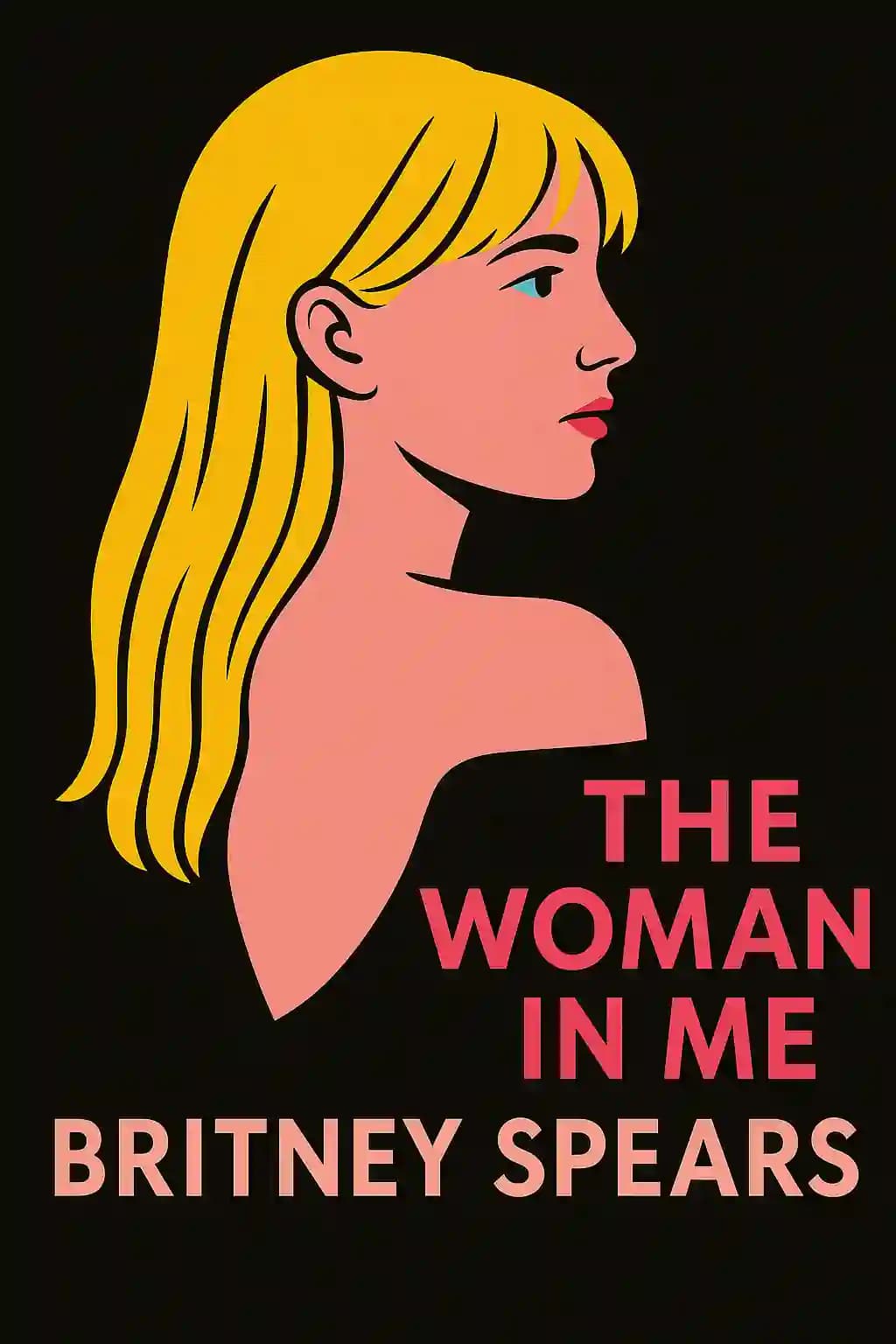
In the heart of Louisiana woods, a little girl once found solace in singing-her tongue and her sword against a turbulent home life. That girl would become one of the most recognized faces on the planet, yet few would truly understand her journey. "The Woman in Me" has become a cultural phenomenon since its release, selling over 2.5 million copies worldwide and spending 15 weeks atop bestseller lists. Celebrities from Lady Gaga to Oprah have praised its raw honesty, with Taylor Swift calling it "the most courageous memoir I've ever read." Beyond book sales, it sparked renewed conversations about conservatorships, mental health, and the treatment of women in entertainment. This intimate portrait reveals how a small-town girl from Kentwood became a global superstar, only to find herself trapped in a gilded cage of others' making-and how she ultimately reclaimed her voice and freedom.
第2章
Roots of Resilience: A Southern Girl's Foundation
In the South where I grew up, children were expected to respect their elders and keep quiet. But singing became my escape-something spiritual I did everywhere: in the car, when sad, throughout my childhood. Born in McComb, Mississippi, I lived in Kentwood, Louisiana-a small town where everyone knew each other, doors stayed unlocked, and life revolved around church. Our little brick house with green-striped wallpaper became my foundation, but music transported me beyond those walls.
Tragedy runs deep in my family. My grandmother Emma Jean Spears, who I physically resemble, suffered under my abusive grandfather June Spears Sr. After losing her infant son, she was institutionalized and eventually shot herself on her baby's grave. June was equally cruel to my father, pushing him relentlessly in sports and sending multiple wives to mental hospitals. My mother came from a completely different world-her British mother Lily had lived an elegant London life before disappointingly marrying an American soldier and moving to rural Louisiana.
My parents married young and poor-mom just twenty-one, dad twenty-three-having my brother Bryan in 1977. While mom studied to become a teacher, dad worked as a welder and started drinking heavily. After my grandfather died, dad's drinking worsened dramatically. Eventually he started a construction business and opened Total Fitness gym on our property, becoming one of the wealthiest men in town. They cemented their troubled marriage by having me on December 2, 1981.
The women in my family shaped me deeply. My cousin Laura Lynne was like my twin sister, and my aunt Sandra became a second mother. My great-grandmother Lexie Pierce-"wicked" beautiful with white face powder and red lipstick, married seven times-became my closest companion. We'd have sleepovers, go through her makeup cabinet, listen to 1950s ballads, and nap together.
As a child, I both craved hiding and performing-seemingly contradictory desires that defined me. I loved hiding in cabinets, making everyone search for me. But I also thrived performing-singing in church choir, taking dance classes three nights weekly plus Saturdays, and adding gymnastics classes. By elementary school, neighbors called me "Broadway bound," and I embraced being "the little entertainer." I wanted to hide, but I also wanted to be seen-both things could be true.
第3章
Family Trauma and Early Stardom: The Path to Mickey Mouse Club
When I was four, my brother Bryan had a devastating accident that changed our family dynamics forever. He and his friends had tried mowing tall grass with four-wheelers and collided head-on. Though I witnessed it, I mercifully blacked out, spared from remembering his crushed body. Bryan broke nearly every bone, and the trauma bonded us deeply. I slept beside him every night, first on a mattress at the foot of his special bed, then climbing in to hold him. Even after his recovery, I continued sharing his bed for years, wanting to comfort him through his difficult life with our father.
As my father's drinking intensified, his businesses failed. His extreme mood swings created chaos at home-I feared riding in the car with him as he'd talk to himself, lost in his own world. What I desperately wanted was unconditional love-a dad who would say, "I just love you as you are." He was reckless, cold, and mean with me, but even harder on Bryan, forcing him into sports despite not being built for it.
Though quiet and small in everyday life, I transformed when performing. At five, I won my first local dance competition with a routine wearing a top hat and twirling a cane. My mother began taking me to contests across the region. After winning a regional contest in Baton Rouge, my parents set higher ambitions. When they saw an advertisement for "The All New Mickey Mouse Club" auditions, we drove eight hours to Atlanta. Among two thousand kids, I had to stand out-especially after learning they wanted performers over ten. When the casting director Matt Casella asked my age, I said "Nine!" instead of my actual eight years.
For my audition, I sang "Sweet Georgia Brown" with dance moves and gymnastics flips. Though I didn't make the final cut, Matt told my mom I was talented and recommended a New York agent named Nancy Carson. My second Mickey Mouse Club audition was successful. The show became my entertainment industry boot camp: dance rehearsals, singing lessons, acting classes, recording sessions, and schooling. We Mouseketeers formed cliques based on our shared dressing rooms-Christina Aguilera, Nikki DeLoach and I were the younger kids, while we looked up to older ones like Ryan Gosling and Tony Lucca. Justin Timberlake and I connected, even sharing a kiss during a game of Truth or Dare.
第4章
The Birth of a Pop Phenomenon: From Jive Records to Global Stardom
Meeting Clive Calder, the founder of Jive Records, felt like entering a dream. I had no idea who he was when Larry Rudolph arranged the meeting, which probably kept my nerves at bay. His three-story office and tiny teacup terrier made me feel like I was stepping into a parallel universe-an amazing one. I was instantly drawn to his mystical smile and vibrant energy, feeling an immediate connection.
After singing Whitney Houston's "I Have Nothing" for rooms of executives, Clive signed me to Jive Records at fifteen. With Miss Fe (Felicia Culotta) as my chaperone, I spent months recording in New Jersey, working tirelessly in the booth. I later met producer Max Martin over a dinner that literally went up in flames when a candle tipped over. Despite this chaotic introduction, we clicked immediately and began working together in Sweden, where I recorded "...Baby One More Time," deliberately staying up late beforehand to make my voice sound gravelly and mature.
When presented with a futuristic astronaut concept for the "...Baby One More Time" video, I pushed back with my own vision: bored students at school who burst into dance when the bell rings. Working with New York dancers at Broadway Dance Center felt natural, and director Nigel Dick embraced my ideas about incorporating school uniforms and cute boys. This period held my greatest passion for music-I was unknown with nothing to lose, performing fearlessly like a basketball player with street sense.
After an exhausting mall tour where no one knew me, everything changed when my single hit stores in October 1998, followed by the video. By January 1999, my album debuted at number one, making me the first woman to debut with both a number one single and album simultaneously. Life accelerated as I toured with NSYNC, became a regular on TRL, and appeared on the controversial Rolling Stone cover that highlighted my youth.
The 2001 Super Bowl halftime show gave me barely a week to rehearse before performing alongside Aerosmith, Mary J. Blige, Nelly, and NSYNC. I sang "Walk This Way" in a sexy football uniform, meeting my idol Steven Tyler right before going onstage. My career was exploding-I landed the "most powerful woman" spot on Forbes' celebrity list and learned tabloids were making fortunes from my photos. At the 2001 VMAs, my "I'm a Slave 4 U" performance with a massive yellow and white snake became iconic but was terrifying. During the performance, the snake brought its head right to my face and started hissing, though cameras didn't capture that moment.
第5章
Love and Heartbreak: The Justin Timberlake Years
Justin Timberlake and I reconnected after the Mickey Mouse Club, finding ourselves magnetically drawn together during the NSYNC tour. I fell head over heels for him, though I sometimes cringed at his attempts to fit in with Black artists. As my fame grew, I noticed the different treatment I received from media compared to Justin-interviewers fixated on my body and questioned whether I'd had plastic surgery. After my 2000 VMAs performance, MTV forced me to watch strangers criticize my "too sexy" outfit and accuse me of corrupting America's youth.
The cameras were trained on me, waiting to see if I would cry. I wondered if I'd done something wrong when all I wanted was to sing and dance. When pressed about corrupting America's youth, I finally said, "I'm not the children's parents. I just gotta be me." This backlash lasted years, with critics constantly questioning my authenticity. I never understood what they expected-a Bob Dylan impression? I was a teenage girl from the South who signed her name with a heart. Why was I treated as dangerous?
Justin and I shared a gorgeous house in Orlando. Our infamous matching denim outfits at the 2001 American Music Awards were my idea-tacky but great. Though we seemed perfect, there were times I knew Justin cheated. When photographers caught him with a girl from All Saints in London, I let it go. Another time in Vegas, one of my dancers overheard Justin bragging about hooking up with someone else.
I became pregnant with Justin's baby, but he wasn't happy about it, saying we were too young. Though it broke my heart, I agreed to an abortion, which we did at home without medical supervision. The pain was excruciating-I lay on the bathroom floor screaming and sobbing for hours while Justin played guitar, wondering if I would die. I was devastated but still loved him deeply.
Justin grew distant while making his first solo album "Justified." He ended our relationship by text message while I was filming the "Overprotected" remix video. I was completely devastated-unable to speak for months, barely leaving my house in Kentwood. When Justin released "Justified," he portrayed me as unfaithful. On 20/20, he played "Don't Go (Horrible Woman)" for Barbara Walters, and his "Cry Me a River" video featured a woman resembling me cheating on him. The media painted me as a harlot who broke America's golden boy's heart, while I was devastated in Louisiana and he enjoyed Hollywood.
第6章
Motherhood and Marriage: The Kevin Federline Chapter
After the Justin breakup, I craved stability and found myself drawn to Kevin Federline. Our connection was immediate and profound-he held me in a pool for hours that first night, providing comfort beyond anything sexual. He would hold me as long as I needed, something I couldn't remember anyone doing before. Kevin liked me exactly as I was, which felt like a gift after spending so much time trying to meet others' expectations. I was clueless about his "bad boy" image and shocked to learn he had a toddler and another baby on the way with his pregnant ex-girlfriend.
We filmed tour diaries that later became the reality show "Britney and Kevin: Chaotic." After getting married, I finally started saying no to things that didn't feel right. I parted ways with my managers and posted a letter to fans announcing I needed time off. "I've actually learned to say 'NO!'" I wrote, explaining that I finally understood what people meant about child stars and how I'd been going nonstop since fifteen. I felt immense peace after declaring my intention to control my own life at last.
Pregnancy brought me two great pleasures: amazing sex and delicious food. Beyond that, I was completely transformed-America's sweetheart became the meanest woman alive. I was hateful, protective, and didn't want anyone near me, not even my mother. Pregnancy was overwhelming and spiritual-creating another body formed an incredibly powerful bond. Sean Preston was born September 14, 2005, immediately showing his sweet, kind nature. Just three months later, I was pregnant again, thrilled to have children close in age despite the physical toll and emotional isolation.
The paparazzi became my greatest danger. Their constant presence-whether I stayed home or ventured out-was inescapable. Every moment with my babies was scrutinized. When I drove with Sean Preston on my lap to escape photographers, I was labeled unfit. The magazines seemed fixated on my weight gain and lack of makeup, as if these were personal betrayals-as if I'd promised to stay seventeen forever.
As Kevin and I grew estranged, I rationalized his behavior: Maybe marriages worked this way, taking turns being selfish. Perhaps this was just his adjustment to newfound fame. I lied to myself, denying he was leaving me just as he'd left his previous family with infant children. Kevin had changed with his growing fame, coming home late from parties, name-dropping celebrities. His infatuation with fame and power was destroying him slowly-I'd seen it happen to others, particularly men.
第7章
Breakdown and Control: The Path to Conservatorship
When Kevin took the boys and wouldn't let me see them for weeks, I was devastated, imagining my babies wondering why their mother had abandoned them. In February 2007, after being denied access to my children again with paparazzi watching, I snapped. I went to a salon and shaved my head-a defiant "fuck you" to a world that demanded I be pretty, good, and their dream girl. Without my children, I became incredibly angry. As one friend said: "If someone took my baby away from me, I would have done a lot more than get a haircut. I would have burned the city to the ground."
When my cousin Alli drove me back to Kevin's house, paparazzi followed us. After being denied entry again, we pulled over and a videographer harassed me through the window, repeatedly asking how I felt about not seeing my kids while smirking. Despite Alli begging them to stop, they persisted until I finally snapped, grabbing an umbrella and hitting the photographer's car-a desperate move I later apologized for.
My album Blackout, my proudest career achievement, released around Halloween 2007. Despite not feeling ready, my team pressured me to perform "Gimme More" at the VMAs. Nothing went right-costume problems, exhaustion, and body-shaming made me panic. I ran into Justin backstage, who was thriving while I was crumbling. My performance was bad, but performers have off nights-they just don't usually have such extreme consequences. The press ridiculed my body and performance. During promotion, interviewers only wanted to discuss whether I was a fit mother, not how I'd created a strong album while caring for two babies.
In early January 2008, I had visitation with my boys when Kevin's security guard came to pick them up. After he put Preston in the car and came for Jayden, panic overwhelmed me-I feared I might never see my children again. I ran to the bathroom with Jayden and locked the door, desperate to keep my baby a little longer. A friend told me the security guard would wait, but suddenly a SWAT team burst through the bathroom door as if I'd committed violence. They tied me to a gurney and took me to the hospital.
The conservatorship's hypocrisy was immediately apparent-I was supposedly too incapable to feed myself or spend my own money, yet weeks later they had me filming "How I Met Your Mother" and sent me on a grueling world tour. My father presented the conservatorship as a "comeback" stepping stone, though I'd just released the best album of my career. I sarcastically thought how "fun" it was that I could work for thousands of people worldwide while being considered too sick to choose my own boyfriend. Looking at me with chilling finality, my father declared, "I'm Britney Spears now."
第8章
Thirteen Years of Silence: Life Under Conservatorship
My life under conservatorship became unbearably restrictive. Security would sweep houses before I visited to remove all alcohol and medication. Potential dates underwent background checks, blood tests, and NDAs, with Robin sharing my medical and sexual history before first dates-a humiliating system that prevented normal relationships. I traded my freedom for time with my children, paying Kevin's legal bills and extra money so the boys could join me on the Circus Tour-which grossed $130 million, with my father and Lou Taylor's company profiting handsomely.
The conservatorship slowly extinguished my spirit. The fire inside me dimmed daily; my fans could see it even without knowing the full truth. Under conservatorship, my father's criticism about my body was particularly devastating. He repeatedly told me I looked fat, forcing me to exercise daily while my passion for performing died. I became a robotic, infantilized version of myself, stripped of my womanhood and artistic connection.
Despite being deemed incapable of self-care, I won over twenty awards in 2008, including three VMAs for "Piece of Me"-ironic recognition for work created during the period used to justify controlling me. The contradiction wasn't amusing; it was tragic.
I loved the dry heat of Las Vegas where my residency began in late 2013. Being onstage was initially thrilling, and I was proud that my shows attracted younger crowds to the Strip. The fans energized me, boosting my confidence despite the tight controls on my life. Despite earning hundreds of thousands per show across 248 performances, I received only $2,000 weekly allowance and couldn't even cover a $1,000 dinner for my dancers when I wanted to show appreciation.
During my Vegas residency, I rebelled in subtle ways-refusing to move my hair during performances, holding back my energy on stage as my own version of a "factory slowdown." I wasn't free under the conservatorship, unable to be a woman in the world. But promoting "Glory" rekindled something in me-I started wearing high heels again and feeling the electric connection with my audience that had been missing. I began dreaming of freedom and even discussed having a baby with Hesam, though my father wouldn't allow me to have my IUD removed.
第9章
Freedom at Last: Reclaiming Power and Identity
On June 23, 2021, I finally addressed the Los Angeles probate court about my conservatorship, knowing millions would hear my voice. Despite practicing for days, I was terrified-what if they called me crazy or accused me of lying? Through my fear, I remembered what mattered: my right to freedom, joy, and understanding.
With Hesam beside me squeezing my hand, I told the judge, "I've lied and told the world I'm okay and happy. It's a lie... I'm not happy. I can't sleep. I'm angry and depressed. I cry every day." I explained how I felt bullied, ganged up on, and deserved the same rights as anyone else. The judge acknowledged my courage, making me feel heard after thirteen years.
After thirteen years of lies, I finally sought a new lawyer. With help from my social media team and friend Cade, I connected with Mathew Rosengart, a prominent former federal prosecutor. He was appalled that even "vicious criminals" get to choose their lawyers while I had been denied this right. Rosengart strategically filed to remove my father as conservator first, then terminate the entire arrangement. On September 29, my father was suspended, bringing overwhelming relief. In November 2021 while in Tahiti, Rosengart called with news that the conservatorship was terminated. I was free.
Recording "Hold Me Closer" with Elton John marked my return to music on my own terms. The song reached number one in forty countries, becoming my longest-charting single in nearly a decade. However, my current focus isn't my music career but finding myself and nurturing my spiritual life. As I've gotten older, I cherish solitude. Though I'm no saint, I do know God.
After thirteen years of restrictions, I'm finally experiencing the richness of being an adult woman. Free from my father's control, I no longer fear his criticism about my weight or appearance. My body has grown stronger, my confidence has returned, and I've rediscovered joy in expressing myself. I love taking photos of myself-naked or in new dresses-because after years of being photographed and posed by others, controlling my own image brings me genuine pleasure.
I'm rebuilding trust in others and faith in God, finding joy in my sons, husband, friends, pets, and beautiful places. I cherish my special connection with the gay community, whose unconditional love has always supported me. I rarely think about my family now, though I wonder if they feel guilty about their treatment of me. I'm embracing freedom-being silly on social media, taking breaks when needed, making and learning from mistakes, and not performing for anyone. Freedom means being beautifully imperfect while searching for joy on my own terms. I've transformed from someone passive and pleasing into a strong, confident woman who is finally present in her own life and power.