第1章
A Life Devoted to Healing Through Understanding
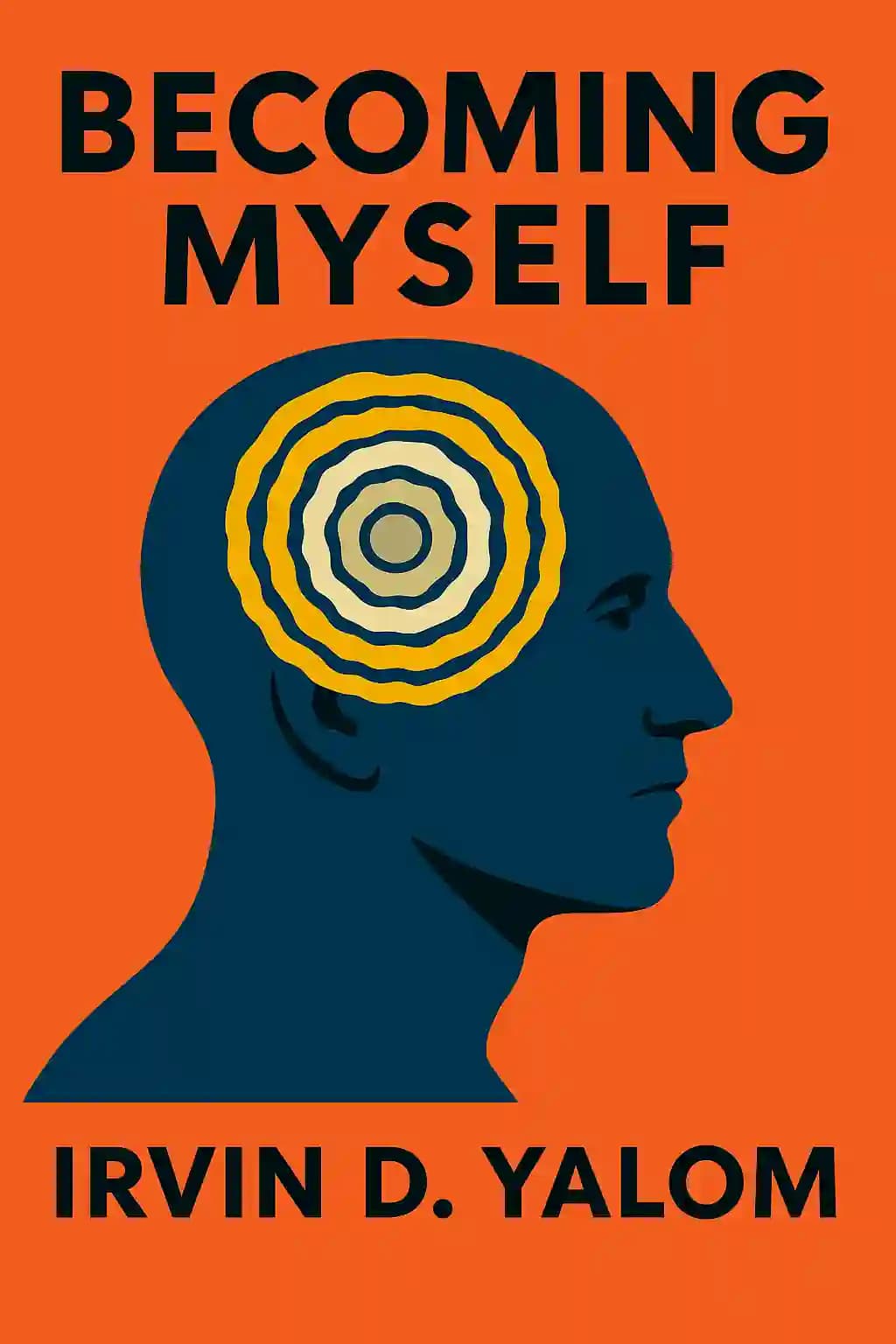
Irvin D. Yalom awakens at 3 a.m. from a dream that leaves him weeping. In it, he's a young boy cruelly greeting a girl with measles, only to be confronted by her father about his thoughtlessness. At 85, this dream resurrects a real childhood memory from 73 years earlier-a moment of callousness he never forgot. This powerful opening to Yalom's memoir perfectly captures his lifelong journey: a brilliant psychiatrist whose work has always centered on empathy, human connection, and confronting the deepest existential truths that shape our lives.
As one of the most influential psychotherapists of our time, Yalom's books have sold millions of copies worldwide and been translated into dozens of languages. His novel "When Nietzsche Wept" was named Vienna's book of the year in 2009, with 100,000 free copies distributed throughout the city. What makes his work so compelling is how he weaves profound psychological insights with literary storytelling, creating what The New York Times called "an unusually transparent account of a therapist's inner world." Through his writings, Yalom has transformed how countless therapists approach their practice, emphasizing authentic human connection over clinical detachment.
第2章
The Search for Mentorship in a World of Isolation
Growing up as the son of Russian-Jewish immigrants in a poor Washington D.C. neighborhood, young Irvin felt perpetually out of place-the only white child in a Black neighborhood, the only Jewish boy in a Christian world. His parents, while dedicated to his education, remained emotionally distant figures who spoke Yiddish to each other but not to him, keeping their past lives in Russia shrouded in mystery. This early experience of cultural and emotional isolation shaped Yalom's lifelong fascination with human connection.
"I had a recurring daydream about being 'rescued' by an influential mentor," Yalom confesses, describing a fantasy where someone would recognize his potential and guide his development. This yearning for mentorship appears throughout his life and writings, even in his novel about Spinoza. The absence of such guidance led him to become essentially self-created, reading voraciously and educating himself without direction.
This early isolation paradoxically prepared Yalom for his future role as a therapist. When working with patients like Michael, a prize-winning physicist plagued by "wave after wave of anxious self-doubting" despite his achievements, Yalom recognizes the familiar pattern of someone who had to create himself without adequate mentoring. He describes such people as "lilies growing in a swamp-beautiful flowers but no deep roots," understanding their struggle from the inside out.
Years later, watching a play called "Venus in Fur," Yalom weeps at a scene where an actress's brilliance is finally recognized by someone who truly sees her-his own childhood fantasy enacted on stage. This emotional response reveals how deeply the search for recognition and mentorship had been woven into his psychological makeup, influencing both his personal development and his approach to therapy.
第3章
The Library: Gateway to a Larger World
At twelve, Yalom convinced his parents to buy him an American Flyer bicycle by promising to use it to visit Washington's Central Library. Though his family rarely indulged in "frivolities," anything connected to education received their enthusiastic support. Every Saturday, he would ride forty minutes each way to exchange six books for new ones, developing his own education plan without guidance.
"The library became my sanctuary," Yalom recalls, "connecting me to a larger world of ideas while keeping me off the dangerous streets of our low-income neighborhood." The grand reception hall inspired awe in the young boy, though he was initially directed to the children's section. With characteristic determination, he developed a systematic approach to his reading, working through biographies alphabetically from Henry Armstrong (boxing champion) through Juan Belmonte (matador), Edward Jenner (who eliminated smallpox), and Genghis Khan.
This self-directed education formed the foundation of Yalom's intellectual life. Without mentors to guide him, books became his teachers. The library offered not just knowledge but escape-both physically from the dangers of his neighborhood and mentally from the constraints of his immigrant background. Each book pulled him further from his parents' world into one of ideas and possibilities.
Looking back, Yalom feels tenderness for "that lonely, determined boy who somehow educated himself without guidance or mentorship." This early experience of finding solace and direction in books foreshadowed his later career combining psychotherapy with literature, where he would draw as heavily from Tolstoy and Nietzsche as from Freud and Jung.
The library also represented freedom from the religious and cultural constraints of his upbringing. As a child who questioned kosher dietary laws and felt isolated by his Jewish identity, books offered a path to a world beyond these limitations-a world he would eventually inhabit as a renowned intellectual who bridged multiple disciplines.
第4章
Rebellion Against Religion and Cultural Constraints
Growing up Jewish offered Yalom no advantages-only anti-Semitic remarks from his barber who called him "Jew boy" and similar treatment from his gym teacher. He felt shame at Christmas when he lied about receiving presents and was caught between contradictory parental expectations: they wanted him educated and American, yet discouraged non-Jewish friendships.
His parents spoke Yiddish to each other but not to their children, remaining secretive about their lives in Russia and silent about the Holocaust. They never interrupted his reading, intuitively understanding that each book pulled him further from their world. As his Bar Mitzvah approached, Yalom became uncharacteristically disruptive in Sunday religious classes, asking irreverent questions until the rabbi expelled him.
"I couldn't (or wouldn't) learn Hebrew despite being an excellent student in all other subjects," he recalls. At the ceremony, his uncle had to chant the Haftarah in his place, and the rabbi held up transliterated cue cards for him to read the blessings. Looking back, he recognizes this as unconscious rebellion-not a language difficulty but a desperate attempt to escape his cultural constraints.
His rebellion extended to kosher dietary laws, which he found ridiculous and isolating. "Even as a young teen, I questioned how God could care about drugstore knives with molecules of ham when the universe was so vast," he writes. He began eating non-kosher hamburgers on his way to Hebrew lessons-his first act of dietary defiance.
This early questioning of religious dogma laid the groundwork for Yalom's later embrace of existential philosophy. He came to view religions as "the world's longest-running con game that infantilizes people while providing comfort against death fears." His childhood experiences taught him to look beyond cultural and religious frameworks for deeper truths about human existence-a perspective that would later inform his groundbreaking work in existential psychotherapy.
Despite this rejection of religious tradition, Yalom maintained a deep connection to his Jewish cultural identity. Throughout his career, he would explore themes of belonging, alienation, and the search for meaning that had roots in his complex relationship with his Jewish heritage.
第5章
Meeting Marilyn: A Life-Changing Partnership
At fifteen, Yalom's life transformed when he moved to a new neighborhood on Blagden Terrace, lined with sycamore trees and handsome homes filled with children his age. Rock Creek Park was just two blocks away with its creek, trails, and sports fields. He'd left behind the rats, roaches, crime, and anti-Semitic threats of his old neighborhood, never again needing to lie about where he lived.
Shortly after this move, his friend Louie suggested they go to a party at Marilyn Koenick's house. Being shy, Yalom nearly retreated when they saw the crowded porch, but Louie convinced him to crawl through a window. Inside stood a petite, vivacious girl with long light brown hair at the center of attention.
"Overcoming my shyness, I approached her and blurted, 'Hi, I'm Irv Yalom and I just crawled in through your window,'" he recalls. "I felt an immediate conviction she would play a crucial role in my life." The next day he made his first-ever phone call to a girl, inviting her to a movie. They bonded over their love of books-she had stayed up all night reading Gone with the Wind, and they exchanged recommendations, she introducing him to Jane Austen while he was on a Steinbeck binge.
After just a few dates, Yalom bet his cousin Jay thirty dollars he would marry her. Jay paid up on their wedding day. Marilyn became his true mentor, uniquely suited to "civilize and elevate" him. Her family background was similar enough to make him comfortable, yet different in important ways. Her father was also an immigrant who owned a grocery store, but he was more educated and romantic, loving opera and having traveled like his hero Walt Whitman.
"I was in awe when I heard her deliver her junior high valedictorian speech," Yalom writes. Though they had different interests-she loved French culture while he preferred science-their shared devotion to literature bound them together. This partnership would last over sixty years, with Marilyn becoming not just his wife but his intellectual companion and editor as he developed his career.
Their relationship demonstrates a central theme in Yalom's life: the transformative power of deep human connection. The boy who once felt isolated found in Marilyn someone who truly saw him and helped him become his best self-an experience he would later help countless patients discover in therapy.
第6章
College Years: Anxiety and Achievement
Unlike today's students with extensive college counseling resources, Yalom had virtually no guidance when choosing a college. When he received the Emma K. Karr Scholarship covering full tuition at George Washington University, his path was set. From day one, he was consumed by anxiety about medical school admission, knowing Jewish applicants faced a strict 5% quota.
"My strategy was singular: outwork everyone else to make grades so exceptional that medical schools would be forced to accept me," he explains. This approach was common among sons of Jewish immigrants, for whom medicine represented the ideal profession-"the joke being that Jewish males had two options: become a doctor or a failure."
His undergraduate experience was purely functional-an obstacle to overcome as quickly as possible. He opted for the accelerated three-year pre-med track, taking almost exclusively required science courses with only three literature electives. Living at home, he followed a brutal routine of constant studying, memorization, and all-night exam preparation.
During these years, Yalom suffered from debilitating anxiety-fingernails bitten to the quick, chest pressure, and severe insomnia requiring stolen Seconal from his parents' supply. He imagined what therapy might have been like, constructing a dialogue with his future self as therapist. In this imagined session, he recognizes his fanatical studying, sexual frustration, and fear of losing Marilyn as central issues.
"Though I wish I had started therapy then, psychotherapy was virtually unknown in my circle in the 1950s," he reflects. His only respite came during summers working as a camp counselor with Marilyn. Despite the grim academic experience, he found the content of his science courses fascinating, particularly organic chemistry. His three literature electives were his favorite classes, especially World Drama, where the only professor who ever knew his name praised his writing and asked if he'd considered a career in humanities.
This period reveals the intense pressure Yalom placed on himself to succeed-pressure born from both external circumstances (the medical school quotas) and internal drive. The anxiety that plagued him during these years would later inform his deep understanding of patients' suffering and his compassionate approach to therapy.
第7章
From Medical School to Psychiatric Practice
After completing his undergraduate degree, Yalom began medical school at Boston University. During his psychiatric practicum at Boston City Hospital, he was required to see a patient weekly for twelve weeks. Dreading the brutal faculty critiques he'd witnessed, he abandoned the formal presentation structure and simply told the story of his eight sessions with Muriel, a young lesbian who sought help at their clinic.
When she first revealed her sexuality, Yalom admitted his ignorance and asked her to educate him. "This honesty created trust-I was the first male to whom she had revealed her true self," he recalls. Their therapeutic relationship deepened as they discussed her problems with her lover as they would any human relationship.
After his presentation, he braced for criticism but was met with silence. Finally, the department chairman and an eminent analyst agreed his presentation spoke for itself. He left thinking he might have something special to offer the field-an insight that would guide his future approach to therapy.
During his internship at Mount Sinai Hospital in New York, Yalom worked every other night and weekend for a year. Though his internship offered no psychiatry rotation, he attended psychiatric presentations whenever possible and volunteered for an LSD experiment studying subliminal perception. The researchers later gave him remaining LSD vials, which he occasionally used, noting profound sensory changes that differed from schizophrenic symptoms-observations he published in his first medical article.
At Johns Hopkins for his psychiatric residency, Yalom gravitated toward Jerome Frank's empirical approach while also attending analytic conferences. Under Frank's mentorship, he discovered his passion for group therapy, seeing it as a unique setting for interpersonal growth through honest feedback. Feeling overwhelmed by competing theories, he found clarity in Rollo May's book "Existence," which introduced him to existential thought and offered an alternative to psychoanalytic and biological models.
These formative experiences shaped Yalom's distinctive approach to therapy-one that valued honest human connection over rigid theoretical frameworks and that integrated existential philosophy with practical clinical techniques.
第8章
Stanford and the Development of Group Therapy
When Yalom arrived at Stanford University in 1962, department chairman David Hamburg granted him almost total freedom to pursue his clinical, teaching, and research interests. For fifteen years, he immersed himself in group therapy as clinician, teacher, researcher, and textbook author, leading therapy groups that psychiatric residents observed through a two-way mirror.
His leadership style evolved toward greater transparency-asking patients to call him "Irv" instead of "Dr. Yalom" and eventually abandoning his white coat. He pioneered an unusual experiment in transparency: after each session, he dictated extensive summaries including his reflections and regrets, then mailed copies to all group members.
"Though this practice required significant time and self-exposure-and few therapists followed suit-I found it consistently beneficial," Yalom notes. His freedom from formal analytic training, negative experience with an inexpressive analyst, and Stanford's experimental atmosphere all contributed to his willingness to innovate.
Over time, he developed an innovative group therapy training program for psychiatry residents. When residents initially resisted observing his therapy sessions, he transformed this challenge by having group members and students switch places at session's end-allowing patients to observe his discussions with students, then having patients discuss their observations of the observers.
Since university faculty must "publish or perish," Yalom conducted research on the outpatient groups, examining patient preparation, group composition, early dropouts, and therapeutic factors-all of which informed his comprehensive textbook "The Theory and Practice of Group Psychotherapy," which would eventually sell over one million copies and transform his financial situation.
His approach to group therapy emphasized what he called the "social microcosm"-the idea that patients' interpersonal problems would be recreated in the group, offering opportunities for learning and change. His research confirmed that patients effectively prepared for group therapy fared much better than those who weren't, a finding that influenced group therapy practice worldwide.
第9章
Confronting Death: The Heart of Existential Therapy
After reading extensively in philosophy, Yalom began working on a book to bring existential ideas into psychotherapy. He dedicated four morning hours daily to reading and note-taking before seeing patients. Death preoccupied him-he had recurring nightmares about deceased relatives and had always believed he would die at 69 like his father.
Concluding that confronting death would be central to existential therapy, he shifted his clinical practice to work with terminal cancer patients. Finding that cancer patients were profoundly isolated in their experience, he created therapy groups for them despite initial resistance from oncologists.
"Paula West, a woman with metastatic breast cancer who faced her condition with extraordinary grace, became pivotal in my work," Yalom writes. She helped him form a group for women with breast cancer, opening the first session with a Hasidic tale about people in Hell unable to feed themselves with long-handled spoons, while those in Heaven used the same spoons to feed each other.
The group provided profound education about facing mortality with meaning. One woman transformed after deciding to model for her children how to face death with courage. Unlike traditional therapy groups, these patients welcomed student observers, eager to share what confronting death had taught them about living.
As his work with cancer patients deepened, so did Yalom's own death anxiety. Looking back at all his previous therapies, he realized death had never been discussed in any of them. Needing guidance to continue working with dying patients, he sought therapy with Rollo May, author of "Existence."
"Though Rollo was twenty-two years older and closer to death himself, he never flinched from accompanying me into these dark inquiries," Yalom recalls. Gradually, he became more comfortable working with dying patients, for which he remained deeply grateful to May. Their therapeutic relationship eventually evolved into a close friendship, and Yalom was present when May died, sitting beside him as he took his final breath.
This work with dying patients formed the foundation of Yalom's existential approach to therapy, captured in his phrase: "Though death's reality destroys us, the idea of death can save us by helping us live more fully with fewer regrets."
第10章
From Academic Writing to Storytelling
Looking back over his career's arc, Yalom traces his transition from academic writing to more accessible storytelling to a strange book published in 1974 called "Every Day Gets a Little Closer." The project began when he proposed an unusual arrangement with Ginny Elkins, a Stanford creative writing fellow who couldn't afford therapy after leaving his group. He waived her fee in exchange for them both writing summaries after each session describing their unspoken thoughts and feelings.
Their exchanges revealed strikingly different perspectives on the same sessions; she often missed his "brilliant" interpretations while valuing small personal gestures he barely noticed. When he showed these writings to his psychiatry students, they were fascinated by their different viewpoints. Marilyn suggested publishing them as a book, which they did in 1974, splitting royalties with Ginny.
"Writing the foreword in a quiet hospital file room marked a critical turning point in my writing-abandoning academic language for a more lyrical voice while exploring themes of transience," Yalom reflects. This shift toward storytelling would define the rest of his career, culminating in works like "Love's Executioner," a collection of therapy stories that became a bestseller.
In 1987, during a sabbatical year, Yalom resolved to elevate storytelling as his primary teaching vehicle. While exploring an abandoned Catholic church in Shanghai, he sat in a confessional booth and experienced an extraordinary creative breakthrough-the entire plot of "Three Unopened Letters" revealed itself to him. With no paper available, he scribbled the essentials in his passport, creating the first story of what would become "Love's Executioner."
In Bali, he rented an exotic open-air house and experienced the uncanny sensation of stories writing themselves, "listening to characters speaking to one another even while strolling arm-in-arm with my wife." Without distractions, he wrote four stories in just two months, carefully disguising patient identities by altering their appearances, occupations, ages, nationalities, and sometimes even gender.
This turn toward storytelling allowed Yalom to reach a much broader audience, bringing his psychological insights to readers who might never pick up an academic textbook. Through narrative, he could convey the emotional truth of therapy in ways that theoretical writing never could.
第11章
The Gift of Therapy: A Return to Human Connection
Rilke's "Letters to a Young Poet" had long inspired Yalom to write something similar for therapists, but he couldn't find the right structure until visiting the Huntington Gardens in 1999. There, an exhibition on bestsellers from the English Renaissance revealed that six of the ten 16th century bestsellers were books of "tips." This sparked immediate inspiration-he would write a book of tips for young therapists.
Drawing from his long-maintained "Thoughts for teaching" file, he wrote 84 tips (later expanded to 95) organized into five clusters covering the therapeutic relationship, existential concerns, practical therapy issues, dream work, and the privileges of being a therapist. He wrote the book to counter the trend toward brief, manualized, problem-solving approaches driven by economic pressures and psychiatry's overreliance on medications, emphasizing instead the human relationship at therapy's core.
Yalom emphasizes provocative approaches counter to behavioral training: "Avoid Diagnosis," "Create a New Therapy for Each Patient," "Let the Patient Matter to You," "Blank Screen? Forget It. Be Real." One of his favorite clinical stories illustrates empathy through a woman who had a lifelong bitter relationship with her father. During a college drop-off trip, they argued about a garbage-littered creek-she saw a beautiful stream while he complained about pollution. Years later, as the driver on the same route, she realized there were two different streams on opposite sides of the road, and her father had been right about his view. But by then he was dead, teaching the vital lesson: "Look out the patient's window. Try to see the world as the patient sees it."
In the final tip, Yalom explains why he continues practicing at 85-his work provides profound meaning through service to others. "We are privileged as 'cradlers of secrets,' entrusted with intimate truths never before shared, giving us a backstage view of the human condition without social pretense," he writes. These secrets sometimes "scorch me" and make him appreciate his own life more deeply.
Recently, Yalom recognized a significant omission in his professional writing-he'd never used the words "love" or "compassion" despite their central importance to effective therapy. He illustrates this through a case with a cancer patient named Joyce, where his honest self-disclosure transformed their therapeutic relationship into one of genuine compassion and healing.
第12章
A Novice at Growing Old: Reflections at Eighty-Five
As a child, Yalom was always the youngest in every group, but now he finds himself the oldest person wherever he goes. At Stanford conferences, he no longer lectures with slides-in fact, he's never made or used a slide in his life! Instead, he's interviewed about his work, which feels comfortable, though the audience applause sometimes feels like a farewell.
"I continue seeing patients not for money but because I love the privilege of entering people's intimate lives," he explains. He's adapted to aging by doing time-limited therapy (maximum one year per patient) and seeing only three patients daily, with careful notes to combat his fading memory. The memory lapses are troubling-forgotten keys, names, and facts haunt him daily. Yet memory loss has one benefit: he can reread favorite books with fresh pleasure.
Yalom finds comfort in what he calls "rippling"-the concentric circles of influence we create that continue beyond our lives, especially through his children and grandchildren. Like his patient Howard, the hedge fund manager who can't stop working despite his wealth, he struggles with retirement. Though he's lived a privileged life, he's still haunted by his beginnings, feeling unexpected tenderness for his immigrant mother when seeing photos resembling her.
He writes every morning and sees patients in the afternoons, splitting time between Palo Alto and San Francisco. With few regrets about his extraordinary life, he echoes Nietzsche: "Was that life? Well then once again!"
This reflection on aging reveals Yalom's continued commitment to growth and self-understanding even in his eighties. The boy who once felt isolated and unseen has become a widely beloved figure whose work has touched millions, yet he maintains the humility to see himself as still learning-still a "novice" at this final stage of life.
His journey from the Washington D.C. slums to international recognition as a healer and writer embodies the very existential principles he taught: creating meaning through work and love, confronting mortality with courage, and embracing the freedom to shape one's own life despite the anxiety it brings. Through it all, his fundamental message remains consistent-that genuine human connection is both our greatest challenge and our greatest source of healing.