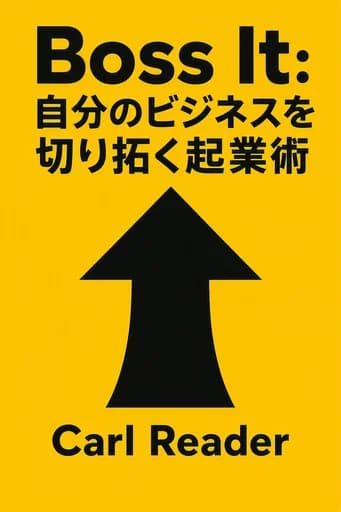
"Boss It" transforms entrepreneurial dreams into reality with practical, award-winning guidance. Winner of the 2021 Independent Press Awards, this hands-on manual distills complex business concepts into actionable steps. What separates successful entrepreneurs from dreamers? The answer might surprise you.
Carl Reader, WH Smith bestselling author of Boss It, is a serial entrepreneur and business commentator renowned for his pragmatic approach to entrepreneurship. His book blends actionable strategies for small business owners with insights on mindset and leadership, reflecting his 25+ years of experience scaling ventures—from acquiring an accounting firm at 23 to co-founding a nationally recognized football club.
A former Chair of ACCA’s Practitioners Panel and 2016 City AM Top 100 Entrepreneur, Reader combines实战经验 with advisory roles for governments, Olympic bodies, and global brands.
He amplifies his expertise through a Substack newsletter, keynote speeches, and prior works like The Start-Up Coach and The Franchising Handbook. Recognized for democratizing business wisdom, Reader’s no-nonsense style resonates with those averse to traditional self-help tropes.
Boss It anchors his broader mission to equip entrepreneurs with tools for sustainable growth, distilling lessons from his advisory firm d&t and collaborations with organizations like the British Franchise Association. The book has cemented his status as a go-to resource for first-time founders and seasoned business leaders alike, available globally through retailers like WH Smith and Amazon.
Boss It by Carl Reader is a practical guide for entrepreneurs, covering mindset development, business planning, and scaling strategies. It’s structured into three parts: mastering the entrepreneurial mindset, actionable steps to launch/run a business, and systems for sustainable growth. The book emphasizes turning ideas into actionable plans while balancing personal values with professional goals.
Aspiring entrepreneurs, new business owners, and SMEs seeking scalable strategies will benefit most. The book is ideal for those transitioning from traditional employment or aiming to systemize their operations. Carl Reader tailors advice to individuals prioritizing time freedom and long-term business autonomy.
Yes—Boss It combines motivational insights with tactical frameworks, including templates and case studies. It’s praised for demystifying entrepreneurship jargon and offering actionable steps for market research, funding, and operational efficiency. Readers gain tools to align their business with personal definitions of success.
Carl Reader highlights resilience, adaptability, and a growth mindset as critical traits. He argues that embracing failure as a learning tool and maintaining curiosity are essential. The book also stresses balancing risk-taking with strategic planning to sustain motivation during challenges.
The book recommends bootstrapping, outsourcing non-core tasks, and securing strategic funding. Reader emphasizes building repeatable systems for inventory, customer acquisition, and team management. He also advises focusing on metrics that align with long-term vision rather than short-term gains.
Key advice includes optimizing supply chains, automating order fulfillment, and ensuring legal/tax compliance. Reader provides frameworks for cost reduction without sacrificing quality and stresses the importance of clear operational workflows to support scalable growth.
Success is framed as aligning your business with personal values, achieving time freedom, and creating a self-sustaining operation. Reader encourages setting “big enough” goals to maintain motivation while ensuring relevance to stakeholders like employees and customers.
A standout quote: “Your dream should be big enough to keep you motivated, relevant to your values, and understandable to your team.” This underscores the book’s theme of marrying ambition with practicality.
Unlike theoretical guides, Boss It blends mindset coaching with step-by-step operational tactics. It’s closer to a workbook than a memoir, with templates for business planning and growth—making it ideal for hands-on learners.
Yes—it addresses common transition challenges, like shifting from structured environments to self-directed work. Reader provides frameworks for validating business ideas, managing uncertainty, and building resilience during the entrepreneurial journey.
The book focuses heavily on SME and solo entrepreneurship, offering less for corporate innovators. Some may find its bootstrapping emphasis at odds with venture capital-driven growth models, though this aligns with Reader’s advocacy for business autonomy.
Reader prioritizes designing businesses that serve personal lifestyles, not just financial goals. Techniques include delegating repetitive tasks, setting boundaries, and aligning business systems with desired time allocation—ensuring entrepreneurship enhances life quality.
著者の声を通じて本を感じる
知識を魅力的で例が豊富な洞察に変換
キーアイデアを瞬時にキャプチャして素早く学習
楽しく魅力的な方法で本を楽しむ
Business isn't difficult-it's hard work, but not difficult.
Most self-employed individuals simply create their own rat race.
Every win and loss is yours, creating stress beyond imagination.
There's a certain magic in controlling your own destiny.
Success looks different for everyone.
『Boss It』の核心的なアイデアを分かりやすいポイントに分解し、革新的なチームがどのように創造、協力、成長するかを理解します。
鮮やかなストーリーテリングを通じて『Boss It』を体験し、イノベーションのレッスンを記憶に残り、応用できる瞬間に変えます。
何でも質問し、学習スタイルを選び、自分に本当に響くインサイトを一緒に作れます。

"Instead of endless scrolling, I just hit play on BeFreed. It saves me so much time."
"I never knew where to start with nonfiction—BeFreed’s book lists turned into podcasts gave me a clear path."
"Perfect balance between learning and entertainment. Finished ‘Thinking, Fast and Slow’ on my commute this week."
"Crazy how much I learned while walking the dog. BeFreed = small habits → big gains."
"Reading used to feel like a chore. Now it’s just part of my lifestyle."
"Feels effortless compared to reading. I’ve finished 6 books this month already."
"BeFreed turned my guilty doomscrolling into something that feels productive and inspiring."
"BeFreed turned my commute into learning time. 20-min podcasts are perfect for finishing books I never had time for."
"BeFreed replaced my podcast queue. Imagine Spotify for books — that’s it. 🙌"
"It is great for me to learn something from the book without reading it."
"The themed book list podcasts help me connect ideas across authors—like a guided audio journey."
"Makes me feel smarter every time before going to work"

Boss Itの要約をPDFまたはEPUBで無料でダウンロード。印刷やオフラインでいつでもお読みいただけます。
Imagine waking up to the realization that you've traded a 9-to-5 job for an 80-hour workweek with no guaranteed income. Welcome to the unvarnished truth of entrepreneurship. While 1 in 7 people in the UK are now self-employed, the journey is far from the Instagram-worthy lifestyle of rented Lamborghinis and passive income streams. The real path involves countless unpaid hours, emotional rollercoasters, and financial uncertainty. That plumber charging $80 per hour? They're likely only billing three hours in an eight-hour workday, effectively halving their rate when accounting for travel, marketing, and administration. Studies reveal that 82% of small business owners overestimate their first-year revenue by a staggering 42%. This optimism bias is both necessary - who would leave stable employment without it? - and potentially dangerous when it leads to cash flow crises. The emotional toll is equally significant: one day you're celebrating landing a major client, the next you're handling a crisis that threatens everything you've built. Your personal and professional lives merge completely, with business challenges dominating dinner conversations and vacations interrupted by emergency calls. Yet despite these hardships, there's an undeniable magic in controlling your own destiny. Even through struggle, you feel energized because you're moving toward what Maslow called self-actualization - becoming everything you're capable of becoming. This profound sense of purpose often compensates for the longer hours and increased stress.
Successful businesses don't require revolutionary inventions, wealthy founders, or perfect timing. They simply follow four essential steps in continuous rotation: Dream (creating a compelling vision), Plan (developing actionable structures), Do (taking consistent action), and Review (evaluating progress). Most failures occur when owners neglect one of these areas - particularly the "Do" phase. Many entrepreneurs engage in "creative avoidance," perfecting logos instead of making sales calls or endlessly revising business plans rather than engaging with customers. Despite media fascination with "unicorns," most successful businesses thrive through consistent execution, not revolutionary ideas. Before setting business goals, reflect deeply on your personal definition of success. Is it material wealth or having time for family? Excellence in one area often comes at the expense of others. When entrepreneurs follow perceived societal expectations instead of creating authentic visions aligned with personal values, they risk pursuing conflicting goals. You cannot build a multi-million-pound empire while maintaining a 20-hour workweek - such contradictions prevent success.
A strong business plan guides daily decisions, not just attracts investors. Traditional planning fails by focusing on concept validation and projections while neglecting implementation. Effective planning specifies actions, not just outcomes. Begin with words before numbers to avoid becoming a "spreadsheet millionaire" who uses projections to justify their business emotionally. The planning process provides more value than the final document. Despite motivational advice against "Plan B," responsible entrepreneurs need backup plans to protect stakeholders. After confirming market fit and making initial sales, resist immediate growth. This is when you should build proper systems. Without them, more customers creates chaos - missed emails, unanswered calls, unpaid suppliers. Your business requires five key systems: lead generation (marketing), lead conversion (sales), operations, human resources, and financials. For each, identify limited key performance indicators to maintain focus. While systems begin in your mind, scaling requires documenting this intellectual property for others to follow. Effective processes must be efficient, complete, and clear. McDonald's exemplifies this - they transformed restaurants through systematization, allowing teenagers to run shifts because every process is documented and simplified.
In any business, success hinges on finding and keeping customers. Without consistent customer flow, strategic decisions become impossible, creating "feast-or-famine" cycles. Many owners mistakenly believe in "magic bullets" like self-promoting websites or products that sell themselves-approaches that consistently fail. Before selecting marketing tactics, define your ideal customer comprehensively. Go beyond demographics to understand their lifestyle, values, and media consumption habits to craft resonant messages. Every business has a target market. Major retailers like Waitrose and Poundland know exactly who their customers are while still accepting business from others. A clear customer definition helps focus limited marketing resources effectively. Market research ensures alignment between your offerings and customer wants. When analyzing competitors, avoid technical bias and view competition objectively. Remember that competition includes all alternatives-a Vietnamese restaurant competes with all dining options, including other cuisines and even grocery delivery. Create a simple monthly marketing plan tracking activities, themes, budgeted and actual spend, metrics, results, and ROI. This structure accommodates seasonal promotions while tracking what works rather than what merely feels good.
A scalable business operates independently of its owner, with no bottlenecks, systems that anticipate growth, and staff who embrace the company's growth journey. Before scaling, reconsider your vision. While startups focus on survival, scaling requires business transformation that impacts your personal life, work-life balance, health and relationships. Your role will evolve from doing the work to management to executive leadership. Research shows 50% of founders are replaced as CEO within three years, and fewer than 25% lead their companies to IPO. Define the difference you want to make, your ideal business size, and your personal end goal. Without a clear vision, securing funding or team commitment becomes difficult.
People represent both the greatest reward and challenge in business. Team building follows no definitive rulebook, yet staffing errors can devastate growth. Most companies hire reactively when overwhelmed, prioritizing skills over attitude, using arbitrary standards, and hiring quickly while firing slowly. Successful recruitment requires foresight. Create an organization chart mapping future positions your business might need, then develop detailed job descriptions with clear responsibilities, qualifications, reporting structures, and performance indicators. Leadership is the one aspect of scaling that depends entirely on your performance - there's nowhere to hide. While "culture eats strategy for breakfast," both elements are vital and interconnected. Effective culture must be deliberately designed, not allowed to emerge randomly. Your behavior as a leader impacts everyone. Hire specialists better than you in their domains and learn from them. Maintain a helicopter view while challenging assumptions by asking why processes can't improve tenfold. Keep communication simple - if you can't explain something to an eight-year-old, the concept isn't clear enough.
Building a business is perhaps the most challenging yet rewarding journey you'll ever undertake. It will test your resilience, challenge your assumptions, and transform you through both defeats and victories. The path isn't about following others' definitions of success - it's about creating something meaningful that aligns with your values. Whether you build a global enterprise or a lifestyle business that supports your family while providing freedom, what matters is that your business serves your life rather than consuming it. Entrepreneurship isn't avoiding having a boss - it's answering to everyone: customers, employees, suppliers, and family. In return, you gain the ability to create your own destiny, build something from nothing, and make an impact beyond yourself. Though difficult, there's no more fulfilling way to spend your professional life.