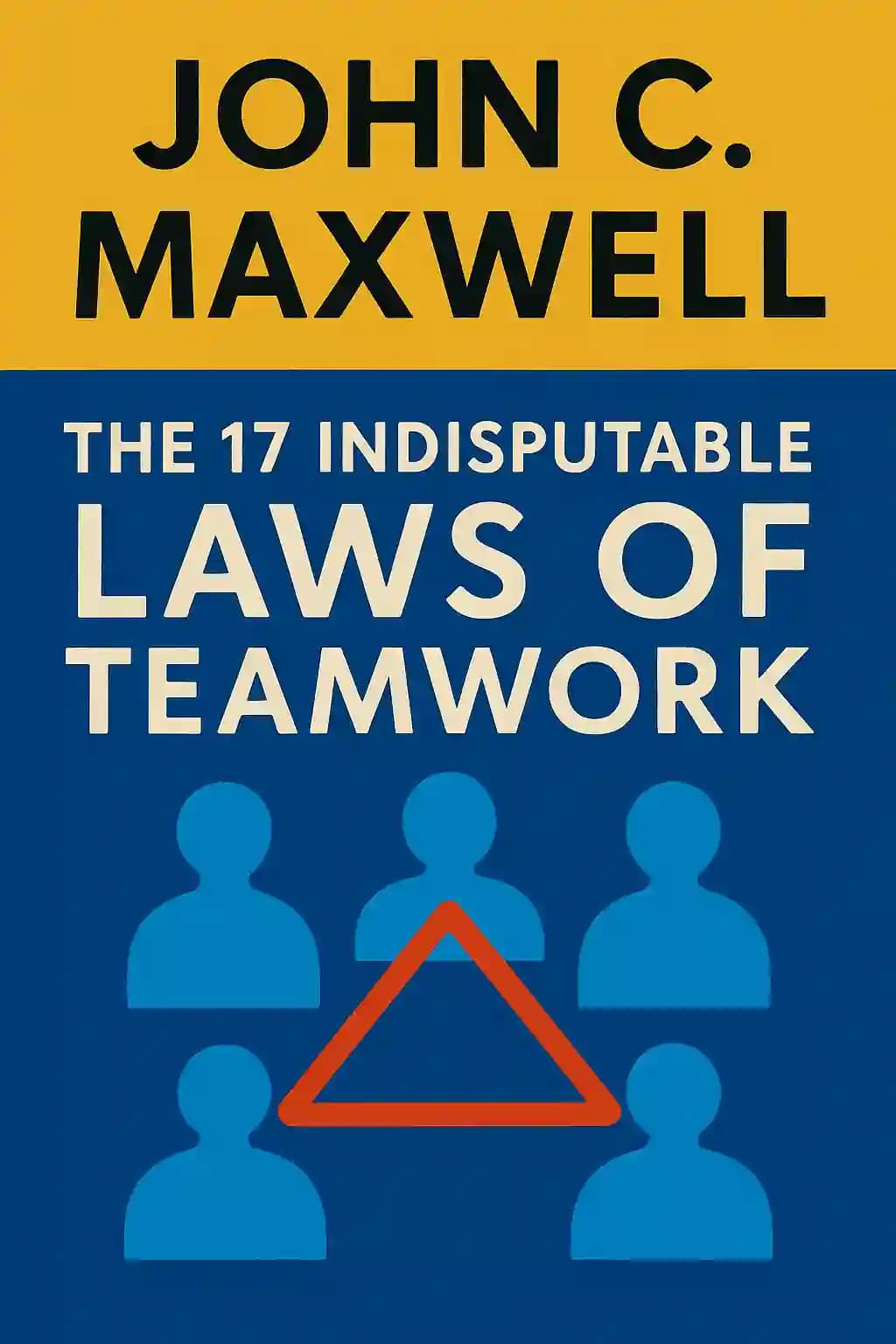
The 17 Indisputable Laws of Teamwork
Embrace Them and Empower Your Team
Overview of The 17 Indisputable Laws of Teamwork
Transform any group into a powerhouse with "The 17 Indisputable Laws of Teamwork." John Maxwell's leadership classic has shaped Fortune 500 strategies and sports dynasties alike. Did you know one principle helped a company survive the dot-com crash? Your team's potential awaits.

Key Themes in The 17 Indisputable Laws of Teamwork
- collective achievement
- complementary strengths
- shared vision
- collaborative culture
- organizational synergy
Quotes from The 17 Indisputable Laws of Teamwork
There are no problems we cannot solve together.
Significant achievements require collaboration.
The goal is more important than any individual role.
Values function as glue.
Characters in The 17 Indisputable Laws of Teamwork
- John C. MaxwellAuthor and leadership expert
- Lilly TartikoffAdvocate who built teams for cancer research
- Dr. Denny SlamonOncologist and breast cancer researcher
- Ronald PerelmanRevlon CEO who provided research funding
About the Author
About the Author of The 17 Indisputable Laws of Teamwork
John C. Maxwell, bestselling author of The 17 Indisputable Laws of Teamwork, is a globally recognized leadership expert and authority on organizational development. A New York Times #1 bestselling author with over 24 million books sold in 50 languages, Maxwell founded EQUIP, a nonprofit that has trained millions of leaders across 177 countries.
His work blends practical insights with decades of experience as a pastor, Fortune 500 advisor, and speaker at institutions like West Point and the United Nations.
Known for seminal works like The 21 Irrefutable Laws of Leadership and Developing the Leader Within You, Maxwell’s writing focuses on actionable strategies for building effective teams and fostering personal growth. His principles are applied by organizations worldwide, from NFL teams to multinational corporations. The 17 Indisputable Laws of Teamwork distills his core philosophy that intentional leadership drives collective success. The book has been a staple in leadership curricula and corporate training programs since its publication.
Download Summary of The 17 Indisputable Laws of Teamwork
Get the The 17 Indisputable Laws of Teamwork summary as a free PDF or EPUB. Print it or read offline anytime.
FAQs About This Book
John C. Maxwell’s The 17 Indisputable Laws of Teamwork outlines universal principles for building high-performing teams, emphasizing collaboration over individual effort. Key laws include the Law of Significance (teamwork is essential for greatness) and the Law of the Big Picture (team goals supersede individual roles). The book blends leadership theory with actionable strategies, using real-world examples from business, sports, and community organizations.
Leaders, managers, coaches, and anyone involved in team-based environments—whether corporate, athletic, or nonprofit—will benefit from this book. It’s particularly valuable for those seeking to improve communication, resolve conflicts, or align team roles with organizational objectives. Maxwell’s practical advice applies to both emerging and seasoned leaders.
Yes. The book’s principles, like the Law of the Niche (assigning roles based on strengths) and the Law of the Chain (addressing weak links), provide timeless strategies for team success. Its blend of anecdotes, self-assessment questions, and clear frameworks makes it a actionable guide for fostering collaboration.
- Law of Significance: No individual can achieve greatness alone.
- Law of the Big Picture: Prioritize team objectives over personal agendas.
- Law of the Niche: Place members in roles where they excel.
- Law of the Chain: A team’s strength depends on its weakest member.
Maxwell defines teamwork as a coordinated effort where members subordinate personal goals to achieve a shared vision. He stresses that successful teams require trust, complementary skills, and leaders who empower others—captured in laws like The Law of the Catalyst (effective leaders drive team momentum).
While 21 Laws focuses on individual leadership traits, 17 Laws shifts to collective dynamics, explaining how leaders cultivate synergy. Both books use Maxwell’s signature storytelling, but 17 Laws adds tools like role alignment and conflict resolution specific to teams.
Absolutely. Principles like the Law of Communication (transparent dialogue) and Law of the Scoreboard (tracking progress) are critical for remote teams. Maxwell’s emphasis on trust and clarity translates well to virtual environments, making the book relevant for modern workplaces.
The Law of the Big Picture is foundational: teams fail when members prioritize personal status over shared goals. Maxwell illustrates this with examples from business and sports, showing how alignment around a vision drives success.
Some critics argue the laws are overly abstract without granular implementation steps. However, Maxwell counters this with workbook-style exercises and case studies, allowing readers to adapt principles to their specific contexts.
He introduces the Law of the Bad Apple, urging leaders to address toxic behavior swiftly. Maxwell also advocates for the Law of the Edge—finding competitive advantages through healthy debate—to turn conflicts into opportunities for growth.
- “One is too small a number to achieve greatness.”
- “The team must understand where it’s going before it can decide how to get there.”
- “The wrong person in the wrong place = regression.”
With rising reliance on cross-functional and global teams, Maxwell’s laws address modern challenges like collaboration across time zones and diverse workstyles. The Law of the Bench (developing backups for key roles) is especially critical in today’s fast-paced, talent-driven markets.