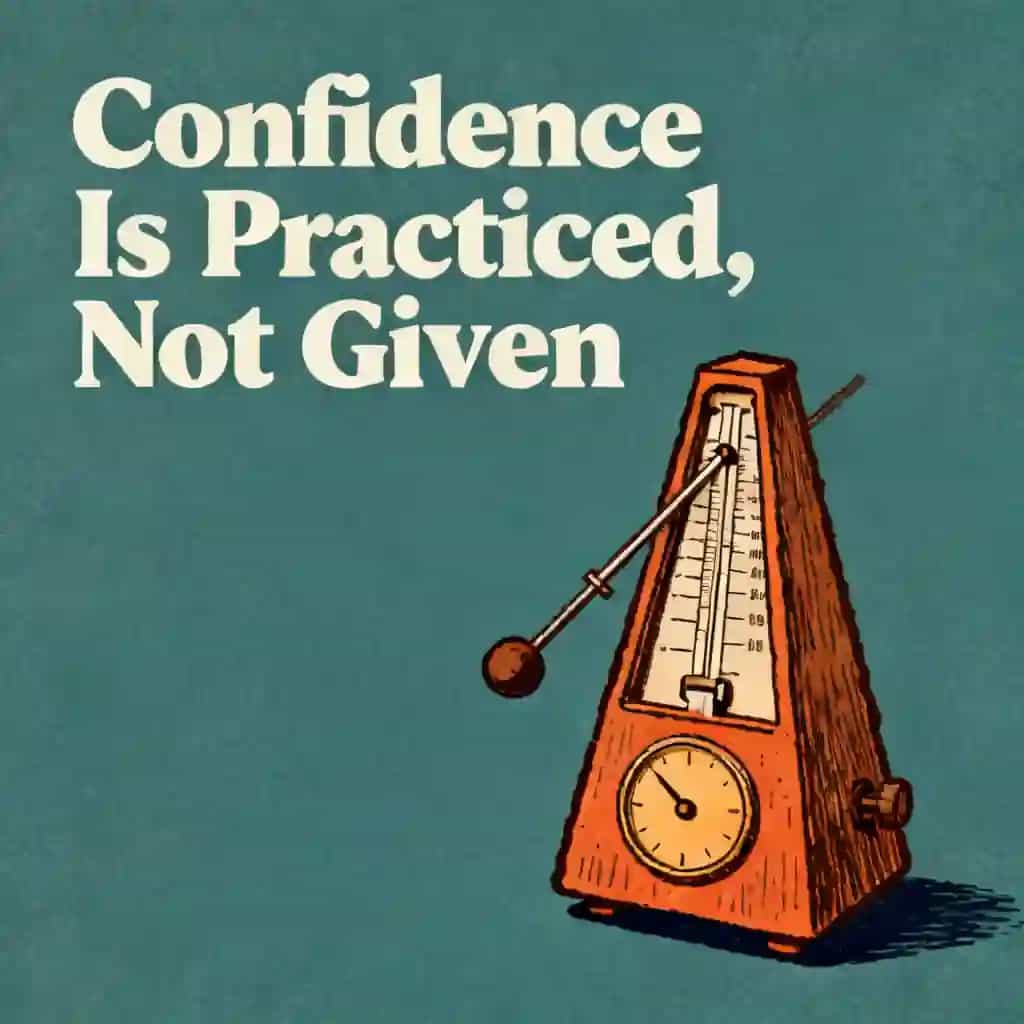
Building Confidence is a Skill You Can Learn
Feeling stuck when you speak English isn't a personality trait. Learn how to reframe your inner critic and use micro-wins to speak with more power.

Miglior citazione da Building Confidence is a Skill You Can Learn
Confidence is a learnable skill, not a birthright. It is like a muscle that only grows when you put it under resistance and take action in the face of uncertainty.
Generated by Евгений Троцковец
The hosts welcome viewers to the Real English channel and invite them to subscribe. The topic of the podcast: How to be more confident. At the end, the hosts remind viewers to subscribe to the channel and leave a like, then say goodbye.

Domande frequenti
No, confidence is described as a learnable skill and a "muscle" rather than a birthright. The script explains that it is an "invisible engine" that grows when put under resistance, such as social interaction. Just like physical exercise, you can build real security through small, daily habits and consistent practice rather than waiting for a "magic spark" of natural bravery.
This happens because of "learned circuits" in the brain. According to Hebb’s Law, neurons that fire together wire together, meaning that if you frequently practice negative self-talk, your brain builds an efficient "high-speed highway" for those thoughts. Additionally, the brain’s "sociometer" is an evolved survival mechanism that tracks social acceptance; it often triggers a "fear brain" response to prevent us from being rejected by our "tribe," even when there is no actual danger.
You can manage physical anxiety through "embodied cognition," which is the practice of using your body to influence your mind. Techniques include "power posing" for two minutes to lower cortisol, or practicing diaphragmatic breathing to switch off the fight-or-flight response. The script also suggests the "5-4-3-2-1 technique" to ground yourself in the present moment and "mindful listening" to shift your focus from your own internal performance to the person you are speaking with.
The ABCDE method is a cognitive restructuring tool used to challenge negative beliefs. It involves identifying the Adversity (the situation), noticing your automatic Beliefs, and observing the emotional Consequences. You then move to Disputation, where you act as a "lawyer for your defense" to challenge the accuracy of those beliefs, and finally notice the Energization, or the shift in your mood once you adopt a more balanced, evidence-based perspective.
Micro-wins serve as a "proof portfolio" that provides your brain with objective evidence of your capability. Because the brain updates its self-concept based on facts rather than just positive thinking, achieving tiny goals—like asking one question in a meeting or making eye contact—releases dopamine and reinforces the belief that you are someone who gets things done. Over time, these small victories desensitize the brain to fear and build the competence necessary for lasting confidence.
Creato da alumni della Columbia University a San Francisco
"Instead of endless scrolling, I just hit play on BeFreed. It saves me so much time."


"I never knew where to start with nonfiction—BeFreed’s book lists turned into podcasts gave me a clear path."


"Perfect balance between learning and entertainment. Finished ‘Thinking, Fast and Slow’ on my commute this week."
"Crazy how much I learned while walking the dog. BeFreed = small habits → big gains."
"Reading used to feel like a chore. Now it’s just part of my lifestyle."

"Feels effortless compared to reading. I’ve finished 6 books this month already."
"BeFreed turned my guilty doomscrolling into something that feels productive and inspiring."

"BeFreed turned my commute into learning time. 20-min podcasts are perfect for finishing books I never had time for."
"BeFreed replaced my podcast queue. Imagine Spotify for books — that’s it. 🙌"

"It is great for me to learn something from the book without reading it."
"The themed book list podcasts help me connect ideas across authors—like a guided audio journey."
"Makes me feel smarter every time before going to work"
Creato da alumni della Columbia University a San Francisco
"Instead of endless scrolling, I just hit play on BeFreed. It saves me so much time."
"I never knew where to start with nonfiction—BeFreed’s book lists turned into podcasts gave me a clear path."
"Perfect balance between learning and entertainment. Finished ‘Thinking, Fast and Slow’ on my commute this week."
"Crazy how much I learned while walking the dog. BeFreed = small habits → big gains."
"Reading used to feel like a chore. Now it’s just part of my lifestyle."
"Feels effortless compared to reading. I’ve finished 6 books this month already."
"BeFreed turned my guilty doomscrolling into something that feels productive and inspiring."
"BeFreed turned my commute into learning time. 20-min podcasts are perfect for finishing books I never had time for."
"BeFreed replaced my podcast queue. Imagine Spotify for books — that’s it. 🙌"
"It is great for me to learn something from the book without reading it."
"The themed book list podcasts help me connect ideas across authors—like a guided audio journey."
"Makes me feel smarter every time before going to work"
"Instead of endless scrolling, I just hit play on BeFreed. It saves me so much time."
"I never knew where to start with nonfiction—BeFreed’s book lists turned into podcasts gave me a clear path."
"Perfect balance between learning and entertainment. Finished ‘Thinking, Fast and Slow’ on my commute this week."
"Crazy how much I learned while walking the dog. BeFreed = small habits → big gains."
"Reading used to feel like a chore. Now it’s just part of my lifestyle."
"Feels effortless compared to reading. I’ve finished 6 books this month already."
"BeFreed turned my guilty doomscrolling into something that feels productive and inspiring."
"BeFreed turned my commute into learning time. 20-min podcasts are perfect for finishing books I never had time for."
"BeFreed replaced my podcast queue. Imagine Spotify for books — that’s it. 🙌"
"It is great for me to learn something from the book without reading it."
"The themed book list podcasts help me connect ideas across authors—like a guided audio journey."
"Makes me feel smarter every time before going to work"
"Instead of endless scrolling, I just hit play on BeFreed. It saves me so much time."
"I never knew where to start with nonfiction—BeFreed’s book lists turned into podcasts gave me a clear path."
"Perfect balance between learning and entertainment. Finished ‘Thinking, Fast and Slow’ on my commute this week."
"Crazy how much I learned while walking the dog. BeFreed = small habits → big gains."
"Reading used to feel like a chore. Now it’s just part of my lifestyle."
"Feels effortless compared to reading. I’ve finished 6 books this month already."
"BeFreed turned my guilty doomscrolling into something that feels productive and inspiring."
"BeFreed turned my commute into learning time. 20-min podcasts are perfect for finishing books I never had time for."
"BeFreed replaced my podcast queue. Imagine Spotify for books — that’s it. 🙌"
"It is great for me to learn something from the book without reading it."
"The themed book list podcasts help me connect ideas across authors—like a guided audio journey."
"Makes me feel smarter every time before going to work"