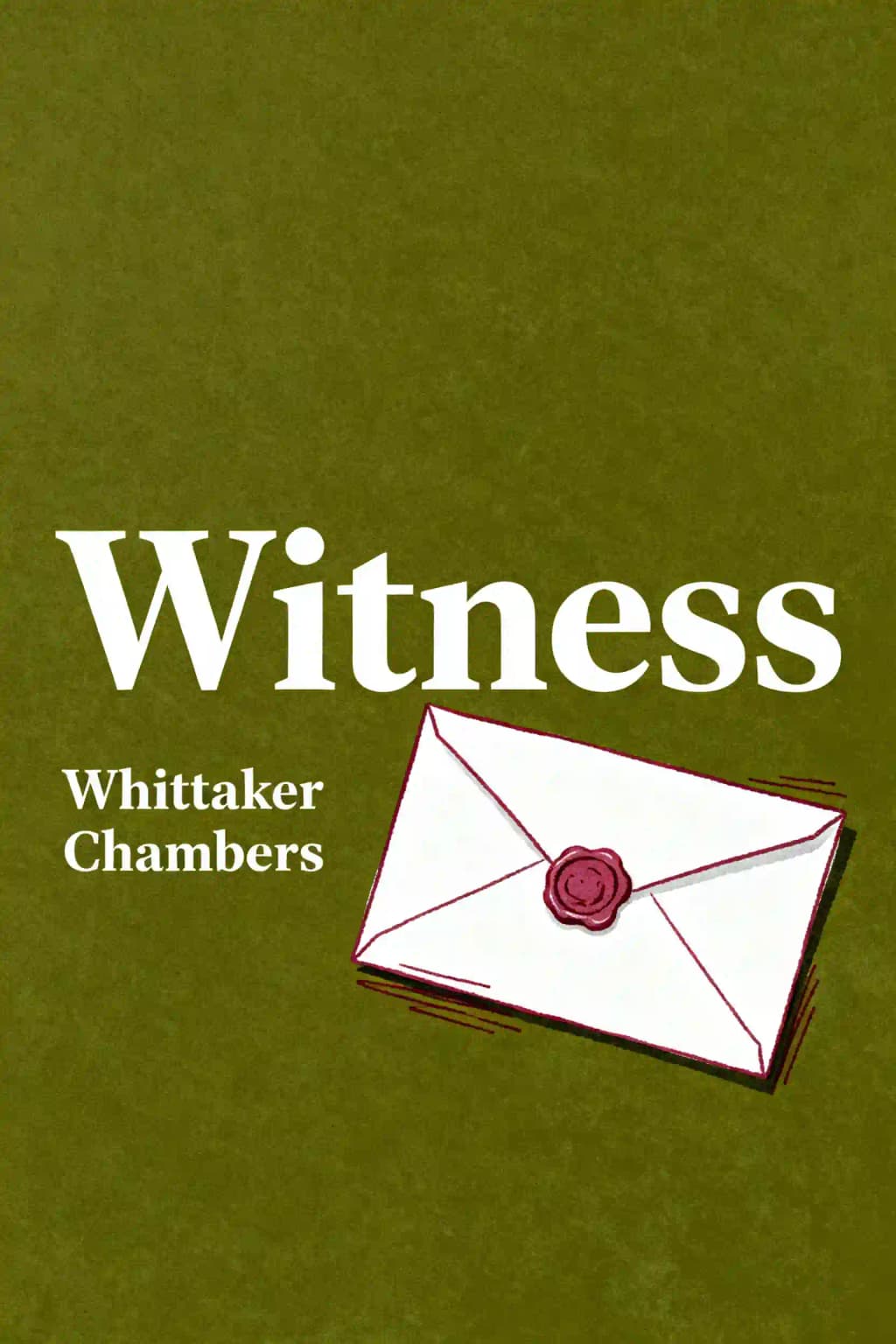
Witness
Panoramica di Witness
Whittaker Chambers' explosive memoir "Witness" - a National Book Award finalist that shaped American conservatism - reveals his journey from Communist spy to star witness. Ronald Reagan awarded him the Presidential Medal of Freedom for this continuously reprinted bestseller that William F. Buckley called essential reading.
Temi chiave in Witness
- soviet espionage
- ideological disillusionment
- moral absolutism
- cold war subversion
- spiritual conversion
Citazioni da Witness
It is idle to talk about preventing the wreck of Western civilization. It is already a wreck from within.
You have no choice.
The world was dying.
We are leaving the winning world for the losing world.
This is evil, absolute evil.
Personaggi di Witness
- Whittaker ChambersFormer Communist operative and author of Witness
- Alger HissState Department official accused of espionage
- Max BedachtCommunist leader who recruited Chambers
- Boris BykovCynical Soviet handler during the Great Purge
- J. PetersHead of the Communist underground
Sull'autore
Sull'autore di Witness
Whittaker Chambers (1901-1961) was the American author of Witness and a pivotal figure in Cold War history who transformed from Communist underground operative to renowned anti-Communist writer and journalist. His powerful memoir chronicles his ideological journey from Marxist devotion through his work in Soviet espionage during the 1930s to his dramatic defection in 1938 and subsequent role as a senior editor at Time magazine.
Chambers' expertise in political memoir and Cold War narrative stems from his unique firsthand experience within both Communist and mainstream American institutions. His testimony in the famous Alger Hiss case became one of the defining moments of the early Cold War era. Beyond Witness, he authored the posthumous memoir Cold Friday and translated notable works including Felix Salten's Bambi: A Life in the Woods.
Witness became a bestseller upon its 1952 publication and remains required reading at conservative institutions like The Heritage Foundation, cementing Chambers' legacy as one of the most influential political converts of the 20th century.
Scarica il riassunto di Witness
Ottieni il riassunto di Witness in formato PDF o EPUB gratuito. Stampalo o leggilo offline quando vuoi.
FAQ su questo libro
Witness is Whittaker Chambers' 1952 memoir chronicling his transformation from Communist spy to anti-Communist witness. The book details his underground work for Soviet intelligence in the 1930s, his dramatic defection in 1938, and his pivotal testimony against former State Department official Alger Hiss during the famous espionage trials of 1948-1950.
Witness appeals to readers interested in Cold War history, political memoirs, and stories of ideological transformation. Students of American history, conservative political thought, and those fascinated by espionage narratives will find Chambers' firsthand account of Communist infiltration and the Red Scare particularly compelling. The book also attracts readers seeking spiritual conversion stories.
Witness remains a influential and bestselling memoir that shaped conservative political discourse for decades. The book offers a gripping firsthand account of Soviet espionage operations and provides crucial historical documentation of Communist infiltration in American government. Its literary quality and historical significance make it essential reading for understanding mid-20th century American politics.
The central message of Witness is Chambers' warning about the "titanic struggle between Communism and freedom". Chambers argues that former Communists have a moral obligation to expose the truth about Soviet infiltration. The memoir presents his journey as a witness both against Communism and for his newfound Christian faith.
The Hiss Case forms the dramatic centerpiece of Witness, occupying nearly half the book. Chambers testified before the House Un-American Activities Committee in 1948, accusing State Department official Alger Hiss of being a Communist spy. The case split the nation, with social elites generally supporting Hiss while average citizens backed Chambers.
Chambers defected from Soviet intelligence in 1938 due to disillusionment with Stalin's brutal excesses and Communist ideology. He witnessed the atrocities committed under Stalin's rule and became disgusted by the Party's direction. His growing spiritual awakening and concern for human freedom ultimately drove him to reject Communism entirely.
The pumpkin papers refer to microfilm evidence that Chambers famously hid in a hollowed-out pumpkin on his Maryland farm. These documents, along with other materials Chambers had received from Alger Hiss, provided crucial proof of Soviet espionage activities. The evidence ultimately led to Hiss's conviction for perjury in 1950.
Witness became a foundational text for anti-Communist and conservative political thought in America. The book helped launch Richard Nixon's political career and inspired prominent conservatives like William F. Buckley Jr. Ronald Reagan, a great admirer of the memoir, posthumously awarded Chambers the Presidential Medal of Freedom in 1984.
Key themes in Witness include the battle between freedom and totalitarianism, spiritual redemption, and personal transformation. Chambers explores the "crisis of the modern soul" and his journey from despair to faith. The memoir also examines loyalty, betrayal, and the moral obligation to bear witness to truth regardless of personal cost.
Critics have questioned some of Chambers' claims about his underground activities and challenged his credibility as a witness. Some historians argue that Chambers may have embellished certain aspects of his story for dramatic effect. However, revelations from Soviet archives and the Venona intercepts have largely vindicated Chambers' core allegations about Communist infiltration.