Capitolo 1
When Winter Comes Knocking: Finding Light in Life's Darkest Season
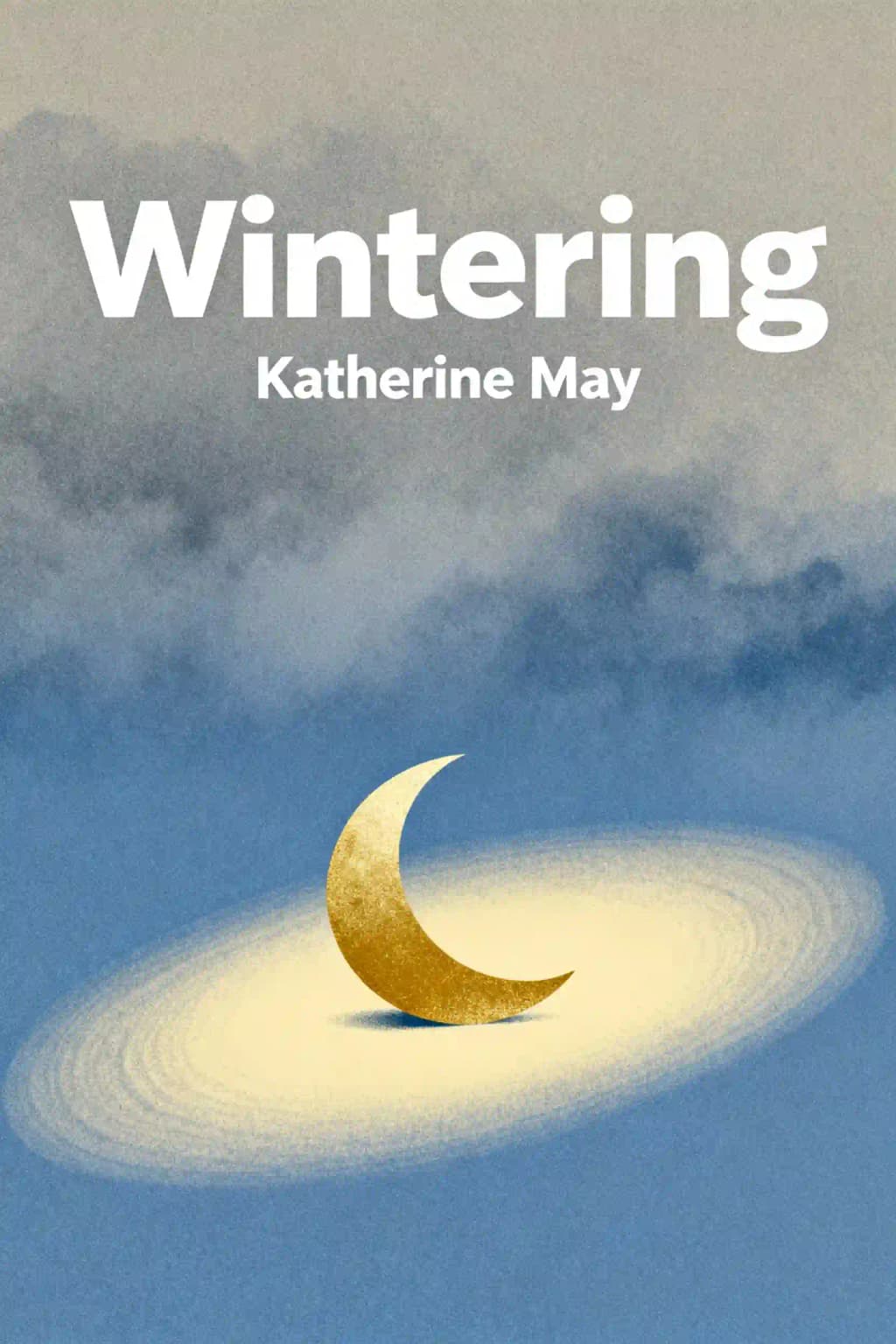
Katherine May's "Wintering" arrived in my hands during a particularly bleak January, recommended by Brene Brown who called it "beautiful, brutal, and breathtakingly honest." This quiet bestseller has developed a devoted following among those navigating difficult transitions-Taylor Swift reportedly gifted copies to friends during pandemic isolation. May's exploration of life's fallow periods resonates deeply in our achievement-obsessed culture, offering wisdom that feels both ancient and urgently needed. As winter approaches each year, sales of this book spike-readers instinctively reaching for its gentle guidance when darkness falls. What makes this book so powerful isn't just May's lyrical prose but her radical proposition: that our winters aren't failures to overcome but necessary seasons to be embraced.
Capitolo 2
The Inevitable Winter: Learning to Accept Life's Cycles
Some winters begin in sunshine. Katherine May's started on a blazing September day before her fortieth birthday when her husband's burst appendix launched her into a season of crisis. This medical emergency, with its rushed hospital visits and sleepless nights, coincided with her departure from university employment, creating a perfect storm that forced her to confront deeper truths about her life's direction. "I had fallen through the gaps in the everyday world into Somewhere Else," she writes, describing that disorienting sensation of being suddenly cut off from normal existence - a feeling familiar to anyone who has experienced life's sudden disruptions.
Wintering, as May defines it, is any period when we're forced into life's margins-through illness, bereavement, failure, or rejection. These fallow times arrive with varying intensity; some creep slowly like autumn's gradual cooling, while others crash upon us without warning like an unexpected frost. Though painful and often lonely, wintering is inevitable for everyone. We may dream of "an equatorial habitat, forever close to the sun," but life simply doesn't work that way. Just as the Earth tilts on its axis, creating seasons, our lives move through cycles of light and shadow.
May learned to winter young as an undiagnosed autistic girl navigating a confusing social landscape, struggling with sensory overload and unspoken social rules that others seemed to grasp intuitively. She then faced severe depression at seventeen, a darkness that seemed endless at the time. Each subsequent "dip" became more manageable as she recognized their patterns - the subtle warning signs, the familiar emotional weather. Yet society treats wintering as taboo-something to hide rather than acknowledge as a natural process. We're expected to maintain perpetual productivity and happiness, posting cheerful updates on social media while concealing our struggles. This collective denial costs us dearly, as wintering brings profound insights when properly embraced.
Plants and animals don't fight winter; they prepare and adapt through extraordinary transformations. Trees withdraw their resources into their roots, bears find warm caves to hibernate, and birds migrate thousands of miles. Winter isn't death but a crucible of change, a time of necessary dormancy and renewal. Once we stop wishing for perpetual summer, winter reveals its sparse beauty - the stark silhouettes of bare trees, the hushed quiet of snow, the way darkness makes us appreciate light more deeply. Slowing down, resting, and recuperating become radical acts in our busy world-essential choices at life's crossroads that allow us to emerge stronger when spring finally arrives. Like the bulbs buried beneath frozen soil, our periods of dormancy often contain the seeds of future growth.
Capitolo 3
Preparing the Nest: Creating Sanctuary in Difficult Times
As May's personal winter deepened, she found herself unable to continue working. While her husband recovered from surgery, she developed mysterious abdominal pain that eventually required medical intervention. The physical manifestation of her stress became impossible to ignore, leading to weeks of medical consultations and tests. Signed off sick and facing uncertainty, she discovered an unexpected relief in having legitimate physical symptoms rather than mere "overwhelm" - a validation of her body's signals that something needed to change.
With newfound time at home, May returned to cooking with renewed purpose and attention. She immersed herself in slow, nurturing food preparation-braising lamb hot pot that filled the house with rich aromas, carefully preparing fresh figs with morning porridge, and crafting velvety pumpkin soup that simmered for hours. These quiet pleasures had retreated during years of constant rushing but now offered solace through "rhythmic handwork, light concentration that allows dreaming." The methodical chopping, stirring, and tasting became a form of meditation. As days shortened, she transformed her living space, bringing warmth and light into her home with strategically placed candles, soft fairy lights, and comfortable corners for reading, creating a sanctuary against encroaching darkness.
This winter became an invitation to transition into a more sustainable life, forcing May to confront her previous patterns of overwork and constant motion. "I'm determined to enter it consciously," she writes, "to make it a practice in self-understanding." Like animals preparing their dens for hibernation, May instinctively gathered comforts around her-soft blankets, favorite books, healing teas, and gentle music-creating what she calls "a bed of straw to cushion the coming blow." She began to understand that this wasn't just about physical comfort, but about creating an environment that could hold her through difficult times.
The Finnish concept of "talvitelat"-being stowed away for winter-resonated deeply with May, offering ancient wisdom about seasonal preparation. Her Finnish friend explained how preparation begins in July or August: methodically repairing houses against winter storms, chopping and stacking firewood, baking breads and pastries for the freezer, and foraging berries and mushrooms from the abundant forests. This careful preparation is woven into Finnish culture, acknowledging winter as an inevitable cycle requiring respect and readiness. Yet despite these skillful preparations, Finland's suicide rates peak in December and January, a sobering reminder that even the most winter-wise cultures struggle with darkness and isolation.
May's own preparations evolved into a series of gentle but deliberate practices-rising at five to read in the quiet morning light, taking hot baths with essential oils, enjoying sedate walks to school with her son where they noticed frost patterns and winter birds. She gave up alcohol, uncomfortable with how she'd used it to "snuff out relentless days," replacing it with soothing mint tea and early bedtimes. These seemingly simple rituals created structure when everything else felt uncertain, demonstrating how instinctively we create cocoons when facing life's winters. Through these acts of self-care and nest-building, May discovered that preparing for difficult times isn't just about physical comfort-it's about creating spaces and practices that help us endure and eventually emerge transformed.
Capitolo 4
Transformation: Winter's Hidden Purpose
Winter's true business, May discovers, is transformation. Walking along the River Stour, she notices how frost picks out every blade of grass with exquisite detail, revealing beauty invisible in other seasons. The high tide transforms marshes into silvery seas, displacing curlews into undergrowth. In these seemingly barren moments, she observes how winter strips away excess to reveal essential forms - the architectural precision of bare branches against pewter skies, the intricate patterns of frozen spider webs, and the stark beauty of seed heads preserved in ice. Amid winter's unwelcome change lies an abundance of life adapting in remarkable ways.
Unlike our linear view of existence, ancient folklore offers cyclical metaphors-seasons when we flourish and seasons when leaves fall, revealing bare bones that will grow again. Traditional wisdom across cultures recognizes winter not as an ending but as a crucial phase of renewal. Celtic mythology speaks of the darkness where seeds germinate, while Japanese philosophy embraces the concept of 'ma' - the pregnant pause between moments. May's friend Shelly exemplifies this cycle-after falling into a coma from meningitis, she emerged transformed, unafraid of death and with renewed focus on what truly matters. Her experience demonstrates how periods of dormancy can lead to profound awakening.
Trees demonstrate this wisdom through abscission-as days shorten, they stop making food, chlorophyll breaks down revealing hidden colors, and leaves detach at specialized zones. This process, far from being wasteful, is precisely orchestrated at a cellular level. Each leaf forms an abscission layer, a cork-like barrier that seals the break point before release. Yet even as leaves fall, next year's buds wait, protected from cold by specialized scales and natural antifreeze compounds. The tree isn't dead but quietly continuing life-mulching the forest floor, drawing moisture, providing food and shelter for countless creatures, from hibernating insects to foraging birds.
May's hospital visits created a particular kind of winter-sterile white layers offering discipline and comfort, where we become compliant and passive. The fluorescent lights and antiseptic smells create an artificial season of pause and reflection. After numerous tests, she learned she had "the gut of a particularly self-neglectful seventy-year-old"-not as bad as feared but life-changing nonetheless. Following a counterintuitive low-fiber diet helped immediately, though she resisted at first, challenging her assumptions about healthy eating. She emerged battle-scarred but wiser, shedding illusions about her youthful invincibility and gaining a deeper appreciation for the body's complex needs.
"Winter asks me to be careful with my energies," she writes, recognizing how this season demands a different relationship with our bodies and limitations-one that honors rest as essential rather than indulgent. Like the dormant seed requiring cold stratification to germinate, some transformations can only occur through periods of apparent stillness. Winter teaches us to distinguish between necessary rest and mere idleness, between productive withdrawal and harmful isolation. Through its stark clarity, winter reveals the art of conscious retreat - knowing when to pull back, conserve energy, and allow internal processes their necessary time.
Capitolo 5
Finding Light in Darkness: The Sacred Rhythms of Winter
When November arrives, May draws the line at sunset, preferring to hibernate evenings away. Four o'clock feels desolate with damp air uncorrected by sunshine. She skips evening commitments, finding night driving nightmarish. Far better to stay home, where winter becomes "a quiet house in lamplight, bright stars on clear nights, the roar of wood-burning stoves, warming teapots and bitter cocoa."
Sleep becomes her sanity and luxury, with winter providing perfect conditions for deep rest. Yet even this sanctuary is sometimes disrupted by what she calls the "terrible threes"-those dark insomniac hours when the mind fully fires at 3 a.m., bringing nightmares and catastrophizing about money, death, and failure.
When sleep fails, May discovers unexpected gifts in these wakeful hours. Downstairs with hot tea, her thoughts settle "like flakes in a snow globe." She clears her desk, makes a pool of light with her lamp, lights a candle, and works between these two poles-one steady, one flickering. Once she abandons the fight for sleep and claims her wakefulness, she finds "slanting love" for this almost-morning solitude when nobody expects anything.
Historian A. Roger Ekirch reveals that pre-Industrial Revolution humans typically experienced "first sleep," a wakeful "watch," then "second sleep." During the watch, people would rise to urinate, smoke, visit neighbors, make love, pray, and reflect on dreams in calm contemplation. Today, we're awash in inescapable light from devices and LEDs, making true darkness nearly impossible. "There is not enough night left for us," May laments, recognizing how we've lost our instincts for darkness and its invitation to spend time in proximity to our dreams.
Perhaps insomnia during personal winters draws us toward that unique space of contemplation without our conscious awareness. Sleep isn't a dead space but a doorway to reflective consciousness where waking thoughts merge with dreams. Winter invites this ambulatory process where space is made in blackest hours to repair fragmented narratives. Even dormice know to wake briefly before surrendering back to sleep. "Winter repeatedly offers liminal spaces to inhabit," May writes, "yet still we refuse them."
Capitolo 6
Sacred Moments: Rituals That Carry Us Through
At winter solstice, May joins friends at Stonehenge, feeling awkward among the remarkably diverse crowd-dreadlocked travelers in weathered jackets, women adorned in intricately embroidered medieval gowns, and a man in a gleaming silver space suit playing melodica with surprising grace. Music drifts from all directions-the deep resonance of hand drums, the crystalline tones of Tibetan singing bowls, the wheezing melody of an old squeezebox-creating an impromptu temple-like atmosphere as the pre-dawn darkness slowly yields to gray.
Though heavy clouds obscure the actual moment of sunrise, the profound significance remains undiminished: light returning after months of encroaching darkness. People embrace spontaneously, exclaiming "We have turned the year!" with genuine joy. This moment marks not humanity's control over winter's harsh reality but rather control over our collective response to it-a crucial distinction that May weaves throughout her narrative as a metaphor for facing life's challenges.
Modern British society often dismisses such celebrations as eccentric, embarrassing, or even slightly threatening to established norms. As May observes, the British as a nation remain "suspicious of ritual, exuberance, and spiritual expression outside conventional boundaries." Yet what she witnessed at Stonehenge wasn't offensive or threatening but rather a remarkable jumble of spiritualities coexisting with profound tolerance-Druids, pagans, New Age practitioners, and curious onlookers sharing sacred space without demanding conformity or questioning others' beliefs.
Seeking deeper understanding, May contacts Philip Carr-Gomm, respected leader of the Order of Bards, Ovates and Druids, who acknowledges this cultural discomfort with refreshing candor: "I think Druidry is a bit wacky myself... As John Cleese once said, the greatest fear of the English is embarrassment." He explains how modern Druids follow the "eightfold Wheel of the Year," creating natural rhythm with celebrations approximately every six weeks. At winter solstice, they perform ceremonies to "cast away whatever impedes the appearance of light" before lighting a single symbolic lamp to welcome the new cycle of seasons.
This pattern flows through the year's natural turning points: Imbolc (February 1st) celebrating early spring, the vernal equinox marking winter's end, Beltane (May Day) welcoming summer's abundance, through to Samhain marking the threshold of winter before returning to solstice. "In mainstream culture," Philip notes with concern, "the only major festival is now Christmas... The gap is far too long." This ancient system offers both "a rhythm to the year" and "a way through even the darkest periods," connecting practitioners to both natural cycles and community.
Is this an invented religion cleverly borrowing from an imagined mystical past? Almost certainly. But it addresses a fundamental human craving many recognize-the need to mark time's passage and celebrate nature's cycles communally. Have we become so disconnected from natural rhythms that we no longer feel compelled to acknowledge and celebrate the lengthening days? If modern society lacks meaningful rituals to ground us in time and place, reimagining and adapting old ways seems not only reasonable but perhaps essential for our collective wellbeing.
Capitolo 7
When Everything Breaks: Winter's Irresistible Gift
Just as May was emerging from her own illness, a greater winter rolled in unnoticed-her six-year-old son had grown too anxious for school. That toxic classroom environment, playground bullies, and a hyperactive curriculum had overwhelmed him. She'd been listening but not truly hearing until she finally recognized his suffering wasn't ordinary childhood difficulty.
Making the radical decision to remove him from school, May rejected suggestions to force him back. "I refused to break him into submission," she writes, questioning why we expect children to endure conditions adults never would: constant performance evaluation, motivation by threat, social mockery, and physical intimidation.
Together, they sank into healing activities: beach play, library visits, making clay pirates, woodland walks, museum trips, baking. They traveled through dark moments together-raging, grieving, fearing. "We didn't retreat from the world so much as let it recede," May explains. They howled out to friends and family and were surprised how many rushed to help. "We felt broken but never so loved."
In their winter, transformation happened. They stopped pushing through "normal life" and created a new one. "When everything breaks, everything is up for grabs," May writes, calling this winter's irresistible gift. Change follows whether we like it or not.
The greatest wisdom came from others who'd endured this winter before. At a trampolining center on a Wednesday morning, another parent approached: "Are you a home schooler, too?" May blurted her entire story and found not judgment but understanding. "I'd say everyone around this table has been through exactly the same thing," the woman said. May learned her son was one of hundreds flattened by school, and she one of hundreds who refused to force them back.
Here's another truth about wintering: you'll find wisdom in it, and afterward must pass it on. We must listen to those who've wintered before us-an exchange where nobody loses. This may break lifelong habits of assuming others bring misfortunes upon themselves. Such attitudes harm us by preventing us from learning how to adapt to disasters and from reaching out to the suffering.
Capitolo 8
Embracing Our Nature: The Wisdom of Winter
January's Wolf Moon marked when hunger historically drove wolves from forests into villages, a primal reminder of survival's raw demands. Like wolves in winter, we all experience deep wanting-not just for food but for meaning, connection, and purpose. Our cravings manifest in complex ways, often inaccurate: we reach for drugs, alcohol, toxic relationships, or unnecessary objects to fill the void. Underneath these misguided attempts lies a fundamental longing for elemental things-authentic love, transcendent beauty, genuine comfort, and yes, sometimes even temporary oblivion from life's challenges.
Unlike bees-which function as a remarkable superorganism where individual members become expendable for colony survival-humans shouldn't aspire to such eusocial efficiency. Our existence demands a different paradigm. We live intricate, messy lives filled with choices, inevitable mistakes, moments of unexpected glory and crushing despair. Each person contributes to the human tapestry in both visible and invisible ways: through daily acts of kindness, creative expressions, maintaining relationships, or simply bearing witness to others' journeys. Unlike the rigid hierarchy of bee colonies, we can recover from our personal winters and return transformed, carrying greater wisdom and deeper compassion.
Winter carries its own sacred labors beyond merely conserving resources and surviving until spring. It invites us into the quiet arts of making-knitting scarves for loved ones, mending old clothes, baking bread that fills the house with warmth, repairing what's broken instead of replacing it. While summer pulls us outside into social activities and external achievements, winter calls us inward to reorganize our internal landscapes: sorting through bookshelves becomes meditation, reading deeply becomes pilgrimage, and pursuing slow, spiritual learning becomes transformation. These seemingly small contributions matter profoundly during our winters, creating space for us to dream of future springs while finding meaning in the present darkness.
In the deepest winter, when darkness seems permanent, the robin begins to sing its dawn chorus. May approached singing lessons with embarrassment and trepidation, unable to hit a clean note after years of silence. Over weeks of patient practice, she gradually regained clarity and volume in her voice, learning to engage her throat muscles properly and flow notes together like water. More importantly, she rediscovered singing's fundamental joy-filling lungs with nourishing air and expressing the full range of human experience: love, loss, desire, and hope.
Like the robin, we sometimes sing to demonstrate strength in adversity, and sometimes simply in hope of better times ahead. Our voices-both literal and metaphorical-carry us through winter's darkest days, connecting us to others who recognize the universal song of survival. Whether through art, work, relationships, or actual song, these expressions remind us that even in winter, we remain essentially human: complex, imperfect, and gloriously alive.
Capitolo 9
The Thaw: Cycles of Renewal
Walking around Pegwell Bay, May notices winter retreating. What was frost-covered a week earlier now enjoys enormous blue skies with almost-warm winds. Snowdrops line the path and lime-green catkins dangle from hazel trees. The recently frozen marshes begin to thaw, marking the transition toward spring.
Though she wishes she could wrap up her story with a neat narrative arc-all problems solved, worries resolved-the truth remains messier. She still jokes about moving into a caravan in the woods because it's all they could afford, often feeling "taut with worry and just a footstep away from chaos."
Alan Watts reminds her that "To hold your breath is to lose your breath." Life is fundamentally uncontrollable, and our suffering comes from fighting against this truth. The present moment is all we truly have-the direct perception of our senses.
Watching a flock of lapwings rolling together at the edge of the sea brings May pure happiness. Their extraordinary flow, their silent collective decisions governing their turns-she stands stock-still, completely absorbed in this moment of wonder.
A year after leaving her job, May finally sorted through her office books. The guilt had gone-she'd formed her "abscission zone," the barrier that allows dead matter to fall away. Like spring cleaning at Imbolc, we must emerge slowly from our wintering, testing the air, gradually unfurling new leaves.
"We who have wintered have learned some things," May concludes. "We sing it out like birds. We let our voices fill the air." Our lives aren't linear but cyclical. We pass through phases of health and illness, optimism and doubt, freedom and constraint. Each cycle teaches us something new. We take the next necessary action, and eventually, that action will feel joyful again.
Winter isn't failure-it's preparation for renewal. By embracing these inevitable seasons rather than fighting them, we discover not just how to survive our darkest days, but how to find unexpected gifts within them.