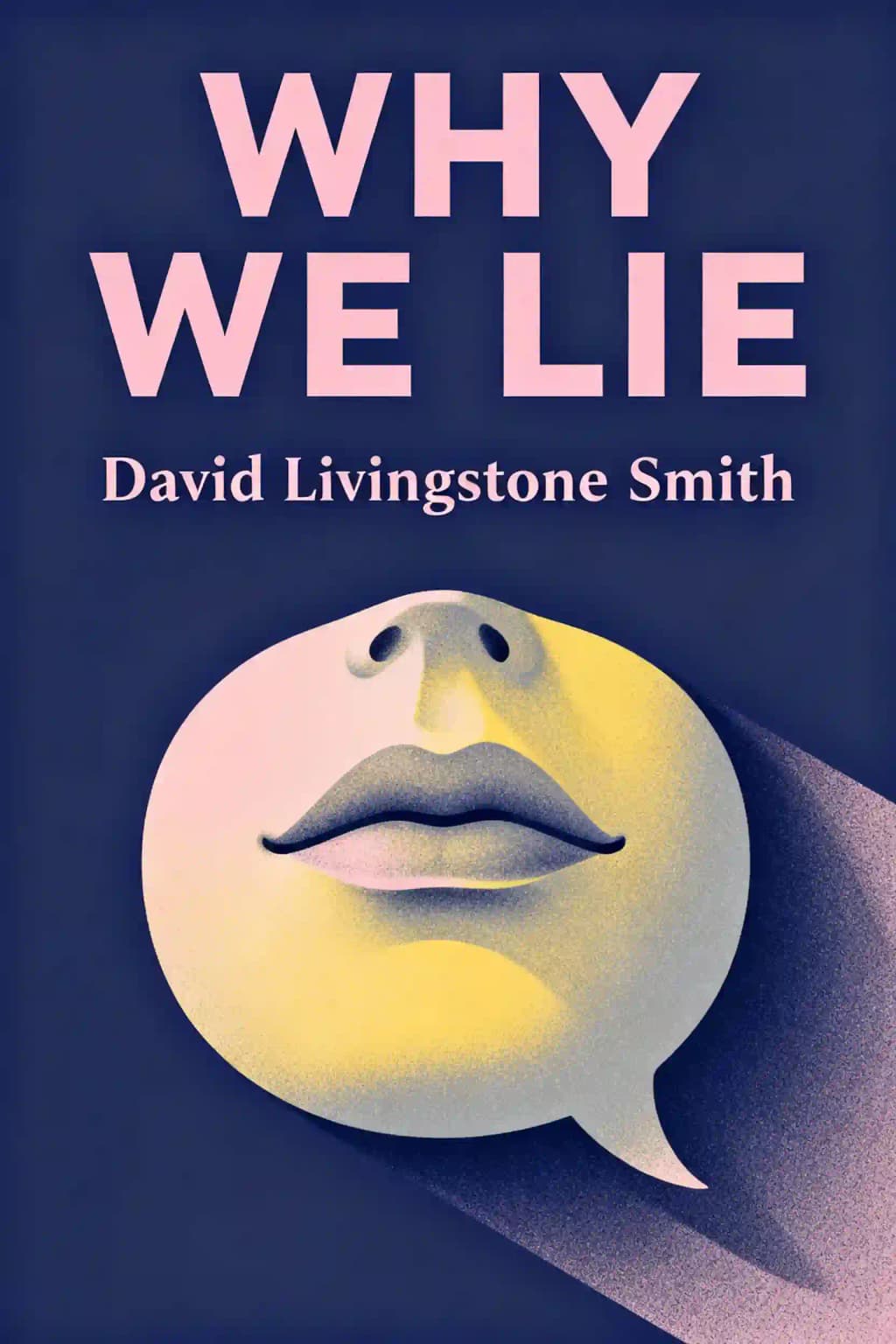
"Why We Lie" unveils deception's evolutionary roots - from animal camouflage to human self-deception. Praised alongside Dawkins and Pinker, Smith's provocative thesis: lying isn't immoral but essential for survival. Could your unconscious mind be deceiving you right now? The answer might surprise you.
Senti il libro attraverso la voce dell'autore
Trasforma la conoscenza in spunti coinvolgenti e ricchi di esempi
Cattura le idee chiave in un lampo per un apprendimento veloce
Goditi il libro in modo divertente e coinvolgente
Have you ever wondered why lying comes so naturally to humans? From the white lies we tell daily to elaborate deceptions that shape history, dishonesty seems woven into our DNA. This isn't a moral failing-it's our evolutionary heritage. We might better be called Homo fallax (deceptive man) than Homo sapiens (wise man). Our minds evolved not primarily for truth-seeking but for reproductive success, and deception offered significant advantages in the struggle to survive and reproduce. Deceit permeates all human relationships-between parents and children, spouses, employers and employees, governments and citizens. Despite claiming to value honesty, we're dimly aware that too much truth can be antisocial. Consider how characters like Dostoevsky's Prince Mishkin or Jim Carrey in "Liar, Liar" create chaos through absolute honesty. Research reveals undergraduates lie to their mothers in half of conversations and to strangers 80% of the time. On average, we tell three lies per ten minutes of conversation-and this only counts explicit verbal falsehoods! The paradox of deception is that it must conceal its own existence to be effective. This makes it simultaneously ubiquitous and elusive-like water to fish, we swim in deception so constantly we rarely notice it.
Scomponi le idee chiave di Why We Lie in punti facili da capire per comprendere come i team innovativi creano, collaborano e crescono.
Distilla Why We Lie in rapidi promemoria che evidenziano i principi chiave di franchezza, lavoro di squadra e resilienza creativa.

Vivi Why We Lie attraverso narrazioni vivide che trasformano le lezioni di innovazione in momenti che ricorderai e applicherai.
Chiedi qualsiasi cosa, scegli la voce e co-crea spunti che risuonino davvero con te.

Creato da alumni della Columbia University a San Francisco
"Instead of endless scrolling, I just hit play on BeFreed. It saves me so much time."
"I never knew where to start with nonfiction—BeFreed’s book lists turned into podcasts gave me a clear path."
"Perfect balance between learning and entertainment. Finished ‘Thinking, Fast and Slow’ on my commute this week."
"Crazy how much I learned while walking the dog. BeFreed = small habits → big gains."
"Reading used to feel like a chore. Now it’s just part of my lifestyle."
"Feels effortless compared to reading. I’ve finished 6 books this month already."
"BeFreed turned my guilty doomscrolling into something that feels productive and inspiring."
"BeFreed turned my commute into learning time. 20-min podcasts are perfect for finishing books I never had time for."
"BeFreed replaced my podcast queue. Imagine Spotify for books — that’s it. 🙌"
"It is great for me to learn something from the book without reading it."
"The themed book list podcasts help me connect ideas across authors—like a guided audio journey."
"Makes me feel smarter every time before going to work"
Creato da alumni della Columbia University a San Francisco

Ottieni il riassunto di Why We Lie in formato PDF o EPUB gratuito. Stampalo o leggilo offline quando vuoi.