Capitolo 1
The Uncomfortable Truth About Our Everyday Deceptions
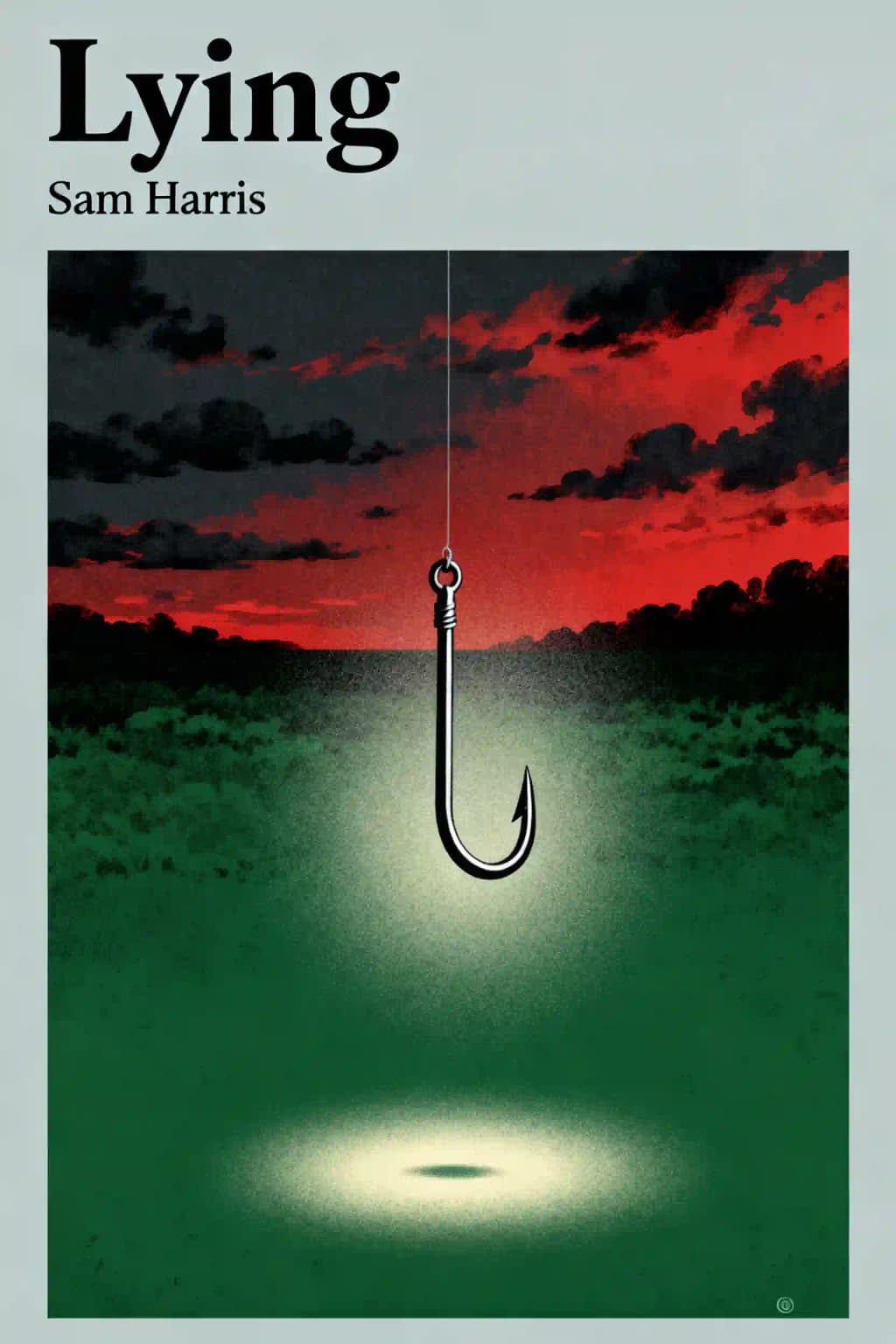
Have you ever wondered why we so often choose paths guaranteed to make us unhappy? Sam Harris's "Lying" has become a modern philosophical touchstone for a reason. This slim volume packs an intellectual punch that has resonated with everyone from Tim Ferriss, who calls it "essential reading," to Elon Musk, who reportedly keeps copies in Tesla headquarters. Since its publication, the book has sparked countless dinner table debates and personal experiments in radical honesty. What makes this work so compelling is not just its intellectual rigor but its practical challenge: What would happen if you simply stopped lying? The question feels almost revolutionary in our post-truth era, where the concept of honesty itself seems increasingly quaint. Yet Harris argues that this one simple change might transform not just our personal relationships but our entire society.
Capitolo 2
The Anatomy of Deception: What Constitutes a Lie?
Not all deceptions are created equal. When we apply makeup, offer polite responses to "How are you?" or engage in social niceties, we aren't necessarily lying in the harmful sense Harris addresses. The crucial distinction lies in intention and expectation: a lie occurs when we intentionally mislead others who reasonably expect honest communication from us. This definition cleverly exempts poker players and magicians while focusing our attention on consequential falsehoods.
The difference between mere truthfulness and genuine honesty is subtle but profound. Truthfulness means accurately representing your beliefs, while honesty requires something deeper-an authentic presentation of yourself to others. We lie for countless reasons: to avoid embarrassment, exaggerate accomplishments, disguise wrongdoing, spare feelings, or gain advantage. But each deception, no matter how small, creates a gap between the liar and the deceived.
Consider the story Harris shares about his friend Sita, who collected hotel toiletries during business trips and presented them as "gifts" to friends. When Harris questioned whether the recipients knew these were hotel items, Sita became defensive. This seemingly trivial deception reveals something important: even small lies create distance in relationships. The recipients might have appreciated the thoughtfulness regardless, but by misrepresenting the origin of these items, Sita denied them the opportunity to respond to the actual gesture.
Research confirms what we intuitively sense: lying is remarkably common. Studies suggest about 10 percent of spousal communication contains lies, while college students report deception in 38 percent of conversations with others. Yet even habitual liars find deceptive interactions less pleasant than truthful ones. In a world where deception is the norm, honest people become rare and precious refuges of reliability and authenticity.
Capitolo 3
The Freedom of Radical Honesty
What would your life look like if you never lied again? The prospect might seem terrifying at first. Wouldn't honesty damage relationships, hurt feelings, and create unnecessary conflict? Harris argues the opposite: a commitment to honesty functions as both gift and power source, creating simplicity by eliminating the need to prepare stories or track falsehoods. This radical approach to truthfulness extends beyond simply not telling lies - it encompasses being honest about our thoughts, feelings, and experiences, even when they're uncomfortable.
Imagine never having to remember which version of events you told to whom. Picture the mental liberation of walking into any room knowing you have nothing to hide, no stories to keep straight, no need to maintain different personas for different people. While honesty may occasionally cause immediate discomfort, one can be both honest and kind - these virtues aren't mutually exclusive but rather complementary. The key lies in delivering truth with compassion and timing, considering both the message and its impact.
Perhaps most powerfully, a commitment to truthfulness forces profound self-reflection: What kind of person have you become? Are your relationships authentic or built on convenient fictions? Do you avoid difficult conversations by crafting elaborate excuses? Honesty brings dysfunction to the surface - whether abusive relationships, addiction, or personal fears - making it harder to maintain destructive patterns without intervention. This transparency often acts as a catalyst for necessary change, pushing us toward authenticity even when it's challenging.
When we commit to honesty, we create a mirror that reflects our true selves. This reflection can be uncomfortable, revealing aspects of our character we'd prefer to ignore - our biases, our shortcomings, our contradictions. But this discomfort is precisely what makes honesty so valuable. It prevents us from hiding from ourselves, forcing us to confront the gap between who we are and who we wish to be. This confrontation becomes the foundation for genuine personal growth and transformation.
The practice of honesty also simplifies life in unexpected ways. Rather than maintaining an increasingly complex web of deceptions, the honest person needs only to report reality as it appears. This simplicity creates a kind of freedom - freedom from the cognitive burden of tracking falsehoods, freedom from the fear of being discovered, and freedom from the nagging sense that our relationships are built on shaky foundations. Even small lies, like saying we're "fine" when we're not, or making up excuses for being late, create subtle but persistent stress that compounds over time.
Moreover, radical honesty builds trust in ways that transform relationships. When people know you as someone who consistently tells the truth, they begin to trust not just your words but your silences, your actions, and your intentions. This deep trust creates space for genuine intimacy and understanding, allowing relationships to evolve beyond surface-level pleasantries into meaningful connections based on shared reality rather than comfortable illusions.
Capitolo 4
White Lies: The Gateway to Larger Deceptions
"It's just a white lie," we tell ourselves. "I'm sparing their feelings." But Harris challenges us to consider whether these seemingly harmless deceptions actually destroy something precious-what he calls "moral wealth": sincerity, authenticity, integrity, and mutual understanding.
By lying, even with good intentions, we deny others access to reality, potentially harming them in ways we didn't anticipate. Consider the dreaded "Do I look fat?" question that's often used to justify white lies. While many insist the answer should always be "no," this creates a slippery slope where exceptions to honesty multiply. Harris shares how he once told a poolside friend he should lose twenty-five pounds rather than offering reassurance. The result? His friend lost fifteen pounds in two months and thanked him for the honesty.
False encouragement steals time and energy people could direct elsewhere. Telling someone they're a wonderful singer when they're not might seem kind, but it could lead them to waste years pursuing an unattainable dream rather than discovering talents where they might truly excel. When we lie for others' benefit, we arrogantly decide how much they should understand about their own lives.
Think about your closest friendships. Aren't they characterized by a level of honesty that might seem brutal in other contexts? We value friends who tell us the truth, even when it's uncomfortable, because we recognize that this honesty comes from a place of genuine care and respect. The friend who tells you that you've had too much to drink or that you're making a mistake in a relationship isn't being cruel-they're showing true friendship.
White lies also create a problematic precedent. Once we decide that certain situations warrant deception, we establish a pattern that can easily expand. The boundary between acceptable and unacceptable lies becomes increasingly blurry, and we find ourselves making exceptions more frequently. Before long, honesty becomes the exception rather than the rule.
Capitolo 5
Trust: How Small Deceptions Create Large Fractures
Even seemingly insignificant lies can erode trust in profound and lasting ways. Harris shares the story of Jessica, who overheard her friend Lucy effortlessly fabricating an excuse to cancel plans. Though the lie wasn't directed at Jessica, it left her wondering if she'd been similarly deceived in the past. Such tiny erosions of trust rarely get addressed or remedied, creating invisible fractures in relationships.
Children often inadvertently expose our dishonesty in uncomfortable ways. In another anecdote, Daniel's young daughter innocently revealed his reluctance to host houseguests after he'd just welcomed them with false enthusiasm. These failures of personal integrity, once revealed, create lasting negative impressions that apologies cannot fully erase.
Trust is perhaps our most valuable social resource, yet we squander it carelessly through unnecessary deceptions. Each time we're caught in a lie-even a seemingly harmless one-we damage our credibility in ways that extend far beyond the immediate situation. People begin to question not just the specific statement that was false, but everything else we've ever told them.
What makes this particularly tragic is how difficult trust is to rebuild once broken. A single discovered lie can undo years of perceived honesty. We intuitively understand this in our most important relationships-few things damage a romantic partnership more irreparably than discovering a pattern of deception. Yet we often fail to apply this same understanding to our everyday interactions, treating small lies as inconsequential when they're actually laying the groundwork for larger breakdowns in trust.
While tact certainly has its place in social interactions, following a simple precept-do not lie-helps avoid embarrassment and social upheaval. This doesn't mean being brutally blunt or ignoring others' feelings. Rather, it means finding ways to be both honest and kind, recognizing that these virtues strengthen rather than contradict each other.
Capitolo 6
The Disservice of False Praise
Insincere praise does our friends no favors. When we offer effusive compliments for mediocre work or fail to provide honest feedback about flawed projects, we treat others like children rather than equals deserving of the truth. Having invested months or even years in doomed projects himself, Harris knows the immense value of frank criticism that spares wasted effort.
By establishing a history of honesty, our praise becomes meaningful. Harris describes a successful writer friend who values his opinion precisely because he once told him a script was terrible-now when Harris says he loves his work, the friend knows he means it. This is the paradoxical power of honest criticism: it makes our praise infinitely more valuable.
Consider how we respond to praise from different sources. When someone known for flattering everyone compliments our work, we might smile politely but feel little genuine satisfaction. Their words carry little weight because they're distributed indiscriminately. But when someone with high standards and a reputation for honesty offers the same compliment, we treasure it. The difference isn't in the words themselves but in the credibility of the speaker.
This principle extends beyond creative work to all aspects of life. The friend who tells you honestly when you've made a mistake is the one whose approval you'll truly value. The mentor who points out your weaknesses is the one whose recognition of your strengths will mean the most. By withholding honest feedback out of a misguided attempt to be kind, we actually diminish our ability to provide meaningful support when it matters most.
False praise also robs people of opportunities for growth. Improvement requires accurate feedback-we cannot address weaknesses we don't know exist. When we shield others from criticism, we may temporarily protect their feelings, but we ultimately hinder their development. True respect means believing others are capable of handling the truth and using it to become better.
Capitolo 7
The Burden of Others' Secrets
Honesty doesn't require disclosing private information-"I'd rather not say" is often the truth and a perfectly acceptable response in many social situations. However, keeping others' secrets can burden us with forced choices between lying and revealing privileged information, creating complex moral and social dilemmas that affect multiple relationships simultaneously.
Harris shares Stephanie's experience to illustrate this dilemma: after learning of her friend Gina's husband's blatant infidelity through another mutual friend, she found herself trapped between betraying a confidence and participating in deception. The husband's affair wasn't a one-time indiscretion but an ongoing relationship with a coworker that had lasted for months, making the burden of knowledge even heavier.
Normal conversations became ordeals of pretense - simple questions like "How was your weekend?" or "Where's John tonight?" required careful navigation to avoid revealing the truth. Social gatherings became exercises in strategic avoidance, with Stephanie constantly monitoring her words and reactions. Eventually, the strain of maintaining these deceptions led to the dissolution of her friendship with Gina, as authentic connection became impossible under the weight of unspoken truths.
Most disturbing was seeing Gina surrounded by "friends" who maintained her husband's lies while quietly severing their relationships with him. Some stopped inviting him to events, others declined business dealings, yet none would tell Gina why. This created a cruel paradox where those closest to her participated in a conspiracy of silence, leaving her isolated precisely when she most needed honest counsel. The ripple effects extended through their social circle, creating factions and forcing others to choose sides without understanding the full context.
This scenario reveals how secrets can poison not just individual relationships but entire social networks. When we become repositories for information that affects others but that we cannot share, we find ourselves in an impossible position. Every interaction becomes a potential minefield where casual conversations require constant vigilance. The mental energy required to maintain these deceptions often leads to social withdrawal, as people find it easier to avoid situations that might expose them to difficult choices.
The burden of keeping others' secrets extends beyond social discomfort to moral complicity. When we know someone is being deceived in ways that affect their life choices-whether about infidelity, financial fraud, addiction issues, or serious health concerns-our silence makes us participants in the deception. We become, however reluctantly, co-conspirators in denying someone information that could be crucial to their decision-making, career choices, or even their physical safety.
This doesn't mean we should never keep confidences. Privacy and discretion remain important values in maintaining trust and healthy relationships. But we should be cautious about accepting secrets that place us in ethical binds, particularly when they involve ongoing deception of others. Sometimes the most honest response when someone begins to share such information is: "I'm not comfortable knowing something I would feel obligated to conceal from others I care about." This boundary-setting can prevent us from becoming entangled in webs of deception that compromise our integrity and damage our relationships.
Capitolo 8
When Deception Seems Necessary: Lies in Extreme Situations
While Kant's absolute prohibition against lying lacks ethical coherence, justifying deception remains difficult. Even in extreme cases-like hiding a child from a murderer-lying may produce unintended consequences. Harris suggests that telling the truth needn't mean acquiescence; it could mean saying "I wouldn't tell you even if I knew."
More commonly, honesty creates connections with potential adversaries. Harris recounts a revealing encounter with a Customs officer after returning from Asia. Despite his hippie appearance and admission of trying drugs abroad, their honest exchange led to a gratifying human connection rather than the confrontation he feared.
This counterintuitive outcome-that honesty sometimes defuses rather than escalates difficult situations-challenges our assumptions about when deception is necessary. We often lie preemptively, assuming truth will lead to conflict or harm when it might actually create understanding.
However, Harris acknowledges that breaking unjust laws sometimes forces peaceful people into unnecessary deception. In a world of imperfect institutions and laws, absolute honesty can occasionally place good people in impossible situations. The ethical question becomes not whether lying is ever justified, but how to minimize its necessity through better social structures.
This nuanced view recognizes that while honesty should be our default position, moral absolutism fails to account for the complexities of human experience. The goal isn't perfect adherence to an abstract principle but minimizing harm while maintaining integrity. Sometimes this means choosing the lesser evil of deception over enabling greater harm.
What's particularly valuable about Harris's approach is his refusal to provide easy answers. He acknowledges the genuine ethical dilemmas we face while maintaining that these exceptions shouldn't become justifications for everyday dishonesty. The fact that lying might be necessary in truly extreme circumstances doesn't validate the casual deceptions that characterize much of our daily communication.
Capitolo 9
The Psychological Cost of Maintaining Deception
Liars must constantly track their falsehoods, creating a psychological burden that most find distressing. While psychopaths manage this without apparent stress, normal people suffer under the weight of maintaining their deceptions. Lies inevitably require more lies, as each falsehood must be protected from collision with reality.
Truth-tellers, by contrast, can point to the world itself as evidence, reconsider facts, and openly discuss doubts. The mental accounting required of liars comes at the expense of authentic communication and attention. Eventually, people sense the dishonesty, and the liar is quietly shunned.
Ironically, research shows liars often trust and like their victims less, as they justify their own behavior by devaluing those they deceive. This psychological phenomenon creates a downward spiral where deception leads to emotional distancing, which in turn makes further deception easier.
Consider how much mental energy is consumed by maintaining even a single significant lie. You must remember not only the falsehood itself but also what you've told to whom, ensuring consistency across multiple tellings. You must anticipate questions that might expose the deception and prepare plausible responses. You must remain vigilant against slips that might reveal the truth.
This cognitive burden takes a toll. Studies show that people engaged in deception experience increased stress responses, including elevated heart rate and skin conductance. The psychological term "cognitive load" describes this mental taxation-our brains simply weren't designed to maintain parallel versions of reality.
Beyond the immediate stress, habitual lying creates a fragmented sense of self. When our public persona diverges significantly from our private reality, we begin to lose touch with our authentic identity. Which version is the real us? The one we present to others, or the one we hide? This fragmentation contributes to psychological distress and can ultimately lead to a profound sense of alienation-from others and from ourselves.
Capitolo 10
The Institutional Damage of Public Deception
Our trust in public institutions has been undermined by systematic lies. Deception has prolonged or precipitated wars, as with the Gulf of Tonkin incident in Vietnam and false reports of weapons of mass destruction in Iraq. When such truths eventually emerge, people grow cynical about government motives, doubting even legitimate interventions.
Pharmaceutical companies mislead the public about drug safety and efficacy by rigging data-comparing new drugs with placebos rather than standard therapies, using incorrect dosages in comparisons, and withholding negative results. Industry-funded trials are four times more likely to show benefits of new drugs than independent studies.
These big lies have fostered widespread distrust of authority, making constructive discourse impossible on subjects from climate change to nutrition. Consider the MMR vaccine controversy: Andrew Wakefield's fraudulent study linking vaccines to autism, combined with public distrust from other institutional deceptions, caused vaccination rates to plummet despite the study being thoroughly debunked, resulting in preventable childhood illnesses and deaths.
The "illusory truth effect" makes lies particularly damaging-people tend to remember statements as true even after they've been disproven. This cognitive bias means that even retracted falsehoods continue to influence public perception, creating a persistent distortion in our collective understanding.
While lying might occasionally be necessary in wartime to reduce innocent casualties, government deception of its own people is virtually never justified, and the damage when such lies are discovered is irreparable. Each exposed deception erodes the foundation of trust necessary for democratic governance.
This institutional dimension of lying reveals how deception damages not just individual relationships but entire societies. When citizens cannot trust basic information from government agencies, scientific institutions, or news sources, the very possibility of informed civic participation collapses. We find ourselves in a post-truth environment where facts become matters of opinion and conspiracy theories flourish in the vacuum created by institutional dishonesty.
Capitolo 11
The Transformative Power of Truthfulness
Like in great literature-Anna Karenina, Madame Bovary, Othello-most private vice and public evil require lies to sustain them. Lying is fundamentally a refusal to cooperate with others, condensing distrust into a single act. It represents both a failure to understand and an unwillingness to be understood.
When we lie, we deny others our view of reality, influencing their choices in ways we cannot predict and assaulting their autonomy. Every lie potentially spreads falsehoods to many others and haunts our future by requiring maintenance of the deception. Truth, by contrast, simply needs reiteration.
The powerful's lies make us distrust institutions; the weak's lies make us callous to suffering; conspiracy theorists' lies undermine genuine whistleblowers. Lies are social toxic waste, harming everyone they touch.
How might your relationships transform if you resolved never to lie again? What truths about yourself would emerge? What kind of person would you become? These aren't merely rhetorical questions but practical ones that invite experimentation. Many readers of Harris's book have reported attempting periods of radical honesty, often with surprising results. Initial discomfort gives way to deeper connections. Relationships either strengthen through authenticity or reveal their fundamental incompatibility. The practice becomes not just an ethical stance but a form of personal development.
Truth-telling isn't merely about avoiding falsehood but about cultivating presence. When we commit to honesty, we must be fully present in our interactions, attentive to both what is true and how to communicate it effectively. This presence itself transforms relationships, creating space for genuine connection that deception precludes.
Perhaps most profoundly, honesty connects us to something larger than ourselves. In a world increasingly fragmented by competing narratives and "alternative facts," the simple practice of truthfulness becomes almost revolutionary. It represents a commitment to shared reality-to the idea that despite our different perspectives, we inhabit a common world that we can understand together.
This commitment doesn't require perfect knowledge or certainty. We can be honest about our doubts, our limitations, and the provisional nature of our understanding. Indeed, this intellectual humility is itself a form of honesty. What matters is the sincere attempt to communicate what we actually believe rather than what's convenient or advantageous in the moment.
In this way, Harris's seemingly simple injunction against lying opens into a comprehensive ethical vision-one that promises not just better relationships but a more integrated self and a healthier society. It's worth finding out what happens when we take this challenge seriously.