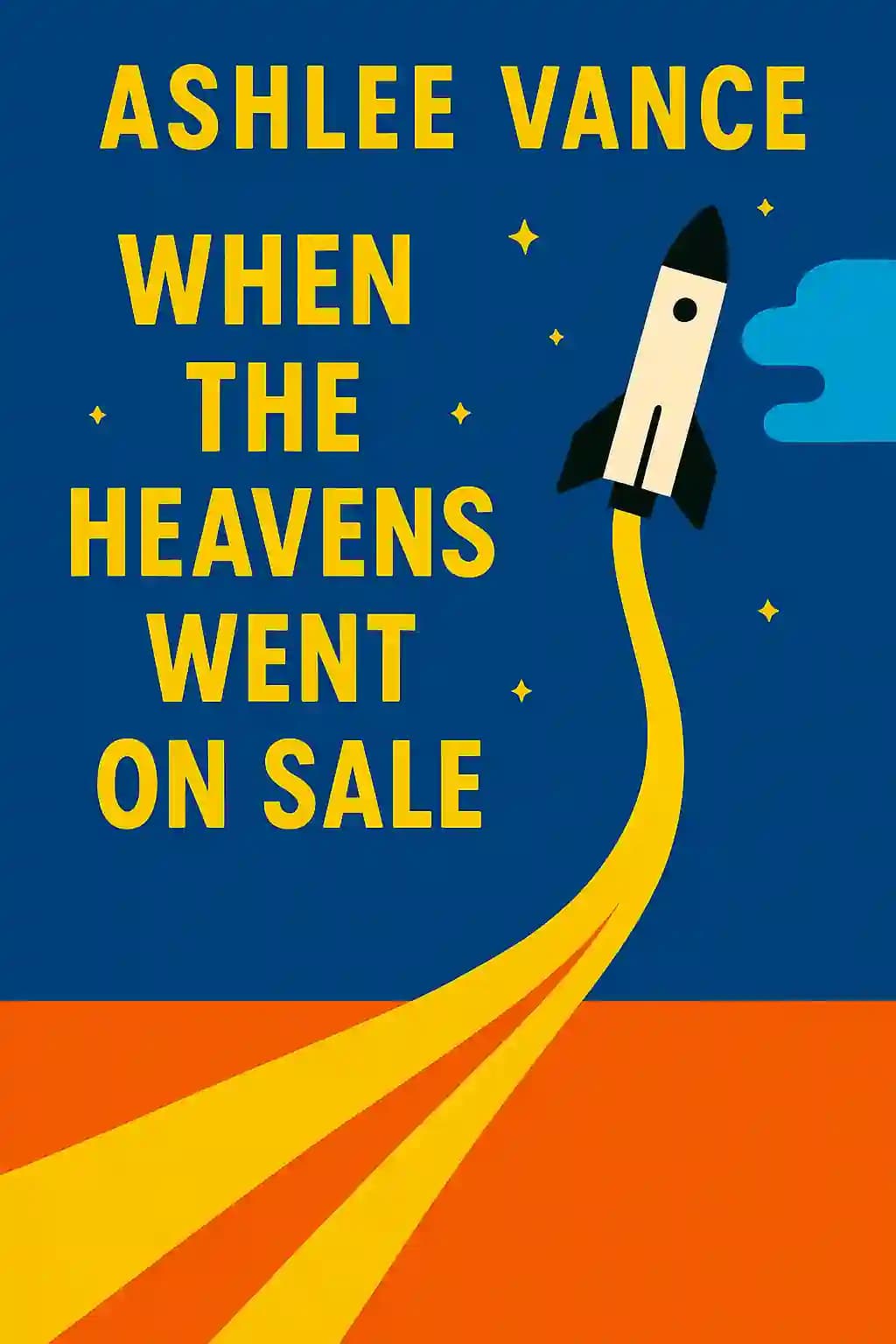
Ashlee Vance's instant NYT bestseller unveils how maverick entrepreneurs slashed space costs and doubled satellites in orbit. Now an HBO documentary, this thrilling race of misfits and geniuses reveals how the final frontier became our next marketplace.
Ashlee Vance, bestselling author of When the Heavens Went on Sale and acclaimed technology journalist, combines deep industry insight with narrative flair to explore the commercialization of space.
Known for his groundbreaking biography Elon Musk: Tesla, SpaceX, and the Quest for a Fantastic Future—a New York Times bestseller translated into over 20 languages—Vance brings decades of expertise covering Silicon Valley’s innovators. His latest work delves into the triumphs and turbulence of companies like Rocket Lab and Astra, reflecting his career-long focus on tech’s transformative power.
A former reporter for Bloomberg Businessweek and The New York Times, Vance also hosts Bloomberg’s Emmy-nominated series Hello World and founded Core Memory, a science-focused media company. His writing blends rigorous analysis with accessible storytelling, informed by firsthand access to industry leaders.
When the Heavens Went on Sale continues his tradition of spotlighting high-stakes innovation, cementing his reputation as a definitive chronicler of modern technology. Vance’s prior work has been adapted into television projects, including a drama series on Musk.
When the Heavens Went on Sale explores the rise of private space startups like Astra, Rocket Lab, Planet Labs, and Firefly, detailing their quests to democratize space access. Ashlee Vance chronicles the audacious entrepreneurs behind these companies, their technical challenges, and the geopolitical tensions shaping the "New Space" era. The book blends immersive storytelling with insights into the commercialization of low-cost satellites and rockets.
This book is ideal for space enthusiasts, tech industry followers, and readers interested in entrepreneurial innovation. It appeals to those curious about the intersection of private enterprise and space exploration, as well as fans of Vance’s storytelling style in Elon Musk. Critics note its optimism about privatization may resonate less with skeptics of corporate space ventures.
Yes, for its gripping narratives about risk-taking founders and the chaos of modern space races. Vance’s access to key players and vivid accounts of rocket launches, corporate drama, and geopolitical clashes make it a compelling read. However, some critics argue it underplays ethical concerns about privatizing space.
The book focuses on four startups:
While Elon Musk centers on a single visionary, Heavens examines an entire industry. Both highlight relentless innovation, but Heavens offers a broader view of collaborative (and sometimes chaotic) efforts in space privatization. Vance’s signature immersive reporting style anchors both works.
Critics argue the book overly romanticizes private space ventures, downplaying risks like orbital debris, monopolistic practices, and the militarization of space. Others note limited analysis of long-term societal impacts, focusing instead on founder narratives.
Vance details how U.S. startups like Planet Labs and Rocket Lab outmaneuvered Chinese competitors through faster innovation and private funding. However, he notes ongoing concerns about espionage and regulatory barriers limiting collaboration.
The book remains timely as private firms dominate satellite deployment and lunar exploration. However, Astra’s financial struggles and increased scrutiny of space sustainability highlight evolving challenges since its publication.
Senti il libro attraverso la voce dell'autore
Trasforma la conoscenza in spunti coinvolgenti e ricchi di esempi
Cattura le idee chiave in un lampo per un apprendimento veloce
Goditi il libro in modo divertente e coinvolgente
Space was no longer the exclusive domain of governments.
Modern computing could replace expensive 'space-grade' equipment.
Come in and do what we wanted.
Perfection [is] prioritized over innovation.
Monitoring environmental changes outweighs the risks.
Scomponi le idee chiave di When the Heavens Went on Sale in punti facili da capire per comprendere come i team innovativi creano, collaborano e crescono.
Distilla When the Heavens Went on Sale in rapidi promemoria che evidenziano i principi chiave di franchezza, lavoro di squadra e resilienza creativa.

Vivi When the Heavens Went on Sale attraverso narrazioni vivide che trasformano le lezioni di innovazione in momenti che ricorderai e applicherai.
Chiedi qualsiasi cosa, scegli la voce e co-crea spunti che risuonino davvero con te.

Creato da alumni della Columbia University a San Francisco
"Instead of endless scrolling, I just hit play on BeFreed. It saves me so much time."
"I never knew where to start with nonfiction—BeFreed’s book lists turned into podcasts gave me a clear path."
"Perfect balance between learning and entertainment. Finished ‘Thinking, Fast and Slow’ on my commute this week."
"Crazy how much I learned while walking the dog. BeFreed = small habits → big gains."
"Reading used to feel like a chore. Now it’s just part of my lifestyle."
"Feels effortless compared to reading. I’ve finished 6 books this month already."
"BeFreed turned my guilty doomscrolling into something that feels productive and inspiring."
"BeFreed turned my commute into learning time. 20-min podcasts are perfect for finishing books I never had time for."
"BeFreed replaced my podcast queue. Imagine Spotify for books — that’s it. 🙌"
"It is great for me to learn something from the book without reading it."
"The themed book list podcasts help me connect ideas across authors—like a guided audio journey."
"Makes me feel smarter every time before going to work"
Creato da alumni della Columbia University a San Francisco

Ottieni il riassunto di When the Heavens Went on Sale in formato PDF o EPUB gratuito. Stampalo o leggilo offline quando vuoi.
September 2008. A handful of SpaceX employees huddled around a laptop screen on a remote Pacific atoll, watching their fourth rocket attempt climb toward the stars. When Falcon 1 finally reached orbit, they erupted-chanting, dancing on the beach, celebrating something far bigger than a technical achievement. They'd just shattered a psychological barrier that had stood for half a century: space was no longer the exclusive playground of superpowers. Elon Musk had bet $100 million of his own money on a radical idea-that modern computing could replace million-dollar "space-grade" equipment, that stripping away bureaucracy could revolutionize rocket construction. That night's celebration marked the beginning of a transformation that would democratize the cosmos itself.