Capitolo 1
The Visionary Rebel: Elon Musk's Extraordinary Journey
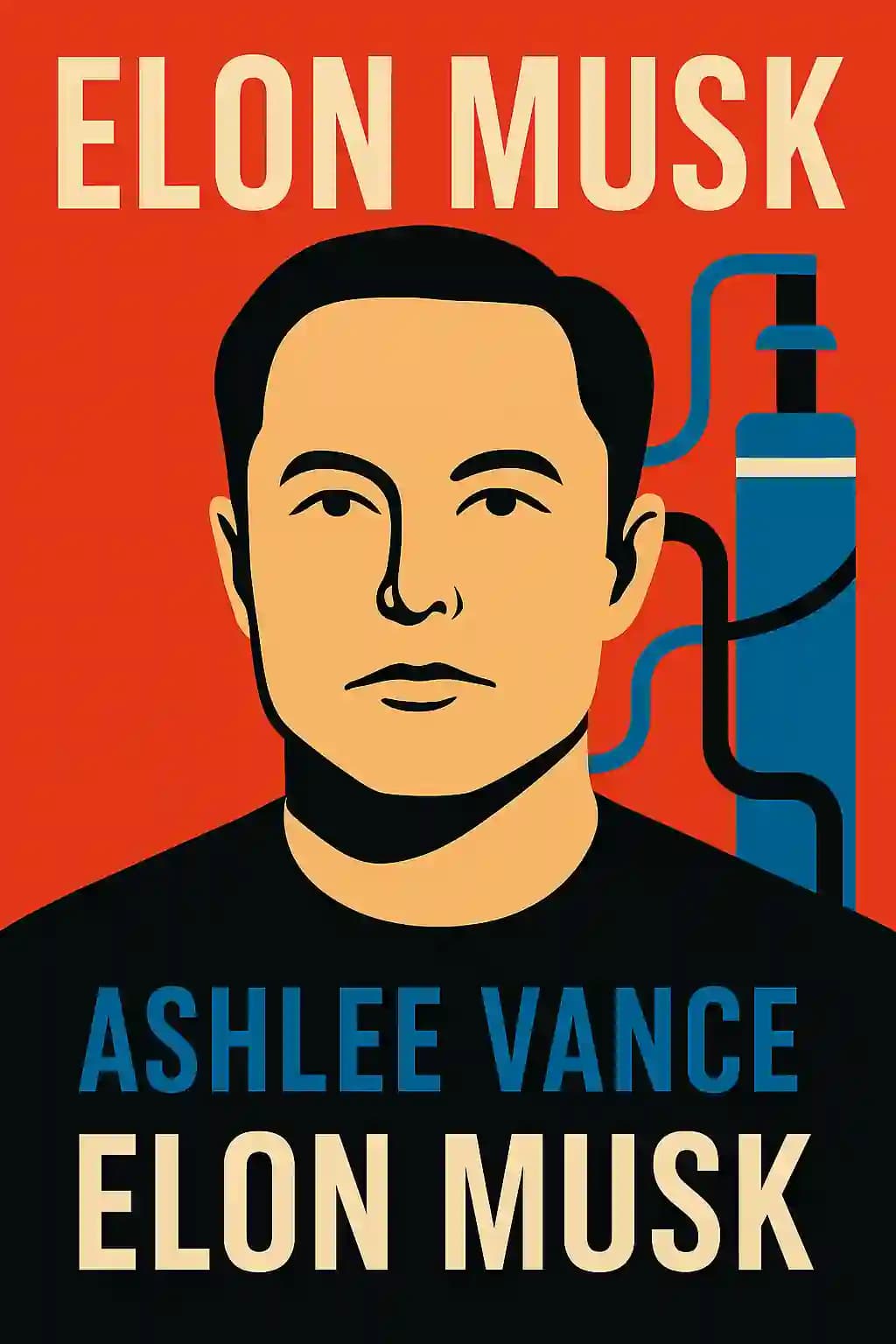
In the pantheon of modern innovators, few names evoke as much fascination, controversy, and awe as Elon Musk. Ashlee Vance's biography of this enigmatic figure has become required reading for entrepreneurs and technology enthusiasts worldwide, selling over a million copies and translated into 40 languages. The book's appeal transcends typical business narratives because it captures something rare - the unfiltered portrait of a man determined to transform not just industries but humanity's future. Bill Gates called it "surprisingly honest," while Mark Zuckerberg praised its insights into "building innovative teams." What makes this biography particularly compelling is how it reveals the complex humanity behind the headlines: a bullied child from South Africa who grew into a relentless force reshaping electric vehicles, space exploration, and sustainable energy. As we navigate an era of existential challenges, Musk's story offers a provocative question: Does our future require the vision and determination of someone willing to push beyond conventional boundaries, regardless of the personal cost?
Capitolo 2
From African Roots to American Dreams
The seeds of Elon Musk's extraordinary vision were planted in his childhood, where adventure and intellectual curiosity shaped his formative years. His grandfather, Joshua Haldeman, was a legendary adventurer who embarked on daring expeditions across Africa without modern navigation tools. These tales of exploration and risk-taking left an indelible mark on young Elon, instilling in him an unusual resilience and appetite for challenges that would later define his entrepreneurial journey.
Growing up in South Africa, Musk was surrounded by intellectual stimulation. His mother, Maye, was academically inclined and later became a successful model - a career she continues well into her sixties. This blend of beauty and brains provided Elon with a unique perspective on life's possibilities. Meanwhile, his father Errol, despite being a complex and often difficult figure, contributed technical knowledge as a master engineer. The household was tense under Errol's strict discipline, but it provided practical education that complemented Elon's theoretical pursuits.
Elon himself displayed extraordinary mental capabilities from an early age. He possessed a remarkable ability to visualize complex ideas, often becoming so immersed in thought that he appeared to be in a trance-like state. This intense concentration, combined with his voracious reading habit, allowed him to accumulate vast knowledge across various subjects. However, this intellectual prowess made him an outsider among peers who couldn't relate to his interests or thinking patterns.
High school was particularly brutal for Musk. He endured severe bullying that left him physically injured and emotionally scarred. For years, he faced constant harassment with little support at home, creating an environment of perpetual terror. Despite these challenges, Musk found some refuge at Pretoria Boys High School, where he participated in a computer-centered program that aligned with his technical interests. Even then, his peers didn't foresee his future success, though his early interest in unconventional fields like rocketry and renewable energy hinted at the visionary he would become.
At 17, Musk made a pivotal decision to leave South Africa for Canada - a strategic move to ultimately reach the United States while avoiding mandatory military service supporting the apartheid regime. His journey through Canada involved various jobs, including dangerous manual labor, which forged his resilient work ethic. This period of struggle and adaptation laid the groundwork for the tenacity that would later help him overcome seemingly insurmountable business challenges.
Capitolo 3
The University Years: Intellectual Awakening
Elon Musk's university experience marked a critical period of intellectual growth and self-discovery. Initially attending Queen's University in Ontario, he later transferred to the University of Pennsylvania, where he pursued dual degrees in economics and physics. This combination reflected his pragmatic understanding that business acumen needed to be paired with deep technical knowledge to create meaningful innovation.
At Penn, Musk's intellectual capabilities flourished in an environment that matched his aspirations. He formed a significant friendship with Adeo Ressi, with whom he created an off-campus living situation that blended serious study with social experimentation. Their house became known for legendary parties that funded their rent while providing Musk with social connections he had previously lacked. Yet even during these more carefree moments, Musk's mind remained focused on bigger questions.
It was during these university years that Musk's interests in energy, solar power, and technology solidified, foreshadowing his future ventures. His academic work revealed his ability to identify transformative technologies before they became mainstream. In particular, his essays on solar power and ultracapacitors earned high praise from professors who recognized his unique ability to connect technical concepts with practical applications.
What distinguished Musk from his peers was his insatiable curiosity and willingness to challenge conventional thinking. While other students were content with mastering the curriculum, Musk constantly pushed beyond assigned material, seeking deeper understanding and connections between different fields. This interdisciplinary approach would later become a hallmark of his business strategy, allowing him to identify opportunities at the intersection of seemingly unrelated industries.
The summer of 1994 proved pivotal in Musk's journey. Following a defining American road trip with his brother Kimbal, Musk secured two internships that would shape his future path. These experiences consolidated his fascination with ultracapacitors and emerging gaming technology, providing critical stepping stones toward his entrepreneurial vision. The road trip itself symbolized Musk's alignment with America's technological optimism - a belief that innovation could solve humanity's greatest challenges.
Capitolo 4
The Birth of an Entrepreneur: Zip2 and Beyond
Elon Musk's entrepreneurial journey began with Zip2, a venture born from his recognition of the internet's transformative potential when most people still viewed it as a novelty. In 1995, alongside his brother Kimbal, Musk established the company with minimal resources but maximum determination. Their concept was remarkably forward-thinking - essentially creating a precursor to modern location services by combining Yellow Pages information with online mapping capabilities.
The early days of Zip2 epitomized the classic startup struggle. The Musk brothers worked relentlessly from a small office that doubled as their living space, subsisting on fast food to conserve their meager resources. Initial funding was scarce - a small investment from their father and a crucial contribution from Greg Kouri barely kept the operation afloat. Yet their vision of filling a significant gap in the online landscape drove them forward despite the challenges.
Their sales approach was equally scrappy and determined. With the internet still unfamiliar territory for most businesses, the Musks adopted a door-to-door sales model, educating potential clients about the new digital frontier's possibilities. This hands-on approach highlighted the uphill battle of early digital entrepreneurship but also demonstrated Elon's willingness to do whatever was necessary to succeed.
A turning point came in 1996 when Mohr Davidow Ventures invested three million dollars in Zip2, transforming both its business model and physical operations. The company relocated to larger offices and hired top-tier developers to refine its products. This influx of capital and talent accelerated Zip2's growth but also brought new challenges for Musk, who found himself pushed into a technical management role while new CEO Rich Sorkin took over strategic leadership.
The company's trajectory wasn't without turbulence. An attempted merger with CitySearch unraveled amid financial disclosures that raised concerns within Zip2. During this period, Musk lost his position as board chairman, replaced by Derek Proudian following disagreements about the merger's direction. This transition marked a pivotal learning experience for Musk, introducing him to the complexities of corporate politics and the challenges of maintaining control as a company grows.
Despite these setbacks, Zip2's story concluded triumphantly with its sale to Compaq in 1999 for $307 million - a remarkable outcome for a startup launched just four years earlier. Musk personally gained $22 million from the deal, providing both financial security and valuable lessons that would inform his future ventures. Perhaps most importantly, this experience taught him about the delicate balance between innovation, leadership, and strategic partnerships - knowledge that would prove crucial in his subsequent endeavors.
Capitolo 5
PayPal and the Digital Finance Revolution
The sale of Zip2 transformed Elon Musk from a struggling entrepreneur into an internet millionaire with newfound confidence and capital. Rather than resting on his laurels, Musk immediately identified his next target: the inefficient financial sector. Drawing from his internship experiences, he recognized lucrative opportunities in handling third-world debt and financial transactions that traditional banks were overlooking.
In March 1999, Musk launched X.com, a bold attempt to revolutionize banking through online services. This venture wasn't merely conceptual - it represented a direct challenge to robust financial institutions by offering a fully digital bank that bypassed traditional bureaucracies. Musk invested $12 million of his own money from the Compaq deal, demonstrating his commitment to this vision despite widespread industry skepticism.
The challenges were immense. X.com faced regulatory hurdles, technological execution difficulties, and internal conflicts. A particularly dramatic moment came when Harris Fricker, initially brought in to help navigate banking regulations, attempted a coup against Musk's leadership. Despite this betrayal and the departure of several key team members, Musk remained resilient, maintaining the company's direction with his remaining loyal supporters.
X.com's innovative approach included radical offerings like rewarding new customers with cash and eliminating traditional banking fees. These strategies helped the company overcome its initial struggles and secure additional funding. However, the path forward became more complicated when X.com merged with Confinity, a company with a promising money-transfer service called PayPal. This fusion brought brand clashes and technological disagreements that exposed fundamental differences in vision.
The merged company experienced growing pains as competing factions formed around different technological approaches. Musk initially maintained control, but his grip weakened as internal opposition mounted. In a pivotal moment, while Musk was on a rare vacation, a coup led to his removal as CEO, with the company rebranding entirely as PayPal. Despite this personal setback, the company itself thrived, eventually being acquired by eBay for $1.5 billion in 2002.
This period revealed Musk's ability to identify transformative technologies ahead of the curve. Under his influence, PayPal pioneered concepts that would later become industry standards. The company also spawned what became known as the "PayPal Mafia" - a remarkable nexus of business and tech talent who would go on to create numerous successful ventures. Though Musk's tenure ended controversially, his vision had helped establish a cornerstone of digital finance that continues to influence the sector today.
Capitolo 6
Reaching for the Stars: The SpaceX Vision
As Musk approached his thirtieth birthday, he experienced something of an existential shift. The end of his "wonder kid" days coincided with X.com's transition to PayPal, leaving him restless and seeking new challenges. Silicon Valley no longer captivated him, and his gaze turned toward Los Angeles - not just for its glamour but for its aerospace connections. This move marked the beginning of Musk's cosmic ambitions.
Inspired by childhood fantasies and frustrated by NASA's seeming lack of ambition regarding Mars exploration, Musk began contemplating humanity's larger purpose in the universe. He immersed himself in the aerospace community, engaging with experts and enthusiasts alike. His thinking took a particularly bold turn when he contemplated a $15 million mission to send mice to Mars as a symbolic first step toward human interplanetary travel. While seemingly outlandish, this concept revealed Musk's willingness to consider unconventional approaches to space exploration.
In June 2002, Musk founded SpaceX with a revolutionary goal: drastically reducing the costs associated with space travel. At the heart of this ambition was the creation of the Falcon 1, a rocket designed to be both effective and affordable. Musk envisioned SpaceX as a vertically integrated company that would produce much of its technology in-house, thereby significantly cutting expenses compared to traditional aerospace contractors.
To realize this vision, Musk assembled a team of leading engineers, including the highly knowledgeable Tom Mueller for propulsion systems and Gwynne Shotwell for business development. This foundation-building coincided with a profound personal loss for Musk - the death of his infant son - which he navigated by channeling his grief into expanding SpaceX's horizons.
The company's approach to talent recruitment was as unconventional as its business model. Musk sought individuals with not only stellar academic credentials but demonstrated ability to create extraordinary results. Bryan Gardner, for instance, was approached during a casual gathering and quickly brought on board. Within six months, he had automated valve testing for the Merlin engine, reducing the process from five manual hours per valve to mere minutes - a achievement that significantly enhanced SpaceX's efficiency.
SpaceX thrived in an environment that demanded rapid solutions to seemingly insurmountable problems. Branden Spikes, who had previously worked with Musk, exemplified this spirit when he spearheaded the creative cabling of SpaceX's facilities without formal permission. This team-driven approach fostered a culture that prioritized progress over protocol, even as landlords noted the borderline legality of such operations.
Capitolo 7
Trials by Fire: SpaceX's Rocky Road
SpaceX's journey to success was anything but smooth. The company's ambitious goals faced numerous obstacles, from supplier relationships to launch failures that tested Musk's resolve and leadership. Traditional aerospace suppliers often couldn't match SpaceX's fast-paced innovation requirements, leading Musk to seek alternative manufacturers, including those in the Midwest skilled in producing large industrial containers. When delays occurred, Musk conducted personal inspections, demonstrating the intense pressure he placed on meeting rigid timelines.
The discovery of Kwajalein Atoll as a potential launch site arose from necessity, as established launch facilities presented too many obstacles for the young company. This remote location offered strategic advantages but required the team to establish makeshift facilities and adapt to unique logistical challenges while living in spartan conditions. On this isolated atoll, SpaceX developed an intense, camaraderie-driven culture where the lines between living and working blurred in pursuit of innovation.
The first test launch of Falcon 1 in March 2006 became a pivotal moment for the company. Despite meticulous preparation, unforeseen complications arose, including a vent failure during tanking that thwarted initial attempts. Each setback demanded resourceful solutions, including rapid turnarounds for replacement electronics. The team's ingenuity was constantly tested as they worked toward the long-anticipated moment of ignition.
Unfortunately, the early Falcon 1 launches resulted in a series of failures that would have crushed less determined companies. A fuel leak caused by a corroded nut led to the first rocket's explosion shortly after liftoff. The second launch reached space but failed to achieve orbit due to fuel slosh in the second stage. The third attempt faced a timing issue during stage separation, resulting in another failure. Each setback cost millions and invited skepticism from industry observers who doubted SpaceX's viability.
What distinguished SpaceX during this period was Musk's response to failure. Rather than retreating or scaling back ambitions, he maintained an unwavering commitment to the company's mission. After each failure, he led rigorous analyses to identify root causes and implement solutions. He also maintained transparent communication with his team and stakeholders, framing setbacks as valuable learning experiences rather than defeats.
This perseverance paid off in September 2008 when the fourth Falcon 1 launch successfully reached orbit, making SpaceX the first privately funded company to achieve this milestone. This breakthrough came at a critical moment, as the company's resources were nearly depleted. The success validated Musk's approach and secured SpaceX's future, opening the door to NASA contracts and further innovations that would revolutionize the space industry.
Capitolo 8
Tesla: Electrifying the Automotive World
While SpaceX was taking shape, Musk's vision for sustainable transportation was simultaneously materializing through Tesla Motors. The company's origins trace back to a fortuitous connection between Musk and J.B. Straubel, whose journey began with youthful scientific experiments and evolved into sophisticated electric vehicle innovations. Straubel's passion for electric propulsion, demonstrated through projects like converting a Porsche to electric power, resonated with Musk's growing interest in lithium-ion batteries' potential to reshape transportation.
Their collaboration sparked ambitious discussions ranging from electric aircraft to Martian colonization, foreshadowing Tesla's revolutionary approach. Straubel then connected with Martin Eberhard and Marc Tarpenning, who had founded Tesla Motors on June 1, 2003. Named after inventor Nikola Tesla, the company aimed to create luxurious, environmentally-conscious sports cars that would challenge conventional automotive industry norms.
Operating from a modest Menlo Park office, Eberhard and Tarpenning faced the daunting reality that no successful American auto manufacturer had emerged since Chrysler's inception in 1925. They recognized that crafting a vehicle from scratch involved significant obstacles in funding and manufacturing expertise. Studying established manufacturers like BMW, they observed that most vehicle components were outsourced, providing a potential strategy for their own production approach.
In their quest for investors, Tesla's founders ventured into Silicon Valley with a borrowed electric sports car prototype to demonstrate its thrilling capabilities. While the performance impressed, the vehicle's rudimentary appearance generated skepticism among venture capitalists. The breakthrough came when they approached Elon Musk, who, after brief deliberation, committed $6.5 million, becoming Tesla's critical early backer and chairman of the board.
As the team expanded, pioneering battery technology became Tesla's frontier. Recognizing the immense risk of battery fires, they conducted extensive experiments to mitigate this threat. These trials, initially conducted at Tesla headquarters before moving to safer dedicated facilities, led to breakthroughs in lithium-ion cell arrangements that effectively prevented fire spread, establishing Tesla's expertise in battery safety and innovation.
The Tesla Roadster evolved significantly from its Lotus Elise foundations, developing a distinct identity through sophisticated design processes. Models ranging from quarter-scale to full-size captured the envisioned aesthetics, integrating Musk's ambition for a balance of elegance and practicality. May 2006 marked a pivotal milestone with the completion of the EP1 prototype, a tangible embodiment of their vision ready for public scrutiny.
Capitolo 9
Tesla's Breakthrough: From Roadster to Model S
The unveiling of Tesla's Roadster prototypes in July 2006 marked a watershed moment for the company. Amid celebrity attendance and media buzz, the sleek design and formidable acceleration capabilities stunned observers, confirming Tesla's emergence as a serious contender in the automotive world. The high-profile event secured interest from tech moguls and investors, validating the company's approach. During this presentation, Musk outlined a cascading model strategy, starting with luxury vehicles before transitioning to more affordable options - a roadmap that would define Tesla's development for years to come.
However, the path from prototype to production proved challenging. The company grappled with the durability of the Roadster's transmission system, facing mounting costs and technical setbacks that threatened timelines. These difficulties were compounded by leadership tensions, as Eberhard's ability to navigate Tesla into mass production came under scrutiny amid rising costs. When Michael Marks revealed to Musk that building a single Roadster would cost $200,000 - well above its selling price - a leadership transition became inevitable.
Eberhard was replaced by Michael Marks, whose structured approach brought temporary stability but clashed with Musk's radical vision for the automotive industry. This tension reflected a fundamental question about Tesla's identity: was it primarily a car company that happened to use electric technology, or was it a technology company reinventing transportation? Musk firmly believed in the latter, leading to further leadership changes as Ze'ev Drori succeeded Marks.
Despite these internal challenges, Tesla persevered through the Roadster's development difficulties. The company managed to galvanize early customers' support despite setbacks and price adjustments. The Roadster ultimately served as a crucial stepping stone, demonstrating both the feasibility and desirability of electric vehicles at a pivotal moment for the industry.
The true game-changer, however, was the Model S - a vehicle that would reshape perceptions of electric cars worldwide. Under the design leadership of Franz von Holzhausen, who had previously worked at Volkswagen, GM, and Mazda, Tesla created a sleek sedan with revolutionary features like a touchscreen interface and aluminum body. Musk pushed for minimalist design elements, including retractable door handles and a lightweight structure that maximized the vehicle's efficiency and range.
The Model S development process involved relentless testing and overcoming numerous technical hurdles to achieve Musk's vision of an extraordinary electric vehicle. When finally unveiled, it captivated the automotive world with its combination of performance, technology, and environmental credentials. Motor Trend named it Car of the Year for 2012 - the first unanimous decision for a non-combustion vehicle - while Consumer Reports awarded it one of the highest ratings in the publication's history.
Capitolo 10
Reinventing the Automotive Experience
Tesla's Model S didn't just introduce a new electric vehicle; it fundamentally reshaped the automobile landscape, awakening competitors from their complacency. The sleek sedan, with its impressive range and rapid acceleration, symbolized a departure from conventional auto design principles. Its adoption spread rapidly from Silicon Valley tech enthusiasts to major U.S. cities, marking a shift in consumer perceptions about electric vehicles.
What distinguished the Model S was its minimalistic yet futuristic design. Features like retractable door handles and a 17-inch touchscreen control center contrasted sharply with traditional cars' button-laden interiors. This approach reflected Tesla's identity as a technology company rather than merely an automaker. The vehicle's electric drivetrain demonstrated remarkable efficiency, achieving three to four times the energy efficiency of internal combustion engines.
Tesla revolutionized not just the product but the entire customer experience. The company bypassed traditional dealerships in favor of company-owned stores, creating an interactive purchase process more akin to buying consumer electronics than automobiles. Service was reimagined with mobile technicians who could perform many repairs without requiring customers to visit service centers. Perhaps most revolutionary was Tesla's approach to continuous improvement through over-the-air software updates, allowing the car to gain new features and capabilities long after purchase.
This customer-centric approach extended to rapid responses to feedback. When early Model S owners reported issues, Tesla implemented solutions quickly, sometimes within weeks - a stark contrast to the traditional automotive industry's multi-year development cycles. This responsiveness created unprecedented customer loyalty and advocacy, with owners becoming enthusiastic ambassadors for the brand.
The Model S quickly gained wide recognition beyond early adopters. Traditional automakers, who had initially dismissed Tesla as a niche player, began to panic as the vehicle took the automotive world by storm. Motor Trend's unanimous Car of the Year decision and Consumer Reports' glowing review fueled both Tesla's sales and stock value, forcing established manufacturers to reconsider their electric vehicle strategies.
However, Tesla's journey wasn't without controversy. The company faced media scrutiny when several Model S vehicles caught fire after accidents. Musk responded with characteristic directness, publicly countering what he viewed as misinformation using data from the vehicles. This aggressive defense strategy protected Tesla's reputation and reinforced its image as a safe, reliable automaker despite being a newcomer to the industry.
Capitolo 11
The Unified Vision: Musk's Master Plan
By 2012, Musk's three main companies - Tesla, SolarCity, and SpaceX - had evolved from struggling startups to formidable forces disrupting their respective industries. What became increasingly apparent was how these seemingly disparate ventures actually formed parts of a cohesive vision for humanity's sustainable future. The companies collaborated effectively, leveraging insights across industries and establishing solid positions against well-funded competitors despite operating in heavily regulated sectors.
Tesla aimed to accelerate the world's transition to sustainable energy through electric vehicles and energy products. SolarCity (co-founded by Musk's cousins with his support) focused on making solar power mainstream and affordable for American homes. SpaceX pursued the goal of making humanity multi-planetary by dramatically reducing the cost of space travel. Together, these companies addressed what Musk viewed as the most critical challenges facing humanity: sustainable energy and species preservation.
The interconnections between these ventures created powerful synergies. Tesla's battery technology informed SolarCity's energy storage solutions, while SpaceX's materials science and manufacturing innovations influenced Tesla's production methods. This cross-pollination of ideas and resources allowed the companies to overcome challenges that might have defeated them individually.
Musk demonstrated remarkable political acumen in advancing his companies' interests. Despite being personally associated with environmental causes typically aligned with progressive politics, he skillfully navigated relationships across the political spectrum. This pragmatic approach secured crucial support for his ventures, including substantial financial incentives like the $1.4 billion package from Nevada for Tesla's battery Gigafactory. By creating jobs across multiple states, Musk's companies developed a nationwide footprint that further enhanced their political influence.
The Tesla vision expanded beyond luxury vehicles to encompass a comprehensive clean energy ecosystem. The ambitious Gigafactory plans, developed in partnership with Panasonic, aimed to dramatically reduce battery costs through economies of scale, enabling more affordable electric vehicles. This facility would eventually become the world's largest building by footprint, producing more lithium-ion batteries than all other global factories combined.
Meanwhile, SpaceX continued to advance toward Musk's ultimate goal of Mars colonization. By achieving cost-effective and frequent rocket launches, Musk envisioned eventually transporting millions of people to establish a self-sustaining colony on the red planet. This ambition required groundbreaking space travel technology, with the goal of creating a reality where Mars could support human life similar to early migrations to the New World.
Capitolo 12
The Mars Obsession: Humanity's Insurance Policy
Elon Musk's fixation on Mars colonization represents more than just a technological challenge or business opportunity - it embodies his philosophical view of humanity's future. For Musk, establishing a self-sustaining colony on Mars serves as an "insurance policy" for human civilization, protecting our species from potential extinction events on Earth. This perspective drives his relentless pursuit of space technology advancement, even when faced with skepticism and financial challenges.
The practical aspects of this vision are staggering. Creating a viable Mars colony would require transporting at least a million people to establish genetic diversity and industrial capacity. With an estimated cost of up to a million dollars per person, this represents an investment of unprecedented scale. The colonists would face extreme challenges, from the planet's harsh environment to the psychological impact of leaving Earth permanently. Musk likens this migration to historic human journeys like the settlement of the Americas - difficult and dangerous, but ultimately transformative for our species.
The engineering challenges are equally formidable. Musk's team at SpaceX developed a methalox rocket engine that could utilize Martian resources for return journeys. This innovation focuses on generating methane fuel from Mars' carbon dioxide atmosphere and subsurface water, creating a sustainable transportation system between the planets. Unlike complex kerosene-based systems, this approach aligns with the simplicity and resource availability necessary for Martian operations.
This obsession with Mars has personal costs for Musk. His relationship with Talulah Riley revealed the isolation of his journey, as late-night discussions about colonization highlighted how few people truly shared his vision. Musk has carefully weighed his personal desire to set foot on Mars against the greater mission of ensuring SpaceX's continuity, ultimately deciding that his greatest contribution would be building the company rather than participating in early manned missions.
The Mars vision extends beyond Musk's lifetime, with the timetable for transforming Mars into a habitable planet ranging from a century to a millennium. This long-term perspective distinguishes Musk from many business leaders focused on quarterly results. His willingness to invest in multi-generational projects reflects a rare commitment to humanity's distant future.
Initially dismissed as fantasy, Musk's Mars ambitions have gained credibility as SpaceX has achieved milestone after milestone in rocket technology. His ability to attract top talent to SpaceX underscores the inspirational power of this vision. For many engineers and scientists, the opportunity to contribute to potentially species-saving technology provides motivation beyond financial rewards. This mission-driven approach has enabled SpaceX to compete successfully against much larger aerospace contractors with decades more experience and significantly greater resources.
Capitolo 13
The Price of Vision: Personal Costs and Public Perception
Behind Elon Musk's technological achievements lies a complex personal journey marked by significant sacrifices and public scrutiny. His relentless drive has taken a toll on his relationships, perhaps most visibly in his marriages. Following his divorce from Justine Musk, their relationship devolved into a public dispute that played out in blogs and media coverage. Justine's candid posts highlighted Musk's unyielding nature and decision-making style, painting him as uncompromising and drawing public sympathies toward her perspective.
The financial settlement negotiations revealed both Musk's practical constraints - with most of his wealth tied up in company equity - and the emotional complexity of their separation. They eventually reached an agreement providing Justine with their house, $2 million, significant monthly alimony, and a Tesla Roadster. Post-divorce, their co-parenting arrangement reflected the formal distance between them, with schedules arranged through an assistant rather than direct communication.
Musk later met actress Talulah Riley at a London club during this challenging period. Despite initial skepticism, a connection formed as Riley showed genuine interest in his work beyond his wealth or status. Their relationship would follow a complicated path, including marriage, divorce, remarriage, and ultimately another separation. Riley provided unique insights into Musk's vulnerability amid his financial and business pressures, seeing beyond the public persona to the man navigating immense challenges while pursuing his visions.
The demands of running multiple revolutionary companies created tremendous pressure. During particularly difficult periods, such as 2008 when both SpaceX and Tesla faced potential bankruptcy, Musk experienced what he described as some of the worst stress of his life. The media often reveled in his companies' setbacks, adding public humiliation to financial pressure. Despite these challenges, Musk maintained a rational approach under extreme conditions, making crucial decisions that ultimately saved both companies.
Musk's management style reveals a highly driven personality that prioritizes mission success over personal sentiment. He often dismisses underperformers who impede progress, driven by a belief in the urgency of his projects. This intensity can make him a difficult boss, yet those who deliver results find opportunities for tremendous growth and impact. Despite his demanding nature, those close to him describe glimpses of warmth and care that rarely appear in public settings.
Public perception of Musk has evolved dramatically over time. Initially seen as a dreamer with grandiose plans, he gradually earned respect across industries by fulfilling promises and achieving what many considered impossible. His ability to attract exceptional talent to his companies underscores his inspirational impact, even as his unorthodox communication style and ambitious timelines continue to generate controversy.
Capitolo 14
Legacy in Progress: Redefining Possible
Elon Musk's journey represents an ongoing redefinition of what's possible in technology, business, and human achievement. His companies have transformed industries that seemed impervious to disruption, challenging conventional wisdom about electric vehicles, private space exploration, and sustainable energy. The impact extends beyond specific products to fundamental shifts in how we envision humanity's future.
Tesla has forced the entire automotive industry to accelerate its transition to electric vehicles. What began as a luxury sports car has evolved into a comprehensive clean energy ecosystem encompassing vehicles, solar power, and energy storage. The company's approach to vertical integration, direct sales, and over-the-air updates has challenged century-old business models, compelling traditional automakers to rethink their strategies. Perhaps most significantly, Tesla changed the public perception of electric vehicles from quirky, limited-range novelties to desirable, high-performance machines that represent the future of transportation.
SpaceX has similarly revolutionized access to space. By dramatically reducing launch costs through innovations like reusable rockets, the company has opened new possibilities for satellite deployment, space research, and eventually human exploration beyond Earth. The Falcon 9's sleek, functional design reflects a new era in aerospace technology that prioritizes efficiency and cost-effectiveness over traditional approaches. SpaceX's transformation from industry laughingstock to crucial NASA partner demonstrates how determined innovation can overcome entrenched skepticism.
Beyond specific achievements, Musk's greatest contribution may be his willingness to tackle problems others consider impossible or impractical. Whether developing electric cars with unprecedented range, landing orbital-class rockets vertically for reuse, or planning human settlement of Mars, he consistently pushes beyond conventional limitations. This approach has inspired a generation of entrepreneurs and engineers to think more ambitiously about solving humanity's greatest challenges.
Musk's legacy also includes his unique approach to company building. By creating organizations that combine Silicon Valley's innovation speed with traditional manufacturing discipline, he has established new models for bringing revolutionary products to market. His insistence on vertical integration - controlling critical components in-house rather than relying on suppliers - runs counter to prevailing business wisdom but has proven effective for achieving breakthrough innovations.
The personal cost of these achievements has been substantial. Musk's relationships, health, and public image have all suffered during particularly challenging periods. His management style, characterized by intense pressure and demanding standards, has created both devoted followers and vocal critics. Yet this combination of vision, determination, and willingness to sacrifice for long-term goals has enabled accomplishments that few thought possible.
As Musk continues pursuing ever more ambitious projects - from neural interfaces through Neuralink to underground transportation via The Boring Company - his ultimate legacy remains unwritten. What's clear is that his approach has already expanded our collective sense of possibility and redirected technological development toward some of humanity's most pressing challenges. Whether his grandest visions like Mars colonization will materialize remains to be seen, but the journey itself has already transformed multiple industries and inspired countless innovations that might otherwise never have existed.