Capitolo 1
Rethinking Everything You Know: The Art of Freakonomics
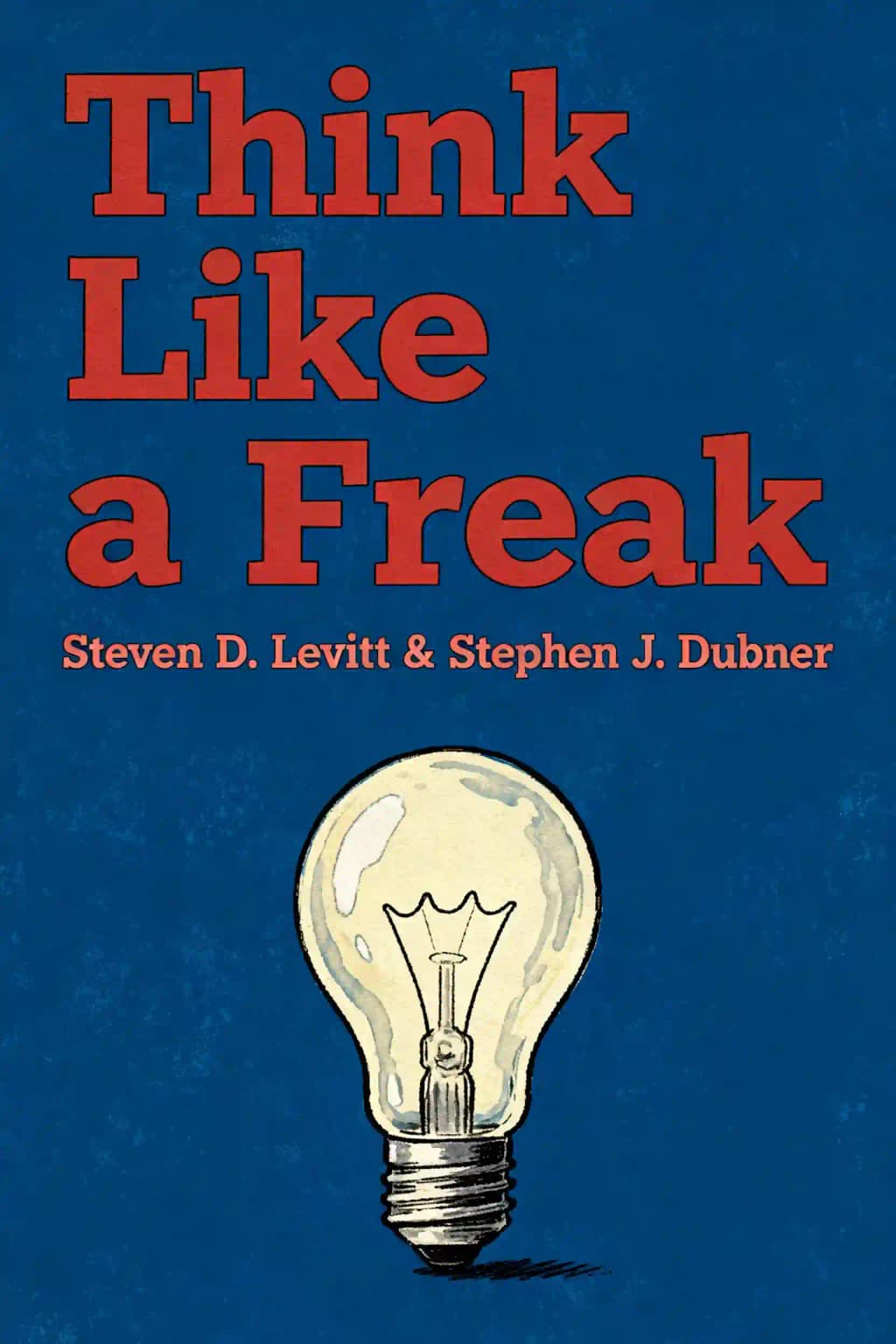
Have you ever wondered why the most logical solution isn't always the one people choose? Why a World Cup soccer player would deliberately avoid kicking to the center of the goal when statistics show it's the most successful strategy? In "Think Like a Freak," Steven Levitt and Stephen Dubner reveal the hidden psychology behind such puzzling decisions. Since its publication in 2014, this book has become required reading in business schools worldwide, praised by figures from Bill Gates to Malcolm Gladwell for its revolutionary approach to problem-solving. Building on their multimillion-copy bestsellers Freakonomics and SuperFreakonomics, the authors don't just explain how the world works-they teach you to see it through an entirely new lens. Their approach has influenced everything from corporate strategy at companies like Google to public policy decisions in governments around the world. The book's genius lies in showing how conventional wisdom often fails us, and how thinking differently-thinking like a "Freak"-can solve problems that traditional approaches cannot.
Capitolo 2
The Courage to Say "I Don't Know"
The three hardest words in the English language might surprise you: "I don't know." Our reluctance to admit ignorance creates a significant barrier to learning and problem-solving. We tend to confuse facts (scientifically verifiable truths) with beliefs (things we hold true without easy verification). This distinction becomes clear when examining religious beliefs across countries-84.5% of Maltese believe in the devil compared to just 9.1% of Latvians-or political beliefs, like the varying percentages of people in Muslim countries who believe Arabs carried out the 9/11 attacks.
The stakes get higher when we pretend to know more than we do about complex issues. Expert predictions often fail spectacularly-political forecasters in Philip Tetlock's 20-year study performed barely better than "dart-throwing chimps," while stock market experts achieved only 47.4% accuracy in their predictions. Even Nobel laureate economists make embarrassingly wrong predictions, like Paul Krugman's claim that "the Internet's impact on the economy has been no greater than the fax machine's."
Why do we pretend to know things? Because the personal cost of saying "I don't know" typically exceeds the cost of being wrong. When Harold Camping predicted the world would end in May 2011, causing widespread fear, he faced no consequences when his prediction failed. The incentives favor bold predictions-huge rewards await those whose predictions come true, while failed predictions are quickly forgotten.
Our moral compasses, while generally beneficial, can also interfere with problem-solving. When consumed with the rightness or wrongness of an issue like fracking or gun control, we lose track of what the issue actually is. A moral compass can convince us all answers are obvious when they aren't, that bright lines exist between right and wrong when they don't, and worst of all, that we already know everything we need to know.
The key to overcoming this barrier is embracing feedback and experimentation. Without feedback, learning is virtually impossible. While simple scenarios provide obvious feedback (like driving too fast around a curve), complex problems require deliberate experimentation to measure cause and effect. Yet many organizations resist experimentation, relying instead on tradition, gut instinct, or fear of admitting ignorance-like the major retailer that continued wasting millions on ineffective print ads rather than run a controlled experiment.
Capitolo 3
Redefining the Problem
Asking the right question is crucial to solving any problem. Most people define problems based on popular perception rather than careful analysis, focusing on aspects that personally bother them rather than true root causes. For example, in education reform, we often blame teacher quality when evidence suggests home-based factors like parental involvement and early childhood learning have greater impact on student performance.
Takeru Kobayashi revolutionized competitive eating by redefining the fundamental problem. Rather than asking "How do I eat more hot dogs?" like his competitors, he asked "How do I make hot dogs easier to eat?" Through meticulous experimentation, he developed the Solomon Method (breaking dogs in half), separated dogs from buns, and dunked buns in vegetable oil-spiked warm water to aid swallowing. He recorded data in spreadsheets, optimized his pace, and developed the famous Kobayashi Shake to create more stomach room. His methodical approach transformed competitive eating into a specialized sport requiring specific training and strategy.
Kobayashi's success teaches two crucial lessons: first, redefining problems often reveals innovative solutions; second, artificial barriers limit achievement-by refusing to acknowledge the existing record as legitimate, he doubled it. Eventually competitors caught up by adopting his methods, proving his techniques, not unique physical attributes, drove his success.
When solving problems, we typically focus on the most obvious, proximate causes rather than digging deeper to find root causes. While this instinct works for simple situations, it fails with complex societal issues. Consider poverty and famine-throwing money and food at these problems doesn't work because they're symptoms of deeper institutional failures. Similarly with crime, many plausible explanations for America's crime decline since the 1990s had minimal impact compared to factors like increased incarceration and the collapsing crack market.
Sometimes understanding root causes requires looking back generations. In modern Germany, Protestant areas earn about 1% more income than Catholic areas-a pattern tracing back to the 1517 Protestant Reformation. Similar historical patterns appear worldwide: Italian towns' civic participation reflects whether they were free city-states in the Middle Ages; African conflicts stem from colonial borders that arbitrarily split ethnic groups; South American mining regions where conquistadors enslaved locals remain poorer today.
Capitolo 4
The Power of Thinking Like a Child
When solving problems, channeling your inner child can be surprisingly effective. Children ask seemingly silly questions, but their curiosity is relentless and unbiased. Without preconceptions, they see things as they truly are-like the child who pointed out the Emperor had no clothes. Children aren't afraid to share wild ideas, and generating many ideas (even outlandish ones) is valuable as long as you can later distinguish good from bad. This "beginner's mind" approach has led to breakthroughs in fields from technology to medicine, where experts' established assumptions often block innovation.
While "big thinkers" get admiration, thinking small is often more productive. Big problems remain unsolved precisely because they're too complex-filled with entrenched incentives and complications. Even Isaac Newton advocated doing "a little with certainty" rather than explaining everything through conjecture. Small questions are valuable because they're less investigated, they tackle manageable pieces of bigger problems, they're more likely to trigger actual change, and they allow for precision rather than speculation. Consider how the polio vaccine wasn't discovered by trying to cure all viral diseases, but by focusing intensely on one specific problem.
One powerful example: economists discovered that simply providing $15 eyeglasses to Chinese schoolchildren who needed them improved learning by 25-50%-a small intervention with enormous impact that big-picture education reformers might overlook. Similar "small thinking" successes include using text message reminders to increase medication adherence and implementing simple checklists in hospitals to reduce surgical complications dramatically.
Another childlike quality worth cultivating is willingness to confront the obvious. Many insights come from asking questions others consider too simple or unsophisticated. While medical professionals ignored bacteria in ulcer patients' stomachs because conventional wisdom held the environment was too acidic, Barry Marshall asked the beautifully simple question: "What in the heck are these bacteria doing here?" By embracing simplicity and the obvious, he discovered that ulcers weren't spiritual failures but more like "blown gaskets"-easily fixed once properly understood. Similar breakthrough moments have occurred when scientists dared to ask seemingly obvious questions, like "Why do apples fall down instead of up?" or "Why do we sleep?"
Freaks like to have fun-another good reason to think like a child. Kids aren't afraid to like what they like, don't pretend to enjoy boring activities, and pursue fun relentlessly. Yet strangely, these traits evaporate in most adults by their twenties. In politics, academia, and business, appearing to have fun is often forbidden, as if it indicates you aren't serious. This mindset has led to countless missed opportunities and innovations, as creative solutions often emerge from playful experimentation.
But there's no correlation between appearing serious and being good at what you do. Research into "expert performance" shows raw talent is overrated-people achieve excellence through endless practice, which is nearly impossible without enjoying your work. Studies of Nobel laureates reveal that many maintained childlike curiosity and playfulness throughout their careers. Companies like Google and Pixar deliberately create playful work environments to foster creativity and innovation, proving that maintaining a child's sense of wonder can lead to remarkable achievements.
Capitolo 5
The Hidden Power of Incentives
Three-year-old Amanda had been potty-trained but backslid. When traditional methods failed, her economist father offered a simple incentive: a bag of M&Ms for using the toilet. It worked perfectly for three days, until Amanda discovered she could game the system by making minimal deposits multiple times per day to maximize her candy intake. Within four days, she went from potty-challenged to having "the most finely tuned bladder in history."
This illustrates the Freak's mantra: people respond to incentives. Understanding all players' incentives is fundamental to solving any problem, though incentives aren't always simple. Different types-financial, social, moral, legal-affect people differently in different contexts.
Financial incentives shape nearly every aspect of modern life, even our physical bodies. The average American adult weighs about 25 pounds more than decades ago-equivalent to wearing three gallon milk jugs around your neck for life. Food has gotten much cheaper, dropping from 13.4% of disposable income in 1971 to about 6.5% today. While nutritious foods have become more expensive, delicious, fattening options have gotten cheaper.
Non-financial incentives can be equally powerful and much cheaper. The key is understanding what truly motivates people, not just what they claim motivates them. Robert Cialdini's research revealed this gap dramatically: Californians ranked environmental protection as their top reason for conserving energy, yet in field experiments, the most effective message was "Join Your Neighbors"-the very incentive they'd ranked last.
Brian Mullaney transformed from a Madison Avenue ad man to a philanthropic innovator by creating Smile Train, which revolutionized cleft palate surgery delivery in developing countries. His most revolutionary innovation was the "once-and-done" approach-offering donors the option to give once and never be solicited again. Conventional fundraising wisdom considered this insane since repeat donors are the industry's lifeblood. Yet the strategy doubled first-time donor rates and increased average donations. Surprisingly, only one-third of donors chose to opt out of future communications, resulting in a 46% increase in overall donations while reducing mailing costs.
The success stemmed from novelty, candor, and giving donors control, but most importantly, it changed the framework of the charity-donor relationship from purely transactional to collaborative. This principle of framework-shifting has proven powerful in many contexts, from the Ping-Pong diplomacy that thawed US-China relations to Zappos transforming online shoe retail through extraordinary customer service.
Capitolo 6
Strategic Thinking: The Solomon Method
What could King Solomon, the wise biblical ruler who built Jerusalem's First Temple, possibly have in common with David Lee Roth, Van Halen's flamboyant frontman? Surprisingly, they share four traits: both were Jewish, both were known for their success with women, both contributed lyrics to number-one songs, and most importantly, both masterfully applied game theory principles.
King Solomon demonstrated his legendary wisdom when two prostitutes came before him, each claiming to be the mother of the same baby. Solomon's brilliant solution-threatening to cut the baby in half-revealed the true mother when she begged to give up her claim rather than see her child harmed. The imposter readily agreed to the splitting, exposing her deception.
Similarly, David Lee Roth employed strategic thinking with Van Halen's infamous contract rider demanding "NO BROWN M&Ms" backstage. Far from rock star excess, this clause served as a clever test to determine if venue promoters had thoroughly read their 53-page technical rider. Van Halen's elaborate stage show required precise specifications for safety reasons, and finding brown M&Ms signaled to Roth that the promoter might have missed critical technical requirements, prompting a thorough equipment check.
Both men faced the challenge of separating the guilty from the innocent when no one would confess. They created what economists call a "separating equilibrium"-conditions where liars and truth-tellers naturally respond differently, revealing themselves through their own behavior. This elegant technique, which we might call "Teach Your Garden to Weed Itself," exploits the fact that dishonest people respond to incentives differently than honest ones.
In medieval Europe, courts used "ordeals" to determine guilt when evidence was insufficient. Church records from 13th-century Hungary show that of 208 defendants forced to grab red-hot iron bars, nearly two-thirds were miraculously unharmed and exonerated. This wasn't divine intervention but "priestly rigging"-priests manipulated the ordeal to protect those they believed innocent. The system created a "separating equilibrium" where guilty defendants, believing God would reveal their guilt, often confessed rather than face the ordeal.
You can create your own "self-weeding garden" by designing systems that make people reveal their true nature. Zappos brilliantly offers new hires $2,000 to quit during training-a cheap way to identify employees not fully committed to the company culture, as those who value quick money over the job self-select out.
Capitolo 7
The Art of Persuasion
The opening of this chapter acknowledges that thinking like a Freak often leads to conflict when challenging orthodoxies. While the authors recommend simply changing the subject when facing resistance, they offer advice for those who must persuade the unwilling.
The Cultural Cognition Project study revealed that people with higher scientific literacy were actually slightly less likely to view climate change as serious. Surprisingly, those with better math and science skills were more likely to hold extreme views in either direction. This contradicts our assumption that education creates moderate views. Smart people may simply have more confidence in their opinions, regardless of which side they're on.
Remember that as the producer of an argument, only the consumer's vote counts. Your argument may be factually perfect and logically sound, but if it doesn't resonate with the recipient, you'll fail. A prime example: Congress spent nearly $1 billion on a national anti-drug media campaign targeting youth, yet studies found "no effects" and even "some evidence of pro-marijuana effects."
If you present a solution with all benefits and no costs, your opponent will never believe it. Using the example of self-driving cars, a persuasive argument acknowledges both the tremendous benefits (potentially saving millions of lives, reducing pollution, helping elderly and disabled people) and the legitimate concerns (technological limitations, job displacement for 3.6 million drivers, potential for hacking, and unforeseen consequences).
Acknowledging your opponent's valid points serves two purposes: it helps you learn from and strengthen your own position, and it keeps your opponent engaged in conversation. With self-driving cars, rather than dismissing safety concerns, acknowledge them while putting them in context. Yes, accidents will happen, but we've become inured to the current global toll of 1.2 million traffic deaths annually (including 180,000 children).
Name-calling is counterproductive to persuasion. Research shows negative information "weighs more heavily on the brain" and "bad is stronger than good" in the human psyche. A study of German schoolteachers found verbal insults were the strongest predictor of poor mental health. Insulting your opponents might damage their mental health, but it will never persuade them-it will only make them your enemy.
Stories are the most powerful form of persuasion because they create deep resonance beyond their individual components. They appeal to our narcissism by letting us put ourselves in characters' shoes, and they capture attention better than clinical information. Steve Epstein of the Department of Defense discovered this when creating "The Encyclopedia of Ethical Failure," a collection of true stories about federal workers' ethical violations that made rules more memorable than dry regulations.
Capitolo 8
The Upside of Quitting
While Churchill's famous "never give in" speech has inspired generations, there's a powerful case for strategic quitting. For most situations, unlike Britain during WWII, the stakes aren't existential, and quitting can be the smartest choice. Three forces bias us against quitting: cultural messaging that quitting equals failure, the sunk-cost fallacy (continuing because you've already invested), and overlooking opportunity costs (what else you could do with your resources). Failure should be reframed as valuable feedback that prevents wasted future effort.
At Intellectual Ventures, failure is celebrated as part of innovation. Their self-sterilizing surface project proved scientifically successful but economically unfeasible with current LED technology. After spending only $30,000 to discover this limitation, they held an actual wake with a cake, casket, and tombstone-treating failure as a learning opportunity rather than a catastrophe. When failure is demonized, people avoid it at all costs, as seen when a multinational retail chain's team leaders all gave green lights for a Chinese store opening despite an internal prediction market showing 92% odds of delay.
The tragic Challenger disaster illustrates the danger of ignoring warning signs. Despite Morton Thiokol engineers warning about cold weather damaging O-rings, NASA pushed forward with the launch that killed everyone aboard. To avoid such failures, psychologist Gary Klein recommends "premortems"-having teams imagine a project has failed and identify the reasons why before it's too late. Research by Professor Carsten Wrosch shows people who quit unattainable goals experience physical and psychological benefits, including fewer depressive symptoms, lower cortisol levels, and better immune functioning.
The authors share their own successful quitting experiences. Levitt abandoned his childhood dream of professional golf after being beaten by a fourteen-year-old, then quit prestigious political economics for the underserved field of crime economics after watching TV show Cops. His co-author quit both a childhood dream and a dream job, having started a rock band called The Right Profile that eventually signed with Arista Records. Despite the band's success and interactions with music legends like Clive Davis, Bruce Springsteen, and R.E.M., he realized the rock star lifestyle wasn't what he wanted. He preferred writing in solitude and having a family.
Quitting is at the very core of thinking like a Freak. It's about letting go-of conventional wisdom, artificial limits, fear of admitting what we don't know, and mental habits that restrict us. Even Winston Churchill, despite his famous "never give in" speech, was actually one of history's greatest quitters, frequently changing political parties and positions. Perhaps this pattern of strategic quitting built his fortitude to stand firm when it truly mattered against Hitler.
Capitolo 9
Breaking Free from Mental Prisons
The ultimate lesson of thinking like a Freak is that most limitations are self-imposed. We create mental prisons through conventional wisdom, fear of looking foolish, and unwillingness to admit ignorance. These self-imposed barriers manifest in countless ways - from executives refusing to challenge established practices to researchers clinging to flawed methodologies simply because "that's how it's always been done."
By embracing childlike curiosity, redefining problems, understanding true incentives, creating strategic tests that reveal truth, and knowing when to quit, we can solve problems that seemed impossible. This approach requires developing specific habits of mind: asking "stupid" questions, challenging assumptions others take for granted, and being willing to look at issues from radically different angles.
Consider how these principles work together in real-world scenarios: The World Cup penalty kicker who refuses to aim center despite better odds (approximately 60% success rate) is trapped by fear of looking foolish. The data clearly shows that goalkeepers dive left or right 94% of the time, yet kickers rarely exploit this opportunity due to social pressure. The retail executive who won't test advertising effectiveness is trapped by institutional incentives against admitting ignorance - it's safer to continue spending millions on traditional advertising than to question its value. The competitive eater who couldn't break records was trapped by artificial barriers until Kobayashi redefined the problem by separating hot dogs from buns and developing a revolutionary "Solomon method."
These mental prisons manifest in various forms across industries and cultures:
• Status quo bias: Following industry standards even when they're clearly inefficient
• Sunk cost fallacy: Continuing failed projects because of previous investment
• Social conformity: Avoiding innovative solutions that might invite criticism
• False constraints: Accepting artificial limitations without questioning their validity
What mental prisons are holding you back? What conventional wisdom do you follow without question? For instance, are you assuming your industry's traditional business model is the only viable approach? What problems could you redefine by challenging fundamental assumptions? What incentives truly drive behavior in your organization - not the stated incentives, but the real psychological and social motivators? What experiments could you run to test your assumptions, even if they seem obvious? What should you quit to focus on more promising opportunities?
The world's most intractable problems-from education to healthcare to poverty-persist not because solutions don't exist, but because our thinking is trapped in conventional patterns. Consider how Khan Academy revolutionized education by questioning the traditional classroom model, or how microfinance transformed poverty alleviation by challenging assumptions about lending to the poor.
By thinking like a Freak-questioning everything, experimenting boldly, and being willing to admit ignorance-we can break free from these mental prisons and find solutions hiding in plain sight. This might mean conducting small experiments, gathering data that challenges our beliefs, or simply asking "why" more often, like children naturally do.
The next time you face a seemingly impossible challenge, remember: the solution might not require more resources or expertise, but simply a different way of thinking. And that different way of thinking begins with three simple words that are surprisingly difficult to say: "I don't know." This admission of ignorance, rather than being a weakness, becomes the first step toward genuine understanding and innovative problem-solving.