Capitolo 1
When Economics Meets the Hidden Side of Everything
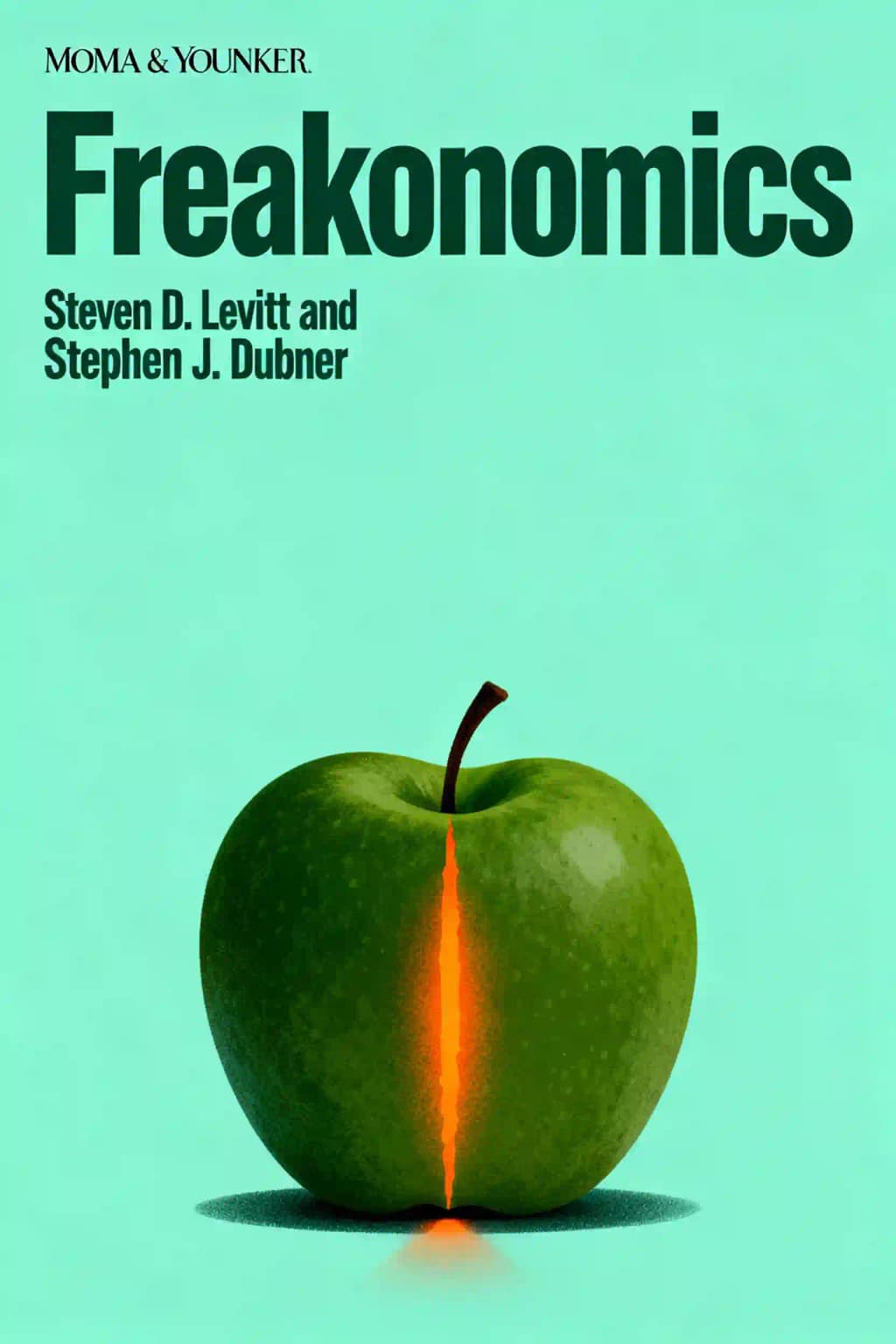
Ever wondered why drug dealers still live with their mothers? Or how a name might shape a child's destiny? In Steven D. Levitt and Stephen J. Dubner's groundbreaking work, conventional wisdom gets turned on its head through the lens of economic analysis applied to everyday mysteries. Since its 2005 publication, Freakonomics has sold over 4 million copies worldwide, becoming a cultural phenomenon that spawned a movie, podcast, and multiple sequels. Even Nobel Prize-winning economist Gary Becker praised it as "economics at its best." The book's genius lies not in complex formulas but in asking questions nobody else thought to ask-examining incentives, information asymmetry, and human behavior through fascinating case studies that reveal the hidden forces shaping our world.
Capitolo 2
The Economics of Everyday Life: Incentives Matter
At its core, economics isn't about money-it's about incentives and how people get what they want when resources are limited. Economists believe almost any problem can be solved with the right incentive structure, but reality often proves messier than theory suggests.
Consider what happened at Israeli day-care centers when economists implemented a $3 fine for late pickups. Rather than reducing tardiness, late pickups doubled. Why? The fine transformed a moral obligation into a simple economic transaction. Parents no longer felt guilty about arriving late-they were simply paying for additional service. When the centers later removed the fine, late pickups remained high because the social norm had already been broken.
This illustrates how incentives come in three flavors-economic, social, and moral-that work together in complex ways. Economic incentives involve money or material goods. Social incentives concern how others perceive us. Moral incentives reflect our personal values. When these incentives conflict, unexpected outcomes often emerge.
The power of incentives explains why real estate agents, despite claiming to represent sellers' interests, often subtly push clients to accept lower offers. Data from 100,000 Chicago home sales reveals agents keep their own homes on the market ten days longer and sell them for 3% more than client properties. Why? On a $300,000 home, working harder to get an additional $10,000 would earn the agent just $150 more in commission-hardly worth the effort from their perspective, though quite significant for the seller.
Similarly, conventional wisdom holds that money determines election outcomes, but the data tells a different story. While winning candidates typically outspend losers, this correlation doesn't imply causation. When examining races where the same candidates faced off multiple times with different spending levels, doubling campaign expenditures yielded just a 1% increase in votes. What matters isn't money but candidate quality-money follows appealing candidates rather than creating them.
Capitolo 3
When Experts Cheat: Teachers, Sumo Wrestlers, and Bagel Men
Given the right incentives, almost anyone will cheat - a truth that manifests across professions, cultures, and contexts. The education sector provides a particularly stark example. When No Child Left Behind legislation tied school funding and teacher evaluations to standardized test scores, it created powerful incentives for academic dishonesty. Teachers' careers, salaries, and job security increasingly hinged on their students' performance, leading some to take drastic measures. To combat this, economists developed sophisticated statistical tools analyzing answer patterns that defied probability - such as entire classes missing simple questions while acing complex ones, or multiple students making identical unusual errors on specific questions.
The investigation in Chicago public schools became a landmark case study in detecting academic fraud. When CEO Arne Duncan implemented surprise retesting in suspicious classrooms, the results were revealing. Control classrooms, where no cheating was suspected, showed consistent performance between initial tests and retests. However, in suspected cheating classrooms, scores plummeted dramatically - often by more than a full grade level. While only twelve teachers ultimately lost their jobs, the initiative sent shockwaves through the system. The following year saw a 30% reduction in suspicious score patterns, demonstrating how increased oversight can effectively deter cheating.
The world of sumo wrestling presents an equally compelling case of incentive-driven dishonesty. In Japan's national sport, where tradition, honor, and ritual reign supreme, a wrestler's rank determines everything - from basic salary and living quarters to the quality of food and personal attendants. Promotion requires achieving a winning record (eight or more victories) in the fifteen matches of a tournament. Statistical analysis of 32,000 matches revealed a striking pattern: wrestlers with 7-7 records (desperately needing one more win for promotion) won nearly 80% of matches against 8-6 opponents (who had already secured their promotion) - far exceeding the expected 50% win rate. The smoking gun came from analyzing subsequent matches between these same wrestlers in later tournaments, where the previously desperate 7-7 wrestlers won only 40% of the time, strongly suggesting a reciprocal match-fixing arrangement.
Yet human behavior isn't uniformly dishonest, as demonstrated by Paul Feldman's remarkable bagel business experiment. Operating purely on the honor system, Feldman delivered bagels and coffee to office buildings, leaving payment boxes for customers to settle their bills voluntarily. His detailed records over many years revealed fascinating patterns about human nature and honesty. Overall payment rates consistently hovered between 87-90%, though with notable variations. Smaller offices demonstrated higher honesty rates than larger ones, where anonymity perhaps reduced social pressure. Surprisingly, executive floor payment rates typically fell 2-3% below company averages, suggesting higher status didn't correlate with higher ethical standards. External factors also influenced payment rates - bad weather or challenging economic conditions decreased honesty, while major events like 9/11 temporarily boosted payment rates by 2%, perhaps reflecting heightened social cohesion. These findings support Adam Smith's observation that humans possess an inherent moral compass that enables social cooperation, even when oversight is minimal.
Capitolo 4
The Unexpected Causes of Crime Reduction
In the early 1990s, crime began falling dramatically across America after decades of increases. By 2000, the murder rate had dropped to its lowest level in thirty-five years. Experts rushed to explain this reversal with theories about innovative policing strategies, gun control laws, the booming economy, and increased incarceration. These explanations became conventional wisdom despite one problem: they weren't true.
The data tells a different story. While New York's "broken windows" policing received extensive media coverage, cities without such policies experienced similar crime reductions. Gun buyback programs made for good photo ops but had negligible impact-typical programs collected fewer than 1,000 guns when millions existed nationwide. Even city handgun bans in Washington D.C. and Chicago failed to prevent these cities from lagging behind in crime reduction.
Two factors actually drove most of the crime decline. First, the crack cocaine market collapsed. Contrary to popular belief, crack remains widely used today, but the enormous profits that once drove violent turf wars vanished as cocaine prices fell and dealers undercut each other. As veteran dealers were killed or imprisoned, younger ones decided the smaller profits weren't worth dying for. From 1991-2001, homicide rates among young black men fell 48 percent compared to 30 percent for older men.
The second and most powerful factor was entirely unexpected: the legalization of abortion following Roe v. Wade in 1973. Studies showed children born into adverse family environments were far more likely to become criminals. The women most likely to have abortions after Roe-poor, unmarried, teenage mothers-were precisely those whose children would have been most likely to commit crimes. When these potential criminals would have entered their prime crime years in the 1990s, crime rates instead plummeted.
This abortion-crime link isn't merely theoretical. Romania's 1966 abortion ban resulted in children more likely to become criminals. Similar patterns emerged across Eastern Europe and Scandinavia when women were denied abortions-even controlling for mother's income, age, education and health, unwanted children were more likely to engage in criminal behavior later in life.
Capitolo 5
Information Asymmetry: The Power of Hoarded Knowledge
Information asymmetry - when one party to a transaction has better information than another - fundamentally shapes economic and social interactions across society. This imbalance of knowledge creates power dynamics that can be exploited for both legitimate and nefarious purposes. The Ku Klux Klan's dominance in 1940s America provides a stark historical example of how controlled information flow can generate fear and influence. Their elaborate system of secret passwords, coded handshakes, and mysterious rituals created an aura of omnipresence and invincibility. Members used this manufactured mystique to maintain control through fear, with their apparent omniscience serving as a powerful tool of social control.
Stetson Kennedy's ingenious campaign against the Klan demonstrated how information asymmetry could be dismantled through strategic exposure. By methodically infiltrating the organization and systematically broadcasting their closely guarded secrets through mass media channels - particularly Drew Pearson's radio show and the wildly popular Adventures of Superman program - Kennedy transformed their mystique into material for public mockery. The Superman show portrayed Klan members as foolish villains, using their actual secret codes and rituals in storylines that children would later mock on playgrounds. This exposure proved devastating - meeting attendance plummeted, recruitment dried up, and their grip on power weakened substantially. Kennedy's approach revealed a fundamental truth: secretive organizations often derive their power more from perceived mystique than actual strength.
The Internet age has fundamentally restructured information asymmetries, democratizing access to knowledge that was once closely held by experts. Consumer review sites, price comparison tools, and instant access to product specifications have shifted power toward consumers in many markets. However, information crimes continue to evolve and persist, particularly in complex financial markets where expertise gaps remain wide. Financial experts often exploit these gaps - either by promoting misleading information or strategically withholding crucial details - to maintain their advantageous position. Most of these information crimes remain hidden until catastrophic failures expose them, as seen in the Enron scandal where recorded conversations revealed traders gleefully celebrating California wildfires that enabled predatory price manipulation.
The dynamics of information asymmetry extend deeply into personal relationships, particularly visible in online dating platforms which provide fascinating data about how people present themselves versus their actual preferences and behaviors. Users consistently engage in strategic information manipulation - 72% of women and 68% of men claim to have "above average" looks, a statistical impossibility. Income figures are routinely inflated, particularly by men, while both genders tend to subtract years from their age and add inches to their height. Traditional gender stereotypes manifest strongly in stated preferences: women consistently emphasize men's income and professional status, while men prioritize physical appearance and youth. Perhaps most revealing is the gap between stated and revealed preferences regarding race - while roughly half of white women and 80% of white men claim race doesn't factor into their dating choices, their actual messaging patterns show overwhelming same-race preferences, with white users predominantly contacting other white users. This disparity between declared values and actual behavior highlights how information asymmetry operates even in our most personal interactions.
Capitolo 6
The Surprising Truth About Parenting
Parents obsess over countless daily decisions in their quest to raise successful children - from selecting the perfect preschool to monitoring screen time to choosing between various enrichment activities. Yet extensive data from the Early Childhood Longitudinal Study, which tracked over 20,000 children from kindergarten through fifth grade, reveals sixteen key factors that correlate with children's academic performance and cognitive development - eight that demonstrate significant impact and eight that surprisingly show little to no effect.
The factors that meaningfully influence children's test scores and development include having highly educated parents (particularly those with graduate degrees), parents with high socioeconomic status (including both income and occupational prestige), a mother who was thirty or older at first birth (indicating greater maturity and resources), low birthweight (showing a negative correlation with achievement), English spoken at home (particularly in American educational contexts), being adopted (demonstrating a negative correlation), parents actively involved in the PTA (suggesting engagement with education), and having many books in the home environment (typically over 100 volumes).
Remarkably, several factors commonly believed to be crucial show no significant correlation with children's outcomes. These include maintaining an intact two-parent family, moving to a more affluent neighborhood, having a stay-at-home mother during early childhood years, participation in Head Start programs, frequent visits to museums and cultural institutions, disciplinary approaches including spanking, television viewing habits (within reasonable limits), and even being read to almost every day - a finding that challenges conventional wisdom about early literacy.
These findings point to a provocative conclusion: what parents ARE matters substantially more than what they DO. The presence of books in a home, for instance, serves as a proxy indicator of educated, intellectually curious parents rather than the actual act of reading being transformative. This fundamentally challenges mainstream parenting advice - specific parenting techniques and daily decisions appear highly overrated compared to parental characteristics and circumstances established long before child-rearing begins.
Adoption studies provide particularly compelling evidence by creating natural experiments that separate genetic influence from environmental nurture. Research consistently shows that children's outcomes - from academic achievement to personality traits - correlate strongly with their biological parents' characteristics rather than their adoptive parents'. By adolescence, adopted children's IQs show zero correlation with their adoptive parents' IQs but maintain strong correlations with their biological parents' cognitive abilities - suggesting that parental nurturing has surprisingly minimal impact on cognitive development compared to genetic predisposition and broader societal factors.
This doesn't mean parenting is irrelevant or that parents should abandon thoughtful child-rearing practices. Parents create the fundamental environment in which children develop and can significantly influence their children's values, social skills, and emotional well-being. However, the specific techniques and decisions parents agonize over daily appear less important than their overall circumstances, educational background, and established values. Good parenting might be better understood as avoiding major mistakes - like severe neglect or abuse - rather than implementing supposedly perfect strategies or following precise formulas for success. This perspective can actually be liberating for parents, suggesting they need not micromanage every aspect of their children's development to raise healthy, capable individuals.
Capitolo 7
What's in a Name? How Names Signal Social Status
The first parental decision-naming a child-reveals fascinating patterns about social signaling and cultural identity. Economist Roland G. Fryer Jr. analyzed California birth certificate data covering sixteen million births since 1961, revealing a stark naming gap between black and white parents that emerged in the early 1970s, likely influenced by the Black Power movement.
By 1980, a typical black girl received a name twenty times more common among blacks than whites. Today, over 40% of black girls receive names not given to any white girls in California that year. The data shows distinctively black names are most likely given by unmarried, low-income, undereducated teenage mothers from black neighborhoods who themselves have distinctively black names-possibly signaling solidarity with their community.
Names reflect how parents see themselves and their expectations for their children. The California data reveals strong correlations between names and socioeconomic factors, with clear patterns in naming preferences between middle-income and low-income families, as well as between highly-educated and less-educated parents.
The naming pattern follows a clear socioeconomic trajectory: names that catch on among high-income, highly educated parents gradually work their way down the socioeconomic ladder. For example, Lauren and Madison started as high-end names before becoming mainstream, while Amber and Heather moved from high-end to low-end status. Contrary to popular belief, celebrities have minimal influence on naming trends. Instead, parents are influenced by slightly higher-status families in their broader social circle-"the family just a few blocks over, the one with the bigger house and newer car."
But do distinctively black names actually harm children's prospects? While resume studies show employers are less likely to call back applicants with distinctively black names, Fryer's research suggests the name itself doesn't cause poor outcomes. Rather, the name serves as a signal of socioeconomic circumstances. A girl named "Precious" may face challenges not because of her name but because of the circumstances that led her parents to choose that name.
Capitolo 8
Testing for Discrimination in Modern Society
How can we measure discrimination in today's world when it has become increasingly subtle and complex? The game show "The Weakest Link" provides a unique natural laboratory for studying discriminatory behavior. Contestants answer trivia questions and vote to eliminate one player after each round, creating a microcosm of real-world decision-making. Strategically, players should eliminate poor performers in early rounds to build the prize money jackpot, then eliminate strong performers in later rounds to improve their chances of winning - a pattern that allows researchers to identify deviations based on bias.
Analysis of over 160 episodes reveals nuanced patterns of discrimination. Black and female contestants are eliminated at rates commensurate with their actual trivia performance abilities, suggesting significant progress from historical patterns of bias. This change likely stems from decades of civil rights and feminist movements making discrimination against these groups socially unacceptable and legally risky. However, elderly contestants face persistent taste-based discrimination, being eliminated disproportionately regardless of their skill level. Latino contestants encounter a different challenge: information-based discrimination, where they are perceived as poor players even when performing well - their actual performance fails to override preexisting stereotypes.
These patterns mirror broader societal trends across multiple contexts. When economists conducted resume studies, sending identical qualifications with either distinctively black names (like Jamal or Lakisha) or white names (like Emily or Greg) to employers, resumes with white names received 50% more callbacks for interviews. The magnitude of this disparity persisted across industry, company size, and job requirements. In online dating markets, despite claims of colorblindness - with roughly half of white women and 80% of white men stating that race doesn't matter in their dating preferences - behavioral data tells a starkly different story. White users overwhelmingly contact other white users, with Asian, black, and Latino men receiving significantly fewer responses from white women than white men with identical education, income, and attractiveness ratings.
The housing market shows similar patterns, with studies finding that minority home seekers are shown fewer properties than equally qualified white buyers. Even in digital platforms like Airbnb, hosts are more likely to reject guests with distinctively African American names, despite identical booking histories and reviews.
These findings suggest discrimination hasn't disappeared but has evolved into more subtle forms. Rather than overt bias, modern discrimination often manifests as statistical discrimination - using perceived group characteristics to make judgments about individuals when information is limited or costly to obtain. While this approach may seem rational from an information-processing perspective, it creates a self-perpetuating cycle that disadvantages group members who don't fit stereotypes. This evolution presents new challenges for policymakers and researchers working to ensure equal opportunity, as statistical discrimination can be harder to identify and address than traditional forms of bias.
Capitolo 9
The Freakonomics Approach: Asking Unconventional Questions
What makes Freakonomics unique isn't complex economic formulas but its approach to asking questions nobody else thought to ask. As Levitt explains, "I just don't know very much about the field of economics. I'm not good at math, I don't know a lot of econometrics, and I also don't know how to do theory. If you ask me about whether the stock market's going to go up or down, if you ask me whether the economy's going to grow or shrink, if you ask me whether deflation's good or bad, if you ask me about taxes-I mean, it would be total fakery if I said I knew anything about any of those things."
Instead, Levitt approaches economics as a set of analytical tools that can reach any subject, however offbeat. Like Adam Smith, who was first a philosopher and moralist before becoming an economist, Levitt explores how economic forces shape human behavior and choices. His true subject is the friction between individual desire and societal norms-examining how self-interested humans operate within moral frameworks.
This treasure-hunt approach follows whatever freakish curiosities arise-creating the invented field of "Freakonomics." By examining the objective merits of interesting cases and beginning with simple unasked questions, Levitt and Dubner reveal the hidden side of everything from schoolteachers to sumo wrestlers, real estate agents to drug dealers.
The power of this approach lies in its willingness to follow data wherever it leads, even when the conclusions prove uncomfortable or unpopular. While Freakonomics-style thinking may not materially improve readers' lives, it encourages skepticism of conventional wisdom and data-driven exploration. In a world increasingly driven by narratives rather than facts, this approach offers a refreshing alternative-reminding us that numbers don't lie, even when people do.
Capitolo 10
The Random Paths to Success and Failure
Despite parents' best efforts to control outcomes, random effects significantly impact life trajectories. This point is dramatically illustrated by contrasting two remarkable individuals: Roland G. Fryer Jr., who overcame abandonment and abuse to become a Harvard economist studying black underachievement, and Ted Kaczynski, who despite loving, education-focused parents, derailed after Harvard to become the Unabomber.
Fryer's mother abandoned him at birth, and his father was frequently imprisoned for sexual assault. Raised in poverty by his grandmother, he nearly followed his father into prison after being arrested for dealing drugs. Yet a basketball coach took interest in him, helping him apply to college where he discovered economics and eventually earned tenure at Harvard by age 30.
Kaczynski, conversely, grew up with devoted parents who prioritized education. A mathematical prodigy, he entered Harvard at sixteen and later became the youngest assistant professor at Berkeley. Yet he abandoned his promising career, retreating to a Montana cabin where he constructed bombs that killed three people and injured twenty-three others during a seventeen-year terror campaign.
These contrasting stories remind us that while parenting matters, its effects are neither as predictable nor as powerful as we might hope. Success and failure emerge from complex interactions between genetics, environment, personal choices, and random chance. This humbling reality doesn't mean we should abandon efforts to improve children's lives, but it suggests we should approach parenting with humility rather than certainty.
In the end, Freakonomics offers not definitive answers but a way of thinking-an approach to understanding the world through data rather than intuition, questioning conventional wisdom rather than accepting it, and following evidence wherever it leads. By revealing the hidden side of everything from crime rates to baby names, Levitt and Dubner remind us that beneath the surface of everyday life lie fascinating patterns waiting to be discovered by those willing to ask unconventional questions.