Behind the presidency: Jean Becker reveals George H.W. Bush's extraordinary post-White House life - skydiving adventures, unlikely friendship with Bill Clinton, and wheelchair courage. What made this NYT bestseller show America's 41st president as both statesman and beloved grandfather?
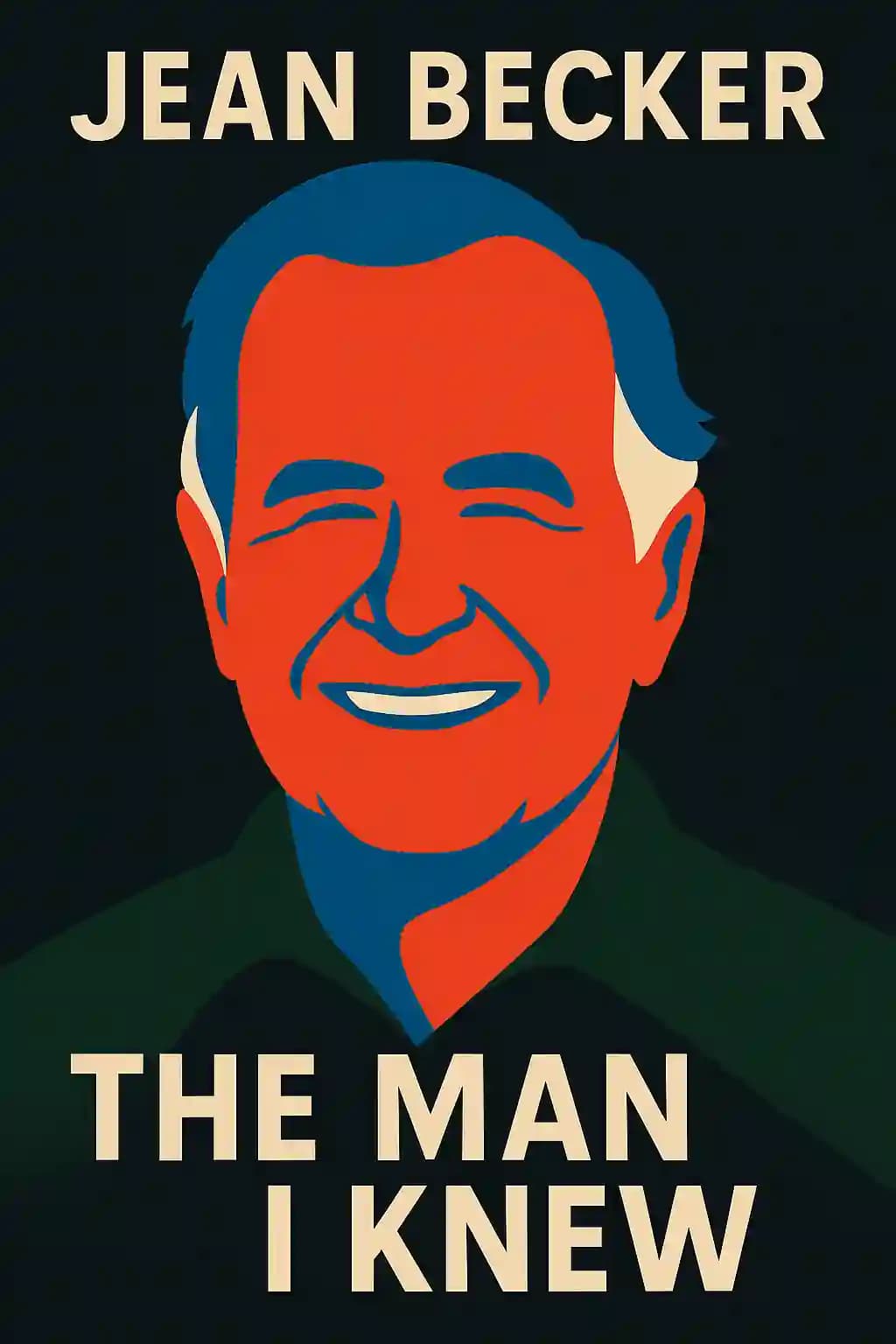
Jean Becker is the New York Times bestselling author of The Man I Knew: The Amazing Story of George H.W. Bush’s Post Presidency, drawing on her unparalleled access as his chief of staff from 1994 until his death in 2018.
A seasoned journalist and former deputy press secretary to First Lady Barbara Bush, Becker specializes in biographical works that blend political history with intimate portrayals of leadership. Her expertise in presidential affairs stems from decades of coordinating landmark events like the Bush-Clinton Katrina Fund and editing Barbara Bush’s memoirs A Memoir and Reflections.
Becker’s other works include Pearls of Wisdom and the 2024 release Character Matters: And Other Life Lessons from George H.W. Bush.
A University of Missouri Journalism Hall of Fame inductee, she serves on boards for Points of Light and the George and Barbara Bush Foundation. The Man I Knew has been celebrated for its heartfelt exploration of Bush’s legacy of compassion and diplomacy.
The Man I Knew chronicles George H.W. Bush’s post-presidency years (1993–2018), offering an intimate portrait of his leadership, philanthropy, and personal character. Jean Becker, his longtime chief of staff, shares behind-the-scenes stories about pivotal moments like the Bush-Clinton Katrina Fund partnership, his skydiving adventures, and his commitment to bipartisan diplomacy.
This book appeals to political history enthusiasts, leadership scholars, and admirers of George H.W. Bush. It’s ideal for readers seeking insights into presidential legacies, bipartisan collaboration, or the human side of public figures through personal anecdotes and never-before-shared correspondence.
Yes, particularly for its firsthand account of Bush’s humility, resilience, and dedication to service. Becker’s unique perspective—forged over 25 years as his confidante—reveals lesser-known facets of his life, including his response to personal loss and his role as a mentor to later presidents.
The book highlights Bush’s emphasis on quiet diplomacy, loyalty, and humility. Examples include his refusal to criticize successors publicly, his handwritten notes to strangers, and his collaboration with Bill Clinton on disaster relief efforts—a model of post-partisan leadership.
Bush navigated health struggles (including Parkinson’s disease), the deaths of close friends like Barbara Bush and Millie his dog, and the emotional weight of his son George W. Bush’s presidency. Becker details how he maintained optimism through family bonds and adventurous pursuits like skydiving.
Key initiatives include:
Becker combines professional insight (as chief of staff) with personal anecdotes, revealing Bush’s wit, vulnerability, and strict principles—like his “no negative campaigning” rule. She also shares archival materials, including letters showcasing his empathy.
Unlike comprehensive biographies (e.g., Jon Meacham’s Destiny and Power), Becker’s account focuses exclusively on post-White House years, emphasizing Bush’s evolution as a statesman and grandfatherly figure rather than political operator.
Some reviewers note the memoir avoids deeper analysis of Bush’s policy controversies (e.g., Iraq War). However, it intentionally centers on personal growth over political debates, reflecting Becker’s close relationship with her subject.
Becker portrays their 73-year marriage as foundational to his identity, detailing Barbara’s role as his “anchor” during setbacks. Touching moments include their shared grief over Robin’s death and playful banter during his post-presidency.
In an era of political polarization, Bush’s commitment to civility and coalition-building offers a timely blueprint. The book also humanizes leadership—showing how vulnerability and humor can coexist with power.
Senti il libro attraverso la voce dell'autore
Trasforma la conoscenza in spunti coinvolgenti e ricchi di esempi
Cattura le idee chiave in un lampo per un apprendimento veloce
Goditi il libro in modo divertente e coinvolgente
"Are you okay?" - his final words perfectly capturing his lifelong concern for others.
I lost the election, my mother died, my dog died, and my boat crashed.
I might be president but I am George and Barbara Bush's son first.
Fix it yourself, Sir George!
Scomponi le idee chiave di The Man I Knew in punti facili da capire per comprendere come i team innovativi creano, collaborano e crescono.
Vivi The Man I Knew attraverso narrazioni vivide che trasformano le lezioni di innovazione in momenti che ricorderai e applicherai.
Chiedi qualsiasi cosa, scegli il tuo stile di apprendimento e co-crea intuizioni che risuonano davvero con te.

Creato da alumni della Columbia University a San Francisco
"Instead of endless scrolling, I just hit play on BeFreed. It saves me so much time."
"I never knew where to start with nonfiction—BeFreed’s book lists turned into podcasts gave me a clear path."
"Perfect balance between learning and entertainment. Finished ‘Thinking, Fast and Slow’ on my commute this week."
"Crazy how much I learned while walking the dog. BeFreed = small habits → big gains."
"Reading used to feel like a chore. Now it’s just part of my lifestyle."
"Feels effortless compared to reading. I’ve finished 6 books this month already."
"BeFreed turned my guilty doomscrolling into something that feels productive and inspiring."
"BeFreed turned my commute into learning time. 20-min podcasts are perfect for finishing books I never had time for."
"BeFreed replaced my podcast queue. Imagine Spotify for books — that’s it. 🙌"
"It is great for me to learn something from the book without reading it."
"The themed book list podcasts help me connect ideas across authors—like a guided audio journey."
"Makes me feel smarter every time before going to work"
Creato da alumni della Columbia University a San Francisco

Ottieni il riassunto di The Man I Knew in formato PDF o EPUB gratuito. Stampalo o leggilo offline quando vuoi.
What defines us when the world stops watching? George H.W. Bush's final words-whispered to his aide just hours before death-weren't about legacy or politics. Opening his eyes one last time, he asked: "Are you okay?" This instinct to care for others, even in his dying moments, captures something profound about how we measure a life well-lived. Most defeated presidents retreat into bitterness or irrelevance. Bush did something different. After losing the 1993 election despite once holding a 91% approval rating, he transformed rejection into renewal, building a second act that rivaled his first. He jumped from airplanes at 90 despite Parkinson's confining him to a wheelchair. He partnered with the man who defeated him to save lives across continents. He proved that our greatest contributions often emerge not when cameras flash, but when character alone guides our choices. Losing the presidency crushed Bush initially. The fall from global power to private citizen happened overnight, leaving him disoriented and raw. During a Caribbean cruise shortly after leaving office, he drafted a memo outlining his new life: make enough money for Barbara's security, build his presidential library, spend time with grandchildren, help others, stay active. Just as importantly, he listed what to avoid: interfering with President Clinton, playing kingmaker, cheapening the presidency, or trying to control his historical narrative. That first year tested him. At his lowest point, Bush lamented: "I lost the election, my mother died, my dog died, and my boat crashed."
The loss cut deep. Bush codified his experience into "10 Rules for Former Presidents"-get out of Washington quickly, never criticize successors, be kind to autograph seekers, avoid the limelight, count your blessings. By 1994, something shifted. Bush emerged with astonishing energy: 111 speeches, 48 candidate campaigns, 22 foreign countries visited. When his chief of staff retired, he asked me to fill in temporarily. That arrangement became permanent. His sons' gubernatorial campaigns helped heal his wounds. Bush realized his defeat had opened doors for their political futures-a silver lining he cherished deeply. When George W. Bush took office in January 2001, Congressman John Dingell suggested they use their presidential sequence numbers: "41" and "43." Bush embraced this enthusiastically, slapping "41" on everything from T-shirts to golf balls. His favorite inauguration moment came that evening. Soaking in a White House bathtub, Bush received word that "the president would like for him to join him in the Oval Office." Despite his achy 76-year-old body, he hurried downstairs and broke down seeing his son already signing papers at the presidential desk.
Their relationship remained wonderfully normal. When the president put his feet on Barbara's coffee table at Walker's Point, she promptly told him to remove them-she was "still his mother" regardless of his title. Yet tensions arose when General Scowcroft publicly opposed the Iraq invasion. Though Scowcroft had given Bush 41 advance notice, the younger Bush vented loudly enough that "the entire West Wing heard." Despite this, their bond remained paramount. When Barbara experienced concerning symptoms, George W. called from the Oval Office: "I might be president but I am George and Barbara Bush's son first." The elder Bush's love was equally profound. In a 2003 letter, he wrote about his son's leadership: "I shamefully choked up, the tears running down my aging cheeks... a visible manifestation of a father's concern, a father's love." Bush's passport stayed remarkably busy after leaving office. World leaders treated him as if he'd never lost-Emperor Akihito rearranged his schedule on short notice, and countless heads of state sought private meetings at Yitzhak Rabin's funeral. Queen Elizabeth knighted him, prompting Barbara's teasing note: "Fix it yourself, Sir George!" Fourteen countries bestowed their highest national honors.
His travels weren't without danger. Saddam Hussein once plotted his assassination in Kuwait. A harrowing journey through terrorist territory to meet Lebanese Prime Minister Hariri required Syrian military protection. His CIA background remained evident-during a meeting with Boris Yeltsin, Bush instructed an aide to document every detail: "Our briefers back home will be very interested in every detail of that meeting." In 2006, appointed UN special envoy for Southeast Asian earthquake relief, Bush insisted on visiting Pakistan despite security concerns. Their flight over Afghanistan and Iran required bulletproof vests and helicopter transportation with machine gun-wielding security forces flying zigzag patterns over Islamabad. As Brian Mulroney eulogized: "When George Bush was President of the United States of America, every single head of government in the world knew they were dealing with a true gentleman, a genuine leader-one who was distinguished, resolute and brave." The unlikely bond between Bush and Bill Clinton became one of America's great political mysteries. Their friendship began at the Clinton Presidential Library dedication in 2004. After the devastating Indian Ocean tsunami, President George W. Bush asked his father and Clinton to lead private sector fundraising.
What began as diplomatic duty became genuine friendship. They donated $12 million directly to tsunami relief, financing fishing boats in Thailand, schools in Indonesia, and a pediatric hospital in Sri Lanka. Their approaches complemented perfectly-Bush favored large-scale projects like $5 million for rebuilding libraries, Clinton funded smaller initiatives like choir robes for a New Orleans church. Their bond deepened at Pope John Paul II's funeral, where a delayed motorcade found them calmly chatting and posing for photos with a surprised Iranian delegation while aides panicked. After Hurricane Katrina, they raised $130.6 million. Clinton visited Bush in Maine every summer. After Barbara died in April 2018, Clinton came for a long lunch, telling stories while Bush listened and smiled. Walking to his car, Clinton broke down, making me promise to call him for one last visit when the end was near. At Bush's funeral, Clinton collapsed sobbing into my arms, followed by Hillary and Chelsea. They had indeed come a long way since 1992.
Bush's kindness manifested through consistent small actions. He habitually offered rides home to everyone from reporters to General Colin Powell, creating such logistical challenges that I arranged a bus at the 2004 Republican convention. Each summer, he hosted over a hundred overnight guests at Kennebunkport. At a 2001 Amy Grant concert, Bush spontaneously sponsored a Filipino child named Timothy through Compassion International. For three years, they exchanged letters with Bush signing as "George Walker." His first letter read: "I am an old man, 77 years old, but I love kids; and though we have not met, I love you already." Timothy discovered his pen pal's true identity only after graduating. After the 2003 Columbia disaster, Bush visited NASA without press coverage, shocking officials accustomed to publicity-seeking VIPs. He toured mission control, spoke with Space Station astronauts, and personally comforted grieving engineers. Bush's conviction that "any definition of a successful life must include serving others" drove him to establish Points of Light. Despite campaign advisors' skepticism, he personally signed congratulatory letters until his death. Today, Points of Light operates in 37 countries.
Working for Bush taught me invaluable lessons: think big, make a difference, don't fear the arena, live with joy. But deeper lessons emerged-embrace new ideas, admit mistakes, don't judge or hold grudges. Bush constantly surprised me with his big thinking. When I considered becoming a columnist, he suggested buying a newspaper instead. Bush exemplified willingness to evolve, particularly on same-sex marriage. In 2004, he confessed the concept confused him, writing he was "getting old at just about the right time" as his traditional beliefs seemed headed for "the dust bins of history." Yet when aide Michael Dannenhauer came out in 1998, Bush immediately assured him: "I love you, nothing would ever change that, you are family." By 2013, he attended the same-sex wedding of Bonnie Clement and Helen Thorgalsen in Kennebunkport. Bush's commitment to truth shone through a World War II revolver story. When the gun was returned decades later, I suggested proceeding with the ceremony even if he wasn't certain it was his. Bush firmly stated: "I would know." This unwavering commitment to truth, even when no one would discover otherwise, exemplified his character. Bush's extraordinary energy gradually slowed after hip replacements, back surgery, and a 2010 Parkinson's diagnosis. He accepted his new normal with grace and humor, continuing public appearances. The Bushes' connection deepened with age. When I suggested separate bedrooms due to snoring, Bush was appalled: "I have to be able to reach out during the night and touch her and make sure she is there." After Barbara died in April 2018, Bush rallied through grief, spending one final summer at Walker's Point-his first without Barbara since 1945. On November 30, 2018, Secretary Baker visited twice. When Bush asked where they were going, Baker replied, "You are going to heaven." "That's where I want to go," Bush answered. That night, Baker was rubbing his friend's feet when Bush passed away. His last words to his oldest son: "I love you, too." Though Bush hated the word "legacy," his 2003 advice best encapsulates his approach: Don't get down when life takes a bad turn. Don't blame others. Give credit when things go well. Listen more than talk. Help friends in need. Be kind and thankful. These principles proved that our truest measure isn't what we achieve when the world watches, but who we become when it looks away.