Capitolo 1
Movement as Medicine: The Joy That Transforms Body and Mind
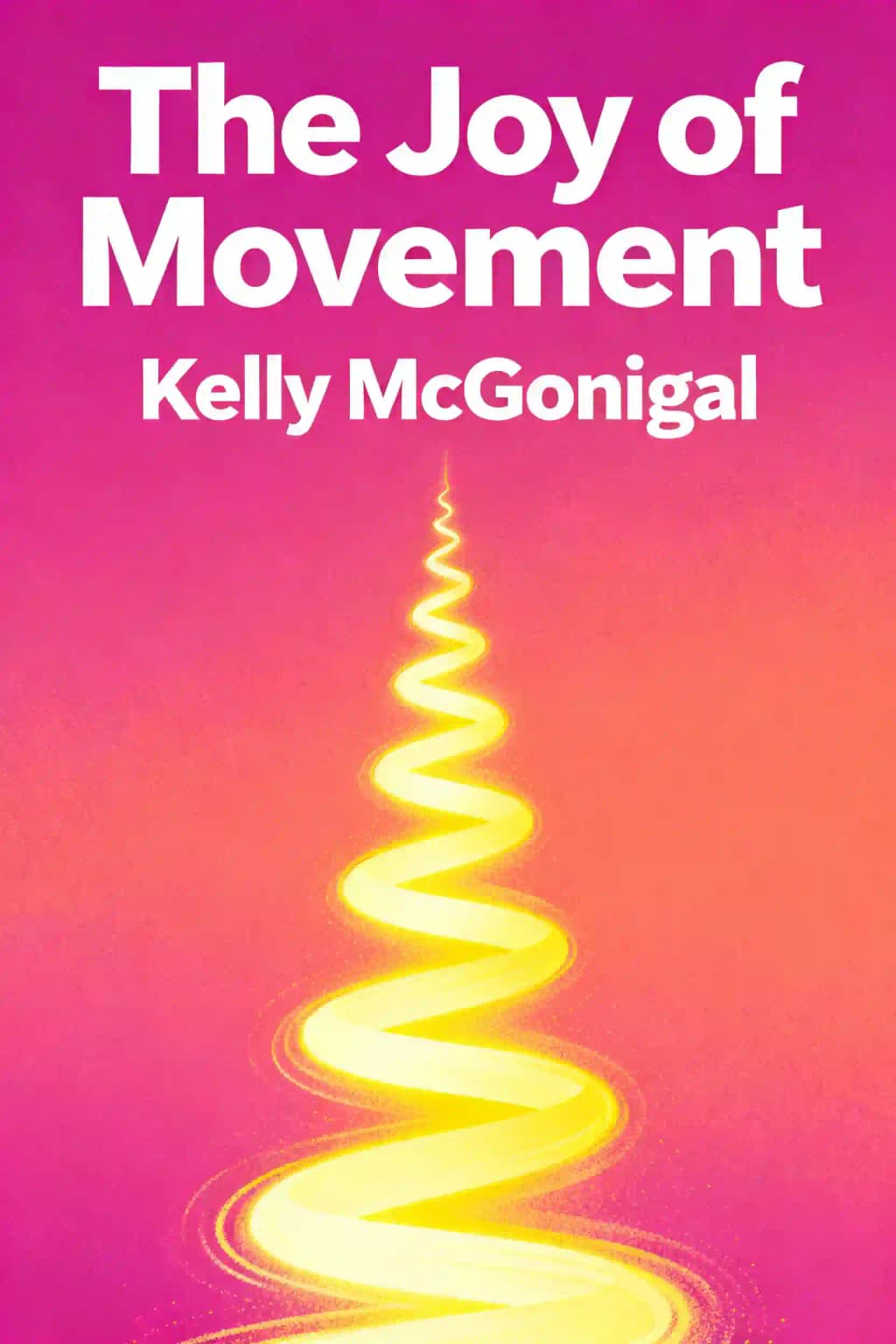
Have you ever wondered why a simple walk can clear your mind after a stressful day? Or why dancing to your favorite song feels like pure liberation? The answer lies deeper than you might think. Kelly McGonigal's "The Joy of Movement" reveals a profound truth: we are neurologically wired to find happiness through physical activity. This isn't just another fitness book-it's an exploration of what makes us fundamentally human. Oprah Winfrey called it "a revolutionary approach to movement that will transform how you feel about exercise," while Jane McGonigal noted it's "the first book to explain how movement creates happiness, meaning, and connection." As exercise participation declines globally despite overwhelming evidence of its benefits, McGonigal's work arrives at a crucial moment, offering a perspective that could revolutionize how we think about physical activity-not as a chore, but as our birthright to joy.
Capitolo 2
The Persistence High: Our Evolutionary Reward System
The runner's high isn't just for elite athletes-it's our evolutionary inheritance. This blissful state, often compared to spiritual transcendence or falling in love, emerges from any sustained physical activity after significant effort. It's not just about endorphins; it's the brain's reward for persistence.
The latest science makes a compelling case: our capacity for exercise-induced euphoria directly connects to our ancestors' lives as hunters and gatherers. Two million years ago, climate changes transformed East Africa's forests into grasslands, forcing early humans to travel extensively for food. Those who survived were those whose bodies could endure the hunt.
The fossil record reveals anatomical adaptations appearing between one and two million years ago-stiffer feet replacing the curved, branch-clasping feet of tree-dwelling ancestors, thighbones 50% longer than earlier hominids, wider shoulders, and smaller forearms-all supporting efficient running strides. Modern humans possess numerous running adaptations: large gluteal muscles, long Achilles tendons, slow-twitch muscle fibers that resist fatigue, and a nuchal ligament (shared with wolves and horses) that prevents head-bobbing during running.
Anthropologist David Raichlen discovered that moderate jogging-not walking slowly or maximum-effort running-tripled endocannabinoid levels in runners' blood, creating the characteristic euphoria runners describe. When he put dogs (who evolved to chase prey over distances) and ferrets (who hunt by stealth) on treadmills, only the dogs showed increased endocannabinoids after jogging-supporting the evolutionary theory.
This isn't specifically a "runner's high" but a "persistence high"-available through any moderately challenging continuous movement lasting at least twenty minutes. The key insight? You don't need to be an athlete to access this neurochemical reward. You just need to persist when it's difficult.
Capitolo 3
The Social Chemistry of Movement
The persistence high isn't just about feeling good-it's about fostering deep human connections. Research shows endocannabinoids are activated by three key triggers: cannabis, exercise, and social connection. This creates a powerful neurobiological link between physical activity and human bonding, suggesting our bodies are wired to reward both movement and meaningful social interaction.
When we exercise, our brains become especially primed for connection. Studies consistently show people report more positive family interactions after exercising, with reduced conflict and increased empathy. Couples who exercise together experience greater emotional closeness and relationship satisfaction, often reporting better communication and shared goal achievement. Even simple activities like walking together or joining group fitness classes can strengthen social bonds through shared endorphin release.
Anthropologist Herman Pontzer's research suggests that sharing behaviors were as crucial as running for early human survival. Hunter-gatherer societies depended on mutual cooperation, with successful groups developing strong social networks for food sharing and collective defense. This cooperation activated the brain's reward system through a cascade of neurotransmitters - dopamine, endorphins, and endocannabinoids - creating what researchers now term a "cooperation high." This same mechanism continues to reinforce social bonding in modern humans.
Organizations like GoodGym have brilliantly tapped into this connection between exercise and social bonding. Founder Ivo Gormley observed that traditional gym workouts represented wasted social potential and created a program connecting runners with isolated older adults and community projects. Participants might run to help an elderly person with gardening, combine a workout with painting a community center, or incorporate strength training while sorting food bank donations. For many members, GoodGym addresses their own social isolation while helping others, creating meaningful connections through shared purpose and physical activity.
The neurobiological benefits compound over time. Regular exercise increases the density of binding sites for endocannabinoids in the brain, particularly in regions associated with emotion and social behavior. This enhanced sensitivity affects both the runner's high and social pleasures like sharing and bonding. Research shows that consistent exercisers often report stronger social networks and greater satisfaction with their relationships. This makes the runner's high a surprising but effective antidote to modern loneliness - the same neurobiological reward system that kept our ancestors from starving may now satisfy our fundamental need for connection, demonstrating that humans are biologically programmed to need each other to truly thrive.
The implications extend beyond individual well-being to community health. Group exercise programs, running clubs, and social sports teams often report higher adherence rates than solo exercise routines, suggesting that combining physical activity with social connection creates a self-reinforcing cycle of positive behavior. This evolutionary legacy of movement-based social bonding offers a powerful tool for building stronger, more connected communities in our increasingly isolated modern world.
Capitolo 4
Getting Hooked: How Movement Becomes a Healthy Addiction
In the late 1960s, psychiatrist Frederick Baekeland conducted a groundbreaking study that revealed the powerful psychological grip of exercise. When he attempted to recruit regular exercisers to abstain for thirty days - offering up to $5,000 in today's money - most refused outright. Those who did participate reported severe psychological distress, including insomnia, anxiety, and restlessness, describing their experience as genuine exercise deprivation. This early indication of exercise's addictive potential opened up a fascinating field of research into how movement captures our minds.
Physical activity influences the brain's reward circuitry through multiple neurotransmitter systems, particularly affecting dopamine, endocannabinoids, and endorphins - the same pathways targeted by substances like cannabis and cocaine. Exercise enthusiasts demonstrate remarkable similarities to other forms of behavioral addiction: they show strong attentional bias toward workout-related cues, their heart rates increase when passing gyms, and their brains' craving circuitry lights up when viewing exercise images, much like smokers responding to cigarette cues. However, exercise stands unique among addictive behaviors because it actually strengthens rather than deteriorates the brain's reward system, promoting neural growth and balanced neurotransmitter function.
The distinction between normal mice and "super-runners" provides fascinating insights into the biological basis of exercise attachment. These super-runners, who voluntarily run up to twenty kilometers daily, possess physically larger midbrains and distinct neurotransmitter patterns, particularly in dopamine signaling. Their enhanced reward circuitry makes them become hooked on running more quickly and intensely. This research suggests humans might be "genetic super-runners" - our species evolved not just the physical capability for endurance movement, but also the psychological drive to seek it out and find it rewarding.
Individual variations in exercise response appear to have a strong genetic component. Some people experience more pronounced mental health benefits from physical activity, showing dramatic improvements in mood and anxiety levels after just a single workout. Research demonstrates that exercise immediately decreases anxiety and rumination, with effects becoming more pronounced over time. Regular physical activity specifically targets the amygdala and hippocampus - brain regions crucial for regulating fear and stress responses. This leads to increased neural connectivity and improved balance in the autonomic nervous system, effectively making people both braver and calmer through consistent practice.
The development of an exercise habit represents a unique form of behavioral attachment that differs fundamentally from harmful addictions. Rather than creating destructive dependency, physical activity changes the brain in ways similar to falling in love - activating bonding hormones like oxytocin and vasopressin. This process harnesses the brain's natural capacity to form deep attachments, helping us develop a joyful commitment to movement that enriches our lives across multiple dimensions. Regular exercisers often describe their relationship with movement as a vital partnership that provides structure, meaning, and emotional regulation to their daily lives.
Capitolo 5
Collective Joy: The Power of Moving Together
At Canada's oldest rowing club, masters women rowers experience a profound sense of unity as they move in perfect synchronization on the Ottawa River. This feeling of "total attunement" where individual boundaries dissolve into collective movement represents a phenomenon found wherever people move together in unison-from dance classes to religious rituals.
Psychology researcher Bronwyn Tarr discovered that synchrony-not just music or exertion-was crucial for creating social bonds. Dancers who moved in unison showed increased pain tolerance and stronger social connections. When participants took naltrexone, which blocks endorphins, synchronized movement no longer increased pain tolerance, confirming that collective joy is partly driven by endorphins.
The mechanism resembles the "rubber hand illusion," where synchronized visual and tactile feedback tricks the brain into perceiving a fake arm as part of one's body. Similarly, during synchronized movement, your brain receives feedback from your own body while simultaneously seeing others perform identical movements. When these inputs arrive together, your brain merges them into one unified perception, interpreting other bodies as extensions of your own.
One powerful side effect of collective joy is increased cooperation. After synchronized movement-whether walking in step, tapping to the same beat, or dancing together-people cooperate more, sacrifice for the greater good, and help strangers more readily. Even fourteen-month-old babies bounced in sync with an adult are more likely to help that person later.
Movement communities often create powerful rituals of support. When Susan lost her husband Henry after fifty years of marriage, her Nia instructor Caroline Kohles created a special class honoring him with his favorite classical music. The class celebrated a birthday, a wedding, and commemorated Henry's passing, ending with students swaying to "Lean on Me" while holding hands in a circle.
After disasters like the 2011 Great East Japan Earthquake or Hurricane Harvey, collective movement becomes not just evidence of resilience but a source of it. In Iwanuma City, where the tsunami claimed 180 lives, those who participated in group exercise were less likely to develop depression symptoms. Offering opportunities for synchronized movement represents a powerful form of civic engagement during recovery.
Capitolo 6
Let Yourself Be Moved: Music's Transformative Power
When we hear music, our brains and bodies respond with an irresistible urge to move-an instinct so fundamental it appears in newborns and activates our motor systems even when we remain still. This powerful connection between music and movement offers one of life's greatest pleasures: surrendering to music's command to be moved.
Throughout history, music has served as an ergogenic (work-enhancing) aid. From exhausted Civil War soldiers finding renewed strength through distant bugles to marathon runners energized by perfectly timed songs, music triggers powerful neurochemical responses that energize effort and alleviate pain.
Power songs share specific qualities that make them stimulating: strong beats, energetic feel, tempos of 120-140 beats per minute (a universally preferred cadence for human movement), and powerful "extramusical" associations that trigger positive emotions and memories. Lyrics prove most crucial for pushing through fatigue and pain-songs like Eminem's "Till I Collapse" (the most popular workout song ever) often emphasize perseverance with words like "work," "go," or "run."
At moderate exercise intensities, music reduces perceived effort, but during high-intensity struggles, it transforms the meaning of physical discomfort into evidence of determination and strength. The right playlist can fundamentally alter how we interpret sensations of effort, turning breathlessness and sweat into signs of growing stronger rather than being too out of shape.
Traditional dances worldwide embody universal expressions of joy through movement. Bhangra from India features bouncing, clapping and upward gestures, while the Israeli "Hava Nagila" dance involves nimble leaps with arms stretched overhead in circles. These dances persist not just as cultural legacies but as effective vehicles for expressing happiness.
Music stirs our most primal instincts, making us forget "centuries of civilization in a second," as Virginia Woolf wrote. Even when bodies cannot fully comply, the feeling of being moved persists-as one chronic pain sufferer described: "It feels like the music comes through my body... like I'm doing what the musicians are doing." Music also unlocks memories-a woman who learned to ski at sixteen still connects Beatles songs to mastering tight turns on the slope.
Capitolo 7
Overcoming Obstacles: Finding Strength Through Challenge
Physical challenges transform our deepest stories about ourselves. Our muscles serve as an "organ of sense" through which we understand our capabilities. Proprioception-our ability to perceive our body's movements-shapes not just physical coordination but our very self-concept. When you move powerfully, your brain concludes "I am powerful." When you move with strength, your brain decides "I am strong."
These physical sensations provide convincing evidence about who you are and what you're capable of. This explains why many athletes enjoy "the part when it's horrible" during intense exercise-that primal feeling confirms "I'm tough." Pamela Jo Johnson discovered kettlebell training at fifty, describing the power swing as "the greatest pleasure I have ever known with movement." Later, when encountering a fallen tree blocking traffic, Johnson felt "invincible"-her nervous system recalled the euphoric feeling of swinging a forty-four-pound bell and recognized she could "take on a giant."
Physical sensations from movement can counter negative self-talk about being too old, awkward, big, broken, or weak. Strength trainer Laura Khoudari notes that lifting more weight than you thought possible shows "you can handle more than you think." Minister and CrossFit coach Katie Norris discovered this through the partner carry-an exercise she avoided for seven years due to body shame. When she finally attempted it, carrying her husband across a beach, she felt transformed: "It's weird, because I literally carried someone, but it felt instead like a weight was lifted off."
At DPI Adaptive Fitness in Virginia, the "Wall of Greatness" celebrates members' accomplishments. Joanna Bonilla came to DPI after developing paralysis from lupus. Initially devastated by her body's "betrayal," she found hope at the gym. Her trainer helped her avoid depression by setting ambitious goals like regaining the ability to drive, which required developing upper body strength to transfer from wheelchair to car. After six years of paralysis, she achieved walking with leg braces-a triumph that inspired her to share her story to encourage others facing similar challenges.
Movement has a remarkable ability to trigger sympathetic responses in observers. When watching athletes perform, our bodies instinctively mirror their actions-our hearts accelerate watching a baseball player sprint, our stomachs lurch seeing a skydiver jump. This embodied empathy isn't merely delusion but an evolutionary advantage rooted in our mirror neuron system, allowing us to learn what's possible by witnessing others' strength, speed, grace and courage.
Capitolo 8
Embrace Life: Nature's Healing Power
Susan Heard, a forty-six-year-old mother who works for a childhood cancer research foundation, lost her ten-year-old son David to cancer. After his death, she fell into deep depression, feeling she wasn't truly alive. Four years later, she began exercising with a Fitbit, eventually joining a running group that supported her journey. While running outdoors, she experiences unexpected moments of connection with her son, feeling his presence when wildlife appears-"Hi, David."
Psychologists call physical activity in natural environments "green exercise," which produces major mood shifts within just five minutes. People feel both distanced from everyday problems and more connected to life itself. Time seems to expand, perspective increases, and feelings of wonder, awe, and curiosity naturally counteract worry and depression.
Nature walks specifically reduce activity in the subgenual cortex associated with self-criticism and sadness-the same neurological change produced by transcranial magnetic stimulation and ketamine therapy for depression. This explains why nature's benefits are strongest for those struggling with depression, offering a "perfect present tense" that interrupts thought patterns that therapy alone struggles to change.
When absorbed in natural surroundings, the brain shifts into "soft fascination"-heightened present-moment awareness where language and memory centers quiet while sensory regions activate. This provides tremendous relief for those with anxiety and depression by interrupting the relentless verbal assault of rumination. Nature floods the senses with pleasant stimulation, creating space for curiosity and appreciation.
Our modern indoor, social-media-saturated lives may overactivate the self-focused default state, while reconnecting with nature helps us rediscover a self defined not by roles or past, but by present-moment awareness and openness. Eighteen percent of Americans report intense spiritual experiences in nature, with nearly half of all mystical experiences occurring in natural settings. The most common is the "unity sensation"-feeling merged with something larger, accompanied by profound love and harmony.
Our brains evolved in constant contact with nature, developing emotional responses like awe, contentment and curiosity that helped our ancestors thrive. These responses remain deeply ingrained; people with stronger nature connections report greater life satisfaction, vitality and purpose. Yet typical Americans spend 93% of their time indoors, creating a nature deficit that becomes most evident in extreme situations like the International Space Station, where astronauts crave natural rhythms so desperately they listen to recordings of wind and rain.
Capitolo 9
How We Endure: Lessons from Ultra-Endurance Athletes
Ultra-endurance events, defined as those lasting at least six hours, have exploded in popularity-North American ultramarathon completions jumped from 650 in 1980 to over 79,000 in 2017. These events, where competitors push their bodies to physiological limits, provide insights into how humans endure seemingly unbearable challenges.
The word "athlete" itself derives from a Greek term meaning "I struggle, I suffer." Ultra-endurance athletes develop a relationship with suffering that resembles spiritual wisdom, seeking not just to complete incredible feats but to explore what it means to "suffer well." Their experiences reveal how humans maintain hope in darkness: by taking one step at a time, allowing suffering and joy to coexist, and relying on others' support.
Shawn Bearden, an exercise physiology professor who produces a popular ultrarunning podcast, has battled depression since childhood. He describes depression's onset as "going dark"-like thunderclouds suddenly rolling in, bringing emptiness and suicidal thoughts. Rather than trying to outthink these feelings, which only made them seem more logical, he found that running outdoors helps "clear the clouds."
The time-distortion experienced during ultramarathons-where minutes feel like hours and forward progress seems impossible-mirrors depression's "dragging, inexorable, and viscous continuance." Studies show ultramarathoners report feeling races are "never-ending" as time expands "to scrutiny at the atomic level."
Scientists studying Yukon Arctic Ultra competitors discovered extraordinarily high levels of irisin in their blood. This "exercise hormone" is a myokine-a protein released by muscles during physical activity-that stimulates the brain's reward system and acts as a natural antidepressant. Scientists now recognize skeletal muscles as an endocrine organ, releasing over thirty-five beneficial proteins during exercise. Some myokines help muscles strengthen, while others regulate blood sugar, reduce inflammation, or protect brain health. These "hope molecules" create the neurochemistry of resilience with every muscle contraction, meaning any movement-not just ultramarathons-releases these beneficial chemicals.
Ultra-endurance athletes may begin their journeys seeking individual achievement, but they quickly discover the profound importance of interdependence. The Marathon Monks of Mount Hiei exemplify this through their seven-year commitment of daily mountain runs. Monk Endo Mitsunaga discovered the greatest spiritual lesson during a nine-day sleepless fast when fellow monks cared for him: "Everybody thinks they're living on their own without help from others. This is not possible."
The physical intimacy of caring for others' blistered feet, vomiting, and exhaustion strips away pretense and deepens connection, teaching participants the essential nature of human interdependence. This revelation helped Bearden overcome his suicidal thoughts; he now celebrates being able to see beyond age forty-five, writing on his forty-sixth birthday, "There's no age I can't see beyond now."
Capitolo 10
Finding Your Movement: A Path to Joy
Norwegian ethicist Sigmund Loland poses a thought-provoking question: if we could condense all the health benefits of exercise into a pill, should we replace movement altogether? The answer is a resounding no-movement offers a rich tapestry of experiences that no pharmaceutical could replicate: the deep satisfaction of mastering a new skill, the sense of identity that comes from being "a runner" or "a dancer," the belonging found in team sports, and the hope that comes from steady progress. Movement puts us in enriching environments, whether it's trail running through serene forests, joining a vibrant CrossFit community, or finding peace in a morning yoga studio.
When movement brings out the best in us, it creates multiple layers of happiness. There's the immediate endorphin rush, but more importantly, there's the lasting satisfaction that comes from purpose, belonging, and connection to something larger than ourselves. Athletes often describe their chosen sports as more than just physical activity-they're portals to self-discovery and community. For instance, rock climbers frequently report that their sport teaches them patience, problem-solving, and trust in others, benefits that extend far beyond the climbing wall.
The joy of movement is highly individual and often comes from finding the right activity at the right time in life. Some people discover their athletic identities after feeling isolated or lost-like the former office worker who finds purpose in becoming a hiking guide. Others stumble upon activities their bodies naturally excel at-the tall person who discovers volleyball in their thirties, or the flexible individual who falls in love with yoga. These "movement matches" often feel like coming home to oneself.
Our complex psychology means we're motivated not just by how exercise feels physically, but by what it symbolizes in our lives. For some, running represents freedom from daily constraints; for others, weightlifting embodies personal strength and resilience. Group fitness classes might represent community and accountability, while solo activities might represent precious alone time and self-reflection. Even lifelong exercise avoiders can become passionate enthusiasts when they find the right combination of activity, environment, and meaning. Take Nora Haefele's inspiring example: beginning her racing journey in her fifties, she has since completed over 200 events, including 85 half marathons, proving it's never too late to discover your movement passion.
The fundamental guideline remains beautifully simple: Move. Any kind, any amount, any way that brings you joy. Whether it's dancing in your kitchen, walking your dog, swimming laps, or climbing mountains-follow what makes your heart sing and your spirit soar. The best movement is the one you'll actually do, and the one that makes you eager to come back for more.