Capitolo 1
The Movement Revolution: Reclaiming Your Body's Natural Potential
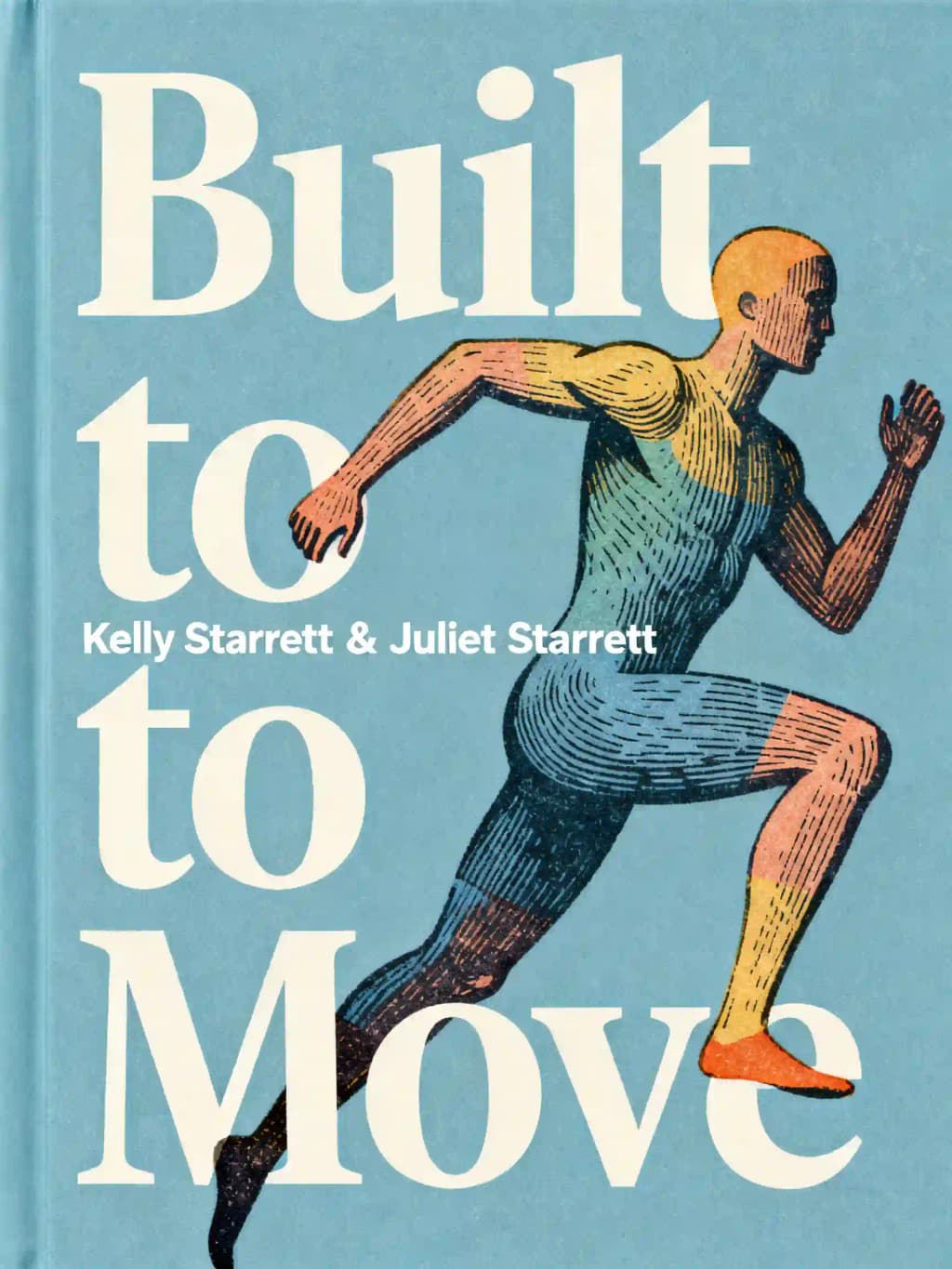
When Kelly and Juliet Starrett met at the World Rafting Championships in Chile back in 2000, their first interaction involved adjusting each other's life jackets-Juliet tightening Kelly's for safety while Kelly loosened hers for comfort. This seemingly trivial moment foreshadowed their complementary approaches to physical risk and movement that would eventually revolutionize how we think about our bodies. Their book "Built to Move" has become a sensation among athletes, physical therapists, and everyday people seeking to escape pain and reclaim mobility. Even celebrities like Joe Rogan and Tim Ferriss have endorsed their methods, which have transformed training protocols for Olympic teams, military special forces, and professional sports franchises worldwide. What makes their approach so groundbreaking is how it bridges the gap between elite performance and everyday movement, offering a roadmap for anyone who wants to age gracefully in a world that increasingly immobilizes us.
Capitolo 2
The Modern Movement Crisis: Why We're Breaking Down
Our bodies face an unprecedented challenge: we're living in an environment fundamentally mismatched with our biological design. The human body evolved for constant, varied movement-walking miles daily, squatting, climbing, carrying, and performing countless physical tasks. Yet modern life has engineered movement out of our existence. We sit for 10-12 hours daily in positions our bodies were never designed to maintain, creating what the Starretts call a "movement debt" that accumulates interest in the form of pain, stiffness, and declining function.
This sedentary crisis affects everyone, regardless of fitness level. Even dedicated exercisers who hit the gym for an hour daily but remain seated the other 23 hours suffer the consequences. Research shows sitting more than six hours daily increases mortality risk by 37% for women and 18% for men compared to those sitting less than three hours-regardless of regular exercise habits.
The consequences appear everywhere: neck and shoulder pain from hunched postures, lower back issues from weakened glutes, knee problems from misaligned movement patterns, and decreased mobility in virtually every joint. We've normalized these problems as inevitable aspects of aging, but the Starretts argue they're largely preventable consequences of our movement-starved lifestyle.
What's particularly insidious is how these problems compound over time. Limited hip mobility leads to compensatory movement patterns that stress the lower back. Poor breathing mechanics reduce core stability, further stressing the spine. Weak feet and ankles compromise balance, increasing fall risk. It's a cascading system of dysfunction that accelerates as we age unless we intervene.
The solution isn't more intense exercise but rather reclaiming the fundamental movements our bodies are designed to perform. The Starretts have identified ten "Vital Signs" of movement health-measurable indicators that reveal how well your body functions and predict how it will age. These aren't abstract concepts but practical assessments anyone can perform, from testing whether you can get up from the floor without using your hands to measuring how long you can balance on one leg with your eyes closed.
Capitolo 3
Rewilding Your Body: The Foundation of Movement Health
The concept of "rewilding" sits at the heart of the Starretts' approach-restoring natural movement patterns that modern life has stripped away. This begins with understanding that our bodies aren't fixed machines but adaptable systems that respond to how we use them. Just as a plant grows toward light, our tissues reorganize based on the positions we frequently adopt.
Take breathing, for example-perhaps our most fundamental movement. Most people breathe shallowly through their mouths, using only a fraction of their lung capacity. This triggers stress responses, reduces oxygen utilization, and compromises core stability. The Starretts teach nasal breathing with full diaphragmatic engagement, which activates the parasympathetic nervous system, increases oxygen efficiency, and provides natural core support.
The Breath-Hold Test (or BOLT-Body Oxygen Level Test) measures how long you can comfortably hold your breath after a normal exhale. This reveals your carbon dioxide tolerance, which directly impacts oxygen utilization efficiency. Scores below 20 seconds indicate poor breathing mechanics that affect everything from sleep quality to athletic performance to pain perception.
Another cornerstone of rewilding is reclaiming ground-based positions. While chair sitting goes back 12,000 years, only about half the world's cultures embrace it as their primary resting position. Many non-Western societies regularly sit cross-legged, squat, or kneel-positions that maintain full hip mobility. This may explain why these populations experience 80-90% less arthritic hip pain than Westerners.
The Sit-and-Rise Test dramatically demonstrates this principle. Research published in the European Journal of Preventive Cardiology found that the ability to sit down and stand up from the floor without using hands or knees strongly predicted mortality risk. Those unable to do so had significantly higher death rates over a six-year follow-up period.
Floor sitting provides a natural counterbalance to chair time, "rewilding" hip joints by placing them in positions that maintain full range of motion. The Starretts recommend accumulating thirty minutes daily of floor sitting, rotating between positions like cross-legged sitting, 90/90 position (one leg forward, one to the side), and long sitting with legs extended.
Capitolo 4
The Movement Ecosystem: How Everything Connects
A fundamental insight from the Starretts' work is that movement problems rarely originate where pain appears. As bodywork pioneer Ida Rolf famously said, "Whatever you think it is, it ain't." Knee pain might stem from stiff quadriceps, tight hamstrings, or immobile ankles. Back pain often originates in shortened hip flexors or weak glutes rather than the spine itself.
This interconnectedness becomes clear when examining hip extension-the ability to open the angle between torso and thigh beyond 180 degrees. Limited hip extension affects not just the lower back but creates downstream issues throughout the body. When hip mobility is restricted, people often compensate by turning their legs outward while walking, creating a duck-like gait that stresses knees and ankles.
The Couch Test measures both hip extension capability and quadriceps range of motion. Many people discover they can't fully extend their hips due to shortened tissues in the front of the hip and leg-a direct consequence of excessive sitting. This limitation forces the lower back to hyperextend during activities like walking or running, creating the characteristic "banana back" posture that leads to pain and injury.
Similarly, shoulder and neck problems typically stem from poor positioning rather than inherent weakness. The authors use the metaphor of an octopus that has swum headfirst into a seashell to explain rotator cuff function. When shoulders slouch forward in the characteristic C-shaped posture of modern humans, this relationship becomes disrupted, limiting mobility and creating pain.
Even seemingly unrelated systems affect movement quality. Sleep deprivation increases pain sensitivity while reducing natural pain-dampening mechanisms. Poor nutrition provides inadequate building blocks for tissue repair. Stress triggers muscle guarding and altered movement patterns. The Starretts' approach addresses this entire ecosystem rather than focusing on isolated problems.
Capitolo 5
Walking: The Forgotten Superpower
Perhaps no movement has been more devalued in modern life than walking. While our hunter-gatherer ancestors likely took 12,000-17,000 steps daily, Americans average only 5,117 steps (about 2.5 miles)-far below international counterparts like Australians (9,695) and Japanese (7,168), who have significantly lower obesity rates.
The Starretts present a striking comparison: between two women of identical height and weight, the one who walks 8,000 steps daily burns twice as many extra calories annually (101,608) as the one who runs three times weekly (51,480). This demonstrates walking's powerful cumulative effect on metabolism over time.
But walking's benefits extend far beyond calorie burning. It counteracts the biomechanical problems caused by prolonged sitting, taking hips and legs out of the right-angle position and restoring proper movement patterns. Walking extends the hips, lengthens tissues shortened by sitting, lubricates joints, and strengthens supporting muscles.
Walking also provides critical sensory input through the feet. Like hands, feet contain dense networks of receptors that respond to pressure, temperature, texture, and position. These receptors send crucial information to the brain that helps with balance, stability, and safe movement. Walking activates this foot-to-brain system, especially when done barefoot or in flat shoes.
The research on walking's health benefits is overwhelming. A 2020 study found that compared to taking 4,000 steps daily, reaching 8,000 steps was associated with a 51% lower risk of all-cause mortality, while 12,000 steps correlated with a 65% lower risk. The Starretts recommend aiming for 8,000-10,000 steps daily, noting that consistency matters more than occasional high-step days.
They suggest three specialized approaches: Nose-Breathing Walks (breathing only through the nose to improve CO2 tolerance), Thrice Daily Walks (ten minutes after each meal), and weekly Barefoot Walks to strengthen feet and provide sensory input. For additional benefits, they recommend "rucking"-carrying weight in a backpack while walking-which combines cardio and strength training with lower impact than running.
Capitolo 6
The Nutrition-Movement Connection
Food provides both building blocks and fuel for our bodies, directly affecting how we move. Poor nutrition can significantly slow healing from injuries or surgery, as tissues that are improperly nourished behave differently and even feel different to massage therapists. The Starretts focus on two key nutritional elements: protein and micronutrients from fruits and vegetables.
Protein is essential for maintaining muscle mass, especially as we age when our bodies become less efficient at converting dietary protein to muscle. Starting in our thirties, we lose 3-5% muscle mass per decade without intervention. The authors recommend consuming 0.7 to 1 gram of protein per pound of body weight daily-higher than conservative government recommendations but lower than what some fitness enthusiasts promote.
For micronutrients, they advocate the 800-Gram Challenge developed by nutrition coach EC Synkowski-consuming 800 grams (about six cups) of fruits and vegetables daily. Research published in the International Journal of Epidemiology analyzed 95 studies and found that this level of produce consumption was associated with lower risk of cardiovascular disease, certain cancers, and all-cause mortality.
The SWAN study found that women who ate just one daily serving of vegetables were 50 percent more likely to develop physical limitations as they aged than those eating 2.4 servings. The fiber in fruits and vegetables helps regulate blood sugar, absorb cholesterol, and create satiety-helping you feel fuller while consuming fewer calories.
What's refreshing about their nutritional approach is its focus on adding rather than restricting. By prioritizing protein and produce, many people naturally reduce less nutritious options without feeling deprived. This creates sustainable habits rather than temporary diets.
Capitolo 7
Movement as Medicine: Addressing Pain at the Source
When pain strikes, most people reach for medication or simply stop moving-approaches that often worsen the underlying problem. The Starretts offer a radically different perspective: pain is your body's request for change, not necessarily a sign of damage.
True "injury" involves obvious tissue damage or unrelenting pain that prevents normal functioning. However, most everyday aches reflect our modern sedentary lifestyle rather than actual injury. When Kelly asks audiences who's experiencing pain, typically 95% raise their hands, even teenagers-a shocking indication of how normalized discomfort has become.
Their approach to pain begins with "upstream-downstream thinking." When a body part hurts, the problem often originates elsewhere in the movement chain. Knee pain might stem from stiff quadriceps or immobile ankles. Back pain could originate in tight hip flexors or weak glutes. By addressing these connected areas through targeted mobilizations, pain often resolves without directly treating the painful site.
They challenge conventional wisdom about treatments like icing. Despite being standard practice for decades, research now shows that icing injured tissues actually delays healing by impeding the inflammatory process necessary for repair. A 2021 study showed iced muscles in mice took four days longer to heal than non-iced controls.
Instead, they recommend the PEACE & LOVE protocol: Protect, Elevate, Avoid anti-inflammatories, Compress, Educate, Load, Optimism, Vascularization, and Exercise. This approach respects the body's natural healing processes while maintaining movement and function.
The mobilizations they prescribe aren't traditional stretches but comprehensive techniques that address multiple tissue systems simultaneously. For example, the Couch Stretch places the hip in extension while mobilizing the quadriceps and hip flexors. By adding breathing techniques and isometric contractions, it becomes a powerful tool for changing both tissue quality and nervous system regulation.
Capitolo 8
Creating a Movement-Rich Environment
Rather than seeing movement as something confined to workout sessions, the Starretts advocate creating environments that naturally encourage movement throughout the day. Standing workstations represent one powerful approach - not because standing is inherently better than sitting, but because it promotes natural fidgeting, weight shifting, and frequent position changes that keep our bodies engaged and mobile.
Research demonstrates compelling benefits of increased standing time. Standing burns approximately 275 more calories daily than sitting - equivalent to running 38 marathons worth of calories annually if maintained for 8 hours daily. Beyond mere calorie burning, regular standing reduces neck, shoulder and back pain, improves vascular function, lowers blood pressure, enhances blood sugar metabolism, and increases brain blood flow. These benefits compound over time, potentially adding years of healthy living.
The Starretts' commitment to movement-rich environments led them to found StandUp Kids, an initiative to combat excessive sitting in schools. They began by converting their daughter's fourth-grade classroom to standing desks - creating California's first all-standing classroom. This pilot program sparked wider interest, with research by Dr. Mark Benden revealing that standing students burned 17% more calories (nearly double for overweight children) while showing markedly improved focus and reduced classroom disruption. Teachers reported better student engagement and fewer behavioral issues.
For those whose work requires sitting, they recommend implementing "dynamic sitting" techniques - changing positions frequently, using active seating options like fidget bars, balance cushions, or wobble stools, and taking regular movement breaks. Setting half-hour reminders to stand up and move, even briefly, can significantly reduce the negative impacts of prolonged sitting. Simple practices like standing during phone calls, walking meetings, and periodic desk stretches can accumulate meaningful movement throughout the day.
Their comprehensive "24-Hour Duty Cycle" approach provides a systematic framework for incorporating movement throughout the day - from morning mobilization routines and breathing exercises to strategic walking breaks, floor sitting, and proper sleep hygiene. This approach helps people analyze their daily schedule to identify which hours are within their control and strategically schedule self-care activities during these windows. The Starretts emphasize that even small changes, when consistently applied across the day, can create significant improvements in overall mobility and health.
The key lies in viewing movement as a constant, natural part of daily life rather than a separate activity. By redesigning our environments - whether at home, work, or school - to encourage natural movement patterns, we can better align our modern lifestyles with our bodies' evolutionary needs for regular motion and position variation.
Capitolo 9
Sleep: The Foundation of Movement Health
Sleep serves as the linchpin that all other physical practices revolve around. Beyond providing energy for other vital sign practices, sleep is critical for recuperation from stress, information consolidation, and tissue repair. Seven of the fifteen leading causes of death are linked to sleep deficiency, making adequate rest perhaps the most important health practice.
Despite the Sleep Foundation reporting 35% of people sleeping less than seven hours nightly, and some business leaders boasting about minimal sleep needs, the "sleepless elite" who genuinely thrive on less than five hours comprise less than 1% of the population. Most people genuinely need seven to nine hours for optimal function.
During sleep, the body cycles through four stages: three non-rapid eye movement (NREM) stages where the body progressively relaxes, repairs muscles, and processes memories, followed by rapid eye movement (REM) sleep for dream activity and memory consolidation. Both NREM and REM sleep are crucial, with research showing every 5% reduction in REM sleep increases mortality by 13-17%.
Sleep dramatically affects movement quality and pain perception. Studies show sleep improves motor skill acquisition and athletic performance while reducing injury rates. Sleep deprivation increases pain sensitivity by heightening pain perception while reducing natural pain-dampening mechanisms. Beyond daily functioning, adequate sleep strengthens immunity (sleeping less than six hours increases cold susceptibility fourfold) and protects against diabetes, obesity, depression, heart attack, and stroke.
The Starretts recommend establishing a consistent bedtime routine with ten key practices: maintaining consistent sleep and wake times; moving throughout the day to naturally fatigue the body; limiting caffeine and alcohol; removing technology from the bedroom; keeping the bedroom cool (around 65F); setting an alarm one hour before bedtime to begin winding down; creating a dark, quiet sleeping environment; overestimating time needed in bed; and maintaining routines when traveling.
Capitolo 10
The Never Do Nothing Philosophy
While the book focuses primarily on movement practices rather than formal exercise, the Starretts make a compelling case for adding regular cardiovascular workouts and strength training to your routine. The current Physical Activity Guidelines recommend adults get at least 150 minutes of moderate-intensity aerobic activity or 75 minutes of vigorous activity weekly, plus muscle-strengthening activities twice weekly.
But beyond official guidelines, they emphasize one crucial principle: "Always Do Something"-or as strength coach Dave Spitz puts it, "Never Do Nothing." This philosophy acknowledges that life sometimes interferes with planned workouts, but something is always better than nothing. If you miss your scheduled Pilates class, go for a walk. Do some mobility exercises. Jump rope for ten minutes.
When their children were young and their businesses growing, Kelly developed "the 10s"-10 pull-ups, 10 push-ups, and 10 squats on repeat for 10 minutes each night. It wasn't high-caliber training, but it kept them fit enough to resume their regular activities when time allowed.
If they have one specific recommendation, it would be strength training. Our culture has embraced cardio activities like running and cycling, but there's a lag in adopting strengthening exercises. Yet it doesn't take much-get a kettlebell and lift it daily, do one push-up and build on it, walk up hills.
Science shows that genetics influence how people respond to exercise-some get more dopamine from activity while others have less tolerance for discomfort. If you avoid exercise, there may be biological reasons, but with countless options available-from kettlebells to Pilates to pickleball-there's something for everyone. The key is to experiment until you find what you enjoy or can at least tolerate.
Capitolo 11
Investing in Your Physical Future
While people meticulously plan financial futures with IRAs and 401(k)s, few develop physical capability plans for their seventies, eighties, and beyond. This oversight often leads to preventable physical decline and reduced quality of life in later years. Like physician Peter Attia's "Centenarian Olympics" concept, we should train specifically for the activities we want to enjoy in old age, countering the body's natural tendency toward stiffness and weakness. Attia's concept involves identifying essential movements for maintaining independence - from getting up off the floor unassisted to carrying groceries up stairs - and deliberately training these patterns decades in advance.
Juliet's father Warren exemplifies this approach - at 76, he completed a physically demanding 16-day Grand Canyon rafting trip alongside people in their forties, paddling through Class IV rapids and hiking six miles over rough terrain. While genetics played a role, Warren's lifelong commitment to movement - including weight training since the 1970s, regular hiking, and maintaining mobility work - made the difference. His story demonstrates how consistent, long-term physical preparation can extend athletic capacity well into later life.
The key to investing in your physical future is identifying what will bring happiness in your senior years, then maintaining the physical capabilities to make those activities possible. This might mean preserving shoulder mobility to play with grandchildren, maintaining balance to prevent falls, or keeping adequate strength for independent living. For instance, maintaining hip mobility through regular squatting can preserve the ability to rise from chairs independently, while upper body strength training ensures the capacity to lift groceries and manage daily tasks without assistance.
The practices outlined in "Built to Move" aren't just about feeling better today - they're about creating a body that will serve you decades from now. This involves developing fundamental movement patterns through daily practice: squatting, hinging, pushing, pulling, and rotating. Each movement pattern supports specific life activities, from gardening to playing with grandchildren to traveling independently. Regular mobility work, strength training, and cardiovascular exercise create a comprehensive foundation for long-term physical independence.
The human body is remarkably adaptable at any age. Research shows that even people in their eighties and nineties can regain significant function through proper movement practices. Studies have documented improvements in strength, balance, and mobility in elderly individuals who begin resistance training programs, with some participants reducing their biological age markers by up to a decade. The key is starting now, before limitations become entrenched, and maintaining consistency rather than seeking quick fixes or extreme transformations. This might mean incorporating daily mobility work, progressive strength training 2-3 times per week, and regular cardiovascular activity that maintains heart health and endurance.
Success stories abound of individuals who began serious physical training in their sixties or seventies and achieved remarkable improvements in function and quality of life. These examples prove that it's never too late to start investing in your physical future, though earlier intervention yields better returns. The goal isn't necessarily to become an athlete, but to maintain the physical capabilities that support an independent, active, and fulfilling life well into advanced age.