Capitolo 1
From Garage to Global Giant: The Amazon Revolution
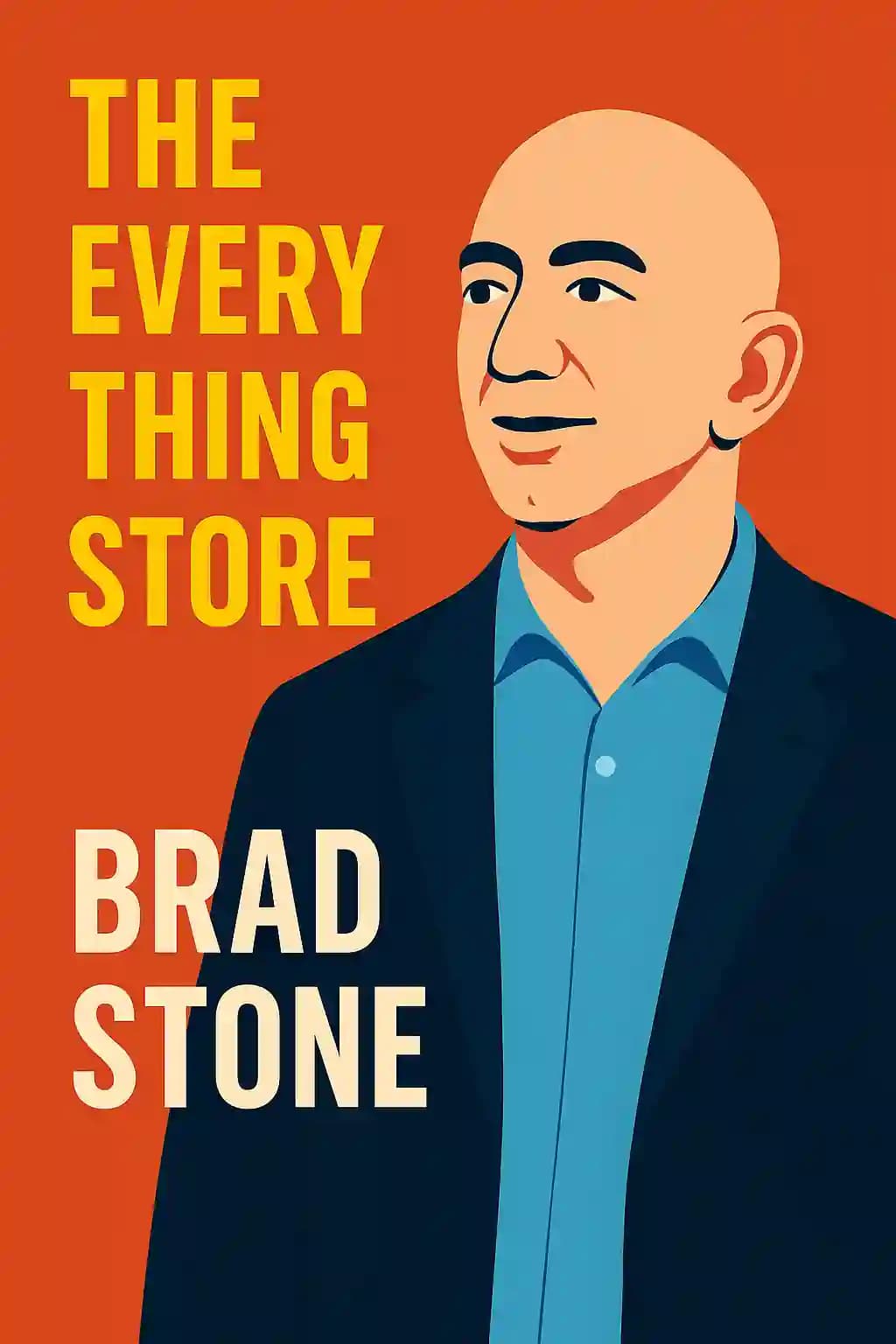
In the heart of Seattle, a small online bookstore was about to change the world. When Jeff Bezos founded Amazon in 1994, few could have predicted that this modest venture would transform into one of the most influential companies in history. "The Everything Store" by Brad Stone has become a business bible for aspiring entrepreneurs worldwide, selling over a million copies and earning a spot on Bill Gates' recommended reading list. The book's revelations about Amazon's ruthless efficiency and Bezos's uncompromising leadership style sent shockwaves through the business world when it was published in 2013, winning the Financial Times and Goldman Sachs Business Book of the Year Award. What makes this story so compelling is not just the astronomical success of Amazon, but the singular vision of a man who was willing to sacrifice everything - including profit margins and work-life balance - to build what he called "Earth's most customer-centric company." As we navigate today's digital economy, shaped in large part by Amazon's innovations, Bezos's journey from Wall Street analyst to tech titan offers a masterclass in ambition, resilience, and reinvention that continues to influence business leaders across industries.
Capitolo 2
The Brilliant Mind Behind the Everything Store
In the early 1970s, a gifted child named "Tim" displayed extraordinary intellectual talents in Houston's Vanguard program for gifted children. This young prodigy, later revealed to be Jeff Bezos, already exhibited the relentless drive and competitive spirit that would one day transform global commerce.
Bezos's journey to entrepreneurial greatness began not in a Silicon Valley garage but in the rarefied world of Wall Street quantitative analysis. At D. E. Shaw & Co., a secretive hedge fund driven by mathematical brilliance, Bezos thrived in an environment where data and competitive edge were paramount. The firm wasn't just about financial algorithms; it was positioning itself as a tech-driven powerhouse ready to ride the digital wave, with visionaries like Bezos steering the ship.
It was here that Bezos first glimpsed the internet's exponential growth potential. While tracking web usage statistics, he witnessed something that changed everything: the internet was growing at an astonishing 2,300% annually. This wasn't just a trend-it was a revolution in the making. "When you see something growing that fast, you have to pay attention," he later explained.
The concept of an "everything store" began to crystallize-an online intermediary offering comprehensive selections and honest customer reviews. But Bezos was strategic; he knew he needed to start with one product category. Books presented the perfect opportunity: a vast, standardized product with millions of titles that no physical store could possibly stock.
In 1994, Bezos faced what he called a "regret-minimization framework" decision: stay in his lucrative Wall Street job or risk everything on his internet vision. "When I'm 80, will I regret not having participated in this thing called the Internet?" he asked himself. The answer led to his departure from D.E. Shaw, a cross-country drive to Seattle with his wife MacKenzie, and the birth of Amazon.
What's fascinating about Bezos is how his early experiences shaped Amazon's DNA. His time at D.E. Shaw instilled in him the value of hiring exceptional talent and using data to drive decisions. His childhood passion for space exploration (which would later manifest in Blue Origin) gave him comfort with long-term thinking and scientific approaches to problems. Even his competitive nature from school days translated into a corporate culture where mediocrity was never acceptable.
As we look at the transformation from Tim the gifted student to Jeff the visionary entrepreneur, we see the foundations of what would become not just an online bookstore, but a company that would fundamentally alter how we shop, read, compute, and live.
Capitolo 3
Humble Beginnings: Amazon's Garage Days
The early days of Amazon were marked by a beautiful simplicity and scrappy resourcefulness that would become legendary in startup lore. In the fall of 1994, Shel Kaphan joined Bezos as Amazon's first employee and technical architect. Despite his initial skepticism about the venture's prospects, Kaphan saw the potential to create something revolutionary-a global bookstore accessible to anyone with an internet connection.
The company's first headquarters? Bezos's garage in Bellevue, Washington. The desks? Doors purchased from Home Depot mounted on four-by-fours. The atmosphere was casual but driven; team members would often convene at the local Barnes & Noble to learn about the book business they were planning to disrupt. The financial foundation was modest but personal-Bezos invested $94,000 of his own money, while his parents contributed $100,000, representing a substantial portion of their life savings.
"It's hard to remember how few people thought this would work," Bezos later reflected. "The common question was, 'What happens when Barnes & Noble decides to launch a website?'"
The company's name itself came after considerable deliberation. Bezos initially registered domains like Awake.com, Browse.com, and Relentless.com (try typing the latter into your browser even today, and see where it takes you). Eventually, he settled on "Amazon"-named after the world's largest river, reflecting his ambition to create the world's largest store.
As the team expanded and relocated to a small office above a needle-trade shop in Seattle's SoDo district, the intensity of the work increased. Programmers like Paul Davis joined the small operation, focusing on surpassing existing online bookstores. The hours were long, the challenges numerous, but there was an electric sense of building something unprecedented.
What's striking about this period is how many elements of Amazon's future culture were already forming. The frugality (those door-desks remained an Amazon tradition for years), the customer obsession (Bezos was already fixated on creating the best possible user experience), and the willingness to think long-term rather than chase quick profits.
By summer 1995, despite having virtually no infrastructure, Bezos began his relentless drive to raise funds. Armed with ambitious forecasts and the audacious vision of an "everything store," he painted a picture of the internet's transformative potential to potential investors. While many were skeptical, some caught the vision, leading to significant early investments that would fuel Amazon's initial growth.
The startup's frantic pace set the tone for what would become a defining characteristic of Amazon's culture-a fierce work ethic that demanded everything from its employees. As one early employee put it: "It wasn't a place where you could thrive if you needed work-life balance."
Capitolo 4
Relentless Growth: Building the Amazon Machine
By 1997, Amazon was preparing for its initial public offering amid a barrage of skepticism from Wall Street analysts and traditional retailers. The night before Amazon's IPO, Barnes & Noble filed a lawsuit against the company, claiming Amazon was falsely advertising itself as "Earth's Biggest Bookstore." Far from being intimidated, Bezos urged his team to stay focused on customers rather than competition, a philosophy that would become central to Amazon's approach.
The IPO raised $54 million, providing crucial capital for Amazon's ambitious expansion plans. Despite the success, Bezos was already looking beyond books. At a Harvard Business School presentation, he faced students convinced that traditional brick-and-mortar enterprises would dominate online retail. Bezos challenged their perception, emphasizing that traditional retailers would struggle with the agility needed in the digital space.
"The question we must ask is not whether our business will be affected by the internet," Bezos told the skeptical Harvard students, "but rather how we adapt our businesses to the fundamental and unavoidable changes the internet brings."
By mid-1998, Amazon embarked on an aggressive diversification strategy, expanding into music and DVDs. The company's mission evolved from being an online bookstore to becoming "Earth's Biggest Selection." To finance these expansions, Amazon raised substantial capital, including a record-setting $1.25 billion convertible debt offering. This financial maneuvering showcased Bezos's forward-thinking approach, ensuring Amazon had the resources to grow without being constrained by immediate profitability concerns.
The late 1990s witnessed an intense period of internet-driven exuberance, and Amazon epitomized this optimistic era. Under Bezos's fearless leadership, the company aggressively expanded its reach through ventures, acquisitions, and distribution centers. Amazon's first public shareholder letter in 1998 laid out a roadmap emphasizing long-term market leadership over short-term gains, a philosophy that would guide the company for decades.
Amazon's rapid growth necessitated a robust distribution network. Jimmy Wright, a seasoned Walmart professional, was tasked with creating a scalable system that could handle Amazon's burgeoning product offerings. With substantial investment and clear direction from Bezos, Wright developed vast, automated distribution centers across the U.S., laying the groundwork for Amazon's staggering 300% yearly sales growth.
During this period, Amazon also introduced innovations that would become industry standards. The Amazon Sales Rank, introduced in June 1998, quickly became an obsession for authors. Around the same time, Amazon filed for a patent on the revolutionary 1-Click ordering system, enhancing the customer experience while creating a competitive advantage that forced competitors like Barnes & Noble to license the technology.
As Amazon expanded beyond books, it faced new operational challenges. Entering categories like toys and electronics required accurate sales forecasting and managing supply without intermediaries. Despite these difficulties, Amazon pushed through, sometimes resorting to buying from gray markets to ensure customer satisfaction. This period tested Amazon's operational capabilities but ultimately strengthened its ability to handle diverse product categories.
Capitolo 5
The Dot-Com Crash and Amazon's Resilience
As the new millennium dawned, the dot-com bubble burst, sending shockwaves through the tech industry. Amazon, despite its rapid growth and innovation, was not immune to the market's skepticism. In June 2000, bond analyst Ravi Suria published a scathing report predicting Amazon's financial doom, sending the company's stock price plummeting and sparking a media frenzy questioning Amazon's viability.
Within Amazon, there was resentment towards Suria's analysis, especially as it threatened to become a self-fulfilling prophecy by scaring away suppliers and customers. The company launched an aggressive damage-control campaign, presenting evidence of its financial stability to suppliers and the public. Despite the initial reports being factually questionable, they highlighted a crucial reality: in business, perception can sometimes outweigh reality.
What's remarkable about this period is Bezos's unwavering calm amid the turmoil. While many executives and employees panicked as Amazon's stock price fell from $107 to just $7 per share, Bezos steadfastly reaffirmed his beliefs and determination in interviews and public appearances. He defended Amazon's business model and future prospects with a conviction that bordered on stubbornness.
"I've watched Amazon's stock go from $1 to $113, and now to $6," Bezos told reporters at the time. "I've seen the whole movie. I know how it ends." This confidence wasn't just bravado-it reflected his genuine belief in Amazon's long-term prospects despite short-term market fluctuations.
Internally, Bezos emphasized focusing on customer satisfaction and staying the course during difficult times. He quoted investor Benjamin Graham: "In the short run, the market is a voting machine; in the long run, it's a weighing machine." This philosophy guided Amazon through the dot-com crash, encouraging the company to focus on building real value rather than chasing stock prices.
The financial pressures did force some difficult decisions. Amazon consolidated employee stock options to boost morale as their value plummeted. Layoffs followed, affecting thirteen hundred employees, including some who had recently relocated for their positions. These cuts caused personal turmoil and underscored Amazon's severe financial realities.
Yet even in this challenging environment, Bezos continued to innovate and explore new opportunities. Amazon's ambition to become an e-commerce platform began to take shape, with partnerships like the one with Toys "R" Us showing how Amazon could leverage its infrastructure capabilities while utilizing other companies' product expertise.
The company also made strategic shifts in its marketing approach. Amazon halted television advertising, with Bezos expressing skepticism about advertising's impact on the bottom line. Instead, the company introduced Free Super Saver Shipping in 2002, initially for orders over $99, later lowering that threshold. This initiative not only addressed a key shopping hurdle but also laid the groundwork for what would later become Amazon Prime.
By 2002, Amazon reported its first profitable quarter-a crucial milestone that revitalized investor confidence and served as a public triumph over dot-com skepticism. The company had weathered the storm, emerging leaner, more focused, and with a clearer vision of its future.
Capitolo 6
Beyond Retail: Amazon's Platform Revolution
As Amazon entered its second decade, Bezos began to envision the company not merely as a retailer but as a technology platform. This shift in thinking would ultimately transform Amazon from an online store into a multifaceted technology giant that powers much of the modern internet.
The evolution began with Amazon's Marketplace, which allowed third-party sellers to offer their products alongside Amazon's own inventory. Initially met with internal resistance-why let competitors sell on your platform?-Bezos insisted that providing the best customer experience meant offering the widest possible selection, regardless of who sold the items.
"We want to make money when people use our devices, not when they buy our devices," Bezos explained, articulating a philosophy that would guide Amazon's approach to numerous product categories.
This platform approach created complex relationships with third-party sellers who simultaneously partnered with and competed against Amazon. Many sellers described their experience as a form of addiction-drawn to Amazon's vast customer base despite the company's tendency to undercut prices and, in some cases, eventually compete directly with successful products.
The platform strategy extended beyond retail. In 2006, Amazon launched Amazon Web Services (AWS), offering cloud computing services to businesses. What began as an effort to monetize Amazon's excess server capacity evolved into a revolutionary business that would eventually become the company's most profitable division.
AWS emerged from Amazon's internal need to create more flexible, service-oriented architecture for its own operations. The technical shift began in 2003, seeking to dissolve infrastructure bottlenecks and empower developers with an open playground for innovation. Two focused efforts emerged: EC2 (Elastic Compute Cloud), crafted in a remote Cape Town office; and S3 (Simple Storage Service), developed in Seattle under Bezos's enthusiastic, albeit intense, scrutiny.
The genius of AWS was that it allowed startups and established companies alike to access computing resources without massive upfront investments. Companies could now pay only for what they used, scaling up or down as needed. This democratization of computing infrastructure helped fuel the next wave of tech innovation, supporting companies from Netflix to Instagram.
"The beauty of this model is that if we can serve developers as customers, we can build a business that scales with the internet," explained Andy Jassy, who led AWS and would eventually succeed Bezos as Amazon's CEO.
Amazon also explored the potential of human computing networks with Mechanical Turk, a platform that enabled anyone to earn money by completing human-intelligence tasks that machines couldn't handle, such as image recognition. Though it didn't achieve the expected success, it demonstrated Amazon's creativity in reshaping labor paradigms via digital networks.
The platform approach extended to Amazon's fulfillment operations as well. Fulfillment by Amazon (FBA) allowed third-party sellers to store their products in Amazon's warehouses and leverage the company's logistics network for shipping. This not only created a new revenue stream for Amazon but also improved the customer experience by making more products eligible for Prime shipping.
By transforming from a retailer into a platform company, Amazon created multiple reinforcing ecosystems that drove growth across its business. Each new service or feature made the overall platform more valuable, creating powerful network effects that competitors struggled to match.
Capitolo 7
The Kindle Revolution: Transforming Reading
In the early 2000s, as digital music transformed the entertainment industry, Jeff Bezos recognized that books would inevitably follow a similar path. With books, music, and movies making up 74% of Amazon's revenue, the shift to digital formats presented both an existential threat and a tremendous opportunity.
Bezos had observed Apple's success with iTunes and the iPod, noting how Steve Jobs had transformed the music industry by controlling both the hardware and the content distribution platform. Despite Amazon's attempts to compete in digital music with its MP3 Store, Apple's head start proved insurmountable. Bezos was determined not to make the same mistake with books.
"The question isn't 'if' this is going to happen, but 'when,'" Bezos told his team. "And if it's going to happen, I want us to be the ones to do it."
Drawing inspiration from Clayton Christensen's "The Innovator's Dilemma," Bezos understood that Amazon needed to disrupt its own business before someone else did. He tasked Steve Kessel, a top executive, with leading Amazon's digital transition, emphasizing the necessity of self-cannibalization to secure the company's future growth.
The development of the Kindle was fraught with challenges. The design had to "vanish in the reader's hands," according to focus group research, creating an immersive reading experience. Debates raged over features like the keyboard, which Bezos insisted on to allow in-taxi purchases of e-books, and wireless connectivity, which represented a significant cost but would ultimately differentiate the Kindle from competitors.
Technical hurdles and legal battles with publishers caused numerous delays. Many publishers were skeptical about the e-book model, fearing it would cannibalize their print sales or lead to widespread piracy. Amazon's approach mixed promise and pressure, leveraging its market dominance to enforce advantageous terms while also offering programs like Topaz to reduce publishers' digitization costs.
When Amazon finally unveiled the Kindle in 2007, it was an immediate success, selling out in just 5.5 hours despite its $399 price tag. The device's wireless connectivity, which allowed readers to purchase and download books directly without connecting to a computer, proved revolutionary. As one early reviewer put it: "This isn't just a device; it's a service."
The introduction of the Kindle 2 in 2009 further refined the design and cemented Amazon's dominance in the e-book market, capturing an impressive 90% market share. However, Amazon's aggressive pricing strategy-selling new releases and bestsellers for $9.99, often below cost-created significant tensions with publishers.
These tensions came to a head when Apple entered the e-book market with the iPad and iBooks in 2010. Apple offered publishers an "agency model" that allowed them to set their own prices, with Apple taking a 30% commission. This contrasted with Amazon's "wholesale model," where Amazon purchased e-books at a set price and could sell them at whatever price it chose, even at a loss.
Five major publishers quickly embraced Apple's model, forcing Amazon to accept similar terms or lose access to their titles. This collaboration between Apple and the publishers later led to antitrust investigations by the Department of Justice and the European Union, resulting in settlements and a court ruling against Apple.
Despite these challenges, the Kindle transformed reading and publishing, just as Bezos had envisioned. It made books instantly accessible, revitalized interest in reading, and opened new opportunities for authors through self-publishing platforms like Kindle Direct Publishing. The device that began as a defensive move to protect Amazon's book business became a cornerstone of its digital strategy and a symbol of its ability to innovate across hardware, software, and content.
Capitolo 8
The Prime Effect: Redefining Customer Loyalty
In 2004, a seemingly simple idea emerged within Amazon that would fundamentally transform the company and reshape consumer expectations forever. Charlie Ward, an Amazon employee, proposed a premium shipping club akin to a music club service. Jeff Bezos immediately recognized the potential and prioritized the initiative, leading to the launch of Amazon Prime in early 2005.
For $79 per year, Prime members would receive unlimited two-day shipping on eligible purchases-a proposition that seemed financially unsustainable to many within Amazon. "I think it was the craziest thing I've ever heard," recalled one executive involved in the early discussions. The economics didn't make sense; shipping costs would far exceed membership fees for active shoppers.
But Bezos saw beyond the immediate numbers. "When I'm competing with someone, I try to figure out what they're good at," he explained. "Then I try to figure out a way to make their strength irrelevant." With Prime, Bezos was neutralizing traditional retail's one remaining advantage: immediate gratification. If Amazon could deliver products reliably in two days, the convenience gap would narrow significantly.
The initial reception to Prime was tepid, with slow adoption rates and concerning financials. The service was enormously expensive to operate, with shipping costs far exceeding membership revenue. Yet Bezos remained committed, understanding that Prime would fundamentally change customer shopping habits.
His intuition proved correct. Prime members began shopping across more categories, increasing their annual spending from around $400 to $900 within a year of joining. The psychological effect was profound-having paid for "free" shipping, members wanted to maximize their investment by ordering more frequently and across more product categories.
"Once you've paid for Prime, you're looking around your house thinking, 'What can I order from Amazon to take advantage of the shipping?'" observed one retail analyst. This behavior shift transformed Amazon from an occasional shopping destination to a habitual first choice for an expanding range of products.
The success of Prime drove further innovations. To make more products eligible for Prime shipping, Amazon introduced Fulfillment by Amazon (FBA), allowing third-party sellers to store their inventory in Amazon's warehouses. This not only expanded Prime's selection but created a new revenue stream as sellers paid Amazon for storage and fulfillment services.
Over time, Amazon enhanced Prime's value proposition beyond shipping. The addition of Prime Instant Video (later Amazon Prime Video) in 2011 positioned Amazon as a competitor to Netflix while giving members another reason to maintain their subscriptions. Later additions included Prime Music, Prime Reading, and exclusive discounts at Whole Foods after Amazon acquired the grocery chain.
The genius of Prime was how it aligned customer interests with Amazon's strategic goals. Every Prime benefit encouraged behaviors that strengthened Amazon's market position: more frequent shopping, category expansion, digital content consumption, and increased loyalty. The annual membership fee, which increased to $99 in 2014 and $119 in 2018, provided predictable revenue while the psychological commitment mechanism reduced price sensitivity and comparison shopping.
By 2018, Prime had over 100 million members worldwide, with studies suggesting that Prime members spent more than double what non-Prime customers spent annually. The service had become so integral to Amazon's business that analysts valued it at over $100 billion as a standalone entity.
Perhaps most importantly, Prime redefined customer expectations across retail. Two-day shipping, once considered premium, became the standard against which all online retailers were measured. The "Prime effect" forced competitors like Walmart and Target to invest billions in their own logistics networks and free shipping programs, fundamentally altering the economics of e-commerce.
Capitolo 9
Leadership Through Chaos: Bezos's Management Philosophy
Jeff Bezos's management style is as distinctive as it is controversial, characterized by a unique blend of visionary thinking, relentless customer focus, and a willingness to embrace what he calls "structured chaos." His approach has shaped Amazon's culture in profound ways, creating an environment that many find simultaneously exhilarating and exhausting.
At the heart of Bezos's philosophy is decentralization. Early in Amazon's history, he challenged traditional communication norms, advocating for less inter-team dialogue and more autonomous decision-making. Drawing from agile development methodologies and high-tech philosophies, Bezos believed that those closest to problems were best suited to solve them-a mantra that would later be echoed across the tech industry.
This thinking led to the famous "two-pizza teams" concept-small, autonomous units designed to enhance efficiency by minimizing bureaucratic communication. "If a team couldn't be fed with two pizzas, it was too large," Bezos would say. These teams were equipped with self-devised "fitness functions" for performance measurement, theoretically encouraging swift innovation without management bottlenecks.
"The best way to fail at inventing something is by making it somebody's part-time job," Bezos often remarked, emphasizing the importance of focused, dedicated teams working on specific innovations.
To combat corporate stagnation, Bezos instituted unique practices that became hallmarks of Amazon's culture. He eliminated PowerPoint presentations, requiring instead six-page narrative documents that forced deeper analytical thinking and clearer communication. "The narrative structure of a good memo forces better thought and better understanding of what's more important than what," he explained in a letter to shareholders.
Another innovation was the "mock press release," requiring teams to begin projects by writing how the finished product would be announced to customers. This practice ensured that development started with the customer's perspective rather than internal considerations or technological capabilities.
Bezos's leadership style is famously direct and demanding. His intense scrutiny, harsh feedback, and unwavering focus on results have drawn comparisons to other tech CEOs like Steve Jobs and Bill Gates. Former employees describe meetings where Bezos would dissect presentations with surgical precision, zeroing in on inconsistencies or flawed reasoning with comments like "Are you lazy or just incompetent?" or "Why are you wasting my life?"
Yet many who worked closely with him acknowledge that beneath this intimidating exterior lies an unerring intuition and focus on excellence. His ability to forecast inaccuracies and decisively guide his teams often left employees both frustrated and impressed. As one former executive put it: "Jeff doesn't tolerate stupidity, even accidental stupidity."
Perhaps the most distinctive aspect of Bezos's management approach is his comfort with contradiction. Amazon simultaneously pursues operational excellence and disruptive innovation, frugality and bold investment, customer obsession and competitor awareness. This comfort with holding opposing ideas has allowed Amazon to evolve continuously while maintaining its core principles.
The company's leadership principles, codified in the early 2000s, reflect this duality. They include seemingly contradictory values like "Frugality" alongside "Think Big," and "Bias for Action" alongside "Dive Deep." These principles aren't just wall decorations-they're actively used in hiring, performance reviews, and daily decision-making.
The result is a corporate culture that many find both invigorating and challenging. Former employees describe Amazon as a place where they did their best work but also faced burnout from the relentless pace and high expectations. The company's use of "stack ranking" performance evaluations and aggressive internal competition created an environment where, as one former manager put it, "You're never done. There's always more to do, higher standards to maintain."
This intensity has led to criticism about work-life balance and employee treatment, particularly in Amazon's fulfillment centers. Yet it has also produced one of the most innovative and customer-focused organizations in business history, capable of disrupting multiple industries simultaneously while maintaining operational excellence in its core business.
Capitolo 10
AWS and Beyond: Amazon as a Tech Powerhouse
What began as an online bookstore has evolved into one of the world's most influential technology companies, with Amazon Web Services (AWS) standing as perhaps the most profound example of this transformation. The rise of AWS symbolizes Amazon's evolution from retailer to tech giant, providing vital cloud services that now power a significant portion of the internet.
The genesis of AWS emerged from Amazon's internal need to solve its own technical challenges. By the early 2000s, Amazon's monolithic architecture was struggling under the weight of the company's rapid growth and expanding ambitions. Engineers were spending more time maintaining existing systems than innovating, and the aging infrastructure was creating bottlenecks that threatened to limit Amazon's expansion.
The solution came from an unexpected direction. Rather than simply upgrading the existing system, Amazon's technical leaders proposed a complete reimagining of the company's infrastructure as a collection of well-documented, internally reusable services. This service-oriented architecture would allow teams to work independently while leveraging each other's work through standardized interfaces.
As this transformation progressed, Amazon realized that the infrastructure services it was building for internal use could potentially be offered to other companies facing similar challenges. Two focused efforts emerged: EC2 (Elastic Compute Cloud), developed in a remote Cape Town office; and S3 (Simple Storage Service), created in Seattle under Bezos's enthusiastic scrutiny.
The revolutionary aspect of these services was their utility-like pricing model-customers paid only for what they used, scaling up or down as needed without upfront investment in hardware. This approach democratized access to enterprise-grade computing resources, allowing startups to compete with established players without massive capital expenditures.
"In the old world, you devoted 70 percent of your time to the heavy lifting of infrastructure and only 30 percent to creating new features," explained Andy Jassy, who led AWS before becoming Amazon's CEO. "In the new world, that ratio is reversed."
The impact was profound. AWS quickly became intertwined with Silicon Valley's fabric, supporting tech titans like Netflix (which runs almost entirely on AWS) and enabling agile startups such as Pinterest and Instagram to scale rapidly without building their own data centers. Venture capitalists began advising portfolio companies to use AWS as essential startup infrastructure, further accelerating adoption.
By 2012, AWS was estimated to generate $2.2 billion in revenue, though Amazon kept the exact figures confidential. More importantly, it was transforming Amazon's image and financial profile, providing higher margins than the retail business and positioning the company as a technology innovator rather than just a sophisticated retailer.
The success of AWS exemplified Amazon's ability to turn internal solutions into new business opportunities-a pattern repeated with services like Fulfillment by Amazon (FBA), which monetized Amazon's logistics expertise, and Amazon Advertising, which leveraged the company's customer data and traffic.
Beyond AWS, Amazon continued to expand its technological capabilities across multiple fronts. The company invested heavily in artificial intelligence and machine learning, using these technologies to improve everything from product recommendations to warehouse operations. Alexa, Amazon's voice assistant, brought the company into millions of homes through Echo devices, creating a new platform for customer interactions and commerce.
Amazon's technological ambitions extended to logistics as well. The company built an increasingly sophisticated network of fulfillment centers, sortation facilities, and last-mile delivery operations, reducing its dependence on traditional carriers like UPS and FedEx. Innovations like Amazon Robotics (following the acquisition of Kiva Systems) automated key warehouse functions, while experiments with drone delivery (Prime Air) and autonomous vehicles pointed to future capabilities.
This technological transformation wasn't without challenges. Amazon faced criticism over working conditions in its fulfillment centers, where sophisticated tracking systems monitored employee performance with little room for human variation. The company's growing market power in cloud computing, e-commerce, and digital content also attracted regulatory scrutiny in the US and Europe.
Nevertheless, Amazon's evolution from retailer to tech powerhouse represents one of the most successful pivots in business history. By leveraging its technical expertise across multiple domains, Amazon created new revenue streams, enhanced its competitive advantages in retail, and positioned itself at the forefront of multiple technological revolutions.
Capitolo 11
The Bezos Way: Leadership Principles in Action
At Amazon's core lies Jeff Bezos's distinctive leadership philosophy, embodied in the company's famous leadership principles and demonstrated through his actions and decisions.
Customer obsession stands as the cornerstone of the Bezos way. This manifests in practical implementations like the "empty chair" representing the customer at meetings, aggressive price reductions, and prioritizing long-term customer benefits over short-term profits. Amazon's innovation process starts with the customer experience, typically beginning with a press release for the finished product before any development begins.
Bezos's comfort with being misunderstood enables Amazon's long-term orientation. As he stated in his 2008 shareholder letter, "If you're long-term oriented, customer interests and shareholder interests are aligned." This perspective has justified investments that initially puzzled analysts but later proved invaluable, such as AWS, Kindle, and free shipping.
The company focuses on what won't change rather than what will. Bezos emphasizes building around constant customer desires-low prices, fast delivery, and vast selection-rather than chasing trends, creating durable competitive advantages.
His "high-velocity decision making" framework distinguishes between "Type 1" decisions (irreversible, high-impact) and "Type 2" decisions (reversible, less consequential). This approach, coupled with the "disagree and commit" principle, enables quick action while managing risk and maintaining team alignment even without consensus.
Bezos's ability to embrace contradiction-balancing operational excellence with innovation, frugality with bold investment, and decentralized creativity with centralized control-has enabled Amazon's continuous evolution while maintaining its core principles.
While this approach has led to extraordinary success, it's not without challenges. The intense culture has faced criticism regarding worker burnout and fulfillment center conditions. As Bezos noted in his "Amazon.love" memo, the company grapples with being both respected for innovation and feared for its competitive tactics, aspiring to be seen as an explorer rather than a conqueror.
Capitolo 12
The Everything Future: Amazon's Ongoing Evolution
As Amazon continues to expand its reach across industries and geographies, the company Jeff Bezos built faces both unprecedented opportunities and mounting challenges. The question is no longer whether Amazon can become the "everything store" Bezos envis