Capitolo 1
Finding Joy in the Everyday: A Journey Through Fun
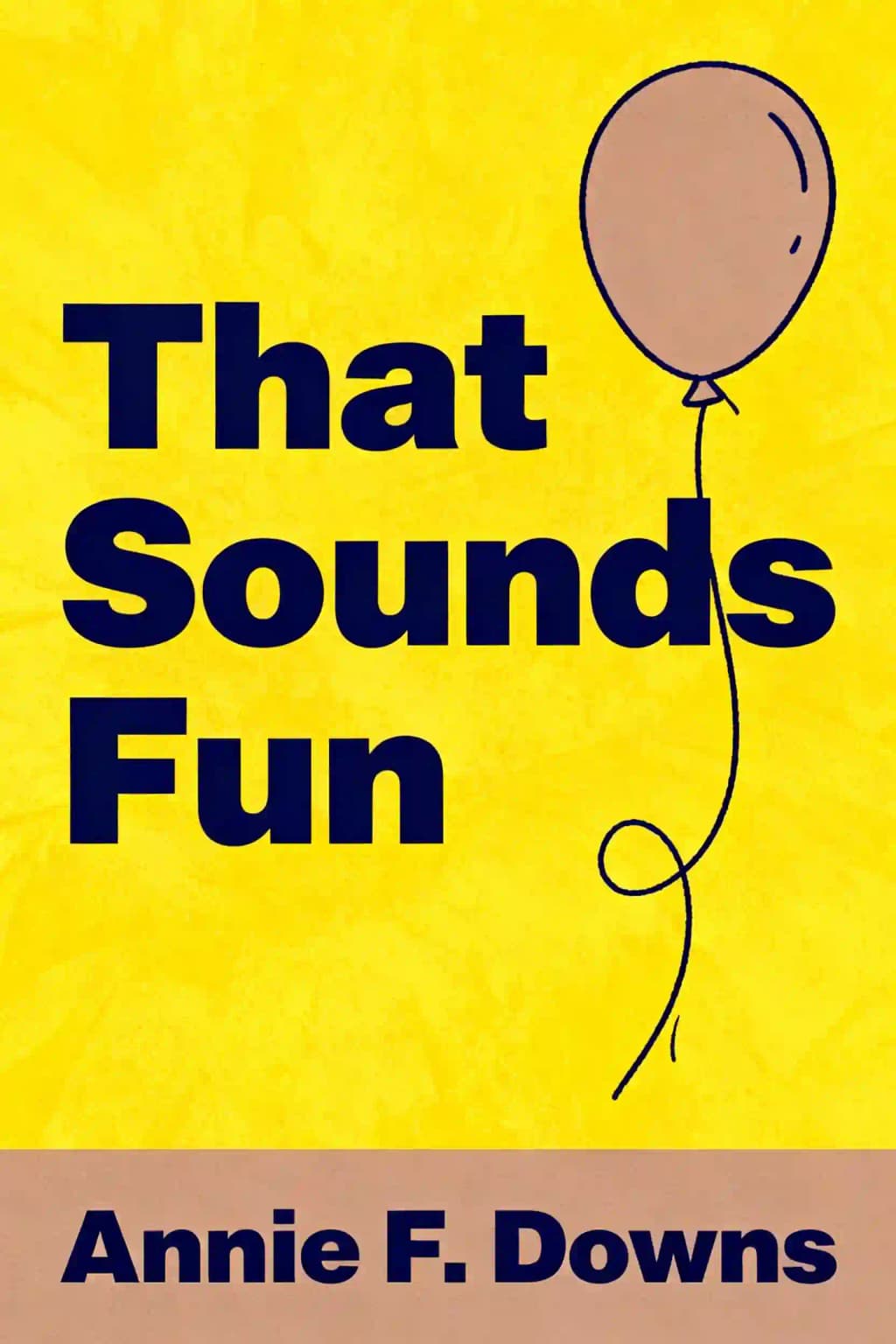
Have you ever noticed how some people seem to radiate joy, even amidst life's challenges? Annie F. Downs has mastered this art, becoming a beacon of authentic fun in a world often too busy to notice the small moments of delight. Her book "That Sounds Fun" has captured the attention of celebrities like Reese Witherspoon and Joanna Gaines, who've praised its ability to reawaken childlike wonder in overwhelmed adults. The book emerged from Downs' wildly popular podcast of the same name, which has amassed millions of downloads and cultivated a community of fun-seekers across the globe. In a culture obsessed with productivity and achievement, Downs offers a revolutionary perspective: perhaps fun isn't frivolous after all, but rather a spiritual practice-a glimpse of Eden in our broken world. As burnout rates soar and mental health concerns escalate, her message arrives at precisely the moment we need it most.
Capitolo 2
The Quest for Authentic Joy in a World of Escapism
There's something about sitting in a coffee shop surrounded by hanging plants and scalloped white tiles that grounds me. That's where Annie found herself at East Pole Coffee Company in Atlanta, sipping chai with oat milk, during a season when God had whispered, "You're going to want to be home next fall." After seven years of constant travel, speaking engagements, and living out of suitcases, she was grounded-both by divine invitation and by health issues that made flying increasingly painful. The constant pressure changes in airplane cabins had begun triggering severe sinus infections, forcing her to reconsider her nomadic lifestyle.
This grounding coincided with an uncomfortable realization: how often do we mistake escapism for genuine fun? Annie's instinct when facing difficult emotions was to run-pack her bags and board a plane to anywhere else. She'd hop flights to Paris when relationships ended, book spontaneous trips to London when work felt overwhelming, and escape to the mountains when family tensions arose. But experience had taught her that geographical solutions rarely solved emotional problems. The same anxieties that plagued her in Georgia followed her to Greece.
As the host of "That Sounds Fun" podcast, with over 50 million downloads and countless stories shared, Annie believes fun is integral to what God has for us, regardless of our life circumstances. Yet finding authentic fun requires distinguishing between momentary escape and genuine joy. The difference lies in whether we're running from something or moving toward something life-giving. True fun, she discovered, doesn't leave you feeling empty when it's over.
Annie's childhood on eighteen acres off Ebenezer Road provided her earliest experiences of pure fun-riding bikes down gravel driveways, racing sticks in the creek, and catching fireflies in summer twilight. She and her siblings would build elaborate fort cities from cardboard boxes, create treasure maps leading to buried plastic jewelry, and spend hours climbing the massive oak tree in their backyard. One memory stands out with particular clarity: snapping beans on her grandparents' cool cement porch alongside her mother and grandmother, the rhythm of their hands working in harmony as stories flowed between generations. These simple moments felt like glimpses of Eden-that perfect garden humans inhabited before brokenness entered the world.
As adults, we often lose touch with these uncomplicated pleasures. The responsibilities of adulthood-bills, careers, relationships, mortgage payments, healthcare decisions-can obscure our view of simple joys. Technology and social media create additional layers of complexity, making it harder to be present in the moment. When Annie's parents eventually sold their family home, she grieved deeply, not just for the physical place but for the uncomplicated happiness it represented. The sale marked the end of an era where joy seemed more accessible, more pure.
Yet fun appears in various forms throughout our lives if we're looking: in movie theaters that transport us away from heartbreak, in Broadway shows that lift our spirits, in the glitter dabbed beside our eyes by a kind performer, in spontaneous dance parties in the kitchen, in game nights with friends that stretch into the early morning hours, and in the quiet satisfaction of creating something with our own hands. These moments remind us that God's journey includes glimpses of Eden, appearing in our smile lines, laughter, and unique creative expressions. The key is learning to recognize and embrace these moments of genuine joy rather than constantly seeking escape.
Capitolo 3
Embracing the Amateur Spirit: Finding Joy in Beginnings
The word "amateur" has become something of an insult in our achievement-oriented culture. Yet its true definition is beautiful: someone who engages in an activity for pleasure rather than professional reasons. When did we decide that being new at something was shameful? When did we determine that unless we could monetize a skill, it wasn't worth pursuing?
This perfectionism kills fun, especially in a social media culture that punishes mistakes. We've forgotten the joy of being beginners-of trying something simply because it brings us pleasure, not because we're good at it or can make money from it.
Annie found herself navigating several amateur areas publicly: being a female speaker in church settings, dating as a public figure, and participating in racial reconciliation work. After receiving feedback about her podcast's lack of diversity, she realized she had been passively negligent. Rather than defending herself, she embraced the amateur position-following different voices, reading about racism, and featuring more diverse guests.
She made mistakes along the way, but remained committed to learning and listening. "Every day is the first day we've ever done today," she writes, suggesting we need more acknowledgment of the amateur who lives in each of us.
The That Sounds Fun podcast itself began as an amateur endeavor. After interviewing author Ted Dekker, Annie turned to Google to learn audio editing, chopped the interview into two thirty-minute episodes, and released them on consecutive Mondays. A few hundred people listened and enjoyed it, encouraging her to continue.
For the first ten episodes, she handled everything herself-scheduling, interviewing, editing, producing, uploading, and writing show notes. Though terrible at some aspects, she loved every second, especially the conversations. Being an amateur-not making money, unsure if it would work-while doing something she loved brought her immense joy.
This amateur spirit extends to other areas of life as well. At Disneyland with her assistant Eliza during their final work trip together, Annie embraced the childlike wonder of the park while simultaneously processing the grief of their professional relationship ending. The teacups and Peter Pan's Flight became spaces where joy and sadness could coexist-where fun became part of grieving.
Similarly, at Dollywood with her new tour manager Emma, Annie discovered that fun could help bridge transitions between life seasons. When later invited to be an extra in a Hallmark Christmas movie filming at the park, her amateur heart answered "yes, yes, a thousand times, yes," embracing the opportunity for joy even when the day didn't unfold as expected.
Even in moments of profound loss, like saying goodbye to her family home, Annie found ways to create fun-organizing an impromptu fireworks show over the pond with her cousins. This ability to hold both grief and joy simultaneously is a skill she's developed through life's challenges: "The more God has formed me, the more I've learned to hold both emotions simultaneously-to find fun amid grief, to make memories in painful situations."
Capitolo 4
The Courage to Love Deeply: Wearing Your Heart on Your Sleeve
Annie falls in love constantly-with ideas, children's laughter, movies, recipes, and even jackets from shops in Scotland. She feels everything big-big happy, big sad, big excitement, big love. Through years of counseling and emotional growth, she's learned that the intensity of her feelings hasn't diminished; she's simply gained the ability to name each emotion properly.
This capacity for deep feeling runs counter to our cultural notion that we should hold back our love and excitement. That's not wisdom; it's fear-fear of standing out, telling the truth, or liking something others might not. If you want to learn to have fun, Annie suggests, fall in love repeatedly. Yes, it might hurt, but that racing heartbeat reminds you that you're alive.
After a painful relationship ending, Annie found herself at Onsite, a therapeutic retreat center, terrified of confronting her pain. Her small group leader guided her through healing work that had little to do with the specific relationship and everything to do with deeper wounds. By week's end, she believed him when he said she was worthy of being chosen by a good, healthy man.
On her final evening there, walking a stone labyrinth alone, she made two promises aloud: "God, I want to buy a house by July. And if it would be okay with You, I want to try again." Despite her heartbreak, she wasn't giving up on love-being "Always Annie," the girl who wears her heart on her sleeve.
This commitment to authentic feeling extended to her house search. After seeing countless options but never feeling the love-at-first-sight certainty she craved, she finally made an offer on a condo with green walls and maple floors. When the offer was accepted, she named it "Harvest House"-not because life would be easier, but because the work was changing from sowing and waiting to harvesting what had been planted.
It took months to feel at home in Harvest House. Her friend Heather told her it takes until your first Christmas to feel at home in a new place. When her family came for Christmas and they ate on her grandmother's china around her friend Stevie's handmade walnut table, something shifted. She began to fall in love with her home slowly, discovering that perhaps this slower love-moving from like to love-harvests something deeper than immediate passion.
Annie's journey with her little white kitchen reflects a similar evolution. Initially the room she cared about least, it became a space of healing after a conversation with Chef Cory Barrett, who told her, "Lots of people say food is medicine, but I would say cooking is medicine." This shifted her perspective from seeing food only as functional healing to seeing the act of cooking itself as therapeutic.
Perhaps the most poignant example of Annie's capacity to love deeply came with Helen F. Downs-a puppy she had for just six days. After months of research about getting a dog, she finally found the one she wanted. Within hours of expressing interest, the tiny cavapoo was hers. But despite cavapoos being hypoallergenic, Annie developed severe allergic reactions. Just six days after Helen's arrival, Annie drove her across Tennessee to a foster family.
Pastor Kevin suggested this experience showed Annie she could love deeply and sacrifice for someone else. Perhaps Helen had been her guard and guide, showing her that her heart was still capable of profound love. Annie kept only one memento-a Coke Icee chew toy-as a reminder that searching for Eden matters, even when it hurts.
Capitolo 5
The Sacred Art of Savoring: Presence in Joy and Pain
Annie's friend Jenn has become one of her closest confidants, offering the same consistent advice through all of life's ups and downs: "Savor this." Whether experiencing joy in a new romance or confusion when communication falters, Jenn encourages Annie to remain present rather than escape the moment.
This doesn't come naturally to Annie. When relationships end, she typically allows herself a brief period to grieve before her inner motivational coach takes over, pushing her to move forward rather than fully experiencing sadness. But she's learning to savor even the painful moments, like when she found herself crying on the office floor with her friends Ashley and Mike, experiencing something unexpectedly holy in that vulnerability.
Our culture rewards those who quickly overcome sadness, who "pull themselves up by their bootstraps." We rush through seasons-dating to engagement, college to adulthood-rather than allowing each period its natural rhythm. Like weather patterns we can't control, we must learn to notice, enjoy, and savor life's changing seasons.
After practicing this mindset for months, Annie decided to get "savor this" tattooed on her arm during a trip to New York, combining her handwriting with Jenn's for the design. During the painful tattooing process, she forced herself to practice what was being permanently inscribed on her skin-to savor even this discomfort, to recognize it as special and unique.
Looking at this tattoo while driving home from surrendering Helen felt painfully ironic. Later, at Sevier Park, she watched her "MiniBFF" Theo bike toward her with pure joy on his face, teaching her that fun is worth the risk. When she had a friendship misunderstanding, she drove straight to the Barnes's house where Annie and Amy were ready to comfort her-that's what love is about.
Having a place where you can break down, laugh, or just show up when you need a hug feels almost Eden-like. Annie has worked hard to feel at home on her own, but it's never quite enough. Western culture has broken us with the lie that independence is strength and needing others is weakness. But isolation doesn't lead to flourishing; it leads to death. What we truly need is love.
Some places, like the Ryman Auditorium, remain constant in Annie's life, though she herself continues to change. The Ryman feels like home to her in a way she can't explain, and she's had to reclaim it after nearly losing her connection to it during a difficult concert experience. This balance between walking away from places that no longer serve us and redefining spaces with new memories is something she's constantly navigating.
Capitolo 6
The Power of Hobbies: Creating Space for Soul-Satisfaction
Meeting her friend Laura at Neighbors Restaurant after work, Annie discussed business, relationships, and struggling friends. Then Laura said, "I'm going to make a list of all the things I want to try"-all amateur activities, all requiring falling in love with something new. She called their generation "the hungriest generation ever," not just for food but for soul-satisfaction.
Hobbies create space in our busy lives, reminding us that good can come from nothing-seeds become flowers, ingredients become soup, yarn becomes mittens. When the world feels broken, hobbies let us put pieces back together. Laura's list wasn't short-piano lessons, dance classes, skydiving, scuba diving, hang gliding, learning about wine, cooking classes, improv nights, starting a girl band, and joining a book club-all things that cost time and money but help put the world back together in some way.
Annie has been a reader her whole life and has belonged to several book clubs throughout her adult years. Her first began when she was in her twenties, where as the youngest member among women in their thirties, she often observed rather than participated. These women read classics and thought-provoking works Annie wouldn't have chosen herself, discussing them with eloquence while she sat amazed at their wisdom.
When she moved to Nashville, she quickly joined another book club, this time reading modern fiction she wouldn't have discovered alone. Eventually she hosted, channeling those women she'd admired years before-with candles lit, beautiful plates, and even a cake made to match their book. The hobby transformed her into the woman she'd once aspired to be.
Now she's in a smaller, more intentional three-person club, reading challenging works about racial injustice and environmental issues. She's learned book clubs aren't forever. Maybe hobbies are markers along your path, showing who you were, who you are, and who you want to be.
Another meaningful hobby emerged through Annie's friendship with Tim Shaw, a former NFL player diagnosed with ALS. Once athletic and talkative, Tim now uses a wheelchair and communicates primarily through an eye-tracking computer. Their friendship has slowed to match Tim's pace, and he decided to teach Annie chess.
Since Tim can't lift his arms or grasp pieces, Annie listens to his instructions and moves his pieces accordingly, then responds with her own move. Tim is ruthless and strategic, always thinking three moves ahead while Annie focuses on just the next move. Learning chess from Tim has taught her the value of slowing down-she feels her muscles relax, notices things around her, and learns to have fun slowly.
Music and theater have been lifelong passions for Annie. In middle school, she chose to play the French horn in band, practicing constantly and taking private lessons. But she quit when she went to high school because friends told her it wasn't "cool"-a decision she still regrets.
Years after moving to Nashville, she discovered the Tennessee Performing Arts Center (TPAC) and eventually became a season ticket holder. She deliberately sits in the balcony so she can watch the orchestra, especially the French horn players. It stirs both joy and regret in her-watching those who didn't quit, who followed their passion rather than peer pressure.
Soccer represents another return to childhood joy for Annie. During an EnneaSummer podcast, she learned that Enneagram Sevens need play in their exercise-and it clicked immediately. Soccer had been her passion until high school, when she quit during her freshman year. Twenty years later, she reached out to her friend Stacey, a trainer for Nashville Soccer Club, tearfully explaining how she missed soccer and needed fun in her exercise routine.
After their first session, she cried from joy-the connection with the ball reconnected her with her younger self. Though challenging, soccer practice has become a priority. She's slowed down her frantic schedule to make room for it. That's how hobbies work-the making of the thing is just as rewarding as the product itself.
Capitolo 7
The Community of Fun: Finding Eden Together
Throughout "That Sounds Fun," Annie emphasizes that true fun is rarely a solitary experience. While moments of solitude can bring joy, the deepest experiences of fun often involve connection with others-whether friends, family, or even strangers who become companions in delight.
Annie's podcast has created a community of fun-seekers who share their own definitions of fun. These responses appear throughout the book as sideways pages of small font-listeners sharing everything from "watching thunderstorms roll in from my porch" to "spontaneous dance parties with my kids" to "finding the perfect reading spot in a new coffee shop."
This community extends beyond the podcast. When Annie surrendered Helen the puppy, she drove straight to the Barnes's house where Annie and Amy were ready to comfort her. Having a place where you can break down, laugh, or just show up when you need a hug feels almost Eden-like.
Western culture has broken us with the lie that independence is strength and needing others is weakness. But isolation doesn't lead to flourishing; it leads to death. What we truly need is love. Annie's "MiniBFFs" send her videos saying "AnnieDowns, I love you"-a love she never knew to ask for but fills the hole in her heart, even if these children don't have her parents' eyes. It's God's way of answering her prayers differently but abundantly.
In the book's acknowledgments, Annie expresses gratitude to her teams at Downs Books Inc., That Sounds Fun podcast, and That Sounds Fun Network, saying "I love my job mostly because you're around." She thanks every podcast guest who has "taught me so much and brought joy to me and many listeners." She acknowledges her publishing team, her pastors, the staff at Lost Valley Ranch, her family, and her dearest friends "who understand when I'm neck deep in writing words for hours a day."
This emphasis on community underscores one of the book's central messages: fun isn't something we manufacture alone. It emerges in the spaces between people-in shared experiences, mutual vulnerability, and collective joy. Even in her writing process, Annie finds comfort in background noise that creates a sense of companionship: sports on television, Gilmore Girls, Food Network, and Hallmark Christmas movies.
The final pages of the book contain a collection of responses from podcast listeners answering the question "What sounds fun to you?" This community-sourced finale reinforces the book's central theme: fun is personal yet universal, unique to each individual yet connecting us all in our shared humanity.
Capitolo 8
Discovering Your Own Path to Fun: An Invitation to Joy
"That Sounds Fun" isn't just a memoir of Annie's experiences-it's an invitation to readers to discover their own paths to joy. The recurring question "What sounds fun to you?" serves as both the book's title and its central challenge to readers.
This question isn't as simple as it might appear. Many adults struggle to answer it, having lost touch with what truly brings them joy. We've become so accustomed to productivity, responsibility, and meeting others' expectations that we've forgotten how to play.
Annie encourages readers to become "amateurs" again-to try new things without the pressure of excellence or monetization. Whether it's joining a book club, learning chess, returning to a childhood passion like soccer, or creating a bucket list of experiences like Laura's piano lessons and skydiving adventures, the key is to create space for activities that have no purpose beyond joy.
She also invites readers to "fall in love repeatedly"-with ideas, places, people, and experiences. This vulnerability might lead to pain, but it also leads to the fullest experience of being alive. The alternative-protecting ourselves from potential hurt by never fully engaging-ultimately leads to a diminished life.
Learning to "savor this"-to remain present in both joy and pain rather than rushing to the next thing-is another crucial practice. Our culture rewards those who quickly overcome sadness, who "pull themselves up by their bootstraps." We rush through seasons rather than allowing each period its natural rhythm. Like weather patterns we can't control, we must learn to notice, enjoy, and savor life's changing seasons.
Finally, Annie emphasizes the importance of community in experiencing true fun. Western culture has broken us with the lie that independence is strength and needing others is weakness. But isolation doesn't lead to flourishing; it leads to death. What we truly need is love and connection-places where we can break down, laugh, or just show up when we need a hug.
"That Sounds Fun" concludes with an implicit challenge: to reclaim fun not as a frivolous luxury but as an essential practice-a glimpse of Eden in our broken world. By embracing our amateur spirit, having the courage to love deeply, learning the sacred art of savoring, discovering the power of hobbies, and finding community, we can experience the joy that God intends for us, regardless of our life circumstances.