Capitolo 1
Life Beyond the Resume: Finding Joy in the Journey
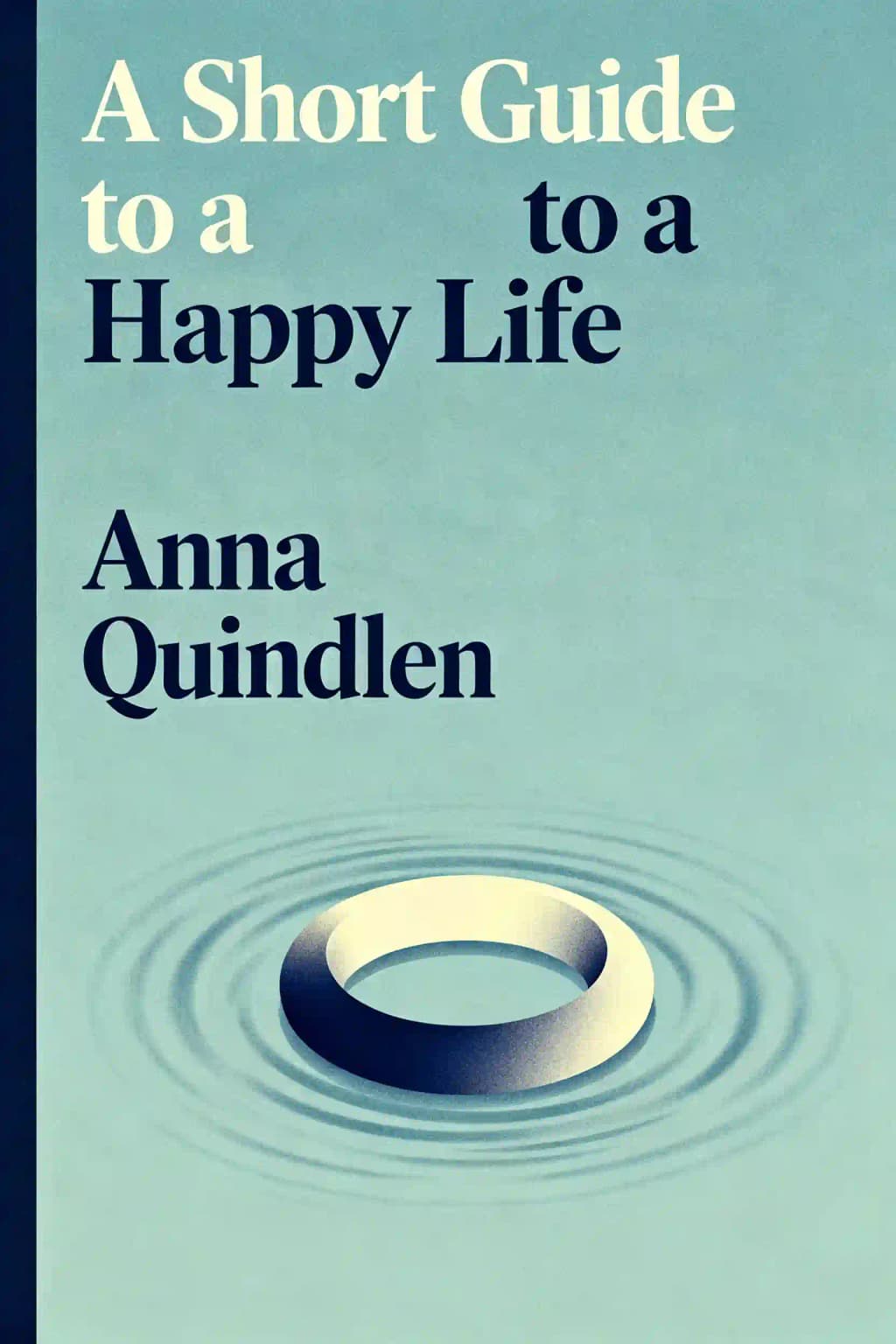
Anna Quindlen's "A Short Guide to a Happy Life" has become a cultural touchstone since its publication, finding its way onto graduation gift lists and bedside tables of millions seeking wisdom in our fast-paced world. The slim volume-emerging from a commencement speech Quindlen was invited to give but ultimately didn't deliver-has sold over 1.5 million copies and been translated into 15 languages. Celebrities from Oprah Winfrey to Emma Watson have praised its simple yet profound message. What makes this little book so powerful isn't complex philosophy but its accessible reminder of what truly matters. As we navigate a world increasingly obsessed with productivity and achievement, Quindlen's wisdom offers a counterbalance that resonates across generations, reminding us that the most meaningful parts of life often exist outside our professional identities.
Capitolo 2
The Transformative Power of Loss
Nothing shapes our perspective on life quite like confronting its fragility. For Quindlen, this moment came at nineteen when her mother died of ovarian cancer. This profound loss divided her existence into "before" and "after," fundamentally altering how she viewed everything that followed. The experience taught her that life isn't something to be taken for granted or postponed until some future milestone. Her mother's death became the lens through which she learned to see life as "nothing less than a magnificent gift." The swiftness with which her mother's illness progressed - from diagnosis to death in mere months - hammered home the precarious nature of our existence.
This perspective shift is something many of us only achieve after facing similar losses. We move through our days assuming there will always be more time-more chances to connect, to appreciate, to live fully. But those who have experienced profound loss often develop an acute awareness of life's brevity that transforms their approach to living. They understand viscerally what others grasp only intellectually: that our time is finite and precious. This understanding manifests in concrete ways - from saying "I love you" more freely to pursuing long-delayed dreams with renewed urgency.
Quindlen doesn't suggest we dwell in grief, but rather that we allow it to teach us. When we recognize how quickly everything can change, we develop a heightened appreciation for what remains. Simple pleasures-a child's laughter, morning sunlight through windows, conversations with friends-take on new significance. The smell of coffee brewing, the warmth of a familiar embrace, even mundane routines become sacred rituals. We become more intentional about how we spend our days and with whom, often making radical changes to prioritize what truly matters.
This awareness isn't morbid; it's liberating. Understanding life's impermanence doesn't diminish joy but amplifies it. When we recognize that nothing lasts forever, we're more likely to be fully present for the moments we have. We stop postponing joy for some hypothetical future and start embracing it in the present. As Quindlen puts it, life's brevity is "our greatest gift from God" precisely because it teaches us not to waste our days on things that don't truly matter. The transformative power of loss lies in its ability to clarify what does.
Loss becomes a powerful teacher, showing us that grief and gratitude are often two sides of the same coin. Those who have experienced deep loss often develop an almost supernatural ability to appreciate life's beauty in its smallest details. They understand that each goodbye could be the last, each reunion is precious, and every ordinary day holds extraordinary potential. This heightened awareness becomes both a burden and a blessing - a constant reminder to live more fully, love more deeply, and waste less time on the superficial aspects of life that often consume us.
Capitolo 3
The Distinction Between Living and Existing
There's a profound difference between merely existing and truly living, between going through the motions and being fully engaged with life. Quindlen challenges us to recognize this distinction and make a conscious choice about how we spend our precious days. She warns against confusing your job with your life-a trap many of us fall into in our achievement-oriented culture.
"Don't confuse your life with your job," she writes. "One is merely part of the other." This simple statement cuts to the heart of a modern dilemma. We live in a world that often defines success narrowly, through professional achievements, financial milestones, and status symbols. We become so focused on building impressive resumes that we forget they provide little comfort during life's most challenging moments.
What does it mean to truly live rather than merely exist? It means being present for the full spectrum of human experience-not just the productive, profitable parts. It means noticing the changing seasons, feeling the sun on your face, and appreciating the people who share your journey. It means recognizing that your worth isn't determined by your productivity or professional accomplishments.
This distinction becomes clearer when we consider what we'll remember at life's end. Few people look back wishing they'd spent more hours at the office or accumulated more possessions. Instead, they cherish memories of connections, experiences, and moments of beauty or meaning. They value the times they were fully present-when they weren't rushing through life but actually living it.
Living fully doesn't mean abandoning ambition or responsibility. Rather, it means expanding our definition of success to include the quality of our relationships, our capacity for joy, and our ability to appreciate life's simple pleasures. It means recognizing that a well-lived life encompasses far more than professional achievements, however impressive they may be.
Capitolo 4
Redefining Success Beyond Professional Achievement
Our culture has narrowed the definition of success to focus primarily on professional achievements, financial gains, and status symbols. Quindlen challenges this limited view, suggesting that true success encompasses something much broader and more meaningful. She writes that her real resume consists of being "a good mother, a good wife, a good friend to the people who want me in their corner." Success, in her view, is about "showing up, listening, and laughing"-qualities rarely featured in professional biographies but essential to a well-lived life.
This perspective invites us to reconsider what truly constitutes achievement. Is it the promotion, the bigger house, the prestigious award? Or is it the ability to be present for loved ones, to offer compassion when needed, to find joy in ordinary moments? While professional accomplishments certainly have value, they represent only one dimension of a fulfilling life.
Consider how we measure success in our daily choices. Do we prioritize work over relationships, believing we'll have time for connection "later"? Do we postpone joy in pursuit of some future achievement that promises satisfaction but often fails to deliver? These patterns reflect a cultural narrative that equates productivity with worth-a narrative that leaves many feeling perpetually inadequate despite significant accomplishments.
Redefining success means recognizing that our professional identities, while important, are just one aspect of who we are. It means acknowledging that the depth of our connections, our capacity for compassion, and our ability to find meaning in everyday experiences are equally valid measures of achievement. It means understanding that "you cannot excel at work if work is all you are."
This broader definition doesn't diminish professional ambition but places it within a more holistic context. It recognizes that true success involves balance-the ability to pursue goals while remaining connected to what gives life meaning beyond achievement. It acknowledges that at life's end, our legacy will be measured not just by what we accomplished but by how we lived and loved.
Capitolo 5
The Art of Noticing: Finding Wonder in the Ordinary
In our hyperconnected, overstimulated world, one of the greatest skills we can cultivate is the ability to notice-to pay attention to the beauty and wonder that surrounds us daily but often goes unobserved. Quindlen emphasizes this practice as essential to a happy life, encouraging us to notice "the way the morning light catches one of your kids just so" or "the way a baby concentrates when it plays."
This kind of noticing requires intention. It means slowing down enough to observe the details that make life rich: the changing colors of leaves in autumn, the expression on a loved one's face during conversation, the taste of a home-cooked meal. These seemingly small moments contain profound opportunities for connection and joy, but we miss them when rushing through life on autopilot.
Perhaps the most powerful example from Quindlen's book comes from an unlikely source-a homeless man at Coney Island who, despite having nothing by conventional standards, taught her to "look at the view." This simple instruction contains profound wisdom. No matter our circumstances, there is always a "view" worth noticing-something beautiful, meaningful, or wonder-inducing if we train ourselves to see it.
The practice of noticing transforms ordinary experiences into extraordinary ones. A walk becomes an opportunity to observe nature's intricate patterns. A meal becomes a chance to appreciate flavors and textures. A conversation becomes a moment of genuine connection rather than an exchange to get through. This attentiveness doesn't require special circumstances or exotic locations-just a willingness to be present with what is.
Cultivating this awareness isn't just about enriching our experience; it's about recognizing that life happens in these ordinary moments. When we're always looking ahead to the next achievement or milestone, we miss the life that's unfolding right now. As Quindlen reminds us, quoting John Lennon: "Life is what happens to you while you're busy making other plans."
The art of noticing is ultimately about presence-being fully available to our lives as they unfold rather than mentally residing in the past or future. It's about recognizing that the extraordinary often hides within the ordinary, waiting to be discovered by those willing to pay attention.
Capitolo 6
The Paradox of Modern Discontent
We live in an age of unprecedented comfort and convenience, yet widespread dissatisfaction persists. Quindlen highlights this paradox, noting that despite enjoying luxuries our grandparents considered unattainable, we've "somehow found the glass half empty." We complain about jobs and responsibilities while surrounded by comforts that would have amazed previous generations.
This paradox reflects a fundamental misalignment between our expectations and our appreciation. As our material circumstances improve, our expectations rise accordingly, creating what psychologists call the "hedonic treadmill"-the tendency to quickly return to a relatively stable level of happiness despite major positive or negative life changes. We adapt to improvements in our circumstances, taking them for granted rather than experiencing sustained appreciation.
Modern life also bombards us with images of idealized existence-perfect homes, bodies, relationships, and careers-creating a perpetual sense that our own lives fall short. Social media amplifies this effect, presenting carefully curated versions of others' lives that make our own messy realities seem inadequate by comparison. We're constantly exposed to what we lack rather than encouraged to appreciate what we have.
Additionally, our consumer culture thrives on creating dissatisfaction. Advertising consistently delivers the message that we're incomplete without the next purchase, experience, or achievement. This manufactured discontent drives economic activity but undermines contentment.
The path beyond this paradox lies in developing what psychologists call "hedonic adaptation prevention"-practices that help us maintain awareness of and gratitude for the good in our lives. This includes mindfulness practices that anchor us in the present moment, gratitude exercises that direct attention to what we have rather than what we lack, and perspective-taking that helps us recognize our relative good fortune.
Quindlen reminds us that life is good "not in some cosmic way but in its small component parts." This insight offers a practical approach to overcoming modern discontent-by training ourselves to notice and appreciate the specific, concrete details that make life rich: flowers blooming, children sitting close, the way light falls on a loved one's face. These moments of beauty and connection are available regardless of circumstances, but only if we develop the habit of noticing them.
Capitolo 7
The Currency of Time and Attention
In our modern world, perhaps nothing is more valuable-or more squandered-than our time and attention. Quindlen's wisdom reminds us that how we allocate these precious resources ultimately determines the quality of our lives. She quotes poet Gwendolyn Brooks: "Exhaust the little moment. Soon it dies." This simple instruction captures a profound truth: our lives consist of moments that, once passed, cannot be reclaimed.
The way we spend our time reflects our true priorities, regardless of what we claim to value. Many of us say we prioritize relationships, personal growth, or well-being, yet our calendars tell a different story. We fill our days with busy work, mindless scrolling, and obligations that drain rather than fulfill us. We postpone meaningful experiences for some future time that may never arrive.
Similarly, our attention-what we choose to focus on-shapes our experience of life. When we're physically present but mentally elsewhere, we miss opportunities for connection, joy, and meaning. We fail to notice the beauty around us or truly listen to those we love. Our divided attention diminishes the quality of our experiences and relationships.
Developing intentionality about time and attention requires recognizing their finite nature. We have limited days, and each contains limited hours of focused attention. This awareness can help us make more conscious choices about how we spend these resources. It can prompt us to ask: Does this activity or commitment align with what I truly value? Am I giving my attention to what matters most?
Practical strategies for reclaiming time and attention might include:
• Regular review of how we spend our days, identifying activities that drain rather than enrich
• Creating boundaries around technology use to prevent mindless consumption
• Scheduling time for relationships and experiences we value, rather than hoping they'll happen spontaneously
• Practicing mindfulness to strengthen our ability to stay present
• Simplifying our commitments to create space for what matters most
As Quindlen suggests, learning to love the journey rather than fixating on the destination helps us recognize that today is the only guarantee. When we treat our time and attention as the precious currencies they are-investing them thoughtfully rather than spending them carelessly-we create lives of greater meaning, connection, and joy.
Capitolo 8
The Practice of Generous Living
Generosity forms a cornerstone of Quindlen's philosophy for a happy life. She encourages readers to "be generous" with their good fortune, recognizing that sharing what we have-whether material resources, time, or attention-enriches both the giver and recipient. This practice of generous living extends far beyond occasional charitable donations; it becomes a way of moving through the world with an open heart and hands.
True generosity begins with awareness of our own good fortune. Despite life's challenges, most of us enjoy blessings worth acknowledging-from basic necessities like food and shelter to the profound gifts of health, relationships, and opportunities. Recognizing these blessings counters entitlement and fosters gratitude, creating fertile ground for generosity to flourish.
Generous living manifests in countless ways, both grand and small. It might look like financial contributions to causes we believe in or spontaneous acts of kindness for strangers. It could mean offering undivided attention to someone who needs to be heard or sharing knowledge and skills without expectation of return. It includes being generous with forgiveness, understanding, and the benefit of the doubt in our interactions with others.
Research consistently shows that generosity benefits the giver as much as the recipient. Studies link generous behaviors with increased happiness, improved physical and mental health, stronger social connections, and greater longevity. These benefits emerge not from occasional grand gestures but from developing generosity as a habitual way of engaging with the world.
Practicing generous living requires overcoming cultural messages that promote scarcity thinking and self-protection. We're often encouraged to accumulate and protect resources rather than share them, to view others' gain as our potential loss. Countering these messages means recognizing abundance in our lives and understanding that many resources-like love, kindness, and compassion-multiply rather than diminish when shared.
Generous living also involves being present enough to recognize opportunities for giving. When we're rushing through life focused solely on our own concerns, we miss chances to offer what others might need-whether material help, emotional support, or simple human connection. Developing awareness of others' circumstances creates possibilities for meaningful generosity.
As Quindlen suggests, this approach to life isn't just about making others happy-though it certainly does that. It's about creating a life of meaning and connection for ourselves. When we practice generous living, we participate in something larger than our individual existence. We become part of a web of giving and receiving that enriches the human experience for everyone involved.
Capitolo 9
Finding Your Own Path to Fulfillment
Perhaps the most empowering aspect of Quindlen's philosophy is her recognition that each person must discover their own unique path to a happy life. She reminds us that "you alone have custody of your particular life"-not just at work or in transit, but your entire existence, heart and soul included. This custody comes with both freedom and responsibility: the freedom to define what matters to you and the responsibility to align your choices accordingly.
Finding your own path begins with honest self-reflection. What brings you genuine joy rather than fleeting pleasure? What activities leave you feeling energized rather than depleted? What relationships nurture your spirit? What values do you want to guide your decisions? These questions have no universal answers-what fulfills one person may leave another cold. The journey toward a happy life requires discovering your authentic responses rather than adopting others' prescriptions.
This personal journey often involves challenging societal expectations and conventional definitions of success. Our culture promotes certain paths as desirable-particular career trajectories, relationship models, or lifestyle choices-but these standardized routes don't accommodate the rich diversity of human needs and aspirations. Finding fulfillment might mean choosing a less prestigious career that allows more family time, pursuing an unconventional relationship structure, or prioritizing creativity over consumption.
The process also requires distinguishing between external pressures and internal wisdom. We're bombarded with messages about how we should live-from family traditions to advertising to social media influencers. Learning to quiet these external voices enough to hear your own inner guidance takes practice but proves essential for authentic living. This doesn't mean ignoring all outside input but rather filtering it through your own values and experiences.
Finding your path isn't a one-time discovery but an ongoing process of alignment and realignment as you grow and change. What fulfilled you at twenty may not at forty; what seemed important in one life season may shift in another. This evolution isn't failure but natural development. A happy life involves remaining flexible enough to adjust your path as your understanding of yourself deepens.
Quindlen's wisdom reminds us that while others can offer guidance, ultimately we each must find our own way toward fulfillment. There is no universal formula for happiness-only the personal journey of discovering what brings meaning, connection, and joy to your particular life. This journey requires courage to listen to your own heart and follow where it leads, even when that path diverges from others' expectations or conventional wisdom.
Capitolo 10
Embracing Life's Magnificent Gift
At its core, Quindlen's message is an invitation to embrace life in its entirety-to recognize it as "nothing less than a magnificent gift" despite its challenges and inevitable sorrows. This perspective doesn't deny life's difficulties but places them within a larger context of wonder and appreciation. It acknowledges that pain and joy, struggle and beauty coexist in the human experience, and a happy life involves embracing this full spectrum rather than waiting for perfect circumstances.
Embracing life as a gift means approaching each day with a sense of possibility rather than obligation. It means waking up asking "What might this day hold?" rather than merely "What must I get through?" This shift in orientation transforms routine activities into opportunities for discovery, connection, or meaning. Even ordinary moments-preparing a meal, commuting to work, completing household tasks-can be experienced as expressions of living rather than items to check off a list.
This perspective also involves accepting life's imperfections and limitations. A gift needn't be flawless to be valuable. Just as we might cherish a handmade present despite its imperfections, we can appreciate life despite its messiness and unpredictability. This acceptance doesn't mean passive resignation but rather a clear-eyed recognition of reality that allows us to work with what is rather than exhausting ourselves fighting against it.
Embracing life fully requires presence-the ability to be where we are rather than constantly wishing for different circumstances. As Quindlen learned from the homeless man at Coney Island, there is always a "view" worth noticing if we're willing to look. This presence isn't always easy; our minds naturally wander to past regrets or future worries. But with practice, we can develop the capacity to return to the present moment where life actually unfolds.
Perhaps most importantly, embracing life as a gift involves gratitude-not just as an occasional sentiment but as a fundamental orientation. This doesn't mean forced positivity or denying genuine struggles. Rather, it means developing the habit of noticing and appreciating what's good, beautiful, or meaningful in our experience. Research consistently shows that gratitude practices significantly enhance well-being, not by changing circumstances but by changing how we perceive and engage with them.
Quindlen's wisdom reminds us that while we can't control all of life's circumstances, we can control how we respond to them. We can choose to move through our days with awareness, appreciation, and openness to the gift each moment offers. This choice-to fully embrace life rather than merely endure it-may be the most powerful determinant of a happy life.