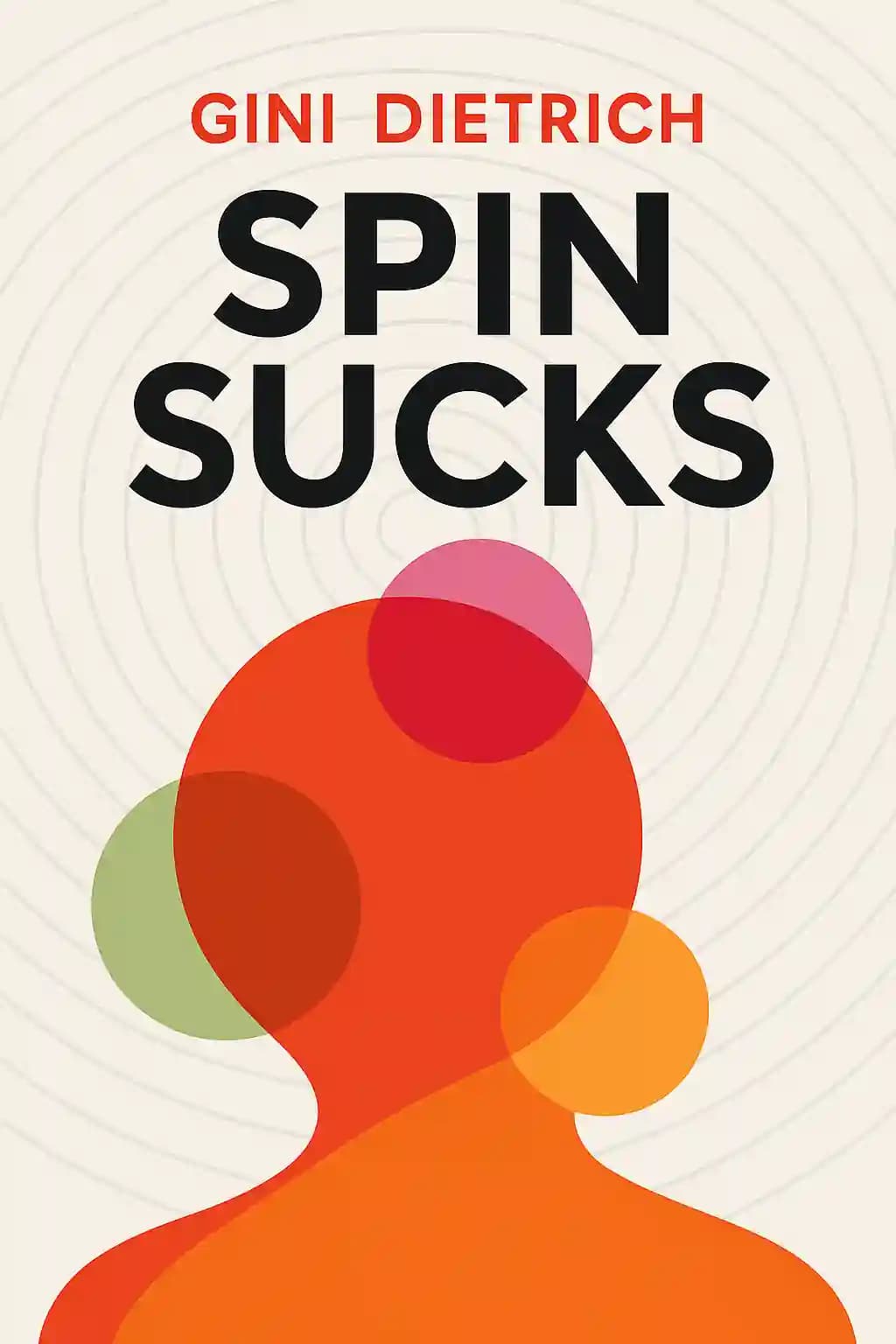
Spin Sucks
Communication and Reputation Management in the Digital Age
Panoramica di Spin Sucks
In "Spin Sucks," PR maverick Gini Dietrich demolishes outdated communication tactics, championing radical transparency in our digital age. Tony Gnau calls it "the manual for business leaders" - a revolution that's transformed how industry giants build authentic connections while measuring real impact.
Temi chiave in Spin Sucks
- reputation management
- integrated media strategy
- brand storytelling
- crisis communication
- radical transparency
Citazioni da Spin Sucks
Spin doesn't work anymore.
Spin is downright dangerous.
Honesty and transparency are your best tools in crisis management.
Content is King, but Distribution is Queen.
Spin sucks.
Personaggi di Spin Sucks
- Gini DietrichAuthor and PR expert who created the PESO model
Sull'autore
Sull'autore di Spin Sucks
Gini Dietrich, author of Spin Sucks, is a renowned marketing strategist and the creator of the influential PESO model, which revolutionized integrated communications.
A bestselling author and CEO of the Chicago-based firm Arment Dietrich, she merges decades of PR expertise with a commitment to ethical, transparent practices.
Her book, a cornerstone in modern marketing literature, tackles public relations challenges by advocating for the seamless fusion of paid, earned, shared, and owned media strategies. Dietrich’s authority extends through her acclaimed Spin Sucks blog, a hub for industry insights, and her co-authorship of Marketing in the Round, which further explores collaborative marketing approaches.
As a sought-after keynote speaker and co-host of the Inside PR podcast, she bridges theory with actionable tactics for global audiences. Recognized for reshaping PR education, Spin Sucks has become a critical resource for professionals aiming to align traditional methods with digital innovation.
Scarica il riassunto di Spin Sucks
Ottieni il riassunto di Spin Sucks in formato PDF o EPUB gratuito. Stampalo o leggilo offline quando vuoi.
FAQ su questo libro
Spin Sucks by Gini Dietrich is a modern guide to ethical PR and digital communication, emphasizing transparency and trust-building in marketing. It critiques outdated tactics like spin and black-hat SEO, offering strategies for crisis management, storytelling, and leveraging Google’s algorithms. The book combines actionable checklists, case studies, and frameworks to help brands create shareable, authentic content that resonates in the digital age.
This book is essential for PR professionals, marketers, small business owners, and students seeking to navigate digital communication. It’s particularly valuable for those aiming to improve online reputation management, master crisis response, or understand SEO’s role in modern PR. Nonprofit leaders and content creators will also benefit from its ethical content strategies.
Yes, Spin Sucks is praised for its practical, no-nonsense advice on ethical marketing and crisis management. Readers gain tools like actionable checklists, real-world case studies, and frameworks for creating trust-driven content. Its focus on Google’s evolving algorithms and storytelling makes it a relevant resource for adapting to 2025’s digital landscape.
The book explains Google’s Panda and Penguin algorithms, stressing the importance of ethical SEO practices over keyword stuffing or backlink schemes. Gini Dietrich highlights how sharable, emotion-driven content now influences search rankings, urging brands to prioritize quality and audience value. This aligns with modern demands for transparency and trust in digital marketing.
Dietrich advises addressing complaints swiftly by identifying root issues, assessing the complainant’s influence, and responding transparently. Key steps include:
- Listening actively to feedback
- Avoiding defensive reactions
- Turning critics into advocates through accountability
These strategies help mitigate reputation damage and build long-term trust.
Storytelling is framed as the cornerstone of trust-building. The book argues that humanizing brands through relatable narratives fosters emotional connections, making content more shareable. Examples include using customer-centric language and avoiding jargon (“removing the French”) to craft stories that highlight real-world impact.
The book includes:
- Checklists for crisis management and content optimization
- Frameworks for ethical SEO and social media engagement
- Case studies on reputation recovery and viral campaigns
These resources help readers implement strategies immediately, from crafting headlines to managing online disputes.
Dietrich condemns “spin,” whisper campaigns, and astroturfing as outdated and harmful. She advocates for replacing manipulation with transparency, such as openly addressing mistakes and prioritizing customer needs. The book positions ethical practices as the only sustainable way to build credibility in the digital era.
Yes, it features case studies on brands navigating crises, optimizing content, and rebuilding reputations. These examples illustrate both successes (e.g., effective apology strategies) and failures (e.g., tone-deaf responses), providing actionable lessons for readers.
As AI and algorithm updates continue reshaping SEO, the book’s emphasis on authentic storytelling and ethical practices remains critical. Its strategies for managing viral misinformation and fostering trust align with current challenges like deepfakes and social media polarization.
Unlike tactical playbooks, Spin Sucks focuses on long-term reputation building over quick fixes. It blends PR theory with digital-age adaptations, offering a unique mix of crisis management, SEO insights, and storytelling frameworks not found in traditional marketing manuals.
Key quotes include:
- “The secret sauce is this: there is no secret sauce” – emphasizing patience and hard work over shortcuts.
- “Remove the French (the we, we, we)” – advocating customer-centric storytelling.
- “Trust is the currency of the digital age” – underlining transparency’s role in brand success.