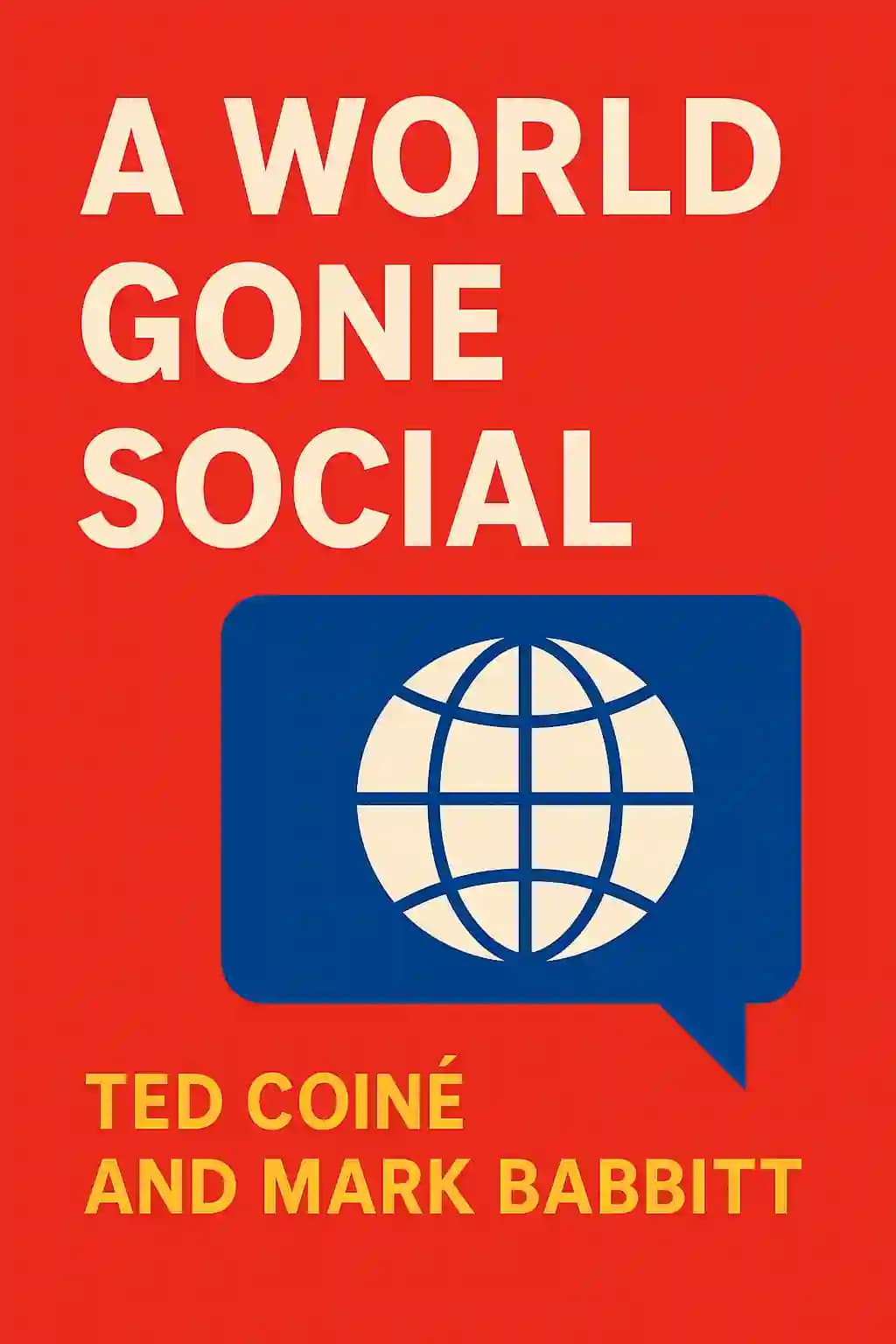
In "A World Gone Social," Coine and Babbitt reveal why social media isn't just a trend but a business revolution. Featured on Blinkist, this guide shows how flat hierarchies and digital influencers now outweigh traditional authorities - is your company ready for extinction or evolution?
Senti il libro attraverso la voce dell'autore
Trasforma la conoscenza in spunti coinvolgenti e ricchi di esempi
Cattura le idee chiave in un lampo per un apprendimento veloce
Goditi il libro in modo divertente e coinvolgente
Social media is inherently neutral-like a hammer that can either build or destroy.
Scomponi le idee chiave di A world gone social in punti facili da capire per comprendere come i team innovativi creano, collaborano e crescono.
Distilla A world gone social in rapidi promemoria che evidenziano i principi chiave di franchezza, lavoro di squadra e resilienza creativa.

Vivi A world gone social attraverso narrazioni vivide che trasformano le lezioni di innovazione in momenti che ricorderai e applicherai.
Chiedi qualsiasi cosa, scegli la voce e co-crea spunti che risuonino davvero con te.

Creato da alumni della Columbia University a San Francisco
"Instead of endless scrolling, I just hit play on BeFreed. It saves me so much time."
"I never knew where to start with nonfiction—BeFreed’s book lists turned into podcasts gave me a clear path."
"Perfect balance between learning and entertainment. Finished ‘Thinking, Fast and Slow’ on my commute this week."
"Crazy how much I learned while walking the dog. BeFreed = small habits → big gains."
"Reading used to feel like a chore. Now it’s just part of my lifestyle."
"Feels effortless compared to reading. I’ve finished 6 books this month already."
"BeFreed turned my guilty doomscrolling into something that feels productive and inspiring."
"BeFreed turned my commute into learning time. 20-min podcasts are perfect for finishing books I never had time for."
"BeFreed replaced my podcast queue. Imagine Spotify for books — that’s it. 🙌"
"It is great for me to learn something from the book without reading it."
"The themed book list podcasts help me connect ideas across authors—like a guided audio journey."
"Makes me feel smarter every time before going to work"
Creato da alumni della Columbia University a San Francisco

Ottieni il riassunto di A world gone social in formato PDF o EPUB gratuito. Stampalo o leggilo offline quando vuoi.
A customer tweets a complaint about a broken guitar. Within days, 14 million people watch the story unfold. A 22-year-old starts an online petition about a bank fee. Three hundred thousand signatures later, a multibillion-dollar corporation reverses course. An intern at an eight-person startup makes a single phone call that four established brands ignored-and wins a customer who shares the experience with 300,000 followers. This isn't science fiction. It's Tuesday. We're living through a transformation as profound as the shift from agriculture to industry, yet many leaders still operate as if it's 1995. The command-and-control hierarchies that dominated the twentieth century-with their knowledge hoarding, rigid bureaucracies, and top-down edicts-are crumbling. Not because of some management fad, but because they simply can't compete anymore. The tools that once kept power concentrated at the top have been democratized. A single person with passion and a smartphone now wields influence that once required armies of PR professionals and millions in advertising spend. Resistance to this new reality comes in predictable flavors. Some dismiss social as a passing trend, like disco or pet rocks. Others remain comfortably ignorant, insisting their current success proves change unnecessary. Still others fear losing the power that hierarchy once guaranteed them. They're like the British naval ship in that famous exchange, demanding the lighthouse change course-not realizing they're demanding the impossible. Think about what's actually happening. Solopreneurs launch businesses from kitchen tables with virtually no capital, gaining traction through nothing but authentic engagement. Customers bypass marketing departments entirely, conferring with each other to decide what's worth buying. Job seekers ignore corporate PR, learning what companies are really like from current employees sharing unfiltered experiences online. Expertise has escaped the executive suite. Knowledge flows freely, rendering traditional gatekeepers obsolete. This shift runs deeper than platforms or technology. Today's workforce-particularly those who grew up with the internet-operates from fundamentally different assumptions. They trust more readily, communicate more openly, and expect collaboration from all directions. They don't understand why information should be hoarded or why good ideas should die in committee. Organizations clinging to Industrial Age thinking aren't just outdated-they're actively repelling the talent and customers they need to survive.