Capitolo 1
When Small Clues Reveal Big Truths
In 2003, LEGO was on the brink of bankruptcy. Despite decades of success, the iconic Danish toy company had lost 30% of its turnover in a single year and was facing potential default on massive debt. Market research and big data suggested that impatient "Digital Natives" lacked the patience for traditional building blocks, leading LEGO to create bigger bricks and diversify into theme parks and media.
Then came the turning point-a pair of worn Adidas sneakers belonging to an 11-year-old German boy. During a home visit, this skateboarding LEGO enthusiast proudly displayed his scuffed shoes, explaining how their specific wear patterns were evidence of his skateboarding mastery. This small observation revealed something big data had missed: children willingly invest significant time in skills they value, seeking mastery regardless of how long it takes.
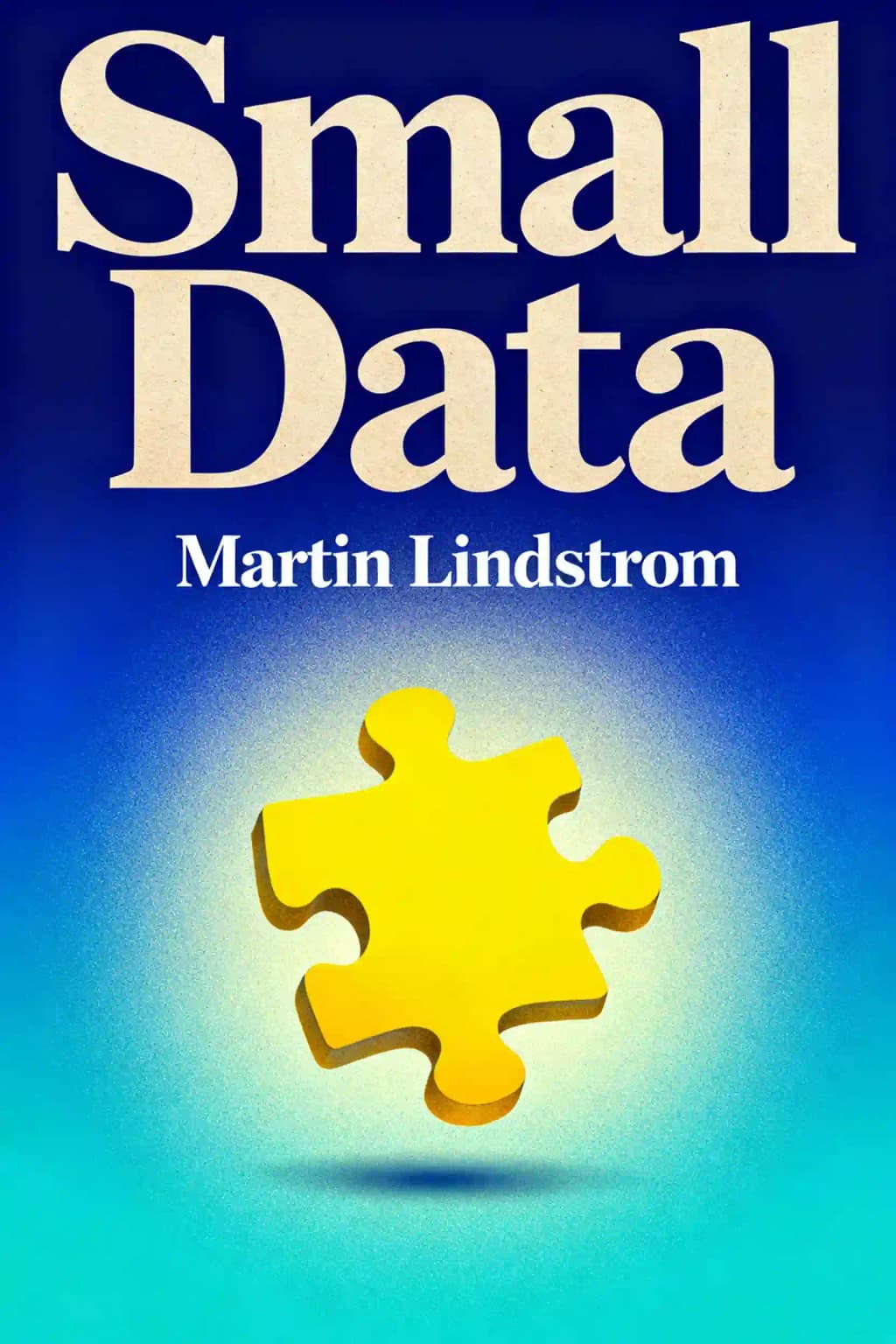
This insight led to LEGO's dramatic pivot back to its core product-actually making sets more complex with smaller bricks and more challenging builds. By 2014, LEGO's sales had risen to exceed $2 billion, surpassing Mattel to become the world's largest toymaker. The company was saved not by massive data sets but by a single pair of sneakers-a perfect example of what global branding consultant Martin Lindstrom calls "Small Data."
As Lindstrom puts it, "Everyone is searching for what is post big data-and the answer is small data." In a world increasingly dominated by algorithms and analytics, the most profound insights often come from the tiniest, most human observations.
Capitolo 2
The Art of Noticing What Others Miss
Lindstrom's career as a global branding consultant began during a childhood hospitalization for a rare inflammatory disease. Confined to bed at age 12, he developed keen observational skills by studying patients and staff around him. He noticed patterns in behavior-how patients manipulated their voices when family visited, how nurses with heavier clipboards seemed more self-important. This hospital stay cultivated both his LEGO building skills (which later led to employment with the company) and his ability to notice, deduce, and interpret human behavior.
Today, Lindstrom travels across 77 countries, conducting what he calls "Subtext Research" or "Subtexting"-visiting consumers in their homes, gathering small data both offline and online, and analyzing these clues alongside observations from around the world. This process almost always reveals an unmet or unacknowledged desire that forms the foundation for a new brand, product innovation, or business strategy.
Small data can be found anywhere-inside ovens, medicine cabinets, Facebook albums, or how shoes are arranged in a hallway. Lindstrom looks for patterns, parallels, correlations, and especially imbalances between people's daily lives and their unacknowledged desires. After gathering observations, he arranges his findings on a bulletin board to identify gaps between perception and reality, between conscious and unconscious fantasies.
The value of being an outsider is that Lindstrom can notice what locals cannot. In Japan, for example, he observed that kitchens and laundry rooms are zones only married women may enter-an unspoken custom that affects how companies must market household products in a country where three-quarters of Japanese males do the household shopping. Similarly, a colleague once pointed out to him that Danes have no structure in how they walk-something he'd never noticed despite growing up there.
Despite having information on billions of online users, even Google has realized it knows little about what truly drives human behavior. The integration of online and offline data-the marriage of big data and small data-is essential for marketing success in the twenty-first century.
Capitolo 3
Cultural Imbalances and Hidden Desires
Our perception of the world revolves around where we live, creating an internal navigational system that guides our everyday behaviors. This unconscious behavioral GPS determines everything from which side of the bed we sleep on to how we position ourselves when walking with others. Cultural differences manifest in countless ways-Australians arrive thirty minutes late to gatherings while Swiss guests are precisely on time, Japanese arrive early, and Israelis come forty-five minutes late.
The digital era has transformed our physical behaviors in subtle but significant ways. People over 40 often struggle with touchscreens, while children navigate them effortlessly. Our increasing reliance on touchscreens has weakened our handgrips, leading manufacturers to design looser bottle caps and easier-to-open car doors.
Even how we eat ice cream has changed. Children raised in the digital age no longer lick around the sides of their cones in anticipation; they bite directly from the top, wanting immediate gratification. This "Power Plug Generation" or "Screenagers" constantly fears being without power, disconnected from their digital lives.
These cultural imbalances and generational shifts are what Lindstrom studies professionally. Societies tend to swing back and forth in predictable ways-politically, fashion trends oscillate between extremes, and each generation reacts against the previous one's norms. By identifying these imbalances-too much or too little of something-Lindstrom can uncover unaddressed national needs or desires that form the foundation for profitable enterprises.
One of Lindstrom's most fascinating assignments took him deep into Russia, where he traveled across eight time zones in ten days, interviewing consumers across remote regions. Russia's most striking characteristic was its pervasive grayness-a quality Lindstrom felt descending upon him whenever he boarded a plane there. The population seemed unanimated, rarely smiling or laughing. Russians often commented that what they most enjoyed about visiting other countries was seeing people having fun.
Inside Russian apartments, heavily padded, soundproof doors created isolation from the outside world. The living spaces were typically functional, cramped and plain. Women controlled the domestic sphere completely, with men's clothing arrangements revealing a telling power dynamic-husbands appeared disheveled outside, yet their closets contained unworn fancy clothes, hung hopefully by wives attempting to revive romantic potential in their marriages.
The most revealing small data appeared on refrigerator doors-every kitchen with children displayed twenty to forty magnets in distinctive arrangements. These magnets, positioned at children's eye level, predominantly featured themes of freedom, escape, and exotic foreign destinations. They seemed to whisper, "There's a future ahead of you. You can do anything."
Russian playgrounds further confirmed Lindstrom's observations. Unlike the children, who rarely used them, parents frequently rode the swings-evidenced by rope wear patterns high up near the fasteners rather than near the seats. This revealed what Russian mothers truly lacked: freedom, release, irresponsibility, and time-qualities typically associated with childhood.
Capitolo 4
Transforming Supermarkets into Community Spaces
In Winston-Salem, North Carolina, Lowes Foods-a regional family-owned grocery chain with about 100 stores-was struggling against Walmart and online competition following the 2008 recession. Lindstrom's challenge was to revitalize the brand and create a unique shopping experience that would draw customers from miles away.
As a foreigner in America, Lindstrom had observed several distinctive cultural patterns. Americans have unspoken social protocols that differ markedly from European ones-like the expectation to make small talk with strangers in elevators rather than maintaining polite silence. This friendliness contrasts sharply with America's lack of physical contact. Unlike in South America where businessmen drape arms around each other's shoulders, Americans maintain strict physical boundaries.
Political correctness dominates American culture in ways that create an interesting contradiction: America symbolizes freedom yet operates under extensive unacknowledged restrictions. Cotton swabs come with detailed instructions for use, something unimaginable elsewhere. What Lindstrom kept observing was fear-fear of offense, rejection, litigation-creating a regulated existence most Americans have become so accustomed to they no longer notice it.
Despite America being safer than ever, Americans overwhelmingly believe crime is increasing due to media coverage. The internet magnifies bad news by placing it literally in our hands without context. This has diminished happiness, as young people now compare themselves not just to local peers but to the entire world.
In American neighborhoods, community has vanished-no town squares, empty downtowns, declining church attendance. The essence of community has dispersed onto highways and into strip malls or migrated online. Yet true communities come together through conflict and disagreement. Europeans are comfortable with indignation-demanding the right cut of meat or ripest cheese. When people argue in European markets, the crowd unites as a community.
For Lowes Foods, Lindstrom needed to create what he calls a "Permission Zone"-an environment allowing consumers to enter an alternate emotional state. Since people come together during disagreement, he set out to ignite in-store conflict. Building on Lowes' renowned rotisserie chicken, he created the Lowes Chicken Kitchen-a standalone counter manned by an employee wearing a Chicken Hat, perpetually arguing with his rival at the SausageWorks kiosk.
With scripted bickering between these characters, shoppers initially looked concerned before realizing it was playful theater. Soon huge crowds formed around both counters, and the community feeling rippled throughout the store. When chickens emerged from ovens, the store's "Chicken Dance" song played, and every staff member participated. Customers stopped shopping to dance-ridiculous yet liberating, allowing them to behave like children again.
Lindstrom also introduced Japanese business etiquette to Lowes' customer service. While Americans exchange business cards reflexively, Japanese businessmen present theirs ceremonially with two hands at chest level-from the heart. Similarly, Japanese store clerks meticulously wrap purchases. Lindstrom instructed Chicken Kitchen and SausageWorks hosts to wrap and present their products using both hands, communicating that both the product and customer were exceptional.
The transformation was remarkable-sausage sales rose several thousand percent in just two months, and chicken sales increased 120%. The store environment became casual and welcoming with structured chaos creating an illusion of wildness. As one executive noted, "Big data never told us to build a SausageWorks. In fact, the opposite is true."
Capitolo 5
The Color of Freshness in India
Lindstrom's assignment in Mumbai and New Delhi seemed simple: help a global cereal manufacturer understand why their product was losing market share among younger female buyers. He wrongly assumed this would be straightforward, not realizing he'd soon confront the combustible relationship between Indian mothers-in-law and daughters-in-law.
India differs dramatically from other BRICS nations. While China emphasizes structure with little creativity, India thrives on creativity and chaos with minimal structure. The country presents shocking contrasts-extreme poverty alongside glimpses of breathtaking beauty, with infrastructure inadequate for its 1.3 billion people.
Each year, approximately 8 million mostly teenage brides marry men chosen by their parents, often meeting them only on their wedding day. After marriage, the bride moves in with her husband's family, expected to cook, clean and provide grandchildren under her mother-in-law's strict oversight. The mummyji (honored mother) controls every aspect of domestic life-from food purchasing to childcare techniques.
When visiting Indian homes, Lindstrom noticed the daughter-in-law always answered the door while the mother-in-law waited inside as the symbolic ruler. To establish rapport during home visits, he came armed with two conversation starters: tea and Bollywood movies. Having watched 70-80 Bollywood films beforehand proved invaluable, as film references resonated with every Indian he met, particularly the mothers-in-law who softened when he mentioned movies from their youth.
The breakthrough came when Lindstrom noticed the spice boxes near every stove-metal containers holding vivid powders and seeds. The positioning of these spices matched the bright colors worn by the mothers-in-law and featured in family ceremonial photographs, confirming they were the primary cooks despite daughters-in-law's claims. The bedroom walls told a similar story-mothers-in-law had vibrant, colorful walls while daughters-in-law's rooms were pale cream or sand-colored.
When Lindstrom asked both generations to rank colors from "freshest" to "least fresh," he discovered they literally perceived the world differently. To mothers-in-law, "natural" meant the vibrant colors of their cooking spices-deep purples, limpid oranges, fluorescent yellows. But younger Indian women, influenced by Western imagery and concerned about pollution affecting their children, unanimously preferred green as their "fresh" color.
Lindstrom's solution was ingenious: design packaging with two distinct color schemes on the same box. The bottom two-thirds featured rich, spice-inspired colors with tactile elements to appeal to mothers-in-law, while the top third used "natural" browns and greens with descriptions of natural ingredients to attract daughters-in-law. This dual-perception packaging allowed both generations to be attracted to the same product for entirely different reasons, resolving a conflict that had previously resulted in households purchasing two different cereals.
Capitolo 6
The Emotional Life of Everyday Objects
At our core, we're all members of a tribe, or a series of tribes, starting with our nationalities and families, and extending to the towns or cities where we live. Our tribal membership shapes everything from our weight to our habits. Studies show obesity spreads like a virus among friends, as we adjust our perception of acceptable body types.
When McDonald's Europe faced public backlash following exposes like "Fast Food Nation" and "Super Size Me," they asked Lindstrom to reinvent the Happy Meal concept. The French McDonald's experience differs dramatically from its American counterpart-more elegant, with muted colors and locally sourced ingredients including cheese, baguettes and macaroons. Its popularity in France stems partly from rebellion against traditional multi-hour meals, with McDonald's offering a quick family dining experience for time-pressed working parents.
Inspiration struck while swimming in Sydney-a creative "Water Moment" where ideas materialize during relaxing activities that require little active thought. Lindstrom noticed children eating carrot sticks by the pool, which sparked his concept for Happy Meal 2.0. The idea featured three lanes representing different vegetables-tomatoes, carrots, and broccoli-combined into an interactive meal experience. Despite management's enthusiasm, the concept ultimately failed due to operational obstacles: McDonald's massive manufacturing infrastructure, 18-month menu planning cycles, and the shelf-life limitations of fresh vegetables proved too daunting to overcome.
When Jenny Craig hired Lindstrom, they wanted a marketing innovation to increase customer loyalty and make their brand more "sticky" among dieters. Through Subtext Research, he developed a profile of the average Jenny Craig dieter-a woman between 30-45, married with children, who enjoyed TV game shows, checked horoscopes regularly, frequented eBay, and bought lottery tickets more than most. This ritualized, superstitious behavior suggested she was seeking control in a chaotic world, but the promised reward of losing 1-2 pounds weekly wasn't satisfying enough.
The breakthrough came during an interview with Jan, a 52-year-old mother whose son had died in military service. When discussing her loss, Jan grasped her charm bracelet containing an airplane charm that reminded her of her son. This connection between emotional milestones and physical tokens reminded Lindstrom of his work with Trollbeads, whose customers formed deep emotional attachments to their jewelry.
Like filmmaker Alfred Hitchcock's dual "Blue Script" (functional elements) and "Green Script" (emotional beats), successful brands operate on both rational and emotional levels. Lindstrom proposed giving Jenny Craig dieters charm bracelets with meaningful beads, including a "Get-Out-of-Jail" bead when they gained weight. Consultants would present these bracelets using two hands, creating a powerful emotional connection. The program dramatically increased customer retention, halving Jenny Craig's attrition rate and helping them become America's number one diet program.
Capitolo 7
Ritual and Transformation in Brazilian Beer Culture
Brazil is a nation of stark contrasts-its glamorous image at odds with everyday reality. While celebrated for beautiful people and vibrant culture, Lindstrom found little glamour during his two months there. It's a warmhearted country burdened by corruption, poor infrastructure, inadequate education, and extreme wealth disparities.
With 200 million people across five regions, Brazil's rigid government-issued class system (A through E) determines nearly everything about a person's life-from education to career prospects to consumer habits. Unlike America, class mobility is almost impossible through education or career advancement. Instead, Brazilians attempt to "jump class" through consumption and appearance, spending on status symbols even when basic needs remain unmet.
In Brazil, beer transcends mere beverage status to become an emotional centerpiece of social gatherings. Despite most consumers initially disliking beer's taste (similar to coffee), they associate it with adulthood and transformation, creating positive memories that override actual flavor preferences.
Lindstrom's bar observations revealed fascinating class dynamics in beer consumption. Brazilians position bottles with premium labels facing outward for others to see, while hiding cheaper brands. Young men save money just to buy prestigious Heineken buckets that make them "feel like kings-until they catch the bus home." Temperature also matters tremendously, with Brazilians preferring their beer nearly frozen at 24F, effectively killing whatever flavor remains-indicating an aversion to bitter tastes.
Brazil's Catholic population has plummeted from 92% in 1970 to 60% today, with projections below 50% by 2030. In homes where religious shrines once dominated, Lindstrom now found collections of branded beer bottles. Even traditional religious symbols like St. George figurines were being used in football-related beer rituals rather than religious devotion.
For Brasil Kirin's Devassa beer, Lindstrom created a signature ritual where customers entering bars are offered flavored powder rims on their beer glasses-salty, lemony, chocolate-infused-allowing them to "find their own flavor." The ritual performs exceptionally well, attracting attention and even non-beer drinkers.
To address Brazilians' desire for transformation, he redesigned Devassa bars as escape havens where customers deposit work problems in a black box before enjoying camaraderie. He even created a floating Devassa island bar 200 feet off Copacabana Beach with DJs and surfboard tables, making the ocean-side fantasy "almost real" yet tantalizingly out-of-reach.
Capitolo 8
The Selfie Generation and Fashion Rituals
The fashion industry faces unique challenges with its seasonal structure and lengthy production timelines. Designers must predict trends 18 months in advance, while manufacturing occurs primarily in Asia before products make the long journey to Western markets. If trends shift while merchandise is in transit, retailers risk massive losses.
Through his research for Tally Weijl, a Swiss-French fashion label with approximately 1,000 stores across 30 European countries, Lindstrom discovered girls spend roughly 80% of their waking hours thinking about fashion. The mystery of missing oil-based hand creams provided a crucial insight-they'd disappeared because they leave sticky residue on phones and create glare in selfies.
Cell phone records revealed girls wake up as early as 6 a.m. to take approximately 17 selfies each morning, seeking validation from friends before facing the day. Every morning, girls snap photos of potential outfits and text them to friends for approval or rejection. Like tribal members, they coordinate their identities, aiming to stand out slightly but not dramatically. Their parents remain unaware of this early morning fashion parade.
The internet has destroyed the concept of "local"-today's teens compare themselves to millions globally rather than just their immediate peers. This extreme coordination has shortened response time and increased consumption as girls constantly refresh their wardrobes.
To address this challenge, Lindstrom transformed Tally Weijl stores into theatrical spaces combining offline sociability with online connectivity. The redesigned stores feature vibrant colors, retro furniture, and "Best Friends Areas" with giant beds and phone chargers. Most importantly, he created "Clicks and Mortar" dressing rooms with internet-equipped mirrors that transform into computer screens, allowing shoppers to connect with Facebook friends for real-time feedback on outfits-bringing their private morning rituals into the store.
Since launching Tally Weijl 2.0, revenue has increased dramatically, Facebook fans have quadrupled, and young customers now line up to use the dressing rooms. Lindstrom successfully created a fashion temple that bridges online and offline worlds, redefining the role of brick-and-mortar retail for digital natives.
Capitolo 9
The Twin Self and Breaking the Frame
Everyone has a "Twin Self"-an inner emotional age distinct from their chronological age. This inner age typically forms when we first feel liberated and independent. Successful brand building requires communicating to this Twin Self rather than to someone's actual age.
Lindstrom has applied this concept successfully with iRobot's Roomba vacuum. Research revealed customers had intimate relationships with their Roombas, often naming them and treating them like family members. Visiting Roomba owners' homes revealed how people strategically arrange their living spaces to project desired identities-from hydroponic gardens yielding few tomatoes to prominently displayed sewing machines that hadn't been used in years.
People strategically arrange their living spaces to express individuality beyond their professional identities-what Lindstrom calls "Breaking the Frame." Male Roomba owners displayed toys for rarely-visiting nephews or French-labeled bathroom items, creating conversation pieces that projected desired identities.
The Roomba became a perfect "Breaking the Frame" tool. While owners initially described functional benefits, their body language revealed deeper emotional connections. Many Roomba owners worked structured jobs but displayed their devices prominently-partially visible rather than fully hidden-as statements of individuality. For young single men, Roombas even functioned as conversation starters to attract romantic partners.
While traveling for a Pepsi project, Lindstrom discovered how sound affects perception-airline food tastes better when wearing headphones because altitude dulls our senses. This insight revealed iRobot's critical mistake: engineers had removed the Roomba's signature sounds like "uh-oh" and "dood-dood" when it bumped into walls or backed up.
By eliminating these sounds, iRobot had stripped away the product's emotional appeal and "cuteness" factor. The Roomba wasn't merely a cleaning device-it was a toy, pet, conversation piece, and identity marker. When asked what brand reminded them of Roomba, most fans mentioned the MINI Cooper, which excels at creating emotional connections through playful communications.
Capitolo 10
Small Data in a Big Data World
As accurate as big data can be at generating correlations, it's often compromised when humans act unpredictably-like Google's self-driving cars struggling with human drivers who don't follow rules precisely. Big data and small data are ultimately partners in a dance, a shared quest for balance as technology advances and humans evolve in response.
Despite our global population, Lindstrom has found there are only 500-1,000 truly unique people, divided by four criteria: Climate (environmental influences on behavior), Rulership (government systems), Religion (belief systems), and Tradition (unspoken cultural protocols). Once these variables are considered, humans are remarkably similar worldwide.
His Subtext Research methodology has become integral to companies like Nestle, where thousands of employees now spend time visiting consumers in their homes. People question sampling bias, but Lindstrom argues that a well-chosen sample of 50 respondents is often adequate-sometimes just ten people can transform a brand.
Every culture has imbalances that reveal subconscious desires-identifying these unmet desires brings you closer to discovering gaps for new products or brands. Lindstrom's 7C Framework-Collecting, Clues, Connecting, Causation, Correlation, Compensation and Concept-provides a systematic approach to transforming small data observations into winning concepts.
The first step involves removing the filters that prevent seeing what's really happening. Begin by establishing navigation points at macro and micro levels through cultural observers-newcomers who see the community objectively. Next, seek out "local observers" like hairdressers, bartenders, or community leaders who have neutral positions but insider knowledge.
As an investigator creating a narrative, consider everything you observe relevant. When entering someone's home, look for the "small voices" being broadcast in every room. Examine the disconnect between the "idealized self" (how we want others to see us) displayed in living rooms versus our "actual selves" revealed in private spaces like refrigerators and closets.
Often what's missing forms the cornerstone of a successful hypothesis-like Denmark's "perfect" staged homes hiding high stress levels. Ask what people are most proud of, explore photo collections, examine personal spaces, and ask two key questions: "What is most important in your life?" and "What worries you the most?"
True creativity emerges when combining two ordinary things in novel ways-LEGO Mindstorms merged building blocks with computer chips, Uber combined private car service with social networks. Lindstrom's best ideas come while swimming laps, as creativity rarely emerges under pressure. For Lowes, he combined supermarkets with entertainment and community; for Tally Weijl, he mixed social media with traditional dressing rooms.
In a world increasingly dominated by algorithms and data mining, the most profound insights often come from the smallest, most human observations-the worn sneakers of a German boy, the refrigerator magnets in a Russian apartment, or the missing hand cream in a teenage girl's bathroom. These small data points reveal the emotional truths that big data can never capture, reminding us that behind every spreadsheet and algorithm are human beings with desires, fears, and dreams that can't be reduced to ones and zeros.