Capitolo 1
When Leadership Meets Destiny: A Hero's Journey Through War and Peace
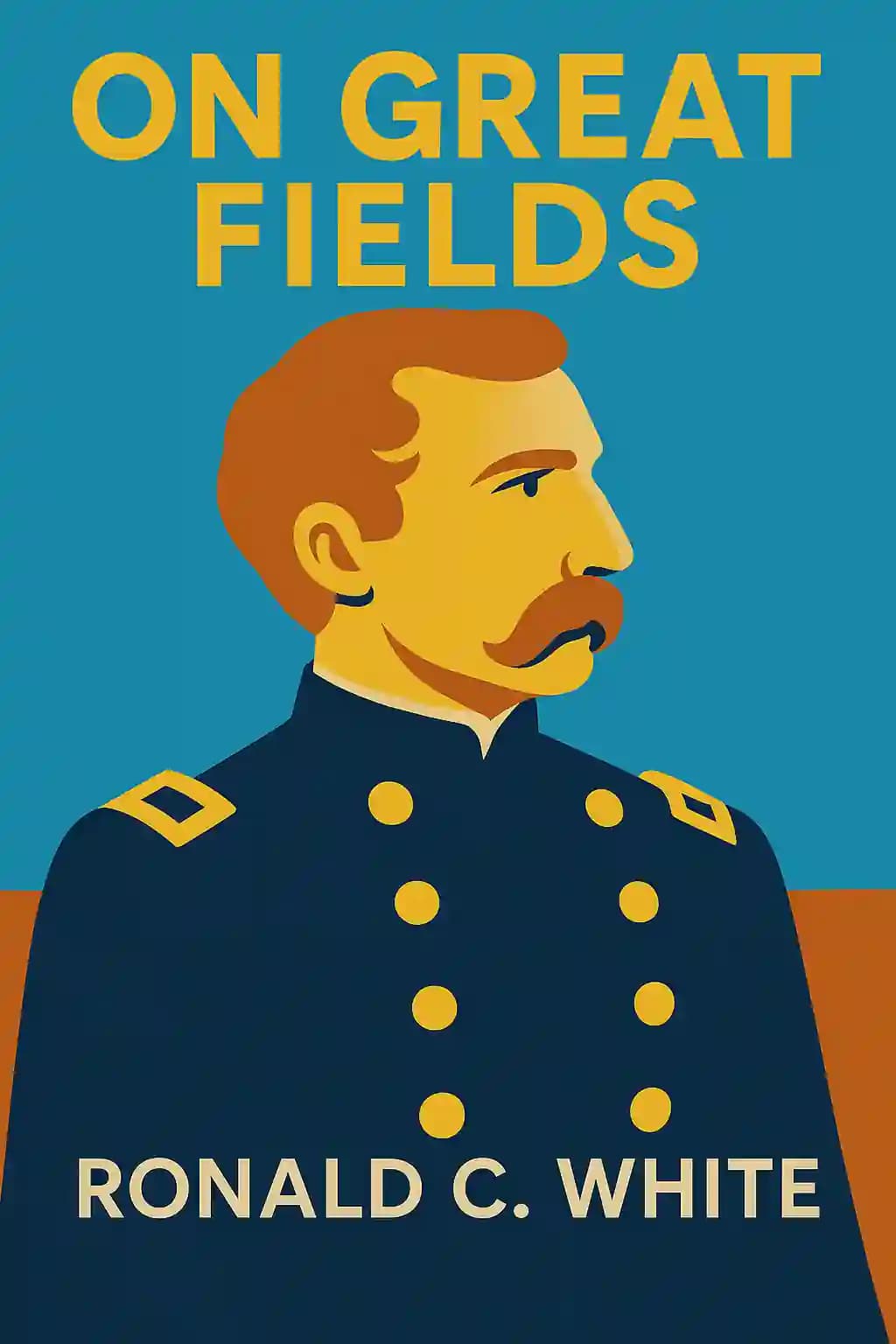
Joshua Lawrence Chamberlain stands as one of America's most remarkable yet often overlooked leaders. Before becoming a Civil War hero, he was a mild-mannered Bowdoin College professor who spoke nine languages. His unlikely transformation from academic to military commander culminated in his famous bayonet charge at Gettysburg's Little Round Top-a moment that may have saved the Union. Though largely forgotten for decades, Chamberlain experienced a cultural resurrection through Ken Burns' documentary "The Civil War" (1990) and the film "Gettysburg" (1993), which introduced millions to his extraordinary courage and character. What makes Chamberlain particularly fascinating is how he repeatedly answered the call to serve-as soldier, governor, college president, and civic leader-always guided by unwavering principles rather than personal ambition. His story reveals how ordinary individuals can rise to extraordinary challenges when principle and opportunity converge.
Capitolo 2
The Crucible of Character: Early Life and Education
A formative childhood experience shaped young Joshua Lawrence Chamberlain's approach to life's challenges. When his wagon became stuck between tree stumps, his father thundered, "Do it! That's how!" rather than offering specific instructions. Through sheer determination, the young boy succeeded, internalizing this maxim as "an order for life" that would guide him through future trials.
Four key influences molded Chamberlain's character: Christian faith, music, adventure, and education. His religious foundation formed in Brewer's Congregational church through daily Bible readings and memorization of the Westminster Shorter Catechism "from cover to cover." His love of music flourished alongside his faith-unable to afford a bass viol, he constructed one from a cornstalk, cutting places for strings and frets. This homemade instrument accompanied the church choir, giving him his first taste of "mastery" and "power." As a teenager, he even established a "singing school" in a nearby village.
Chamberlain's adventurous spirit manifested in his exploration of Maine's wilderness, developing "a keen eye and ear for the sights and sounds of animals and birds." He visited Penobscot Indians, learning elements of their language-his first step toward becoming a polyglot. Unlike his peers, he refused to hunt, feeling "it is a mean thing to snatch a pleasure at another's loss." His swimming feats included crossing the Penobscot River while carrying a twenty-five-pound rock, developing what a biographer called "a school of self-command."
Education became a source of family tension as Lawrence (as he preferred to be called) approached adulthood. His father, descended from a line of soldiers, wanted him to attend West Point, while his mother hoped he would become a minister. After briefly attending Whiting's Military and Classical School, Lawrence tried teaching in village schools. In Milford, he faced students who had "broken up" the school three years running. When confronted by defiant boys, the seventeen-year-old teacher struck the ringleader and stood firm against the boy's angry father. Rather than merely disciplining, Lawrence visited the wayward student daily until he returned to school.
To postpone the military-versus-ministry decision, Lawrence applied to Bowdoin College. The entrance requirements demanded proficiency in Latin, Greek, geography, arithmetic, and algebra. He prepared with characteristic determination, creating a seventeen-hour daily study schedule and memorizing all 573 pages of Kuhner's Greek grammar. Despite his rigorous preparation, Lawrence felt "not more than half ready" when application time arrived, compromising by entering in February 1848 rather than the previous fall.
Capitolo 3
The Scholar's Path: Intellectual Growth and Personal Challenges
At Bowdoin, Chamberlain immersed himself in a curriculum deeply rooted in classicism and Protestant Christianity. Despite missing the fall term, he worked exceptionally hard to catch up with classmates under the guidance of impressive professors like Parker Cleaveland, whose mineralogy work had earned recognition from Goethe, and Alpheus Spring Packard, who became a mentor and whose home served as Lawrence's second home.
Throughout his studies, Lawrence struggled with a debilitating stammer, particularly with words beginning with b, p, and t. This affliction proved especially challenging in Bowdoin's oral recitation-focused curriculum. He called his stammering "one of the miseries of his life" and tried various techniques to overcome it, including deep breathing and avoiding public debates-a strategy he later deemed "humiliating."
Beyond academic challenges, Lawrence navigated a boisterous campus culture where student rowdiness frequently clashed with the college's strict moral code. Despite rules against profanity, drinking, fighting, and gambling, students regularly engaged in pranks and rebellions. Lawrence experienced this firsthand when sophomores "welcomed" him with a "smoke out" of his room, filling it with pipe smoke until his lamp "looked like a red moon on a foggy night."
A pivotal moment came during Class Tree Day when Lawrence refused to inform on classmates who had engaged in mischief. When President Woods demanded he identify the guilty parties, Lawrence replied, "I have conscientious scruples against that, sir." Despite threats of suspension, he stood firm, declaring he would accept punishment rather than become "an informer." His principled stance impressed his peers, who subsequently confessed to the president. This act of loyalty fully cemented Lawrence's acceptance among his classmates and demonstrated the courage that would later define his character.
During his junior year at Bowdoin, Chamberlain encountered Harriet Beecher Stowe, who had recently arrived on campus with her husband, Professor Calvin Ellis Stowe. Chamberlain was fortunate to be among the small group of students invited to Stowe's Saturday evening gatherings where she read excerpts from her developing work "Uncle Tom's Cabin" and encouraged discussion. He later recalled these evenings as "the chief of privileges" at Bowdoin, as they forced him to confront the South's attitudes toward slavery and imagine moral problems beyond Maine's boundaries.
Despite campus-wide debates on slavery, Lawrence remained academically focused. His hard work earned him academic awards in French and German, prizes in oratory and composition, and recognition in mathematics and astronomy. Outside the classroom, he was elected president of the Praying Society and became organist for the Lockwood Musical Society. His intellectual horizons expanded through participation in the Round Table discussion group, where he encountered works like Nathaniel Hawthorne's "The House of the Seven Gables" and the romantic poetry of Lord Byron-readings that would have been forbidden in his family home.
Capitolo 4
Love and Faith: The Courtship of Fanny Adams
In fall 1850, upon returning to Bowdoin after a medical leave, Lawrence accepted an invitation to lead Brunswick's First Parish choir. Though his responsibility was to direct the singers, his attention was drawn to the brown-haired young woman playing the organ-Frances Caroline Adams, known as Fanny.
Born in 1825, Fanny was sent at age four to live with her father's younger cousin, Rev. George Adams, minister at First Parish in Brunswick. Though loved and indulged in her adoptive home, Fanny struggled with bouts of melancholy and an inherited eye condition that caused frequent headaches. Her intelligence and wit shone through her schoolwork, as when she composed a clever assignment using verbs ending in "fy" that revealed her self-awareness and humor.
After her adoptive mother's death and following arguments about her future, Fanny boldly struck out on her own-an unusual decision for a young woman of that era. She moved to Portland, Maine's largest city, where she established a painting room to display her artwork and continued her musical studies with Frederick N. Crouch, an accomplished English composer. On weekends, she returned to Brunswick to play the organ at her father's church.
It was at First Parish that Lawrence and Fanny began conversing, likely about their shared love of music. Despite her initial self-consciousness about being three years older than Lawrence, she was drawn to his intelligence and wit. Their relationship deepened in early 1851, though at different paces-Lawrence fell deeply in love while Fanny struggled to determine whether her feelings constituted true romance.
Another potential obstacle was their different religious views: Fanny had decided not to join First Parish, unable to assent to traditional Christian beliefs, possibly influenced by Unitarian teachings. Despite their religious differences, Lawrence remained accepting of Fanny's independence.
Their courtship faced challenges when Rev. Adams returned from a trip with news that shocked everyone-he was courting Helen Root, a woman only six months older than Fanny. By December, George and Helen were married, creating new tensions in the household. Lawrence, missing Fanny during this time, wrote her despairing letters revealing his insecurity.
By January 1852, Fanny finally confessed her deep feelings: "I would nestle closely in your arms forever and love you." Yet doubts persisted from both families. In April 1852, Fanny moved to New York to study music with Professor Root (Helen's brother), partly to escape the tense household. Despite separation and Lawrence's anxious pleas during his final year at Bowdoin, Fanny eventually accepted his marriage proposal. Lawrence gave her an engagement ring but insisted they wait until after he completed his studies at Bangor Theological Seminary-a three-year delay. Nevertheless, from that moment forward, they referred to each other as husband and wife.
Capitolo 5
From Professor to Soldier: Answering the Call to Duty
As the Civil War intensified, Chamberlain continued corresponding with former students now serving in the Union army. One soldier, Walter S. Poor, wrote of his dismay at the poor leadership he witnessed: "We want cool, self-reliant, self-controlling officers." This letter may have planted seeds in Chamberlain's mind about his own potential service.
The winter of 1861-1862 brought personal tragedy when Chamberlain's beloved brother Horace died of tuberculosis. Lawrence was devastated, writing to his sister Sae: "I feel very sad this winter... That [Hod] should be cut down at the very opening of his career... seems almost against the course of nature."
As the war continued with disappointing progress toward Richmond, Chamberlain began giving passionate speeches urging young men to enlist: "I feel that we are fighting for our country-for our flag-not as so many stars & stripes, but as the emblem of a great & good & powerful nation." On July 1, 1862, President Lincoln called for 300,000 more men to serve three-year terms. Two weeks later, Chamberlain wrote to Maine Governor Israel Washburn offering his services, stating: "I fear this war, so costly of blood and treasure, will not cease until the men of the north are willing to leave good positions, and sacrifice the dearest personal interests."
Though Governor Washburn offered him a colonelcy, Chamberlain humbly requested a lower rank: "Give the colonelcy of the regiment to some regular officer now in the field. I will take the subordinate position and learn and earn my way to the command." At a Brunswick rally, General Oliver O. Howard, the "Christian general" and fellow Bowdoin alumnus, publicly endorsed Chamberlain's decision to serve.
News of Chamberlain's appointment spread quickly through Maine newspapers, which praised his patriotic sacrifice of "exchanging the recitation room for the camp." His Bowdoin colleagues, however, were surprised and some angered to learn of his decision through the press rather than directly from him.
As Chamberlain assumed command of the Twentieth Maine, he faced an immediate challenge when forty men from the Second Maine arrived under guard, deemed mutineers for refusing to continue fighting after their two-year enlistments had ended. While General Meade's orders were to "make them do duty or shoot them," Chamberlain took a different approach. He provided the unfed men with rations and fresh clothing, then spoke to them as fellow soldiers, promising to examine their cases while requiring they follow orders. His empathetic but firm leadership worked-nearly all the men agreed to fight.
Capitolo 6
The Crucible of Combat: Little Round Top and Beyond
In June 1863, two massive armies began their northward march from Virginia toward an inevitable confrontation. Lee's 75,000-strong Army of Northern Virginia moved with high morale after victories at Fredericksburg and Chancellorsville, while Hooker's larger Army of the Potomac marched with uncertainty about their commander but confidence in their own fighting abilities.
On July 2, Chamberlain's men arrived near Gettysburg, learning that Union troops had been overwhelmed the previous day. At 3:30 p.m., Union General Warren spotted Confederate forces preparing to attack the undefended Little Round Top. Recognizing this strategic high ground could allow enemy artillery to fire on the entire Union line, Warren urgently requested reinforcements.
Colonel Vincent's four regiments, including Chamberlain's Twentieth Maine, double-marched to Little Round Top. Upon arrival, Vincent positioned his men in a quarter circle, placing Chamberlain at the extreme left of the Union line with clear orders: "This is the left of the Union line. You understand! You are to hold this ground at all costs!"
Chamberlain positioned his 358 remaining men-barely a third of the regiment's original strength-with Walter Morrill's Company B angled to protect against fire from Big Round Top. His regiment now anchored not just Vincent's brigade but the entire Union left flank.
When the Confederate attack began, Chamberlain calmly walked his line offering encouragement. As Confederate soldiers appeared below, Chamberlain's men alerted him to an attempt to flank their left. Climbing atop a rock for better visibility, Chamberlain adjusted his line into a right angle to prevent being outflanked.
In the fierce fighting that followed, the Twentieth Maine met the initial assault with concentrated fire that temporarily stunned the attackers. When ammunition began running dangerously low, Chamberlain made the critical decision to counterattack, shouting "Bayonet!" Lieutenant Holman Melcher was first to spring forward as the Maine men charged down the hill. The unexpected assault, combined with fire from Morrill's Company B into the Confederate rear, broke the Alabama regiments' resistance.
The battle ended with 130 casualties for the Twentieth Maine-about one-third of the regiment. The story remains powerful in its simplicity: a small regiment of 358 tired men-lumbermen, fishermen, farmers, and shopkeepers-defended a 650-foot hilltop that represented the far-left line of the entire Union army. With discipline instilled by their colonel over many months, these citizen soldiers responded to Chamberlain's order and bravely charged down the hill to victory.
Nearly a year later, on June 18, 1864, at Petersburg, Chamberlain would face his greatest physical trial. Leading his men against well-fortified Confederate positions, he was struck by a minie ball that tore through his body from right hip to left, severing blood vessels and damaging his bladder and urethra. Despite catastrophic blood loss, Chamberlain thrust his sword into the ground to steady himself, not wanting his men to see him fall.
Against all odds, Chamberlain survived the night. The next day, still believing he might die, he wrote a poignant letter to Fanny: "I am lying mortally wounded the doctors think, but my mind & heart are at peace. Jesus Christ is my all-sufficient savior."
Upon hearing of his "mortal" wound, General Warren immediately wrote to Grant requesting Chamberlain receive promotion "before he dies for the gratification of his family and friends." Grant responded by issuing Special Order No. 39, promoting Chamberlain to Brigadier General of Volunteers, effective from June 18, 1864.
Capitolo 7
The Ultimate Test: Appomattox and Reconciliation
As Chamberlain fought for his life at the Naval Hospital in Annapolis, false reports of his death reached Maine. His survival in an era before antibiotics was remarkable. By August 31, Chamberlain wrote to Maine's Governor Cony expressing his eagerness to return to battle despite his wounds.
Returning to Virginia in late February 1865, Chamberlain prepared his brigade for Grant's spring offensive. On March 29, Grant directed General Sheridan to link up with Warren's Fifth Corps to turn Lee's right flank, cut supply lines, and force the dwindling Army of Northern Virginia into a final open-field battle.
During the Battle of Quaker Road on March 31, Chamberlain again demonstrated extraordinary courage. When Confederate reinforcements launched a counterattack, he led his regiments forward. A minie ball ripped through his horse's neck, exiting to hit Chamberlain just below the heart. The twin blows stunned horse and rider, with Chamberlain falling forward covered in blood. Yet miraculously, Chamberlain had been saved by the brass frame of a hand mirror and a leather case of field orders in his breast pocket.
On April 9, 1865, Chamberlain watched as both Lee and Grant entered Appomattox Court House from different roads. Grant offered magnanimous surrender terms in just 185 words. Confederate soldiers would be allowed to return home unmolested if they observed their paroles and local laws. At Lee's suggestion, Grant permitted them to keep their horses for farm work.
Neither Grant nor Lee would attend the formal surrender ceremony on April 12. Grant appointed Generals Griffin, Merritt, and Gibbon as commissioners, and they selected Chamberlain to command the surrender ceremonies. To his surprise, Chamberlain was chosen for this historic honor.
As Confederate General John B. Gordon led his troops toward the surrender, Chamberlain, sensitive to the moment's significance, ordered his men to shift from "order arms" to "shoulder arms"-a marching salute-honoring their former enemies' courage. Gordon, surprised by this gesture, wheeled his horse and touched his sword to his toe in response, calling it "a token of respect."
The day after the surrender, Chamberlain wrote modestly to his sister about the event, not boasting of his role but expressing compassion: "Poor fellows. I pitied them from the bottom of my heart." Six days later, in a letter to Fanny, he mentioned matter-of-factly that he "happened to be designated to receive the surrender of the arms of that great Army of Northern Virginia."
Capitolo 8
From Battlefield to Statehouse: Governing with Principle
Chamberlain was inaugurated as Maine's thirty-second governor on January 4, 1867, in a grand ceremony at the Greek Revival state capitol in Augusta. Many questioned whether the Civil War hero's battlefield leadership would translate to governing, where he would face political maneuvering instead of enemy regiments.
In his inaugural address, Chamberlain acknowledged Maine's immense wartime sacrifice-72,945 men (12 percent of the state's population) served, with 8,792 dead and 11,309 wounded. He firmly positioned himself against President Johnson and with Congress in the ongoing Reconstruction debate.
During his second term, Chamberlain began pushing back against the temperance movement's increasing influence. While Maine had become the first "dry" state in 1851, Chamberlain asked the legislature to repeal laws that would imprison people for selling liquor and to suspend the special constabulary police force created to enforce prohibition, calling both unconstitutional. Though sympathetic to temperance, he believed individual rights were more important than any moral movement, however popular.
Chamberlain also addressed economic challenges, noting that young people were leaving Maine and immigrants were declining to come due to lack of opportunity. He believed government needed to play a more active role in supporting railroads and new industries, and even proposed hiring an agent to travel to Sweden to recruit immigrants.
In his third term, Chamberlain faced a critical decision about Maine's death penalty law regarding Clifton Harris, a young Black man convicted of murdering two women. When the year elapsed from Harris's sentencing, Chamberlain signed the death warrant on January 8, 1869, while simultaneously commuting the sentences of two others. This decision shocked many Mainers, with newspaper editors noting the death penalty had "slumbered on our statute book" for thirty years.
Chamberlain defended his decision in his third inaugural address, emphasizing that his duty was to carry out the law as written, not substitute personal opinion. While resolute in public, privately he confessed to his mother that many were "bitter on me about capital punishment," though he maintained he acted from "conscious rectitude."
After four unprecedented terms as governor, Chamberlain could look back with both fulfillment and frustration. He had successfully expanded Maine's railroads, even into uninhabited northern regions, and his initiative to recruit Swedish immigrants had borne fruit when fifty-one Swedes established "New Sweden" in northern Maine. A historian later noted that Chamberlain had "fostered it with truly parental care."
Capitolo 9
Educational Visionary: Transforming Bowdoin College
When Chamberlain stepped down as governor after his fourth term, he didn't wait long for a new leadership opportunity. In spring 1871, Bowdoin College's trustees and overseers unanimously elected him as their next president.
In his inaugural address titled "The New Education," Chamberlain acknowledged the values of "Old Bowdoin" while enthusiastically pointing to his hopes for a new Bowdoin. Using a military metaphor, he declared he had been given a "commission." He boldly stated that "the times had shot past the college" and that Bowdoin had "touched bottom," asking "How to rise again? And how to begin?"
Near the end of his address, he surprised his audience by declaring that "Woman too should have part in this high calling," though he didn't elaborate on how he envisioned women becoming part of the college.
Chamberlain expanded the curriculum, particularly in sciences, despite some alumni viewing science as a threat to religious faith. The student newspaper, the Bowdoin Orient, supported these changes, criticizing those "refusing to believe that times had changed." He also expanded offerings in modern languages, encouraging the reading of Greek and Latin texts in modern translations, and established Bowdoin's first graduate program with a Master of Arts degree.
Chamberlain made extensive changes to daily college life. He separated academic rankings from behavior evaluations, ensuring pranks wouldn't damage a student's academic standing. He rescheduled morning prayers to after breakfast, eliminated evening prayers except on Sundays, increased library hours, moved the long vacation from winter to summer, and changed commencement from August to June.
In his first report to the boards, Chamberlain explained his philosophy of treating students as gentlemen rather than policing them: "I made them see and understand that I should deal with them as gentlemen, and that I should hold a man's word of honor as better than foreign testimony."
In his second year as president, Chamberlain recommended mandatory military drill at Bowdoin, believing it developed not just technical skills but character. Initially embraced with enthusiasm, by 1873 students worried Bowdoin was becoming a military school and that drill consumed too much of their time. In November 1873, 126 students petitioned the trustees and overseers to abolish the military department.
The controversy, dubbed the "Drill Rebellion," spread to newspapers across Maine and as far as Boston and New York. The conflict revealed different notions of manliness: for Chamberlain, it meant "military prowess and willingness to make sacrifices in the name of duty," while for students it meant "independence and forthright expression of one's point of view"-reflecting a generational shift by the mid-1870s.
Capitolo 10
Crisis and Courage: Maine's Political Standoff
In January 1880, Chamberlain faced perhaps his greatest test of leadership since the Civil War. Following a disputed election where both Republicans and Democrats claimed victory, Maine's outgoing Democratic Governor Alonzo Garcelon turned to Chamberlain as the one man who could restore order. He issued a special order authorizing Chamberlain "to protect the public property and institutions of the State until my successor is duly qualified."
Arriving in Augusta on January 5, Chamberlain found the state house barricaded. He immediately dismissed the governor's paramilitary force, replacing them with Augusta's official police, and returned weapons to the Bangor armory. Effectively serving as military governor, Chamberlain locked up important rooms and papers while refusing to call up militia forces, knowing Maine's citizen-soldiers were poorly trained and equipped. He maintained strict neutrality, urging both sides to present their cases to the state supreme court rather than resort to violence.
The political crisis intensified as both sides pressured Chamberlain to recognize their claims. "Everything is confusion here," he wrote to Fanny on January 7, frustrated that even Republicans resented his impartiality. When Fusionist candidate Joseph Smith and his supporters barged into the state house on January 12, Republicans threatened to "pitch the Fusionists out the window." Chamberlain firmly responded: "I am here to preserve the peace. There will be no fighting."
Facing resentment from all sides-Republicans accused him of betrayal in the Bangor Commercial while Fusionists attempted to arrest him for treason-Chamberlain received an unexpected offer from James G. Blaine: support for a U.S. Senate seat if he would recognize the Republican legislature. True to character, Chamberlain refused to trade his principles for political advancement.
When informed that an angry mob was gathering to kill him, Chamberlain calmly walked to the capitol rotunda, opened his coat, and delivered an extraordinary speech: "Men, you wish to kill me, I hear. Killing is no new thing to me. I have offered myself to be killed many times, when I no more deserved it than I do now... I am here to preserve the peace and honor of this State... If anybody wants to kill me for it, here I am. Let him kill!"
After a breathless silence, a veteran in the crowd thundered, "By God, old General, the first man that dares lay a hand on you, I'll kill him on the spot." The crowd dispersed. Chamberlain later wrote to Fanny, "Yesterday was another Round Top," comparing this moment to his famous stand seventeen years earlier.
Capitolo 11
Legacy of Honor: Final Years and Lasting Impact
In his final decades, Chamberlain became one of the most sought-after public speakers on the Civil War. Unlike others who offered chronological battle accounts, the soldier-professor drew examples from classical and European history, quoted from the Bible, and likened battle tactics to chess. He enriched his speeches with references to Dante, Milton, Byron, and Lincoln, while employing his mastery of nine languages and sophisticated rhetorical devices.
In his speeches, Chamberlain would begin in past tense then switch to present tense during battle descriptions to create what he called "present moments," increasing narrative tension. He wanted audiences to feel empathy rather than resentment toward Confederate soldiers, describing their surrender at Appomattox with moving details: "They move along our front...and then reluctantly, painfully, furl their flag, and lay them down, some kneeling and kissing them with tears in their eyes."
Chamberlain's accounts of the Appomattox surrender became his most enduring and controversial speeches. Some historians later challenged his account, claiming he "invented" the story of his "shoulder arms" salute to Gordon's Confederates. However, Patrick Schroeder, historian at Appomattox Court House National Historical Park, discovered contemporary newspaper accounts confirming Chamberlain's role.
Despite declining health from his war wounds, Chamberlain remained active in his final years. The fiftieth commemoration of the Civil War in 1911 brought numerous invitations to write for national magazines. In 1912, at age eighty-three, Chamberlain wrote "My Story of Fredericksburg" for Cosmopolitan magazine, followed by a Gettysburg piece for Hearst's Magazine titled "Through Blood and Fire at Gettysburg."
On February 24, 1914, Joshua Lawrence Chamberlain died at his Portland home at age eighty-five, finally succumbing to infections from his old war wounds and pneumonia. Despite his request for a simple funeral, thousands lined Portland's snowy streets as the funeral cortege traveled to city hall. The Reverend Jesse Hill eulogized, "There was a texture to his mind, a color to his soul, a certain quality to his personality that would have made him conspicuous and lovable without the titles and robes of the earth."
After Chamberlain's death, his voice lived on through his nearly completed manuscript about the Army of the Potomac's final campaigns, published in 1915 as "The Passing of the Armies." This elegant, classically-infused work offered Chamberlain's final judgments on Civil War generals and concluded with his defiant assertion that the Army of the Potomac would "live on, so long as soul shall answer soul."
Today, Chamberlain's legacy thrives in Maine, where his Brunswick home welcomes visitors, and at Gettysburg, where West Point cadets study his leadership and Little Round Top remains the battlefield's most visited site. Though not a spotless hero-at times headstrong, risk-taking, and rigid in his sense of duty-Chamberlain embodied magnanimity in a divided nation, working for reconciliation between North and South. As Helen Kilham noted during the 1880 crisis, he proved "it possible for a man to be at once a statesman, a soldier, a scholar, a gentleman and a Christian."