Capitolo 1
The Last Romanovs: A Tragic Tale of Love, Power, and Revolution
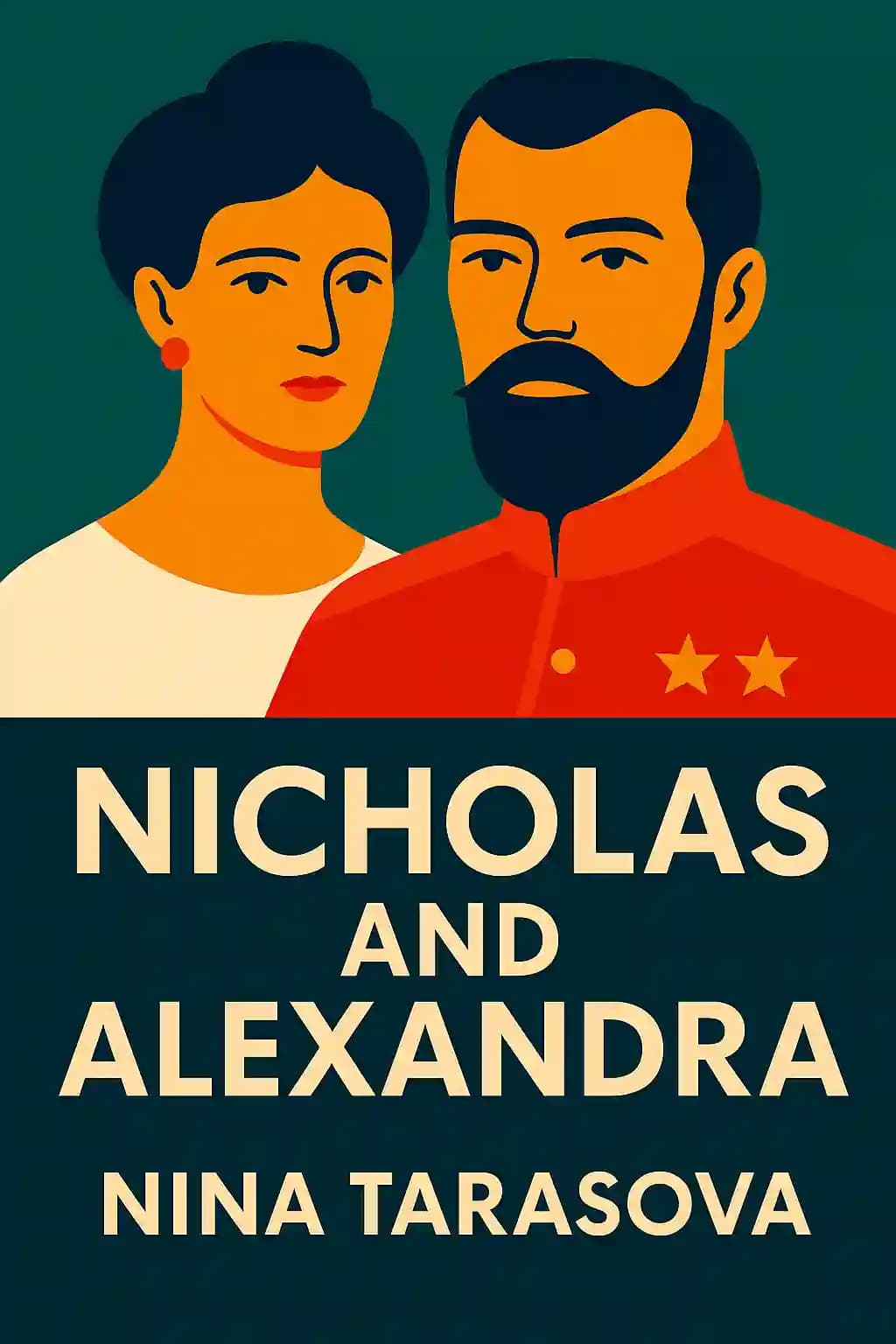
In the grand tapestry of history, few stories captivate the imagination quite like that of Nicholas II and Alexandra, Russia's last imperial couple. Their tale is one of stark contrasts - immense privilege alongside profound personal tragedy, unwavering love amid political turmoil, and rigid traditionalism in an age demanding change. This book has become a cultural touchstone, praised by historians and casual readers alike for its intimate portrayal of the human side of historical figures often viewed only through the lens of their tragic end. When the remains of the Romanov family were finally reinterred in St. Petersburg in 1998, it marked not just the closing of a chapter in Russian history, but also renewed global fascination with their story. The narrative of Nicholas and Alexandra continues to resonate in modern culture, from award-winning films to exhibitions drawing record crowds across Europe and America. Their story serves as a poignant reminder of how personal choices and historical forces can collide with devastating consequences, making it as relevant today as it was a century ago.
Capitolo 2
Imperial Russia at the Crossroads
As the 19th century drew to a close, Russia stood at a pivotal moment in its history. Nicholas II inherited an empire that appeared stable on the surface but harbored deep structural tensions. His father, Alexander III, had ruled with an iron hand, maintaining autocratic principles while suppressing dissent. When Nicholas ascended the throne in 1894, he lacked both his father's imposing presence and decisive character, yet remained committed to the same absolutist ideals.
"I will maintain the principle of autocracy just as firmly and unflinchingly as my unforgettable father," Nicholas declared early in his reign, setting a tone that would ultimately contribute to his downfall. This rigid adherence to tradition came at a time when forces of modernization were reshaping societies across Europe.
The contradiction at the heart of Nicholas's Russia was embodied by Sergei Witte, his brilliant Minister of Finance. Despite his aristocratic background, Witte advocated for industrial development and economic integration with Europe. Under his guidance, Russia experienced remarkable industrial growth, with factory output doubling between 1894 and 1904. The Trans-Siberian Railway, a monumental achievement of engineering, began to connect the vast Russian territories as never before.
Yet this economic modernization clashed with the political conservatism championed by influential advisors like Konstantin Pobedonostsev, who viewed Western liberalism as a threat to Russian identity. This fundamental tension - between economic progress and political stagnation - created fractures that would eventually split the empire apart.
Imagine walking through St. Petersburg during this period - gleaming new factories and elegant European-style boulevards existing alongside medieval social structures and desperate poverty. This was Nicholas's Russia: a nation rushing toward the future while its leadership remained anchored in the past.
What made this situation particularly dangerous was Nicholas's inability to recognize the changing nature of power in the modern world. While he genuinely believed in his divine right to rule, new ideologies like socialism were gaining traction among workers and intellectuals. The contradiction was unsustainable, like trying to contain steam in a vessel with no release valve - eventually, something had to give.
Capitolo 3
The Royal Romance: Nicholas and Alexandra
The love story between Nicholas and Alexandra stands as one of history's most poignant royal romances. Their relationship began when they were teenagers, blossoming despite the political complications surrounding their union. Alexandra, a German princess and granddaughter of Queen Victoria, initially hesitated to convert to Russian Orthodoxy, a prerequisite for marrying the heir to the Russian throne. Yet love prevailed, and they married in 1894, just weeks after Nicholas's father died and he became Tsar.
Their letters reveal a deep, almost modern connection that transcended the typical arranged marriages of European royalty. "I cannot express in words how happy I am and how I love you," Nicholas wrote to Alexandra shortly after their engagement. Their relationship remained extraordinarily close throughout their lives, with Nicholas referring to Alexandra as "Sunny" in his private correspondence, reflecting the warmth she brought to his life.
Yet this very closeness, while beautiful on a personal level, created problems in governance. Nicholas relied heavily on Alexandra's counsel, and she, in turn, held strong opinions about how Russia should be ruled. "Remember you are the Autocrat Emperor," she would remind him in letters, encouraging him to assert his authority more forcefully. This dynamic became especially problematic during World War I when Nicholas took personal command of the army and Alexandra exerted significant influence over domestic affairs.
Their family life centered around their five children - four daughters (Olga, Tatiana, Maria, and Anastasia) and finally, the long-awaited son and heir, Alexei. The joy of Alexei's birth in 1904 was quickly tempered by the devastating discovery that he suffered from hemophilia, inherited through Alexandra's family line from Queen Victoria. This illness, which prevented blood from clotting normally, meant that even minor injuries could be life-threatening.
The constant fear for their son's life drove the imperial couple to increasing isolation and secrecy. Palace staff were kept in the dark about the Tsarevich's condition, as the family feared public knowledge of his illness would be seen as a sign of weakness in the dynasty. This secrecy only fueled rumors and distanced the family further from their subjects.
Alexandra's desperate search for a cure led her to Grigori Rasputin, a Siberian mystic who seemed able to ease Alexei's suffering when doctors could not. The exact nature of Rasputin's influence remains debated - was it hypnotic suggestion, some form of primitive faith healing, or simply his calming presence that reduced the boy's stress and thus his symptoms? Whatever the mechanism, his apparent success gave him unprecedented access to the imperial family.
What would you do if your child's life depended on someone society rejected? This was Alexandra's dilemma. Her reliance on Rasputin, while understandable from a mother's perspective, proved disastrous for the monarchy's public image. Rumors of Rasputin's debauchery and undue influence over the Tsarina spread throughout Russian society, undermining respect for the throne at a critical moment in history.
Capitolo 4
A Gilded Cage: Life at the Imperial Court
Life at the Russian imperial court under Nicholas II presented a fascinating paradox - magnificent in its opulence yet increasingly isolated from the reality of Russian life. The Winter Palace in St. Petersburg, with its 1,500 rooms and priceless art collections, stood as the symbolic heart of imperial power. Yet ironically, Nicholas and Alexandra rarely lived there, preferring the relative seclusion of the Alexander Palace at Tsarskoye Selo, about 15 miles from the capital.
Their retreat from public view reflected both personal preference and a growing disconnect from the society they ruled. The daily rhythm of court life followed elaborate protocols established over centuries. A vast hierarchy of servants - from high-ranking chamberlains to footmen - maintained the imperial household with meticulous attention to detail. Even the most mundane activities were governed by strict etiquette, creating an environment that was as restrictive as it was luxurious.
For special occasions, the court burst into spectacular displays of wealth and ceremony. The grand balls of the St. Petersburg season were dazzling affairs, with nobles dressed in elaborate costumes adorned with family jewels accumulated over generations. Ladies of the court wore the distinctive Russian court dress, featuring the kokoshnik, a traditional headdress often studded with pearls and precious stones. These events served not just as entertainment but as carefully choreographed demonstrations of power and prestige.
Yet beneath this glittering surface, the imperial family lived with surprising simplicity in their private quarters. Nicholas and Alexandra's personal rooms at the Alexander Palace were furnished comfortably rather than extravagantly. Alexandra, influenced by English tastes, preferred cozy spaces filled with family photographs and mementos. Their daughters shared bedrooms, and the family often dined together informally, a practice unusual for royalty of that era.
This retreat into domesticity reflected Alexandra's difficulty adapting to Russian court life. Never fully accepted by the Russian aristocracy, she found their intrigue and formality exhausting. "I am surrounded by enemies," she once wrote to her sister. Her German background became increasingly problematic as tensions with Germany grew, fueling rumors that she was a foreign spy - accusations that were completely unfounded but nonetheless damaging.
The family's religious devotion formed another cornerstone of their private life. They observed Orthodox rituals with sincere dedication, finding solace in faith amid mounting political challenges. Their personal piety, however, sometimes translated into a mystical approach to governance that seemed increasingly out of touch with modern realities.
As the years passed, the gap between the imperial family and Russian society widened. While they lived in relative seclusion, revolutionary ideas spread through universities and factories. The contrast was stark - in their gilded rooms, the Romanovs maintained traditions centuries old, while just beyond the palace gates, a new world was taking shape, one that would ultimately have no place for them.
Capitolo 5
The Burden of Empire: Nicholas as Ruler
Nicholas II's reign coincided with one of the most turbulent periods in Russian history, yet he approached governance with a mindset more suited to the 18th century than the 20th. "I am not prepared to be Tsar. I never wanted to become one," he confided in his diary upon his father's death. This reluctance, combined with his belief in divine right, created a ruler who was simultaneously absolute in theory and indecisive in practice.
His approach to foreign affairs reflected this contradiction. On one hand, Nicholas initiated the Hague Peace Conference of 1899, an idealistic attempt to limit armaments and prevent war. On the other, he approved the aggressive expansion of Russian interests in the Far East, particularly Manchuria, which directly led to conflict with Japan.
The Russo-Japanese War of 1904-1905 became the first major crisis of his reign. Russia's humiliating defeat shattered the myth of imperial invincibility and triggered unprecedented domestic unrest. The loss of the Russian fleet at Tsushima was particularly devastating - a modern European power had been defeated by an Asian nation, challenging fundamental assumptions about the global order.
This military disaster coincided with growing internal dissent. On January 22, 1905, a peaceful workers' demonstration approaching the Winter Palace was fired upon by imperial troops, resulting in hundreds of deaths. This "Bloody Sunday" massacre destroyed whatever remaining faith ordinary Russians had in the Tsar as their protector.
The subsequent 1905 Revolution forced Nicholas to make concessions he deeply resented. The October Manifesto promised civil liberties and established the Duma, Russia's first elected parliament. Yet Nicholas viewed these reforms as temporary concessions rather than genuine constitutional change. "A constitution would be the ruin of Russia," he insisted, even as he reluctantly signed the document.
The period between 1906 and 1914 saw Russia achieve remarkable economic growth under the leadership of Prime Minister Pyotr Stolypin, whose agrarian reforms began addressing the chronic problems of Russian agriculture. Yet Stolypin's assassination in 1911 removed a capable administrator from government at a critical moment.
When World War I erupted in 1914, Nicholas initially benefited from a surge of patriotic support. The renaming of St. Petersburg to the more Russian-sounding Petrograd symbolized this nationalist sentiment. However, his decision to take personal command of the army in 1915 proved disastrous. Not only was he ill-equipped for military leadership, but his absence from the capital left a vacuum filled by Alexandra and, by extension, Rasputin.
As military defeats mounted and domestic hardships intensified, public opinion turned decisively against the monarchy. The contrast between lavish court ceremonies and the suffering of ordinary Russians became impossible to ignore. By 1917, even loyal monarchists recognized that Nicholas had lost the ability to govern effectively.
What makes Nicholas's failure as a ruler particularly tragic is that he was not, by nature, a cruel or malicious man. In personal interactions, he could be charming and considerate. He was a devoted husband and father who genuinely believed he was fulfilling his duty to Russia. Yet his inability to adapt to changing circumstances, combined with his insistence on preserving autocratic power, ultimately doomed both his reign and his family.
Capitolo 6
The Tsarevich's Shadow: Alexei and His Illness
The birth of Tsarevich Alexei in July 1904 initially seemed like the culmination of Nicholas and Alexandra's happiness - after four daughters, they finally had a male heir to secure the Romanov succession. The nationwide celebrations reflected not just joy for the imperial family but relief that the dynasty's future appeared assured.
"God has heard your prayers," announced the official proclamation, as church bells rang throughout the empire and public festivities marked the momentous occasion. The christening ceremony at the Chapel of the Peterhof Palace was conducted with all the splendor befitting the heir to the Russian throne, with the infant dressed in a christening gown of silver cloth that had been used for generations of Romanov babies.
Yet within months, the family's elation turned to terror when Alexei began showing symptoms of hemophilia. This genetic disorder, which prevents blood from clotting normally, had been passed down through Queen Victoria's descendants but had never before appeared in the Russian imperial line. For Nicholas and Alexandra, the diagnosis was devastating - not only personally as parents but politically as custodians of the dynasty.
The reality of Alexei's condition was brutal. Even minor bumps or bruises could cause internal bleeding that might last for days. More serious injuries threatened his life. During one particularly severe episode when he was seven, after a fall while playing, the boy lay close to death for days, his body swollen and wracked with pain as blood pooled in his tissues.
Court physician Eugene Botkin described the family's anguish during these crises: "The Empress sits for days by the side of the bed where lies her son, upon whom she has concentrated all her affection, all her ambition. She watches the change in his color, the pulse, the temperature... She does not sleep for nights, she does not dress, and hardly eats."
The imperial couple went to extraordinary lengths to protect their son. A sailor named Derevenko was assigned as Alexei's constant companion, carrying the boy when he could not walk and preventing him from activities that might cause injury. Despite these precautions, they could not entirely shield him from his condition's effects.
What's particularly poignant is that despite his illness, Alexei developed into a lively, sometimes mischievous child with a strong will. His tutor, Pierre Gilliard, noted: "He was the center of this united family, the focus of all its hopes and affections. His sisters worshipped him. He was his parents' pride and joy. When he was well, the palace was transformed. Everyone and everything in it seemed bathed in sunshine."
The need for secrecy surrounding Alexei's condition further isolated the family. Only a small circle of trusted individuals knew the full truth, creating an atmosphere of mystery and rumor. This secrecy extended to official functions - photographs were carefully staged to hide any evidence of the Tsarevich's limitations, and his public appearances were strictly controlled.
Alexandra's desperate search for treatments led her to embrace various doctors and healers, culminating in her reliance on Rasputin. When conventional medicine seemed powerless, Rasputin appeared to succeed where doctors failed. Whether through hypnotic suggestion, some form of faith healing, or simply by calming the boy (and thus lowering his blood pressure), Rasputin repeatedly helped ease Alexei's suffering.
This apparent miracle-working gave Rasputin unprecedented influence. "God has heard me again," Alexandra wrote to Nicholas after one such episode. "Our Friend's prayers have been answered." This "Friend" - Rasputin - thus became indispensable to the imperial family while simultaneously becoming a source of scandal throughout Russia.
The tragic irony is that in their desperate attempts to protect both their son and the secrecy surrounding his condition, Nicholas and Alexandra inadvertently undermined the very monarchy they were trying to preserve for him.
Capitolo 7
Cultural Flowering Amid Political Decay
While the political foundations of imperial Russia were crumbling, Russian culture experienced a remarkable renaissance. The period of Nicholas II's reign, particularly the early 20th century, witnessed an explosion of creativity across all artistic fields - a Silver Age that produced works of enduring global significance.
In literature, symbolist poets like Alexander Blok and Andrei Bely pushed the boundaries of Russian verse, while novelists such as Leo Tolstoy continued producing masterpieces that explored the human condition with unparalleled depth. Tolstoy's death in 1910 became a national event, highlighting his moral authority in a society increasingly questioning its traditional values.
The visual arts underwent a revolutionary transformation through movements like the World of Art group, led by Sergei Diaghilev and Alexandre Benois. Their journal challenged academic conventions and introduced Russian audiences to modern European trends while celebrating distinctive Russian artistic traditions.
Perhaps the most internationally influential cultural export was the Ballets Russes, which Diaghilev established in Paris in 1909. Combining the talents of composers like Igor Stravinsky, choreographers like Michel Fokine, and dancers like Vaslav Nijinsky, these productions revolutionized ballet worldwide. The premiere of Stravinsky's "The Rite of Spring" in 1913 famously caused a riot in the theater - a vivid demonstration of how Russian artists were redefining artistic boundaries.
In music, composers such as Sergei Rachmaninoff and Alexander Scriabin created works that expanded the emotional and harmonic vocabulary of classical music. Rachmaninoff's Piano Concerto No. 2, completed in 1901 after he overcame a debilitating depression, remains one of the most beloved pieces in the classical repertoire.
Russian scientific achievements were equally impressive. Physiologist Ivan Pavlov conducted his groundbreaking work on conditioned reflexes during this period, earning the Nobel Prize in 1904. Mathematician Andrey Markov developed his innovative probability theory, while Konstantin Tsiolkovsky laid theoretical foundations for space travel decades before it became reality.
What makes this cultural flowering particularly remarkable is that it occurred against a backdrop of increasing political repression and social unrest. Many artists found themselves walking a tightrope between creative expression and political censorship. Some embraced revolutionary ideas, while others sought refuge in aesthetic concerns removed from political realities.
The imperial family's relationship with this cultural renaissance was complex. Nicholas and Alexandra patronized traditional arts and maintained the Imperial Theaters, but they had little connection with the avant-garde movements transforming Russian culture. Their taste remained conservative, preferring the familiar comfort of classical ballet and traditional painting to experimental forms.
This disconnect between the court's cultural conservatism and the dynamic creativity flourishing across Russia reflected the broader gap between the monarchy and the changing society it ruled. While Russian artists were creating works that would influence global culture for generations, the court remained anchored in traditions that were rapidly losing relevance.
The contrast is striking - in the same city where revolutionary pamphlets circulated in factories, premiere performances of groundbreaking ballets took place in sumptuous theaters. The cultural vitality of late imperial Russia serves as a poignant counterpoint to its political fragility, reminding us that societies on the brink of transformation often produce their most enduring creative achievements.
Capitolo 8
The Shadow of Rasputin
Few historical figures have generated as much fascination and controversy as Grigori Rasputin, the Siberian peasant who became the confidant of Russia's last imperial family. His rise from obscurity to the inner circles of power represents one of history's most improbable journeys.
Rasputin first came to St. Petersburg in 1903 as a starets - a holy wanderer with a reputation for spiritual gifts. His unkempt appearance and hypnotic eyes made a strong impression in aristocratic salons, where interest in mysticism and the occult was fashionable. Grand Duchess Militza Nikolaevna introduced him to the imperial couple in 1905, suggesting he might help the ailing Tsarevich.
What transformed Rasputin from an eccentric curiosity into a figure of immense influence was his apparent ability to help Alexei during bleeding episodes. In 1908, when doctors had given up hope during a particularly severe crisis, Rasputin sent a telegram from Siberia: "The illness is not dangerous as it seems. Let the doctors not bother him too much." To the amazement of the court physicians, Alexei's condition improved.
This seemingly miraculous intervention cemented Rasputin's position with Alexandra. "He is our Friend and our intercessor before God's throne," she wrote to Nicholas. For a deeply religious woman desperate to save her son, Rasputin's apparent healing powers were nothing short of divine intervention.
Yet outside the imperial family's inner circle, Rasputin became increasingly controversial. His crude manners, sexual impropriety, and drinking scandalized St. Petersburg society. More damaging were rumors of his political influence, especially after Nicholas departed for the front in 1915 and Alexandra began consulting Rasputin on government appointments.
"Listen to our Friend," Alexandra would write to Nicholas, recommending ministers based on Rasputin's advice. "He has your interest and Russia's at heart." This influence led to a revolving door of officials, with competent ministers dismissed and replaced by men whose primary qualification was Rasputin's approval.
The public perception of Rasputin's power far exceeded reality, but perception itself became a political force. By 1916, even conservative monarchists were convinced that Rasputin's influence was destroying the monarchy from within. Prince Felix Yusupov later wrote: "We were convinced that only the elimination of Rasputin could save Russia and the dynasty."
On December 17, 1916, Yusupov, along with Grand Duke Dmitri Pavlovich and right-wing politician Vladimir Purishkevich, lured Rasputin to Yusupov's palace and murdered him. The circumstances of his death - requiring poison, multiple gunshots, and finally drowning to kill him - quickly became the stuff of legend, enhancing Rasputin's mystical reputation even in death.
Rather than saving the monarchy, however, Rasputin's murder accelerated its collapse. Alexandra, devastated by the loss of her son's "savior," became even more isolated and distrustful. The involvement of a member of the imperial family in the murder (Grand Duke Dmitri) exposed the deep divisions within the Romanov dynasty itself.
More significantly, the affair destroyed what remained of the monarchy's moral authority. If the Tsar could not control influences within his own household, how could he govern an empire? The public no longer distinguished between Rasputin's actual influence and the wild rumors about him - in the popular imagination, the government had fallen under the sway of a debauched holy man who held the Tsarina in his thrall.
Rasputin's famous prediction - "If I die or you desert me, in six months you will lose your son and your crown" - proved eerily accurate. Within three months of his murder, the February Revolution forced Nicholas's abdication. The provisional government arrested the imperial family, and fifteen months after Rasputin's death, the Romanovs were executed by Bolshevik forces.
Capitolo 9
War and Revolution: The Final Act
World War I struck Russia like a thunderbolt in the summer of 1914, initially generating a wave of patriotic fervor that temporarily united the nation behind Nicholas II. Enormous crowds gathered in Palace Square as the Tsar appeared on the balcony of the Winter Palace to announce Russia's entry into the conflict. For a brief moment, the deep social divisions that had plagued the empire seemed to dissolve in the face of a common enemy.
"I hereby vow not to make peace so long as one enemy remains on Russian soil," Nicholas declared solemnly, echoing the traditional role of the Tsar as defender of Holy Russia. The renaming of St. Petersburg to the more Russian-sounding Petrograd symbolized this surge of nationalist sentiment.
The initial enthusiasm quickly gave way to the harsh realities of modern warfare. Russia mobilized the largest army in the world - nearly 15 million men over the course of the war - but struggled with inadequate equipment, poor transportation, and ineffective leadership. By the end of 1914, Russian forces had already suffered devastating defeats, with hundreds of thousands of casualties.
Nicholas's decision to take personal command of the army in September 1915 proved catastrophic on multiple levels. Militarily, it meant that the Tsar would be personally associated with every subsequent defeat. Politically, it left a vacuum in the capital that was filled by Alexandra and, by extension, Rasputin. "Remember you are the Emperor of Russia," Alexandra wrote to him. "God anointed you, and you must be firm and show your authority."
As the war dragged on, conditions on the home front deteriorated dramatically. Food shortages became critical as the transportation system collapsed under the strain of military demands. Inflation soared, eroding the purchasing power of urban workers. By the winter of 1916-17, bread lines in Petrograd stretched for blocks in the bitter cold, with women waiting hours for meager rations.
Against this backdrop of suffering, reports of corruption and incompetence in high places fueled popular anger. The contrast between the sacrifices demanded of ordinary Russians and the perceived decadence of the elite became impossible to ignore. When workers in Petrograd went on strike in February 1917, their economic demands quickly evolved into political ones.
The February Revolution began with bread riots but rapidly transformed into a fundamental challenge to the monarchy. When Nicholas ordered troops to suppress the demonstrations, many soldiers refused to fire on the crowds and instead joined the protesters. This military mutiny effectively ended the Tsar's ability to restore order by force.
Isolated at military headquarters and receiving contradictory information about the situation in the capital, Nicholas finally grasped the gravity of the crisis too late. On March 2, 1917, he abdicated not only for himself but also for his son, passing the throne to his brother Grand Duke Michael, who refused to accept it without the consent of an elected assembly. Thus ended three centuries of Romanov rule.
The Provisional Government that took power initially treated the former imperial family with respect, keeping them under house arrest at Tsarskoye Selo. However, the October Revolution that brought the Bolsheviks to power in November 1917 dramatically worsened their situation. Lenin's government viewed the Romanovs as symbols of the old order that needed to be eliminated.
In April 1918, the family was moved to Yekaterinburg in the Ural Mountains. There, in the early hours of July 17, 1918, Nicholas, Alexandra, their five children, and four loyal servants were awakened, led to a basement room, and executed by a Bolshevik firing squad. The bodies were transported to an abandoned mine shaft, doused with acid, and buried in a forest location that remained secret for decades.
This brutal end came just days before White Russian forces would have reached Yekaterinburg, potentially rescuing the family. The timing suggests the Bolsheviks feared the former Tsar might become a rallying point for counter-revolutionary forces in the Civil War that was engulfing Russia.
The execution of the Romanovs marked not just the end of individuals but the definitive close of an era in Russian history. The medieval conception of divinely appointed monarchy, which had guided Russia for centuries, was replaced by a radical new vision of society - one that would transform Russia and influence global politics throughout the 20th century.
Capitolo 10
Legacy in Art and Memory
The story of Nicholas and Alexandra continues to resonate long after their deaths, preserved in a rich tapestry of art, artifacts, and cultural memory. Their physical legacy survives in the magnificent palaces they inhabited - the Winter Palace (now part of the Hermitage Museum), the Alexander Palace at Tsarskoye Selo, and Peterhof with its spectacular fountains. These architectural treasures, many painstakingly restored after Soviet-era neglect and wartime damage, offer glimpses into the lost world of imperial Russia.
The material culture of the Romanov court - from Faberge eggs to imperial porcelain, from court costumes to children's toys - provides tangible connections to their daily lives. These objects, now displayed in museums worldwide, reveal both the extraordinary privilege and the surprising domesticity of the imperial family. A child's simple wooden toy sits alongside priceless jewels, reminding us that behind the grand historical narrative were real people with ordinary human emotions.
Artistic representations of the Romanovs evolved dramatically over time. During the Soviet era, they were typically portrayed as decadent symbols of a justly overthrown regime. Films like Eisenstein's "October" (1928) depicted Nicholas as a weak, ineffectual ruler whose time had passed. For decades, Soviet historians emphasized the political failures of the regime while downplaying the personal tragedy of the family's execution.
This perspective began to shift in the late 20th century. The discovery of the Romanovs' remains in 1979 (though not publicly announced until 1991) renewed interest in their personal story. The collapse of the Soviet Union allowed for a more nuanced reassessment of imperial history. In 1998, the remains of Nicholas, Alexandra, and three of their daughters were reinterred with full honors in the Peter and Paul Cathedral in St. Petersburg, the traditional resting place of Russian emperors - a symbolic reconciliation with a past that had long been denied.
In post-Soviet Russia, the Romanovs have been partially rehabilitated. The Russian Orthodox Church canonized the family as passion-bearers (those who face death with Christian dignity) in 2000. Churches now stand at both the site of their execution in Yekaterinburg and the location where their remains were discovered. These memorials attract pilgrims and tourists alike, reflecting the complex place the Romanovs now occupy in Russian cultural memory - simultaneously symbols of a flawed political system and victims of revolutionary violence.
International fascination with the Romanovs has never waned, fueled partly by the persistent myths that surrounded their deaths. For decades, rumors circulated that one or more of the children had escaped the execution. The most famous claimant, Anna Anderson, maintained until her death in 1984 that she was the Grand Duchess Anastasia. DNA testing ultimately disproved these claims, but they had already inspired numerous books, plays, and films, including the animated feature "Anastasia" (1997), which reimagined the youngest daughter's story as a fairy tale.
More historically accurate portrayals emerged in works like Robert K. Massie's biography "Nicholas and Alexandra" (1967) and the 1971 film adaptation starring Michael Jayston and Janet Suzman. These works humanized the imperial couple, emphasizing their devotion to each other and their children while acknowledging their political limitations.
The discovery in 2007 of the remains of the two missing Romanov children - Alexei and either Maria or Anastasia - near the main burial site provided scientific closure to their physical story. Yet the cultural afterlife of the Romanovs continues to evolve, shaped by changing political contexts and new historical research.
Perhaps the most enduring aspect of their legacy is the way their story encapsulates larger themes of history - how personal choices intersect with vast social forces, how love can be both a source of strength and a political liability, and how quickly seemingly permanent institutions can collapse when they fail to adapt to changing times. In their tragic fall from the heights of power to anonymous graves in a forest, the Romanovs offer a timeless cautionary tale about the fragility of human institutions and the unpredictable currents of history.