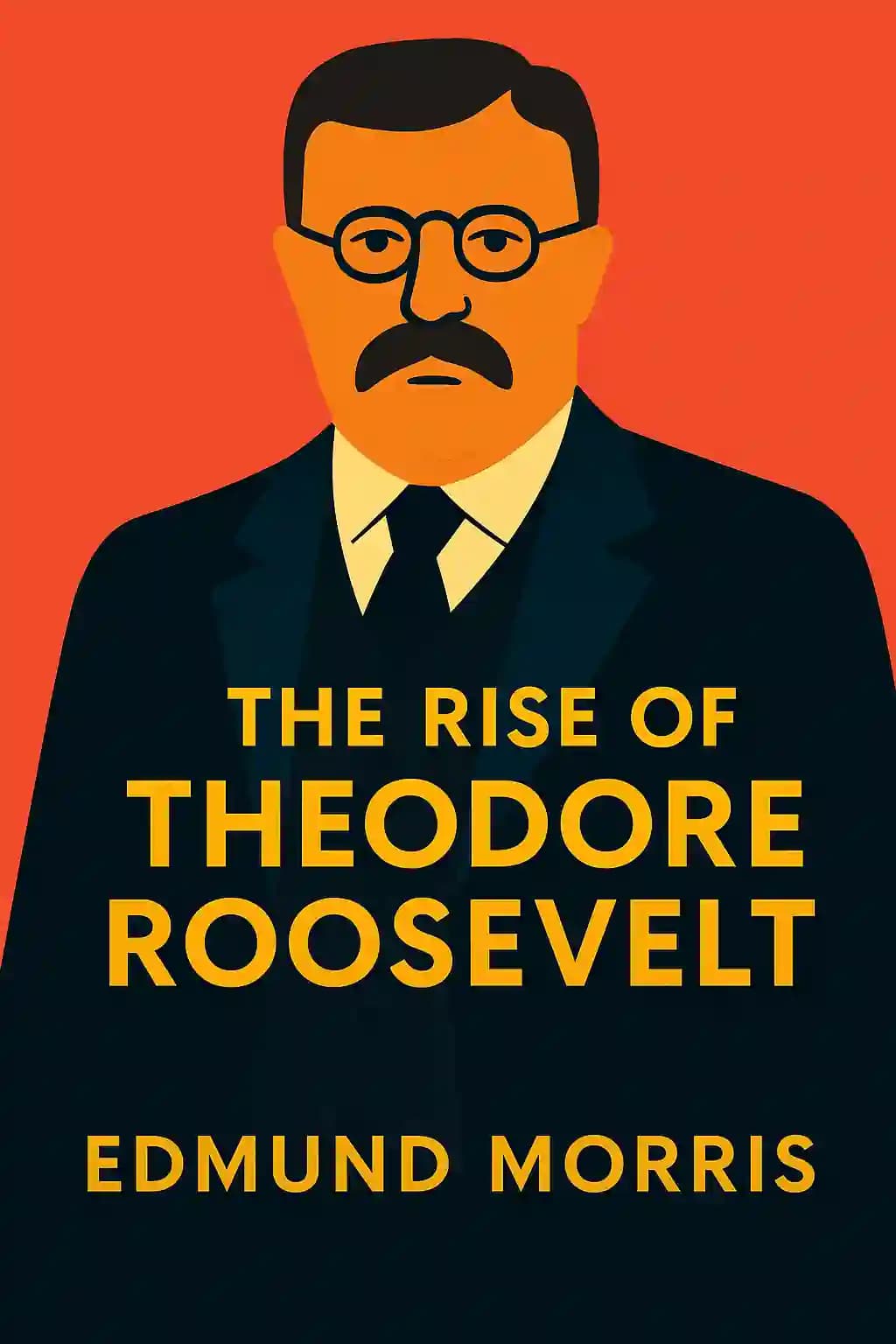
The rise of Theodore Roosevelt
Panoramica di The rise of Theodore Roosevelt
Before becoming president, Theodore Roosevelt was a Harvard scholar, cowboy, and reformist commissioner. This Pulitzer Prize-winning biography, once slated for a Scorsese-DiCaprio film, reveals how a sickly boy transformed into the embodiment of American vigor and adventure.
Temi chiave in The rise of Theodore Roosevelt
- overcoming physical disability
- dakota frontier life
- progressive era reform
- spanish-american war
- political machine corruption
Citazioni da The rise of Theodore Roosevelt
...as lizards crave the sun.
Personaggi di The rise of Theodore Roosevelt
- Theodore RooseveltThe protagonist and future 26th U.S. President
- Theodore Roosevelt SeniorTheodore's father who encouraged his fitness
- Alice Lee Hathaway RooseveltTheodore’s first wife who died tragically young
- Edith CarowTheodore’s second wife and childhood friend
- William McKinleyU.S. President under whom Roosevelt served
Scarica il riassunto di The rise of Theodore Roosevelt
Ottieni il riassunto di The rise of Theodore Roosevelt in formato PDF o EPUB gratuito. Stampalo o leggilo offline quando vuoi.
FAQ su questo libro
The Rise of Theodore Roosevelt chronicles Roosevelt’s life from birth to his 1901 presidential inauguration, detailing his transformative journey from a sickly child to a dynamic leader. Edmund Morris explores his political rise in New York, roles as Civil Service Commissioner and Assistant Secretary of the Navy, and leadership in the Spanish-American War, framing him as a relentless reformer and architect of American global influence.
This book is ideal for history enthusiasts, leadership scholars, and readers interested in presidential biographies. Morris’s vivid storytelling appeals to those seeking insights into early 20th-century politics, personal resilience, and the making of a progressive icon. Its depth also rewards academic readers analyzing institutional reform or U.S. imperialism.
Yes. Winner of the 1980 Pulitzer Prize and National Book Award, Morris’s biography is hailed as a definitive work for its meticulous research and narrative brilliance. It balances Roosevelt’s public achievements with intimate portraits of his family, intellect, and moral drive, offering unparalleled insight into his pre-presidential years.
Key themes include the interplay of personal ambition and public service, the evolution of U.S. imperialism, and the tension between corporate power and progressive reform. Morris emphasizes Roosevelt’s relentless self-improvement, environmental advocacy, and belief in American exceptionalism.
Morris depicts Roosevelt as a hyper-energetic polymath who blended intellectual rigor with physical daring. His leadership is shown as transactional—using charisma and calculated alliances to advance reforms in the NYPD, Navy, and New York governorship—while maintaining an uncompromising moral core.
While direct quotes are scarce in summaries, Roosevelt’s mantra “speak softly and carry a big stick” permeates the narrative. Morris highlights his diary entry at McKinley’s death: “It is a dreadful thing to come into the presidency this way,” underscoring his resolve amid tragedy.
Morris’s work stands out for its literary elegance and psychological depth, avoiding hagiography. Unlike drier biographies, it immerses readers in Roosevelt’s era through anecdotes, such as his 8,000-handshake inauguration day, blending scholarly rigor with novelistic pacing.
Some critics argue the book’s detail-heavy approach may overwhelm casual readers. It also glosses over contradictions in Roosevelt’s policies, such as trust-busting alongside corporate alliances, focusing more on triumphs than ambiguities.
This first volume lays the foundation for Roosevelt’s presidency (Theodore Rex) and post-White House years (Colonel Roosevelt). It establishes key relationships, ideological roots, and the driven personality that shaped his later achievements.
The book resonates for its exploration of leadership in polarized times, environmental stewardship, and balancing power with ethics. Roosevelt’s ability to navigate crises and redefine governmental responsibility mirrors modern debates over democracy and global influence.
Morris’s Pulitzer-winning research draws from Roosevelt’s diaries, letters, and contemporaneous accounts. Historians praise its accuracy, though some note dramatic embellishments in dialogue and scenes to enhance narrative flow.
A planned 2013 film adaptation by Martin Scorsese and Leonardo DiCaprio was abandoned. The book’s cinematic detail and Roosevelt’s adventurous life, however, continue to attract interest from filmmakers.


