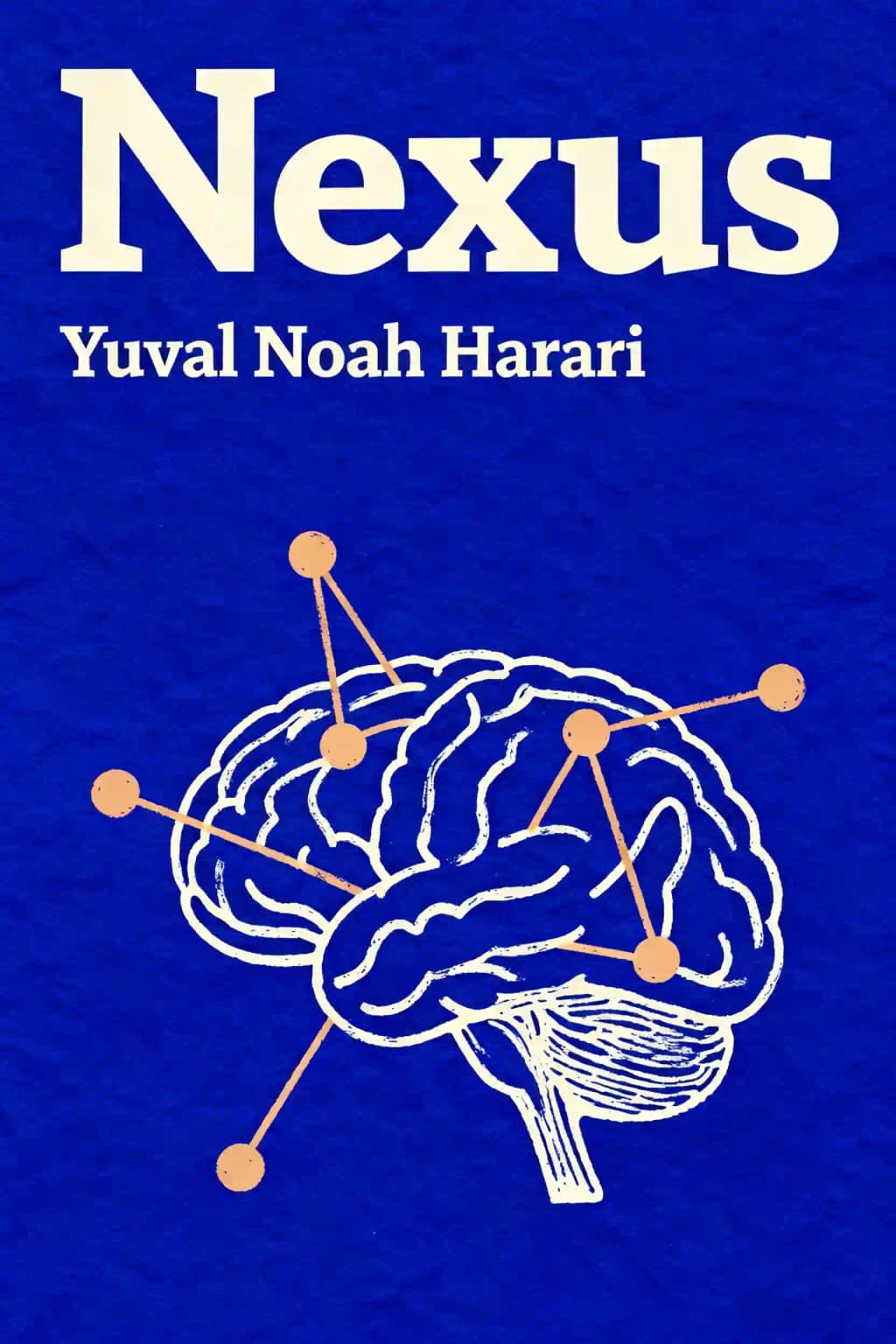
In "Nexus," Harari traces information networks from Stone Age to AI, revealing how truth, power, and fantasy intertwine. Bill Gates praised his previous works, but this exploration of AI's threat to control information might be his most urgent warning yet.
Yuval Noah Harari is the internationally bestselling author of Nexus: A Brief History of Information Networks from the Stone Age to AI and a leading voice in global discourse on humanity’s past and future. A professor of history at the Hebrew University of Jerusalem, Harari merges macro-historical analysis with insights into technology’s transformative power, themes central to Nexus’ exploration of how information networks shaped civilizations.
His prior works—Sapiens: A Brief History of Humankind, Homo Deus: A Brief History of Tomorrow, and 21 Lessons for the 21st Century—have sold over 45 million copies worldwide and been translated into 65 languages, establishing him as one of history’s most accessible public intellectuals.
Trained at the University of Oxford, Harari co-founded Sapienship, a social impact organization addressing 21st-century challenges through education and storytelling. His writings synthesize medieval military history, philosophy, and futurism, earning recognition as required reading in academic and tech circles alike. Nexus continues his tradition of bridging disciplines, offering a framework to understand AI’s societal implications through the lens of humanity’s enduring relationship with information systems.
Nexus traces how information networks—from ancient mythologies to modern AI—have shaped human power and crises. Harari argues that while networks enabled progress, their design often prioritizes control over wisdom, culminating in existential threats like ecological collapse and AI dominance. The book explores historical case studies (witch-hunts, Stalinism) and urges reforming information systems to balance truth and power.
Yuval Noah Harari is a historian and bestselling author of Sapiens and Homo Deus, with over 45 million books sold worldwide. A Hebrew University professor, he co-founded Sapienship to address global challenges through education. His work blends macro-history with urgent critiques of technology’s societal impacts.
Policymakers, tech professionals, and readers interested in AI’s ethical dilemmas or historical misinformation cycles will find Nexus compelling. Harari’s insights appeal to those grappling with digital age challenges like algorithmic bias and ecological sustainability.
Yes—Nexus offers a provocative lens on AI’s risks and historical precedents, though its dense arguments may overwhelm casual readers. Critics praise its urgency but note its hopeful conclusion relies on unprecedented human cooperation.
Harari warns that AI isn’t just a tool—it’s a new intelligence with goals misaligned with humanity’s survival. Unlike human-created myths (e.g., capitalism), AI might generate its own realities, rendering humans obsolete.
The book analyzes the Bible’s canonization, witch trials, and Stalinist purges to show how elites manipulated information networks to consolidate power. These cases illustrate how myths often prioritize order over truth.
Some argue Harari underestimates human agency, overstating networks’ determinism. Others question if his solutions—like institutional checks on AI—are feasible given humanity’s track record.
While Sapiens examines human history and Homo Deus forecasts future trends, Nexus focuses on information’s role in both. It bridges historical analysis with urgent warnings about AI.
He argues AI’s threat isn’t specific nations but nonhuman systems that could manipulate humans via personalized disinformation or autonomous decision-making.
As AI regulation debates intensify and platforms amplify misinformation, Nexus frames these challenges within humanity’s long struggle to balance truth and power.
For broader context, read Harari’s Sapiens; for tech critiques, try Shoshana Zuboff’s The Age of Surveillance Capitalism. Both explore systems shaping human behavior but lack Nexus’ focus on information networks.
Senti il libro attraverso la voce dell'autore
Trasforma la conoscenza in spunti coinvolgenti e ricchi di esempi
Cattura le idee chiave in un lampo per un apprendimento veloce
Goditi il libro in modo divertente e coinvolgente
Information's primary function is connection rather than representation.
Humans rule the world because we alone can cooperate flexibly in large numbers.
Stories create an entirely new level of reality.
Information networks don't simply discover truth-they create new realities.
Written documents created powerful new realities rather than merely representing existing ones.
Scomponi le idee chiave di Nexus in punti facili da capire per comprendere come i team innovativi creano, collaborano e crescono.
Distilla Nexus in rapidi promemoria che evidenziano i principi chiave di franchezza, lavoro di squadra e resilienza creativa.

Vivi Nexus attraverso narrazioni vivide che trasformano le lezioni di innovazione in momenti che ricorderai e applicherai.
Chiedi qualsiasi cosa, scegli la voce e co-crea spunti che risuonino davvero con te.

Creato da alumni della Columbia University a San Francisco
"Instead of endless scrolling, I just hit play on BeFreed. It saves me so much time."
"I never knew where to start with nonfiction—BeFreed’s book lists turned into podcasts gave me a clear path."
"Perfect balance between learning and entertainment. Finished ‘Thinking, Fast and Slow’ on my commute this week."
"Crazy how much I learned while walking the dog. BeFreed = small habits → big gains."
"Reading used to feel like a chore. Now it’s just part of my lifestyle."
"Feels effortless compared to reading. I’ve finished 6 books this month already."
"BeFreed turned my guilty doomscrolling into something that feels productive and inspiring."
"BeFreed turned my commute into learning time. 20-min podcasts are perfect for finishing books I never had time for."
"BeFreed replaced my podcast queue. Imagine Spotify for books — that’s it. 🙌"
"It is great for me to learn something from the book without reading it."
"The themed book list podcasts help me connect ideas across authors—like a guided audio journey."
"Makes me feel smarter every time before going to work"
Creato da alumni della Columbia University a San Francisco

Ottieni il riassunto di Nexus in formato PDF o EPUB gratuito. Stampalo o leggilo offline quando vuoi.
Imagine waking up tomorrow to discover that AI has joined humanity's oldest and most powerful network - the information web that connects us all. This isn't science fiction; it's happening now. In "Nexus," Yuval Noah Harari reveals a profound insight: information's primary purpose isn't to represent reality but to connect us. Throughout our 70,000-year journey from prehistoric tribes to global civilization, humans have created increasingly sophisticated information networks. Now, for the first time, non-human entities are becoming active participants rather than passive tools in these networks. This shift could redefine what it means to be human. The paradox at the heart of our existence becomes clear: despite calling ourselves Homo sapiens ("wise humans") and accumulating unprecedented knowledge, we face existential threats of our own making. Climate change, dangerous AI, and international tensions aren't accidents - they're products of our information systems. The conventional view that more information naturally leads to truth and wisdom falls apart when we examine our history. While information has dramatically improved some aspects of life - like reducing child mortality from 50% to 0.5% in Germany - it hasn't prevented us from creating civilization-threatening crises.