Capitolo 1
Economics Unveiled: The Hidden Forces That Shape Our World
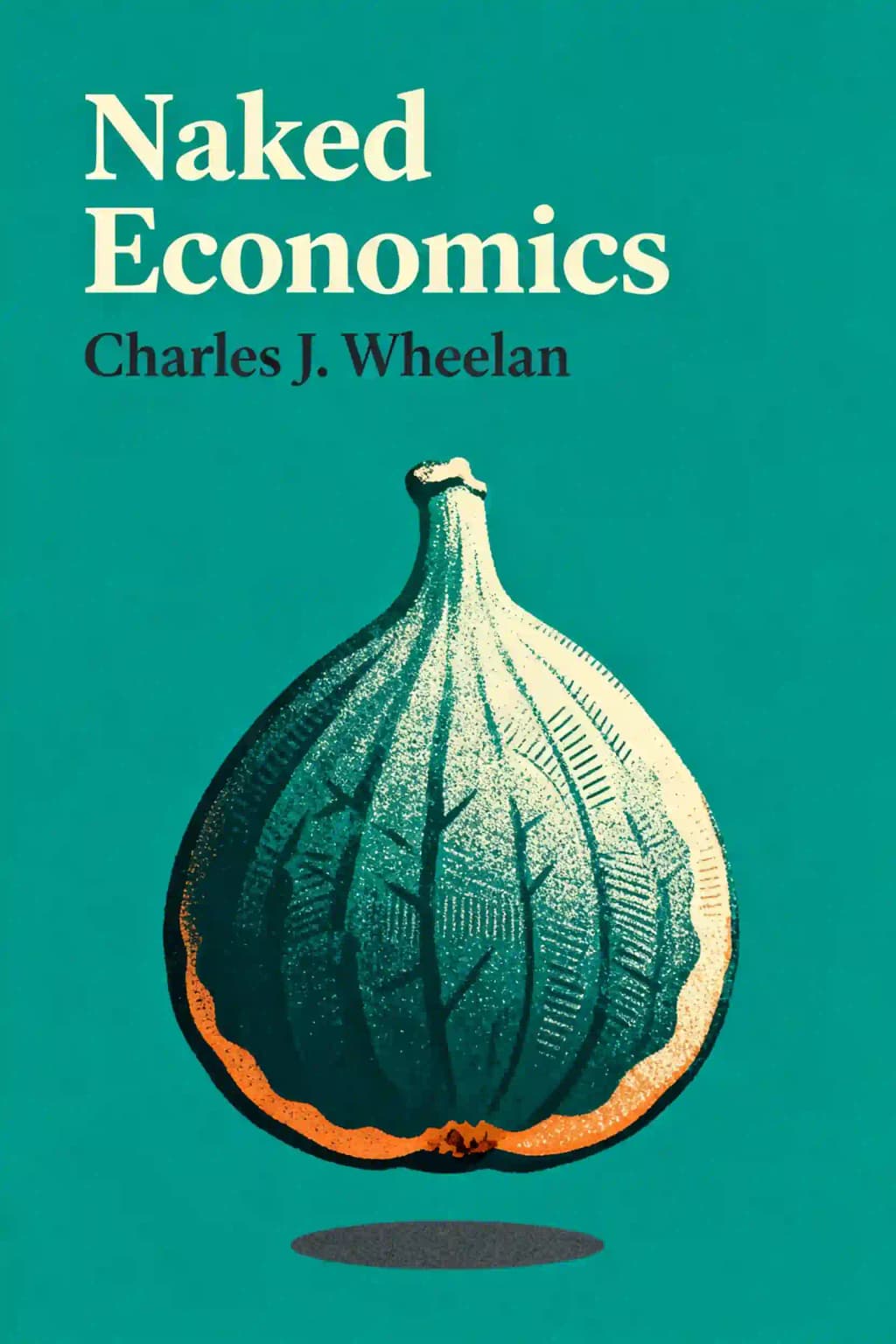
When Charles Wheelan's "Naked Economics" first hit bookshelves in 2002, it quickly became the antidote to the dry, equation-laden economics texts that had dominated the field. Endorsed by influential voices from Burton Malkiel to Joseph Stiglitz, the book transformed complex economic concepts into accessible insights for everyday readers. Unlike traditional economics texts that drive away curious minds with mathematical formulas, Wheelan strips economics down to its essentials-revealing how market forces shape everything from dating decisions to global poverty. The book's enduring popularity stems from its rare combination of intellectual rigor and conversational clarity, making it required reading at universities worldwide and a favorite among business leaders seeking to understand the invisible hand guiding our economic lives. As Warren Buffett once remarked about economic literacy, "If you don't understand it, you're like a one-legged man in an ass-kicking contest." Wheelan's masterpiece ensures you'll have both legs firmly planted.
Capitolo 2
The Invisible Logic Behind Human Behavior
Economics begins with one crucial insight: individuals act to maximize their utility-a concept broader than mere happiness. This explains why we make the choices we do, from career decisions to grocery purchases. But utility doesn't just mean selfish pleasure; it encompasses everything that makes us better off, including the satisfaction from charitable giving. When Oseola McCarty, who washed clothes for a living, donated her life savings of $150,000 to university scholarships despite living frugally herself, she wasn't acting against economic principles-she was maximizing her own utility through generosity.
Our preferences vary dramatically based on wealth and circumstances. Environmental protection, for instance, is what economists call a "luxury good"-something wealthy nations prioritize more than developing countries, where immediate survival needs take precedence. This explains why Americans might fight to preserve an endangered owl while people in developing nations focus on basic necessities.
Every aspect of human behavior responds to costs, both monetary and non-monetary. When costs fall, consumption rises-evident in post-Christmas shopping frenzies. Even addictive products follow this pattern: research showed a proposed tobacco settlement raising cigarette prices by 34% would have reduced teenage smokers by a quarter. The costs of smoking now include standing outside in freezing weather, not just the price of cigarettes.
This cost-sensitivity explains the plummeting birth rate in developed countries. Having children isn't more expensive in terms of basic needs, but the opportunity cost has skyrocketed as women's professional opportunities have improved. Meanwhile, the economic benefits of large families have disappeared-children no longer work on farms or provide retirement security. Though children bring great joy, the economic reality explains why the average American woman now has 2.07 children versus 3.77 in 1905.
Markets direct resources to their most productive use through prices, which function as information signals. Brad Pitt earns $30 million per film rather than selling insurance because his unique talents create more value in Hollywood. Similarly, prices ensure Paris restaurants have just enough tuna by triggering a chain reaction through wholesalers to fishermen. Even in challenging environments, profit opportunities attract entrepreneurs-like Chester's pizza shop near Chicago's Cabrini Green, which operated successfully behind bulletproof glass.
Our market economy uses prices to allocate scarce resources. Since everything worth having is finite, economic systems must decide who gets what. In capitalism, those willing to pay the most get Super Bowl tickets; in the Soviet Union, the Communist Party decided. Both systems ration goods-we do it with prices, Soviets did it with waiting lines. This price-based allocation creates self-correcting markets, as demonstrated when OPEC limits oil production. While politicians debate interventions, consumers naturally respond to higher prices by driving less and buying smaller cars.
Capitolo 3
The Power of Incentives in Shaping Our World
Incentives fundamentally drive human behavior-we work harder on commission, drive less when gas prices rise, and children learn to cry for cookies when it works. Adam Smith recognized this when noting that butchers and bakers serve us from self-interest, not benevolence. Bill Gates didn't join the Peace Corps; he founded Microsoft, enriching himself while revolutionizing computing.
Communist systems that ignored incentives led to inefficiency and starvation. By 1991, India's state-run Hindustan Fertilizer Corporation employed 1,200 workers but never produced any fertilizer. North Korea's incentive-free economy has caused devastating famines. Even American education suffers from incentive problems-teacher pay based solely on experience and credentials creates "adverse selection" where the brightest teachers leave for professions that reward performance.
Well-intentioned policies often create perverse incentives with unintended consequences. Requiring car seats on airplanes might actually increase child deaths as families choose to drive instead of fly due to higher costs. Similarly, Mexico City's policy restricting cars one day per week backfired when families bought second cars-often older, more polluting vehicles-increasing overall emissions.
The private sector struggles with misaligned incentives too. Fast-food restaurants offer free meals without receipts not out of generosity but to prevent cashiers from pocketing unrecorded sales. This exemplifies the "principal-agent problem" where employees (agents) have incentives contrary to owners' (principals) interests. CEOs face similar conflicts-two-thirds of corporate mergers destroy shareholder value, yet CEOs pursue them for prestige and larger compensation packages.
Real estate agents exemplify everyday principal-agent problems. When representing buyers, agents earn more when you pay more for a house, creating an incentive to discourage aggressive negotiation. For sellers, the misalignment is subtler-while agents earn more from higher sale prices, the difference isn't worth their time. An agent might prefer selling your $300,000 house quickly at $280,000 (earning $8,400 for minimal work) rather than listing at $320,000 and spending weeks marketing it for just $1,200 more commission.
Economics teaches us that incentives can sometimes lead rational individuals to make choices that leave everyone worse off. The prisoner's dilemma perfectly illustrates this: two suspects separately interrogated will both confess to avoid being betrayed, resulting in lengthy sentences when mutual silence would have benefited both. This model explains real-world problems like fishery depletion, where each fisherman's rational choice to "catch as many fish as I can" collectively destroys the resource.
Capitolo 4
When Markets Fail: Externalities and Public Goods
When individuals make decisions that affect others who have no say in those decisions, economists call this an externality-a gap between private costs and social costs. My choice to drive an SUV affects others' safety and the environment, but I don't compensate those harmed. The market fails in these situations because it encourages behavior that benefits individuals at society's expense.
Externalities affect everything from annoying airplane experiences with crying babies to texting while driving. Smokers create both negative externalities (healthcare costs) and positive ones (saving pension costs by dying younger). Philip Morris quantified this benefit in a Czech Republic report showing $148 million in net government savings from smokers' early deaths-a calculation technically correct but ethically troubling.
Market economies address externalities through regulation or taxation. Economists often prefer taxing over banning-for example, taxing gas-guzzling vehicles to reflect their true social cost rather than banning them outright. This approach creates better incentives: limiting harmful behavior, raising revenue for offsetting costs, and encouraging innovation.
Sometimes parties involved in externalities can reach private agreements without government intervention, as Nobel Prize winner Ronald Coase demonstrated. If property rights are clearly defined, one party can pay the other to change behavior when it's mutually beneficial. For example, if my neighbor's bongo playing is worth $50 to him but costs me $100 in distress, I could pay him $75 to stop-making us both better off.
Contrary to cocktail party wisdom about government "getting out of the way," good government actually makes market economies possible. Property rights are crucial-not just for physical items but for intellectual property like books, music, and inventions. Copyright law enables authors to profit from their work, while patents give pharmaceutical companies incentive to invest in expensive drug development (averaging $600 million per new drug). Without patent protection, companies like Pfizer wouldn't invest in developing medications like Viagra.
Government provides crucial "public goods" that benefit society but wouldn't be supplied by the private sector due to free rider problems. The FBI's counterterrorism work exemplifies a necessary public good that requires government funding through taxation. Government also redistributes wealth through taxation, though most benefits flow to the middle class via Medicare and Social Security rather than to the poor.
Should government protect people from their own poor decisions? The answer is philosophical, not economic. Views range from libertarian (individuals know best) to paternalistic (society should prevent self-harm). Behavioral economics shows human decision-making is prone to errors like underestimating risk. "Libertarian paternalism" offers a middle ground-not forcing behavior change but "nudging" people toward better choices by leveraging inertia. For example, making organ donation the default option (requiring opt-out rather than opt-in) significantly increases donation rates.
Capitolo 5
The Information Problem: Making Decisions With Limited Knowledge
Economists study how we acquire information, what we do with it, and how we make decisions with incomplete knowledge. The 2001 Nobel Prize in Economics recognized George Akerlof, Michael Spence, and Joseph Stiglitz for their groundbreaking work on information asymmetry-problems arising when rational people make decisions with incomplete information or when one party knows more than another.
Information asymmetry can lead to rational discrimination. When firms lack specific information about individuals, they make decisions based on statistical averages. A law firm might rationally favor male over female Harvard Law graduates not from prejudice but because women statistically bear more child-rearing responsibilities, potentially creating higher turnover costs. This statistical discrimination maximizes profits while violating our sense of fairness and federal law.
Markets tend to favor the party with more information, but extreme information asymmetry can cause markets to collapse entirely. This was the fundamental insight of Nobel laureate George Akerlof in "The Market for Lemons." In used car markets, sellers know more about their cars than buyers, creating adverse selection-owners of good cars are less likely to sell them, leaving mostly lemons in the market.
Health care suffers from profound information asymmetries. Patients typically know less than their doctors, and even after treatment, may not know if they received proper care. Under fee-for-service systems, doctors have incentives to perform expensive procedures while patients, who don't directly pay, have no reason to object. When your doctor suggests a CAT scan for a headache "just to be sure," both of you are acting rationally despite the system's inefficiency.
Insurance markets face their own information problems. While doctors know more about your health than you do, you know more about your lifestyle and risks than insurance companies do. This information advantage wreaks havoc through adverse selection. Insurance companies protect themselves by screening applicants with detailed questions about health, family history, and risky behaviors. Companies also use deductibles as screening mechanisms-a Nobel Prize-winning insight from Joseph Stiglitz. Healthy customers willingly choose high-deductible plans with lower premiums, while those expecting medical issues opt for higher premiums with lower deductibles.
Genetic testing creates a profound dilemma for insurance markets. A single strand of hair contains your entire genetic code, potentially revealing predisposition to diseases decades before symptoms appear. If insurers can access this information, those most likely to need coverage will be unable to get it. If laws forbid insurers from using genetic information, adverse selection will devastate the industry as high-risk individuals load up on generous policies.
Beyond healthcare, markets constantly develop mechanisms to overcome information problems. McDonald's golden arches represent predictability-you know exactly what you'll get regardless of location. This consistency explains why travelers choose familiar chains over unknown local establishments. Branding solves the problem of selecting products whose quality you can determine only after purchase. Companies spend enormous sums building brand identities that signal trust in complex economies where we regularly transact with strangers.
Capitolo 6
Human Capital: The Ultimate Economic Resource
Human capital represents the sum total of skills embodied within an individual-education, intelligence, charisma, creativity, work experience, and entrepreneurial vigor. It's what remains if all your assets were stripped away, leaving you with only your abilities. People like Bill Gates or Tiger Woods would thrive even if their wealth disappeared because their skills remain valuable. Meanwhile, those with limited skills struggle.
The market prices skills based on scarcity, not social value. As economist Robert Solow noted when asked if it bothered him that baseball players earned more than Nobel Prize winners: "There are a lot of good economists, but there is only one Roger Clemens." Education represents an excellent investment in human capital, typically yielding about 10% annual returns-better than most Wall Street investments.
Poverty is fundamentally a dearth of human capital. While the immediate cause of poverty may appear to be joblessness, the underlying problem is typically a lack of marketable skills. Fast-food workers earn little because their skills aren't scarce-approximately 150 million Americans could perform the job, keeping wages perpetually low. The poverty rate for high school dropouts in America is twelve times higher than for college graduates.
Imagine dropping 100,000 high school dropouts in downtown Chicago-a social calamity would ensue. Now imagine dropping 100,000 elite university graduates instead-they'd find jobs immediately, start businesses, or attract employers to the area. This stark contrast demonstrates human capital's value. Consider the Naval Air Warfare Center in Indianapolis-when scheduled for closure, Hughes Electronics bought it primarily for its workforce of scientists and engineers. Unlike typical plant closings where narrowly-skilled workers lose 25% of their earning capacity, 98% of NAWC employees simply switched employers, their human capital remaining valuable.
Human capital extends beyond earnings potential-it makes us better parents, more informed voters, more appreciative of culture, and healthier. In developing countries, an additional year of female education reduces child mortality by 5-10%. Economist Gary Becker estimates that education, skills, and health constitute about 75% of a modern economy's wealth-not physical assets but knowledge carried "in our heads."
Human capital drives productivity-our efficiency in converting inputs to outputs. Americans are rich because we're productive, working fewer hours while producing more than at any point in history. Since 1870, hours required for food acquisition dropped from 1,800 to 260 annually, while real GDP per capita rose from $4,800 to over $40,000. This productivity advantage explains why Ross Perot's NAFTA fears proved unfounded. American workers can compete against lower-paid foreign workers because they produce more, thanks to education, health, access to capital and technology, and better institutions.
America has grown increasingly unequal. From 1979 to 2004, households in the bottom fifth saw incomes rise just 2% while the top quintile enjoyed 63% growth. Human capital explains much of this inequality. The wage gap between college and high school graduates doubled from 40% to 80%. Our economy increasingly rewards skills-computers and technology make smart workers more productive while replacing low-skilled labor.
Capitolo 7
Financial Markets: The Engine of Modern Economies
Like the absurd "grapefruit and ice cream diet" that captivated smart college students, intelligent people often abandon common sense when investing. They chase miracle strategies instead of embracing the simple but disciplined rules of successful investing. The financial markets may appear complex with their bewildering array of instruments, but they operate on straightforward principles: financial products must create value for both buyer and seller.
Financial markets allow us to spend money we don't have, enabling everything from credit card purchases to business investments. We borrow for college, homes, and equipment. Sometimes we raise capital by selling ownership stakes through stocks or issuing bonds. These transactions range from simple car loans to multibillion-dollar IMF bailouts. Credit is essential to modern economies and has become a powerful tool for fighting poverty. Organizations like Opportunity International make micro-loans averaging just $195 in developing countries, helping entrepreneurs like Ugandan midwife Esther Gelabuzi establish businesses that create jobs and provide vital services.
Those with surplus capital face three challenges: physical protection, inflation protection, and putting money to productive use. Interest represents the "rental rate" on capital-surplus funds being rented to those who can use them productively. Harvard's $25 billion endowment employs hundreds of professionals to invest globally, earning an impressive 16% annual return from 1995-2005 (though losing 30% during the financial crisis).
Financial markets help us minimize life's many risks through insurance. We willingly pay predictable premiums exceeding expected payouts to protect against devastating outcomes. Almost anything can be insured-from homes to ships facing pirates in dangerous waters. When a French oil tanker was bombed off Yemen in 2002, insurers paid $70 million.
Despite what get-rich-quick schemes promise, there are no miracle paths to market riches. The efficient markets theory explains why: everyone is trying to maximize utility, so obvious bargains quickly disappear. When you buy a "hot stock," someone else has decided to sell it at that price. Half the investors trading that stock are trying to get rid of it. Even Wall Street analysts, while providing legitimate information about companies, can't guarantee above-average returns because everyone else has access to the same information.
Data shows that monkeys throwing darts (or towels) at stock listings perform surprisingly well compared to professional investors. Index funds-which simply buy and hold predetermined baskets of stocks rather than trying to pick winners-consistently outperform most actively managed funds over long periods. According to Morningstar, only 45 percent of actively managed funds beat the S&P 500 over a twenty-year stretch.
The fundamental principle behind all investing is that capital is scarce, which is why it yields returns. To have capital to invest, you must spend less than you earn. The more you save and the earlier you begin, the more "rent" you can command from financial markets. Compound interest, which Einstein reportedly called the greatest invention of all time, works powerfully over time.
When investing, risk and reward are fundamentally linked. Riskier investments must offer higher expected returns to attract capital-not some arcane law of finance but simply markets at work. No rational person would invest somewhere when they can earn the same return with less risk elsewhere. A well-diversified portfolio significantly lowers risk without reducing expected returns. By spreading investments across multiple uncorrelated assets, you maintain the same expected return while dramatically reducing catastrophic risk.
Capitolo 8
The Global Economy: Trade, Development, and Currency
Trade functions like a miraculous machine that converts one nation's products into goods they couldn't otherwise produce. This economic exchange benefits both rich and poor countries alike, allowing each to focus on what they do best. Despite growing controversy around globalization, international trade has expanded dramatically, with global exports growing from 8% of world GDP in 1950 to around 25% today.
Trade creates wealth by allowing specialization. When Abraham Lincoln suggested that buying British rails meant "they've got our money," he missed a crucial economic insight: trade frees us from inefficient self-sufficiency. Saudi Arabia produces oil cheaply while America excels at growing corn-this absolute advantage makes both countries richer through exchange. Even more powerful is comparative advantage, which explains why America imports shirts from Bangladesh despite having more skilled workers. Our engineers create more value designing airplanes than making shirts, while Bangladeshi workers are more productive making textiles than anything else.
While trade benefits the world collectively, it also creates painful disruption. Workers in Maine earning $14/hour lose jobs when production moves to Vietnam where labor costs $1/hour, unless American productivity is 14 times higher. Protected industries in developing countries can be crushed when suddenly exposed to ruthlessly efficient global competition. Though trade creates more jobs than it destroys (37,000 jobs lost annually to NAFTA versus 200,000 new jobs monthly), the human cost is severe.
Protectionism's benefits are immediately visible in preserved jobs, but its costs are more subtle yet ultimately more damaging. Blocking trade is like forbidding commerce across the Mississippi River-it forces workers to abandon what they do best to produce goods they're less efficient at making. This reverses specialization, reducing productivity and prosperity. We impose economic sanctions on enemies precisely because preventing trade devastates economies. Trade barriers are essentially self-imposed sanctions that make a country collectively poorer while protecting specific industries.
Why do 2 billion people live on less than $2 a day despite our technological advances? The answer lies in failed economic systems that don't effectively convert inputs, including human talent, into valuable outputs. Good governance provides the foundation for economic growth. Countries need laws, courts, infrastructure, and tax collection systems that function with reasonable honesty. Corruption isn't merely inconvenient-it's a cancer that misallocates resources and discourages investment.
Property rights are crucial for the poor, not just the wealthy. In developing countries, informal property arrangements prevent people from legally renting, selling, or using their assets as collateral. Economist Hernando de Soto estimates that poor people in developing nations hold over $9 trillion in "dead capital"-property without legal title-which is 93 times the development assistance provided by rich countries over three decades.
Human capital drives productivity and living standards. Nobel laureate Gary Becker observed that all countries with persistent income growth have significantly increased education and training. The Asian tigers grew rapidly by leveraging well-trained, educated workforces. In poor countries, education improves public health, reduces infant mortality, and facilitates technology adoption from developed nations.
Capitolo 9
The Future of Economics: Questions for 2050
Economics provides tools to understand and improve our imperfect world, but we must decide how to use them. Like physics enabling moon exploration, economics doesn't predetermine outcomes but offers pathways to goals we choose. Before economics can help us achieve the "good life," we must define what that means.
Productivity growth is the fundamental determinant of our material standard of living. At 1% annual growth, our standard of living will be 50% higher by 2050; at 2%, it will more than double. The more intriguing question is how we'll use this prosperity. Economics predicts a "backward-bending labor supply curve"-as wages increase beyond a certain point, people choose leisure over additional income. Will Americans continue working sixty-hour weeks to live materially rich lives, or will we eventually opt for twenty-five-hour workweeks with more time for pursuits like classical music in the park?
America and Europe represent different ends of the market economy spectrum. European economies offer stronger safety nets, worker protections, and guaranteed healthcare, resulting in lower poverty rates and inequality. However, they also experience higher unemployment and slower innovation. The American system produces a more dynamic, entrepreneurial economy that creates enormous wealth but distributes it less equally. Capitalism comes in many flavors-which will we choose?
The most effective way to accomplish goals is aligning incentives, yet we often design policies that do the opposite. Our education system doesn't adequately reward good teachers or make it easy for talented people to enter the profession. We subsidize car travel despite its environmental costs and tax productive activities rather than implementing "green taxes." Markets can solve social problems when properly incentivized, as demonstrated by the Orphan Drug Act, which created incentives for developing treatments for rare diseases.
Economics doesn't dictate that we must accept whatever the market produces. We can collectively decide to protect aesthetically pleasing landscapes or ways of life, even at economic cost. As we grow wealthier, we often become more willing to prioritize beauty over efficiency. However, we should be transparent about the costs of market intervention, ensure those who enjoy the benefits bear the costs, and avoid imposing one group's aesthetic preferences on others who may value convenience and affordability.
Global poverty remains a profound moral challenge that defies simple explanation to children. While we lack a silver bullet for economic development, the question of whether poor countries will remain poor isn't predetermined. The difference between an East Asian growth miracle and continued stagnation in sub-Saharan Africa represents billions of lives. Progress depends on specific factors: will developing countries build institutions supporting market economies, develop export industries, gain access to wealthy markets, benefit from technology transfer to fight disease, and invest in human capital-particularly for girls?
America faces an unsustainable fiscal trajectory as the world's largest debtor, owing over a trillion dollars to Chinese bondholders alone. The challenge is compounding: we must fund current government operations (which we're not doing fully now), pay interest on accumulated debt, and cover growing expenses from retiring Baby Boomers claiming Social Security and Medicare-all while maintaining defense spending. Americans have developed hostility toward higher taxes without willingness to trim government accordingly. This mathematical reality requires serious political leadership and public recognition that the status quo cannot continue.