Capitolo 1
Warriors Among Us: Courage, Sacrifice, and the Unbreakable Spirit
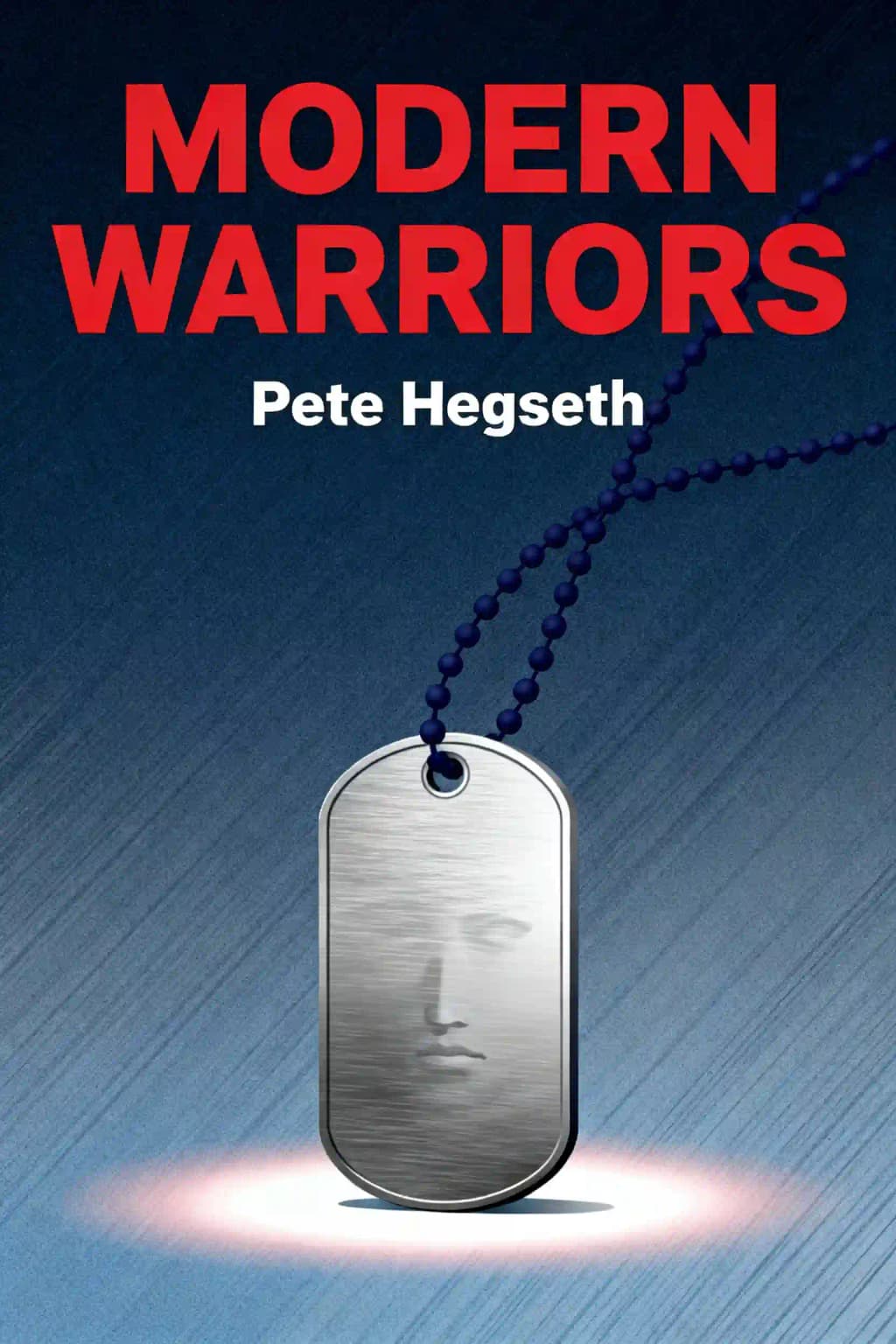
In 2014, Pete Hegseth watched with growing frustration as cities in Iraq fell to ISIS-places where American blood had been shed. This wasn't what a generation of warriors had fought for. The experience sparked a mission to tell the real, unfiltered stories of America's post-9/11 warriors. "Modern Warriors" emerged from this determination, offering raw accounts from those who served on the front lines. The book has resonated deeply with readers across America, becoming a New York Times bestseller and earning praise from veterans and civilians alike. What makes these stories so powerful is their honesty-they reveal both the heroism and humanity of those who volunteered to fight when their country called. Through firsthand accounts of firefights, loss, resilience, and homecoming, Hegseth creates an intimate portrait of the warrior spirit that continues to protect American freedom, reminding us of the extraordinary individuals who serve in ordinary circumstances.
Capitolo 2
When Giving Up Isn't an Option
The warriors featured in this section exemplify extraordinary resilience in the face of devastating injuries and seemingly impossible circumstances. Their stories reveal a common thread-a refusal to surrender when confronted with life-altering challenges.
John Wayne Walding's journey epitomizes this spirit. During the 2008 Battle of Shok Valley in Afghanistan, a sniper's bullet nearly severed his right leg. Despite excruciating pain, Walding continued fighting-folding his nearly detached limb "like a bird's wing" into his crotch while applying a tourniquet. As enemy fire rained down, he maintained his position, protecting wounded teammates while calling in air support. This wasn't just physical endurance but psychological fortitude of the highest order.
For Joey Jones, an Explosive Ordnance Disposal technician, the danger wasn't theoretical-it was a daily reality. After witnessing one teammate killed and another lose his legs in a single night, Jones developed a premonition about his own fate. He began running obsessively, his bleeding feet perhaps a subconscious acceptance of what might come. Two weeks later, while clearing IEDs in Safar Bazaar, Jones lost both legs in an explosion. His immediate response wasn't despair but pragmatism: "I don't look at this like I've lost my legs. I look at this like I've gained a second chance at life."
Chad Fleming, an Army Ranger, demonstrated similar resolve after losing his leg in a 2005 ambush in Mosul. Rather than accepting medical retirement, Fleming underwent twenty-three surgeries and returned to combat, completing five additional deployments as an amputee. Each step on his prosthetic leg served as a constant reminder of his vulnerability, yet he transformed this awareness into strength rather than weakness.
What drives such extraordinary resilience? For Jeremiah Workman, who earned the Navy Cross for heroism in Fallujah, it was a sense of responsibility to fallen comrades. Despite suffering from PTSD, Workman channeled his struggles into helping other veterans, paying forward the support he received. When asked about his medal, he deflects praise, feeling it belongs to the Marines who didn't return home.
These warriors share a common perspective-they refuse to be defined by their injuries or traumas. Instead, they reframe their experiences as opportunities for growth and service. As Jones puts it, "Technology has led us to believe there is an easy button... but not for the stuff that really matters." Their stories remind us that true strength isn't the absence of fear or pain, but the determination to move forward despite them.
Capitolo 3
The Warrior's Code: Honor in Combat
What separates warriors from mere fighters? The warriors featured in this section reveal it's not just combat skill but adherence to a moral code that guides their actions even in the most chaotic circumstances.
Eric Joseph Geressy, a Silver Star recipient, demonstrated this principle when taking command of Combat Outpost Blackfoot in Baghdad's most dangerous sector in 2007. Rather than focusing on personal comfort, Geressy immediately prioritized defensive preparations-fortifying fighting positions, pre-positioning ammunition, establishing mortar positions, and conducting thorough rehearsals. When ordered to investigate a potential vehicle-borne IED, he sensed a trap based on previous experience and insisted on proper planning despite pressure from command. His judgment saved lives when the outpost came under attack from three directions with mortars, machine guns, and RPGs.
This warrior's code extends beyond tactical decisions to encompass moral choices in combat. Mat Best, a veteran of five combat deployments and four hundred direct action missions, experienced this reality when his mentors Sergeant Dale Brehm and Sergeant Ricardo Barraza were killed during a house raid in Iraq. Best had to drag Brehm's bleeding body from the building, haunted by his earlier promise: "If I ever go down, you'd better use my radio and take control. If there's one thing I'm going to do, it's get you home to your family, even if it means I have to die." This experience transformed Best's understanding of leadership, as he later told his own men, "I'm going to be the first one through the door. If I die, then your job is to fuckin' live."
The code also involves adapting to local cultures and building trust in hostile environments. Scott Mann, a Green Beret who served in Afghanistan, explains that beyond the Hollywood portrayal of direct action, Special Forces' real strength lies in human connections. During Operation Nam Dong in Oruzgan Province, Mann's team replaced a departing infantry battalion with untested Afghan National Army soldiers. Despite cultural and language barriers, they established trust that enabled successful operations against the Taliban. As Mann notes, "We're relationship-based connectors who happen to be lethal when necessary."
This warrior's code creates bonds that transcend background differences. As Best explains, in combat "there are no Republicans or Democrats, whites or blacks-only brothers." These warriors recognize that their ultimate responsibility is to each other and the mission, not to politics or personal glory. Their stories reveal that true warriors aren't defined by how many enemies they defeat, but by how they conduct themselves in the most challenging circumstances-maintaining honor and humanity even when surrounded by chaos.
Capitolo 4
The Burden of Command: Leadership Under Fire
Military leadership differs fundamentally from its civilian counterpart-decisions made in combat directly determine who lives and dies. The warriors in this section reveal the weight of this responsibility and how it shaped their approach to leadership both in and beyond the battlefield.
Jocko Willink, a decorated Navy SEAL commander, describes leadership's heaviest burden as not fear for his own mortality, which he'd accepted, but constant dread of his men being wounded or killed. This weight became fully apparent only after returning home. When SEAL team member Marc Lee was killed in Ramadi in 2006-the first SEAL killed in Iraq-there was no formal protocol for handling such loss. Willink had to improvise: give the team time to mourn, hold a memorial service, then return to the mission. As hundreds of service members lined the route for Marc's angel flight, Willink experienced his most humbling and proudest moment simultaneously-standing beside a fallen hero while part of a brotherhood willing to make the same sacrifice.
Nick "The Reaper" Irving, who confirmed 33 enemy combatant kills as a sniper in Afghanistan, approached leadership differently. Despite being a sniper team leader, he maintained an informal relationship with his spotters, preferring to be called "Irv" rather than "Sergeant." He valued open feedback and humility despite his fearsome reputation. Irving believed in leading by example and embraced the Ranger creed of "Sua Sponte" (Of their own accord), considering his spotters equal leaders regardless of rank differences.
David Bellavia, the first living Iraq War recipient of the Medal of Honor, took a more intense approach to leadership. He pushed his soldiers relentlessly during training, taking their weekends and nights, believing they needed to earn their freedom. He opposed comforts like fast food restaurants on forward operating bases, wanting his men "pissed off, agitated, and focused." Bellavia took pride when a soldier admitted fearing him more than the enemy, believing that's exactly how it should be. Yet this demanding leadership style came from deep concern for his men's survival in urban combat situations like Fallujah, where split-second decisions determined life or death.
Caroline Johnson, a weapons systems officer who flew combat missions against ISIS, faced unique leadership challenges as one of few women in naval aviation. Despite facing gender-based stereotyping at the Naval Academy and in her squadron, she focused on mission accomplishment. Her moral injury came not from combat itself but from being forced to witness ISIS atrocities during reconnaissance missions without being allowed to intervene due to restrictive rules of engagement.
These diverse leadership styles share a common foundation-putting the mission and team above self. As Willink explains, fear-based leadership only works short-term; true leadership builds trust and encourages valuable feedback. His most influential mentor was a legendary SEAL officer who, despite his status, remained humble enough to take out trash and empower junior team members. This principle-that leadership is service, not privilege-defines the warrior's approach to command.
Capitolo 5
The Invisible Wounds: PTSD and Moral Injury
Not all battle scars are visible. The warriors in this section confront the psychological impacts of combat-revealing both the devastating effects and pathways to healing.
Jeremiah Workman earned the Navy Cross for heroism in Fallujah but returned home carrying invisible wounds. The weight of losing three Marines under his command haunted him, especially remembering families who had asked him to "take care of my son." Though they continued their mission, the full impact hit him back home. Years of therapy helped him accept that "people die in combat" and that no decision he made could have saved those Marines, though he still runs scenarios through his mind daily.
Morgan Luttrell's injuries were both physical and psychological. After a helicopter crash during training left him with a broken back and traumatic brain injury, he noticed subtle cognitive issues persisting-incomplete sentences in emails, absent-mindedness, and trouble focusing. Unlike his physical injuries, which received excellent treatment, his brain injury required him to assemble his own team of specialists and perform cognitive rehabilitation exercises even while deployed.
Scott Mann's transition from Special Forces to civilian life revealed another dimension of psychological injury. After twenty-three years of service, including fifteen as a Green Beret, Mann struggled with PTSD and suicidal thoughts. "I didn't realize how purpose-driven I was in Special Forces-it was all I knew and what I was born to do," he explains. Writing and performing his play "Last Out: Elegy of a Green Beret" became therapeutic, feeling "like going on a mission every time I step on stage."
Caroline Johnson describes a different type of psychological wound-moral injury, which she defines as damage to one's core beliefs when experiencing events that challenge one's sense of right and wrong. Her injury came from being forced to witness ISIS atrocities without being allowed to intervene because rules of engagement only permitted defending American citizens and coalition troops. Despite nine years of intensive training to protect human life, she was initially prevented from acting.
Nick Irving reveals the psychological challenge specific to snipers-disconnecting emotionally while targeting humans through a scope. Unlike the chaos of being a machine gunner, sniping requires calculated observation, creating a disturbing intimacy with targets. What haunted him most were his victims' eyes, which always remained open in death, prompting uncomfortable reflections about his own mortality. To cope, Irving created a psychological separation between his combat persona "The Reaper" and his civilian identity.
These warriors emphasize that while PTSD can't be cured, it can be managed through proper support and finding new purpose. As Workman urges veterans struggling with PTSD: "By helping yourself, you're helping them [your family]." Their stories demonstrate that healing often comes through continued service to others and honest sharing of experiences-breaking the silence that too often surrounds psychological wounds.
Capitolo 6
Coming Home: The Warrior's Return
The transition from warrior to civilian presents challenges that often exceed those of combat itself. The veterans in this section navigate this complex journey, revealing both struggles and strategies for successful reintegration.
Mat Best describes the jarring contrast between military and civilian life: one day he was a senior team leader coordinating Rangers and leading combat missions, the next he was surrounded by college students whose greatest challenge was homework. Without his military support system and purpose, Best initially struggled with self-medication and resentment. After hitting bottom, he received a wake-up call from a Ranger buddy, moved back to his father's house, and gradually rebuilt his life. He eventually found purpose creating content that showed the full humanity of operators-not just as warriors but as creative individuals with diverse talents.
Adam Kinzinger, despite being elected to Congress, considered returning to the Air Force for years because nothing compared to the sense of accomplishment from military service. He argues that the country needs to focus less on writing checks to veterans and more on helping them find purpose after service. "Life's value comes from one's contributions," he emphasizes, encouraging veterans to find new missions rather than dwelling on past glories.
Joey Jones frames the transition challenge as an identity question: "Veterans struggle when they make military service their entire identity rather than one chapter in life's book." Success requires recognizing opportunities that "look a lot like work" rather than comparing oneself to curated social media highlights. Jones emphasizes focusing on immediate tasks rather than distant goals, noting that in today's world of "instant gratification," people overlook that "you can't get to tomorrow unless you live through today."
Dan Crenshaw, who lost his right eye to an IED in Afghanistan before becoming a congressman, approaches his transition through the lens of duty: "Living with duty means continuing your mission for those who can't complete theirs." Despite his injuries, Crenshaw refuses victimhood, noting that his fallen teammates-whose initials are tattooed on his chest-"don't get to complain because they're dead." He applied his SEAL problem-solving mindset to politics, approaching his congressional campaign like a military operation with clear objectives and tactical execution.
Scott Mann founded The Heroes Journey specifically to help veterans transition and find their voice, recognizing that the 200,000 veterans who leave service annually often struggle with identity loss. Through storytelling workshops, Mann helps veterans process their experiences and reconnect with civilian communities. "Sometimes healing means telling your own story; sometimes it means listening to others tell theirs," he explains.
These warriors demonstrate that successful transition requires finding new purpose while honoring military experiences without being defined by them. As Jocko Willink advises veterans: find a new mission-whether being a great parent, pursuing athletics, or starting a business. Without this focus, veterans risk drifting downward. The skills that made them effective warriors-discipline, teamwork, adaptability, and leadership-become powerful assets in civilian life when directed toward meaningful goals.
Capitolo 7
Beyond Service: Warriors as Citizens
The warriors featured in this section don't simply transition to civilian life-they transform their military experiences into continued service through advocacy, entrepreneurship, and political engagement.
Dan Crenshaw's path from Navy SEAL to congressman exemplifies this approach. After losing his right eye in Afghanistan and being medically retired despite his objections, Crenshaw channeled his problem-solving mindset into politics. He approaches governance differently than traditional politicians, strategically engaging in cultural, political, and policy battles rather than avoiding confrontation. His international upbringing in Colombia during their civil war shaped his political views, particularly on immigration and multiculturalism. Unlike the perspective that all cultures are equally valid, Crenshaw believes immigrants should integrate while maintaining pride in their heritage.
Mat Best identified a void in Special Operations representation and filled it by creating content showing operators as fully human-not just as warriors but as creative individuals with diverse talents. His videos embraced the dark, irreverent humor that helps military personnel manage traumatic experiences. These "small wins" helped him rebuild purpose after returning to civilian life directionless and self-destructive. Best has since transitioned from comedy to entrepreneurship, focusing on veterans' issues and challenging the narrative that war inherently breaks people.
Morgan Luttrell's severe injuries from a helicopter crash inspired his post-military education in neuroscience. Frustrated by the limited understanding of traumatic brain injuries, he earned advanced degrees and worked as a research scientist at the Center for Brain Health. Luttrell believes veterans must step up to help other veterans, becoming leaders in neuroscience, psychology, and business to address issues like PTSD, TBIs, and suicide. "For hundreds of years, the military has had a 99.9 percent success rate. We win," he says, confident veterans can solve these problems too.
Sean Parnell, who led the legendary Outlaw Platoon in Afghanistan, continues serving through veterans advocacy and writing. Initially reluctant to share his combat experiences with civilians, Parnell discovered that writing "Outlaw Platoon" was deeply healing. He realized veterans often shut down to protect loved ones from painful stories, creating a widening gap between those who enjoy freedom and those who protect it. Parnell now advocates for veteran storytelling as essential to properly bringing veterans home and educating society about war's realities.
These warriors demonstrate that military service doesn't end with discharge-it evolves into new forms of citizenship and leadership. They apply the values and skills forged in combat to address challenges in civilian society, whether through political service, entrepreneurship, advocacy, or education. As Jocko Willink emphasizes: "The entire world needs leaders." These veterans answer that call, continuing to serve their country long after removing their uniforms.
Capitolo 8
The Brotherhood: Bonds Forged in Fire
The most profound aspect of military service isn't the combat itself but the relationships formed through shared hardship and mutual dependence. The warriors in this section reveal how these bonds transcend background differences and often last a lifetime.
Eric Geressy maintains weekly contact with Iraq War comrades years after service, demonstrating how combat connections endure. Mat Best emphasizes how service members of all backgrounds unite around the mission: "When bullets fly, there are no Republicans or Democrats, whites or blacks-only brothers." This unity contrasts sharply with civilian society's increasing polarization.
Nick Irving experienced both the strength and complexity of these bonds as an African American in predominantly white units. Despite facing racial stereotyping-soldiers expecting him to speak "ghetto" or have a "black chick with a big booty" as a girlfriend-Irving formed unbreakable connections with teammates who would trust him with their lives in combat. First Sergeant Seeley, one of only two Black men in Charlie Company, became a crucial mentor, holding Irving to higher standards because everything he did reflected on Black servicemen.
David Bellavia describes the paradoxical beauty found in combat's horror-the divine grace that appears when strangers sacrifice for one another without recognition or reward. This willingness to die for teammates creates a bond unlike any civilian relationship. As Joey Jones explains, in military units the only question that matters is: "Can you get me home? And can I get you home?" Everything else-politics, background, personal differences-becomes irrelevant.
Jocko Willink experienced the brotherhood's full emotional weight during Marc Lee's angel flight in Ramadi, as hundreds of service members lined the route in silent respect. This moment represented both his greatest pride and deepest humility-standing beside a fallen hero while part of a brotherhood willing to make the same sacrifice.
The intensity of these bonds creates challenges during transition to civilian life. Many veterans describe feeling isolated among civilians who can't understand their experiences. Mat Best recalls attempting to share combat stories with civilian friends, only to find himself sitting alone as his stories became "buzzkills" during celebrations. This disconnect leads many veterans to seek community with fellow veterans who "get it."
These warriors emphasize that while civilians can never fully understand combat experiences, bridging this gap requires effort from both sides. Veterans must find ways to share their stories without expecting complete understanding, while civilians must listen with genuine interest rather than superficial gratitude. As Sean Parnell argues, this exchange is essential to properly bringing veterans home and educating society about war's realities, potentially making America more careful about sending troops to battle in the future.
The brotherhood formed in combat represents humanity at its best-people willing to sacrifice everything for others regardless of differences. This principle, warriors suggest, could heal many of society's divisions if applied to civilian challenges.
Capitolo 9
Legacy of Service: What Warriors Leave Behind
The final measure of a warrior isn't just their actions in combat but the lasting impact they create through their example, mentorship, and continued commitment to service. The veterans in this section reflect on the legacies they hope to build.
Chad Fleming, who deployed five times as an amputee after losing his leg in Iraq, demonstrates resilience to his ten-year-old son who claimed he couldn't climb a muddy creek bank. "If I can climb that hill with one good leg, you can too," Fleming told him-and the boy immediately succeeded. With fourteen different prosthetic legs for various activities, Fleming lives by the motto: "Not every day's a good day, but there's good in every day." His legacy extends beyond his military accomplishments to include inspiring others to overcome perceived limitations.
John Wayne Walding, who continued fighting after nearly losing his leg in Afghanistan, refuses to say "you're welcome" when thanked for his service. Instead, he responds, "You're worth it"-worth the sacrifices, missed holidays, birthdays spent deployed, and his leg that will never grow back. This simple phrase encapsulates his belief that service transcends personal cost when directed toward protecting others.
Scott Mann's legacy includes founding The Heroes Journey to help veterans transition to civilian life and find their voice. Through storytelling workshops and his play "Last Out: Elegy of a Green Beret," Mann helps veterans process their experiences while educating civilians about war's realities. His work addresses the planetary-scale change veterans experience when leaving service, particularly the identity loss that accompanies removing the uniform.
David Bellavia reflects on the paradoxical beauty found in combat's horror-the divine grace that appears when strangers sacrifice for one another without recognition or reward. His legacy includes advocating for America's political divide to be bridged when everyone serves something greater than themselves. "Let's all find that thing like we did in our military service. Let's find our true north," he urges.
Morgan Luttrell believes veterans must step up to help other veterans, becoming leaders in neuroscience, psychology, and business to address issues like PTSD, TBIs, and suicide. His own journey from injured SEAL to neuroscience researcher exemplifies this commitment to solving problems that affect the warrior community.
These warriors share a common understanding that their service doesn't end with military discharge-it evolves into new forms of contribution. Whether through mentoring the next generation, advocating for fellow veterans, building businesses that employ former service members, or sharing their stories to bridge civilian-military divides, they continue the mission in different forms.
The ultimate legacy these warriors seek isn't personal glory or recognition, but creating positive change through continued service. As Mat Best lives by the motto "If not me, then who?"-stepping up when others can't or won't. This commitment to serving something greater than themselves defines the warrior ethos that extends far beyond the battlefield into every aspect of civilian life.