Capitolo 1
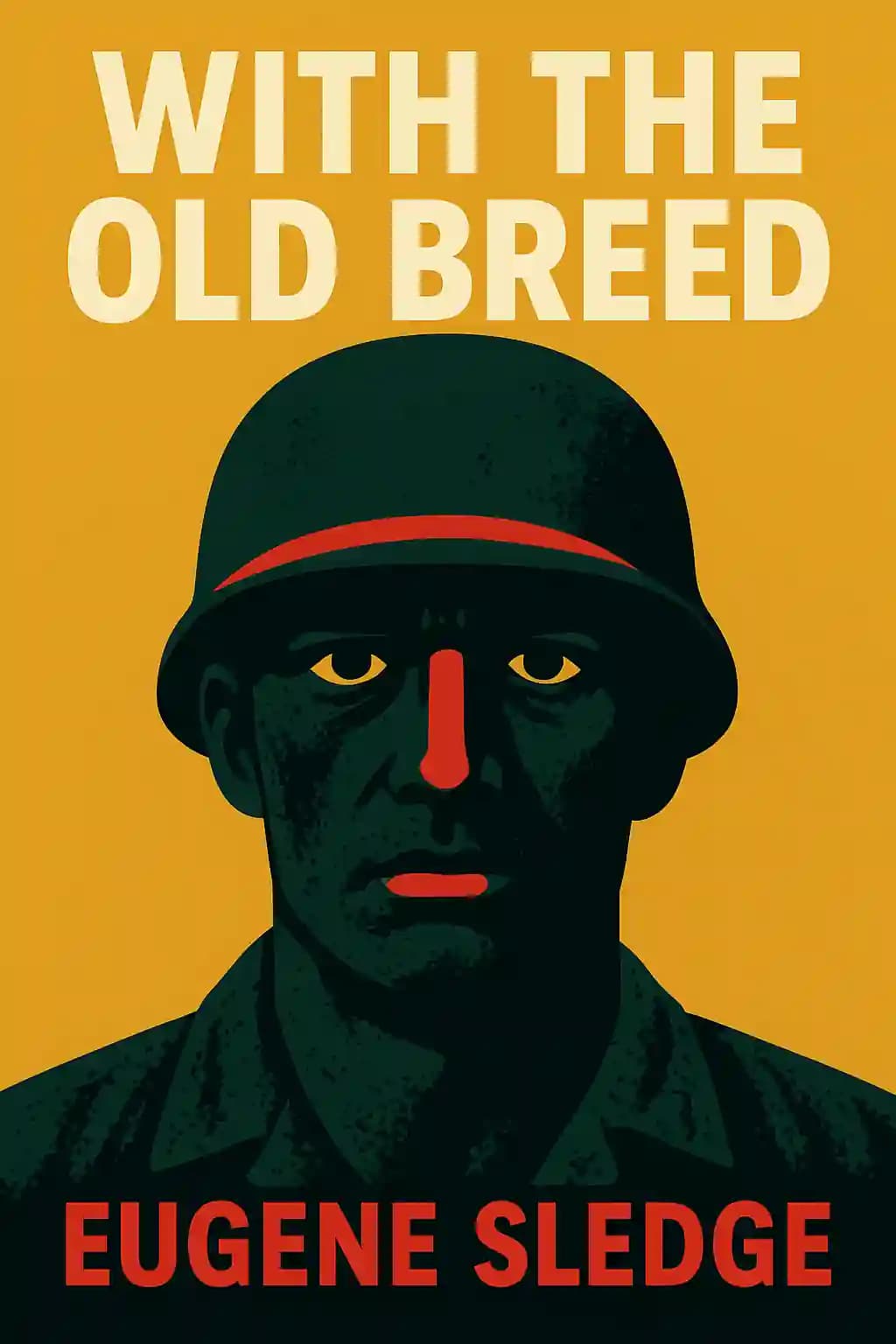
Through Hell's Gates: A Marine's Unflinching Journey
The year was 1981 when HBO first aired "The Pacific," featuring a young Marine named Eugene Sledge whose harrowing memoir had captured the brutal reality of Pacific combat like no other account. Tom Hanks later called it "the most honest and horrifying account of what combat is actually like." This unassuming Alabama professor's book has since become required reading at military academies worldwide, with the U.S. Marine Corps making it mandatory for officer candidates. What makes this account so extraordinary is not just its unflinching portrayal of combat's horrors, but the transformation it documents-how a sheltered, educated young man from the American South became part of what he reverently called "the old breed," Marines who endured some of history's most savage fighting on remote Pacific islands most Americans couldn't locate on a map.
Capitolo 2
The Making of a Marine: From College Boy to Combat Ready
In December 1942, Eugene Sledge made a decision that would alter the course of his life forever. Against his family's wishes, he abandoned his college studies and officer training to enlist in the Marine Corps as a private. "I wanted to be a Marine," he writes, "because I knew they had the most discipline and were the best trained, and I knew they were fighting in the Pacific, which is where I wanted to go."
The transformation from civilian to Marine began at boot camp in San Diego under the watchful eye of Corporal Doherty, a drill instructor whose cold, penetrating stare and immaculate appearance set the standard for what was expected. Boot camp was a deliberate shock to the system-a psychological and physical crucible designed to break down individuality and rebuild men as Marines. Days began at 0400 hours with endless drilling in deep sand, meticulous rifle care, and constant harassment. Sleep deprivation was standard, with surprise inspections and drills interrupting precious rest.
"The discipline and esprit de corps we had: that's what saved me in combat," Sledge later reflected. "The Marine Corps trained us to kill efficiently and to try to survive. But it also taught us loyalty to each other-and that's the most important thing that can ever be learned."
After boot camp came infantry training at Camp Elliott, where Sledge mastered the 60mm mortar through competitive drills. His training expanded to include hand-to-hand combat techniques and knife fighting. The instructors emphasized fighting "dirty" against Japanese night infiltrators: "Kick him in the balls before he kicks you in yours." Despite this professional training, Sledge and his fellow Marines remained naively optimistic, never fully comprehending they were becoming cannon fodder in a global war.
Their greatest fear wasn't death but appearing cowardly under fire-until two Bougainville veterans assured them: "Listen, mate, everybody gets scared, and anybody says he don't is a damn liar." These words would prove prophetic in the hellish battles to come.
Capitolo 3
Joining the Old Breed: Pavuvu and Preparation
After months of training, Sledge finally joined the legendary 1st Marine Division on Pavuvu, a miserable coconut plantation turned military base in the Russell Islands. The contrast between fresh-faced replacements like Sledge and the battle-hardened veterans of Guadalcanal and Cape Gloucester was stark. These men-the "old breed"-were in terrible physical condition, with jungle rot so severe they painted each other with gentian violet and had cut their boondockers into sandals to accommodate their swollen feet.
Life on Pavuvu was miserable in every respect. The food was atrocious-hot C rations, synthetic lemonade so acidic it bleached the galley deck, and bread so infested with weevils that "each slice contained more beetles than a slice of rye bread has seeds." Bathing consisted of stripping during tropical downpours and soaping up, hoping to rinse before the rain suddenly stopped.
"I think the Marine Corps has forgotten where Pavuvu is," one man said. "I think God has forgotten where Pavuvu is," came the reply.
What sustained them through these hardships was the elite unit's discipline, high esprit de corps, and youthful resilience. Another motivating factor was their collective hatred for the Japanese, fueled by stories of atrocities like the Goettge patrol massacre on Guadalcanal.
Among the veterans, Sledge encountered two figures who would profoundly influence him. Gunnery Sergeant Haney exemplified the "old breed"-a hard, muscular man obsessed with his rifle and bayonet who lived in his own world. Captain Andrew "Ack Ack" Haldane, their company commander, was "the finest officer I ever knew-intelligent, courageous, and compassionate without needing to shout orders."
As August 1944 arrived, training intensified along with "chicken" discipline, driving the men to exasperation. An old salt explained, "If they get us mad enough, they figure we'll take it out on the Nips when we hit this beach coming up." The psychological conditioning was deliberate-making them "mean, mad, and malicious" toward the enemy they would soon face on a small, unknown island called Peleliu.
Capitolo 4
Baptism by Fire: The Beaches of Peleliu
On September 15, 1944, Sledge experienced the full horror of amphibious assault as his unit landed on Peleliu. The beach transformed into a continuous sheet of flame backed by thick smoke, like a volcanic abyss. Japanese shells screamed around the approaching amtracs, creating geysers of exploding water. As naval bombardment lifted inland, the Japanese intensified their fire against the waves of landing craft.
Upon reaching the beach, Sledge leapt from his amtrac only to be nearly hit by machine-gun tracers at eye level. He fell awkwardly into the sand, tangled in his gear. A Marine helped him up, and they crawled rapidly off the beach as shells crashed around them and bullets snapped viciously overhead. Nearby, a DUKW took a direct hit, erupting in black smoke with debris flying into the air. The sight of helpless comrades being slaughtered filled him with disgust as he asked God, "Why?"
Moving inland, they were quickly pinned down by enemy machine guns and heavy mortar fire. Sledge dove into a shallow crater as shells fell in a continuous, crashing rumble. Every muscle in his body tightened like piano wire as he shuddered and shook, sweating profusely. The barrage seemed endless, teaching him a new sensation: utter helplessness.
"To me, artillery was an invention of hell," he reflected. "Each time it left me feeling more forlorn and helpless, more fatalistic." He feared losing his mind under sustained shelling more than physical injury.
When the shelling finally lifted, he emerged covered in coral dust, amazed any of them had survived. Moving through sniper-infested scrub, he encountered his first enemy dead-a Japanese medic and two riflemen. He stared in horror at the corpsman's exposed viscera, feeling sick. A veteran casually plucked souvenirs from the bodies, taking glasses, a pistol, and a flag with shocking nonchalance. Nearby, one of their corpsmen wept over a dead Marine who couldn't have been over seventeen.
Despite reaching their objective on the eastern shore that first day, they were ordered to fall back to establish contact with the 7th Marines. A dangerous gap had formed between their units, leaving them vulnerable to Japanese counterattack.
Capitolo 5
The Crucible of Combat: Peleliu's Bloody Ridges
The battle for Peleliu quickly evolved from the beach landing to a brutal struggle for the island's coral ridges-a maze of jagged limestone formations honeycombed with Japanese defensive positions. These ridges would become known to the Marines as "Bloody Nose Ridge," a name that captured the savage nature of the fighting.
On September 17th, Sledge's unit faced the daunting task of crossing Peleliu's airfield under intense enemy fire. Four infantry battalions moved across the open, fire-swept terrain in widely dispersed waves, exposed to devastating fire from the ridges. Japanese bullets snapped past while shells exploded all around, sending coral fragments flying. Sledge recited Psalm 23 to himself as men fell around him. The sun was merciless, with temperatures reaching 105 degrees.
"I considered it the worst combat experience of the entire war," Sledge wrote. "Crossing that airfield under direct enemy observation and fire was worse than anything I experienced on Okinawa."
The Japanese demonstrated excellent fire discipline, firing only when they could inflict maximum casualties. Their positions were mutually supporting, allowing them to cover each other and trap Marines in deadly crossfires. Despite massive bombardment from artillery, naval gunfire, and air strikes, the Japanese remained in their caves until the shelling stopped, then emerged to repulse each attack.
The filth of combat-rarely mentioned by historians-became a constant companion. In the Marine Corps, cleanliness was tradition, but in combat, it was impossible. Fear and filth were inseparable companions. The stench of death permeated everything as Japanese corpses lay rotting where they fell among the rocks, impossible to cover on the hard coral.
"The air hung heavy with the stench of death," Sledge wrote. "This putrid odor of decomposing flesh saturated our senses day and night, a ghastly horror impossible to convey to anyone who hasn't experienced it."
By October 12th, tragedy struck when Captain Haldane was killed by a Japanese sniper. His death devastated Company K. "Never in my wildest imagination had I contemplated Captain Haldane's death," Sledge wrote. "He represented stability and direction in our world of violence and destruction. It was the worst grief I endured during the entire war."
The cost of Peleliu was staggering: the 1st Marine Division suffered 6,526 casualties (1,252 dead, 5,274 wounded), with infantry regiments losing nearly half their men. Company K alone went in with 235 men and left with only 85 unhurt-a 64% casualty rate.
Capitolo 6
The Aftermath: Rest, Reflection, and Return to Combat
After the hellish experience of Peleliu, Sledge and the survivors returned to Pavuvu in early November 1944. The reality of their losses weighed heavily as they inquired about friends. Most of Sledge's old companions in rifle companies had been wounded or killed, and each conversation with survivors brought more devastating news.
"After several such exchanges, I began to feel not just lucky but like the survivor of a major tragedy," he wrote.
One day after lunch, a friend looked at him intensely and asked, "Sledgehammer, why the hell did we have to take Peleliu?" He argued passionately that their losses had been useless, that the island could have been bypassed, noting that the Army had landed on Morotai with light opposition the same day they faced hell on Peleliu. "And while we were still on Peleliu, MacArthur hit Leyte and walked ashore standing up. I just don't see where we did any good," he lamented.
Stepping onto Pavuvu's beach, Sledge encountered an incongruous sight-an American Red Cross girl serving grapefruit juice in paper cups. His mind, still benumbed by Peleliu's violence, couldn't reconcile her presence. "What the hell is she doing here?" he thought resentfully.
Back at camp, they found numerous self-conscious replacements waiting in their tents. They were the "old men" now, and the replacements seemed impossibly innocent. Shortly after their return, 1st Sgt. David Bailey gathered the Peleliu survivors-a fraction of their original 235 men-and offered rare words of praise: "You people have proved you are good Marines." Coming from such a stern old salt, his straightforward commendation meant more than any medal.
As Christmas approached, rumors promised real turkey from Banika's refrigerators. After special Christmas Eve services in the palm-thatched chapel and carols at the regimental theater, they enjoyed their promised feast despite Sledge's homesickness.
New Year's Eve proved even more memorable. After a mysterious fire distracted the mess sergeant, Sledge's friend Howard Nease appeared with a stolen roast turkey, slicing generous portions with his kabar knife. With warm beer, "jungle juice," and improvised music, the survivors of Peleliu's bloodbath enjoyed what Sledge called "the finest New Year's party I've ever attended."
As they began integrating new replacements and received fresh equipment to replace what was worn out on Peleliu, rumors circulated about their next "blitz." When Sledge's friend showed him a National Geographic map matching their training materials, they identified their target: Okinawa Shima, just 325 miles from Japan's home islands-promising another bitter, bloody fight.
Capitolo 7
Okinawa: The Rain of Steel
Easter Sunday-April Fool's Day-1945 began with a predawn reveille and the traditional "feast before slaughter" of steak and eggs. As naval bombardment thundered toward the beaches and Japanese aircraft droned overhead, they prepared their gear. After boarding their Higgins boats, they circled slowly in the choppy blue water, watching the awesome intensity of the bombardment on Hagushi beaches.
The landing on Okinawa brought an astonishing surprise-virtually no opposition from Japanese forces. When they hooked up with an amtrac near shore, a Marine shouted "The landing is unopposed!" They responded with disbelief until they saw troops moving inland like they were on maneuvers. The tension released in unforgettable waves of laughter and singing as they approached the beach.
This easy landing was part of Lieutenant General Mitsuru Ushijima's strategy. Rather than contest the beaches as at Peleliu, he had positioned his 110,000-man Thirty-second Japanese Army in the formidable east-west ridge systems of southern Okinawa, creating a sophisticated defense-in-depth of mutually supporting positions connected by tunnels.
For the first month on Okinawa, Sledge's unit patrolled central Okinawa with little contact with Japanese forces. They encountered Okinawan civilians-mostly elderly, women, and children-who appeared bewildered and terrified. The children with their round faces and dark eyes quickly won the Marines' hearts, and they shared candy and rations with them.
But rumors intensified about the army's struggles in the south, where distant flashes and rumbling could be seen and heard on clear nights. Finally, they received orders to move south on May 1st to replace the 27th Infantry Division. Their officers who had reconnoitered the area warned them of intense enemy fire, with Japanese knee mortars "firing as thick and fast as we fire M1s."
The morning of May 1st dawned cloudy and chilly as they prepared to move south. As they approached the ridge where Company K would take position, Japanese shells began falling around them with terrifying frequency. They raced across open ground under fire, diving for cover on the gentle slope while soldiers streamed past them trying to escape alive.
"The contrast between that morning's peaceful countryside and the afternoon's deadly storm of steel was jarring," Sledge wrote. "Though terrified, my Peleliu experience helped me control my fear, knowing what to expect and that I wouldn't panic."
Capitolo 8
The Mud and Maggots of Shuri
The battle for Okinawa reached its nadir at Wana Draw and Ridge-a natural avenue aimed directly into the heart of Japanese defenses at Shuri Castle. After the fall of Awacha and Dakeshi, they faced this even more formidable obstacle, with terrain that couldn't have better served the enemy if they had designed it themselves.
Heavy rains began on May 6th and continued through May 8th, previewing the nightmare of mud they would endure until month's end. The torrential rain turned Wana Draw into a lake of mud where tanks bogged down and even amtracs couldn't navigate. They struggled to keep their mortars operational as the base plates sank deeper into the soft soil with each round fired.
"The mud of Okinawa transformed every movement into an exhausting ordeal," Sledge recalled. "We trudged through slippery terrain with mud varying from inches to knee-deep, while rain fell constantly-from drizzles to slashing deluges that quickly flooded our footprints."
Their mortar section moved to Half Moon Hill-the westernmost extension of Wana Draw-with clear visibility to their riflemen and beyond them to the smoke-shrouded Shuri Heights. The Japanese still occupied caves in the crescent-shaped hill's southern tips, creating a deadly crossfire zone in the valley below.
Looking around, Sledge witnessed what he called "the most ghastly corner of hell I'd ever seen-a muddy, repulsive open sore on what had once been a picturesque valley." Marine corpses lay half-submerged in water-filled shell craters, weapons still in hand, with swarms of flies hovering about them. Japanese artillery fire from Shuri Heights prevented recovery of the dead, as anyone moving in the open immediately drew shells.
"The stench of death was overpowering, with maggots crawling through the muck around every corpse," he wrote. "I could only bear this horror by looking skyward and telling myself it was just a nightmare, though the smell of death filled every breath."
Foxholes filled with water faster than they could bail them out, forcing constant vigilance with helmets and ration cans to keep from drowning in their own positions. Sledge and his friend Snafu engineered a makeshift solution by creating "duckboards" from wooden ammo crates placed on braces at the bottom of their foxhole with a sump dug at one end.
Their casualties during the stalemate at Half Moon were particularly heartbreaking. The mud and rain seemed to accentuate the bloody battle dressings and expressions of shock on the wounded. Shell blast concussion cases were disturbingly common-some men walked in dazed stupors, others with wild-eyed expressions of fear, and some with the vacant looks of simpletons.
"Many would never recover," Sledge observed, "doomed to spend their futures as 'living dead' in veterans' hospitals."
Capitolo 9
Beyond Shuri: The Final Push
After breaking through at Shuri Castle in late May, they continued their advance through horrific conditions. The rain turned torrential, creating muddy ridges where they dug foxholes amid rotting Japanese corpses and writhing maggots. Despite the stench and filth, they pressed forward as the Japanese Thirty-second Army finally retreated from their main defensive line.
On May 28th, they attacked southward under clearing skies against reduced opposition, advancing several hundred yards-a significant achievement in that sector. The following day, they pushed toward Shuri Ridge with Company L leading. They learned that Company A, 1st Battalion had raised the Confederate flag over Shuri Castle, causing Southern Marines to cheer while "Yankees grumbled." Later, the Stars and Stripes that had flown over Guadalcanal was properly raised over the castle.
By mid-June, familiar faces were scarce in Company K, which had lost thirty-six men on June 1st and another twenty-two to immersion foot ten days later. With only about a hundred men and two or three officers-half their original landing force-they moved toward Kunishi Ridge, the western anchor of Japan's final defensive line on Okinawa.
The Japanese had fortified this 1,500-yard coral escarpment with caves and emplacements on both slopes, with perfect fields of fire across the open northern approaches. The 7th Marines had captured portions of Kunishi on June 12th but remained isolated atop the ridge for four days, supplied only by air drops and tanks.
When Company K arrived on June 17th, they helped repel a company-sized night counterattack, then learned they would attack at dawn to seize the remainder of the ridge-moving under cover of darkness across open ground toward what resembled the hellish coral ridges of Peleliu.
"The ridge's silhouette against the skyline reminded me terribly of Bloody Nose Ridge on Peleliu," Sledge wrote, "nearly buckling my knees with dread."
Daylight revealed a desperate battlefield littered with about thirty poncho-covered dead Marines. Snipers hidden throughout the ridge picked off men one after another. During one rescue, they found a Marine named Vargo who'd been shot in both feet by a sniper still hiding nearby. After a tense moment of hesitation, Sledge scrambled up beside him, expecting to be shot at any moment, but strangely felt at peace.
By day's end, Company K reached the eastern end of Kunishi Ridge and linked up with Army units. In just twenty-two hours of fighting, they'd lost forty-nine enlisted men and one officer-half their remaining strength. Company K now stood at a mere twenty-one percent of its normal 235-man complement.
Capitolo 10
The War's End: Reflection and Return
The battle for the Kunishi escarpment marked the end of organized Japanese resistance on Okinawa. With intense relief, they descended from Kunishi Ridge on June 18 and rejoined other companies of the 5th Marines. Okinawa was declared secured on June 21, 1945, after 82 days of brutal combat.
Their reward wasn't the rumored R&R in Hawaii but a final, demoralizing order-Company K had to mop up remaining Japanese resistance and clean the battlefield. They were furious at having to bury enemy dead and collect brass shell casings "above .50 caliber in size" after such a brutal campaign. Some veterans nearly refused orders outright, reaching their breaking point at this final indignity.
As they completed their tent camp on the Motobu Peninsula, they struggled to decompress from the brutal campaign. The war's end came suddenly-first news of the atomic bomb on August 8th, then surrender rumors, and finally on August 15th, 1945, the unbelievable announcement that Japan had surrendered.
"We received this news with stunned silence," Sledge wrote, "thinking of our countless dead comrades and the futures they'd lost."
In September, the 1st Marine Division deployed to North China for occupation duty, with Sledge's unit, the 5th Marines, stationed in ancient Peking. After four and a half months, he rotated home, saying painful goodbyes to his K/3/5 brothers. The bond they'd forged under extreme adversity would never be broken.
Of the approximately 65 Peleliu veterans who landed on Okinawa with Company K, only 26 men survived death, injury, or illness to see the battle's conclusion. Many had previously been wounded on Cape Gloucester or Peleliu, highlighting the extraordinary survival rate against overwhelming odds.
"Something in me died at Peleliu," Sledge concluded, "perhaps a childish innocence that believed man is basically good, or faith that politicians would stop sending others to endure war's savagery. Yet I also learned crucial lessons: the absolute necessity of depending on comrades and leadership, the importance of discipline and training, and the realization that to defeat an enemy as dedicated as the Japanese, we had to be equally tough and committed."
Years later, as a professor at the University of Montevallo, Eugene Sledge would transform his wartime notes-originally scribbled in the margins of a small Bible he carried through combat-into one of the most powerful war memoirs ever written. His unflinching account of what he called "the abyss" continues to educate new generations about the true nature of combat and the extraordinary brotherhood that sustains men through its horrors.