Capitolo 1
The Virtual Workplace Revolution: A New Era of Work Begins
In 2017, when Acceleration Partners expanded into the UK, a fascinating experiment unfolded. Despite remote work being less common in British business culture, the company's new UK team quickly embraced working from home, eventually preferring it over the flex workspace provided. This wasn't an isolated case. Remote work had been steadily gaining momentum globally-growing 44% in the US over five years and a staggering 91% over a decade. Then came COVID-19, forcing an unprecedented global experiment that revealed something surprising: employees adapted far better than employers expected. Twitter made headlines by announcing employees never needed to return to offices. The pandemic didn't create the remote work revolution; it merely accelerated a transformation already underway.
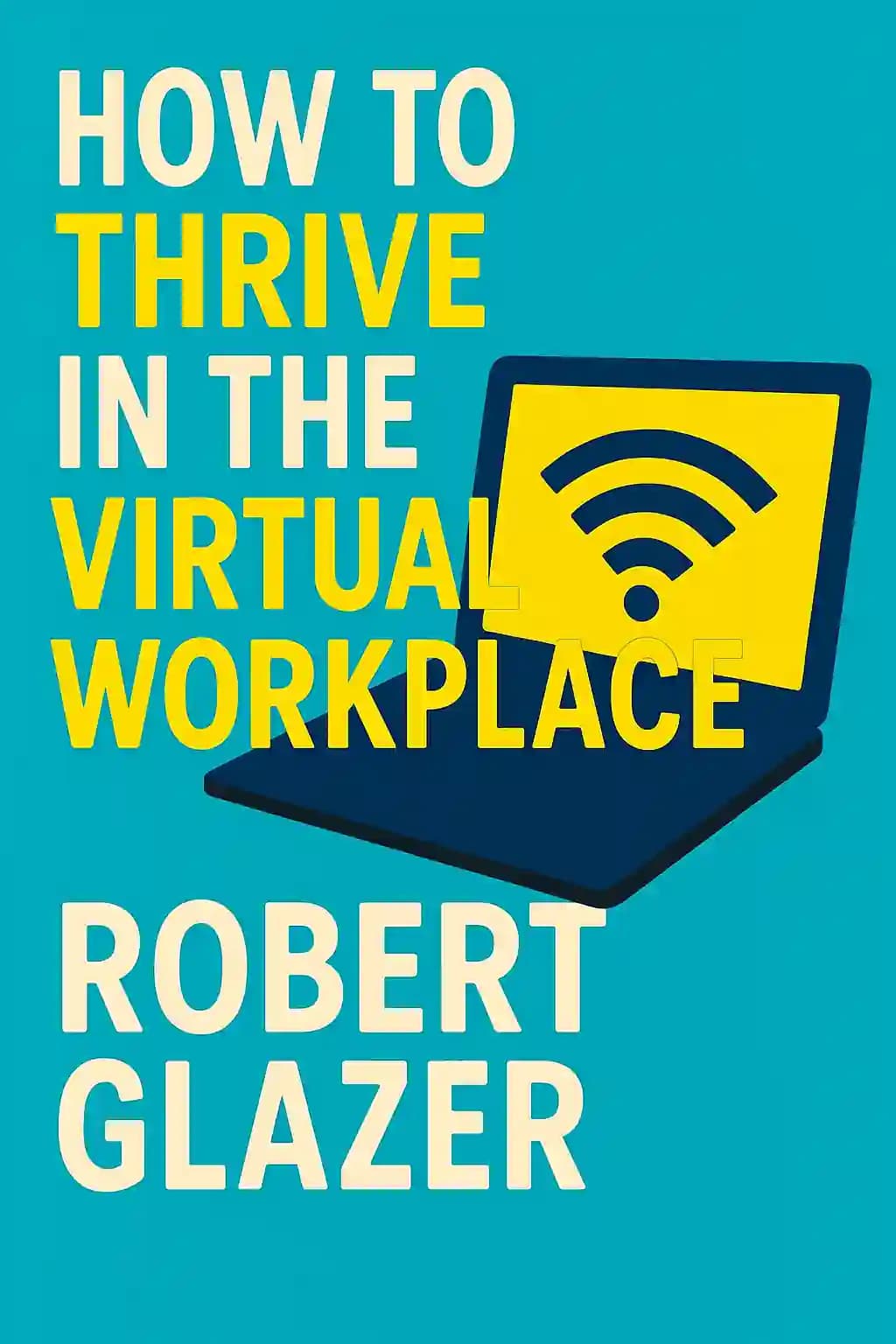
Robert Glazer's "How to Thrive in the Virtual Workplace" has become essential reading for business leaders navigating this seismic shift. The book has influenced major corporations like Microsoft and Spotify in reshaping their work policies. As a Wall Street Journal bestseller translated into over 15 languages, it offers a roadmap for what many are calling the most significant workplace transformation since the Industrial Revolution. With remote-first organizations reporting 25% lower turnover and access to talent pools 10 times larger than location-restricted competitors, the stakes couldn't be higher for getting virtual work right.
Capitolo 2
Creating Your Remote Work Foundation
When Sophie Parry-Billings began working remotely in 2017, everyone in her life expressed concern. As a self-described "people person" immersed in London's office-centric culture, friends and family couldn't imagine her thriving without daily in-person interaction. Yet she had an intuitive feeling she'd enjoy remote work-and she was right. Her story exemplifies how even the most socially oriented professionals can successfully transition to remote work with the right foundation.
Her previous experience reflected the common pitfalls of modern offices: an open-plan space with fifty colleagues, constant noise, music blaring from nearby speakers, and cliquey social dynamics that often created more stress than connection. The daily 90-minute London Underground commute meant spending nearly 800 hours annually on transportation - time that could be better invested elsewhere. Like many professionals, Parry-Billings was unknowingly enduring the traditional workplace's hidden costs, from expensive lunches to the mental drain of constant interruptions.
Despite being an extrovert in one of the world's least remote-friendly cities, she adapted quickly and has loved working from home ever since. Remote work has given her "a drastically better quality of life"-allowing time for morning yoga sessions, preparing nutritious meals, and extended visits with family in other cities. She's even found ways to maintain social connections through virtual coffee chats and local coworking spaces when needed.
The foundation of successful remote work begins with appropriate technology, and this requires careful consideration of several key elements. Internet connection quality is paramount, with both download and upload speeds being crucial for video conferencing and file sharing. Most organizations recommend at least 25 Mbps for both directions for a single user, with requirements increasing based on household usage: 1-2 devices need up to 25 Mbps, 3-5 devices need 50-100 Mbps, and more than 5 devices require 150-200 Mbps. It's worth testing speeds at different times of day, as neighborhood usage can impact performance.
Beyond internet connectivity, remote workers essentially perform on a mini stage during video calls-sometimes to large audiences of colleagues, clients, or stakeholders. Several accessories can enhance both productivity and professionalism:
• A second monitor allows multitasking and better posture while reducing eye strain
• High-quality headphones or a headset prevent distracting echo effects and improve audio clarity
• Professional lighting (ring lights or desk lamps) makes a significant difference in appearance
• Ergonomic chairs and standing desks support physical wellbeing during long workdays
• Clean, professional backgrounds (or green screens) maintain visual professionalism
• A reliable webcam (external, not built-in) ensures clear video quality
• A dedicated microphone improves voice clarity and reduces background noise
• Cable management solutions keep workspaces organized and professional
While many organizations offer stipends ranging from $500 to $2,000 for these improvements, they're worth personal investment even if not reimbursed. The total cost typically ranges from $1,000 to $2,500 for a complete setup - significantly less than what most spend annually on commuting, professional wardrobe, and workplace meals. These investments not only improve daily work experience but also contribute to long-term career success in the remote environment.
Capitolo 3
Mastering Remote Work's Hidden Rhythms
Remote work success demands establishing clear boundaries and strategically leveraging flexibility. When transitioning to virtual work, proactive communication about availability becomes paramount. While daily schedules may fluctuate, sharing your typical working hours with managers and teammates builds essential trust and sets proper expectations. This includes being explicit about time zones, core collaboration hours, and any regular commitments that affect availability.
Nothing erodes trust in virtual environments faster than being consistently unreachable during designated working hours. One cautionary example involved an employee who concealed their lack of childcare during key working hours-a requirement explicitly discussed during recruitment-which affected their availability and work quality. When confronted about performance issues, trust was irreparably damaged, leading to resignation. Another case study showed how a team's productivity plummeted when a key member regularly missed scheduled meetings without communication, creating cascading delays across projects.
The physical separation between work and personal life that offices naturally provide requires intentional effort when working remotely. Without careful boundaries, remote workers risk feeling like they live at their office, unable to truly disconnect. Creating a designated workspace within your home is crucial-it not only helps mentally separate work from personal life but also signals to household members when you're working versus available. This might mean converting a spare room, setting up a desk in a quiet corner, or even working from a local co-working space. The key is consistency in location and setup.
Maintaining a structured schedule becomes even more vital in remote settings. Unlike office environments where breaks naturally occur through watercooler chats or coffee runs, remote employees can easily work for hours without pausing. Effective remote work requires intentionality about time use-setting consistent wake-up times, defining working hours, and deliberately planning for projects, meetings, meals, exercise, and personal time. Successful remote workers often use time-blocking techniques, scheduling focused work periods, collaborative sessions, and regular breaks to maintain productivity and prevent burnout.
Despite disliking commutes, the psychological transition they provide between work and personal life serves a valuable purpose worth replicating in remote settings. Morning routines-whether enjoying breakfast, exercising, reading, or practicing mindfulness-help create mental space before diving into work. Similarly, end-of-day transitions are crucial. Taking 20-30 minutes to exercise, meditate, or walk creates a necessary mental shift from work mode. Some remote workers find success in creating artificial commutes, such as walking around the block before and after work hours, or using specific music playlists to signal the start and end of their workday.
The most successful remote workers also implement regular check-ins with their teams, using virtual coffee breaks or quick video calls to maintain social connections and prevent isolation. They establish clear communication protocols, using status indicators in messaging apps to signal availability and setting appropriate response time expectations for different communication channels. This comprehensive approach to remote work rhythms ensures sustainable productivity while maintaining work-life balance.
Capitolo 4
Staying Connected in a Virtual World
A common concern when transitioning to remote work is potential isolation. While offices provide natural social interactions like group lunches and spontaneous conversations, working from home eliminates these opportunities. However, this challenge can be addressed with intentional planning.
Remote colleagues often share your desire for connection. Many relationships can be built one-on-one through social catch-up calls, virtual lunches, coffee breaks, or happy hours. You can create social group chats, discussion boards, or even start a book club. Despite working remotely, you can still meet colleagues in person if they live nearby, spending time at coffee shops or coworking spaces together.
Remote work affects personality types differently. Extroverts, who thrive on high-energy environments with many people, face challenges working in isolation. They can adapt by proactively creating social opportunities-scheduling virtual lunches with colleagues, working from cafes, or filling evenings with social engagements. Introverts may initially enjoy remote work's escape from overstimulation but face their own challenges. Video calls make it harder to speak up naturally, and without in-office encouragement, they may hesitate to reach out to colleagues or join virtual social events.
Video calls build trust and enable clearer communication than phone calls-if in-person meetings are a ten, phone calls are a four, and video calls are a seven or eight. Even if clients don't show their video, keeping yours on builds rapport and engagement. However, "Zoom fatigue" is real-constant eye contact, worry about technology failures, and seeing yourself on screen for hours is mentally exhausting.
For globally distributed teams, asynchronous video offers an efficient alternative to scheduling calls across time zones. Rather than gathering employees for a company-wide message, sending a video for everyone to watch at their convenience is more practical. Platforms like Zoom, Loom, BombBomb, and Vidyard make recording these videos simple. Asynchronous video also works well for individual communications-instead of spending an hour crafting a detailed email, you can record a five-minute video response that captures conversational style and includes tone and body language cues.
Capitolo 5
The Remote Lifestyle Revolution
Remote work offers unprecedented lifestyle flexibility that was previously unimaginable in traditional work environments. Ben Jolly transformed his life from biking through Boston's snow to working from a Thai island simply by joining a remote organization. Since embracing remote work, he's lived and worked in twelve different cities across Mexico, Japan, Turkey, Spain, Singapore, and Thailand-escaping his expensive, traffic-laden hometown with its harsh winters.
As a digital nomad, Jolly uses virtual work flexibility to immerse himself in new cultures while maintaining full-time employment. His success relies on careful preparation: researching coworking spaces before relocating, verifying high-speed internet availability (even asking Airbnb hosts to conduct speed tests), and sometimes working unusual hours to align with client time zones-like his 5pm-1am schedule in Istanbul to match US Eastern business hours.
Remote work even transformed his personal life-he met his wife while working from Mexico, and she joined his international journey. On Thailand's Koh Lanta island, he found a remote work community integrated with local culture rather than isolated from it, becoming a true global citizen who's learned multiple languages and cuisines.
Miranda Barrett's story similarly exemplifies the lifestyle possibilities remote work enables. As vice president of member success at Community Company, she's designed her life around remote work's flexibility. During summers, Barrett creates memorable experiences with her children without taking vacation time-in 2019, they traveled for seven weeks visiting North Carolina, Vermont, and California, while she maintained her normal work hours leading a 35-person department. When the pandemic hit in 2020, instead of social distancing in their small Arlington home, her family relocated to a relative's rural Virginia farmhouse where they began raising goats, chickens, and foster dogs.
While pandemic remote work conditions were abnormal, future remote opportunities will be different and more fulfilling. Post-pandemic remote workers will have proper childcare, more formal home office setups, and less isolation as they can attend classes, run errands during breaks, or meet friends. This freedom lets employees design their ideal work-life integration. Though remote work isn't for everyone, many who try it will never want to return to traditional offices.
Capitolo 6
Building a Remote-First Culture
For organizations to excel at remote work, they must build the proper cultural foundation that empowers employees to succeed without constant supervision. While individual employees control much of their remote experience, leadership plays an even bigger role in creating effective virtual workplaces by establishing principles, systems, and infrastructure that support a healthy, high-performing remote culture. This requires intentional design of communication channels, collaboration tools, and workplace practices that bridge physical distances.
Culture has a dual definition: it's both your organization's operating system and how people make decisions when you're not in the room. Building world-class culture requires authentic leadership rooted in personal values. The "Mighty Five" principles found in all high-performing organizations are: Vision, Values, Goals, Consistency, and Clarity. These principles must be deliberately reinforced through daily actions, team meetings, and company communications to maintain their impact in a virtual environment.
Successful companies have clear, forward-thinking vision that excites stakeholders and provides direction in uncertain times. Acceleration Partners' vision statement "To lead the partner marketing revolution while changing the work-life paradigm" serves as their organizational topic sentence. But bringing vision to life requires more than just a statement. Drawing inspiration from Brian Scudamore and Cameron Herold of 1-800-GOT-JUNK?, who created the transformational "Painted Picture" concept, Acceleration Partners developed a detailed "Vivid Vision"-a present-tense narrative describing what the company would look and feel like at a specific future date. This detailed visualization includes specific metrics, cultural attributes, and operational characteristics that make the future state tangible and actionable for all employees.
Core values represent the DNA of successful employees at your company-they must be objective, evaluative, and measurable. WD-40 exemplifies this with six hierarchical values, where higher values take precedence in conflicts. CEO Ridge empowers employees to make decisions aligned with these values, knowing mistakes will be forgiven if made in service of core values. These values guide everything from hiring decisions to performance reviews, ensuring cultural alignment across the distributed workforce. Regular value-focused discussions and recognition programs help reinforce these principles in daily operations.
Goals serve as accountability metrics that must build upon each other to advance the organization's vision and values. In remote organizations, accountability requires transparent systems where everyone's progress is visible. Acceleration Partners uses Metronome Growth Systems to track goals from leadership down, with each metric assigned to individuals and color-coded to indicate progress. This transparency ensures team alignment-individual contributors understand how their work contributes to larger organizational goals, while executives set standards by making their own metrics visible to all. Regular virtual town halls, team meetings, and one-on-ones provide forums to discuss progress, celebrate wins, and address challenges in real-time. The system also includes regular check-ins and adjustment periods to ensure goals remain relevant and achievable in changing circumstances.
To maintain cultural cohesion in a remote environment, organizations must also invest in virtual team building, mentorship programs, and informal communication channels that recreate the spontaneous interactions of physical offices. This might include virtual coffee chats, online social events, and dedicated Slack channels for non-work discussions that help build relationships across the distributed team.
Capitolo 7
The Remote Hiring Revolution
Recruiting becomes the most crucial factor in developing a healthy, high-performing culture once you've established your desired organizational culture. Most business and culture-building mistakes stem from hiring the wrong people-those who don't share your values or resist accountability. In remote environments especially, it's extremely difficult to train someone into being the right cultural fit.
The biggest hiring mistake is relying on instinct rather than data-driven systems. Dr. Geoff Smart, CEO of ghSMART and author of "Who: The A Method for Hiring," found that most hiring managers achieve only a 50% success rate-equivalent to flipping a coin. Smart emphasizes that hiring is more science than art, requiring systematic approaches rather than magical interview questions. He advises against hypothetical questions that yield hypothetical answers, instead recommending behavior-based questions about candidates' employment history-their accomplishments, lessons learned, and relationships with managers.
Virtual interviewing doesn't have to hinder effective hiring if you use a structured, fact-based approach. While video interviews limit your ability to read body language, they offer unique advantages when hiring for remote roles-you can observe how candidates communicate virtually and assess their attention to professional presentation in a home setting.
Remote work requires specific traits that not everyone possesses. When hiring, companies must assess whether candidates align with core values that support remote success. At Acceleration Partners, values like "Own It," "Excel and Improve," and "Embrace Relationships" reflect the accountability, teamwork, improvement, and flexibility essential for remote work. The company hires only 1-2% of applicants for account manager positions, building a system to identify those who will thrive remotely.
Self-aware organizations clearly communicate their values and working style to attract like-minded employees while deterring poor fits. I call this principle "flying your flag." At Acceleration Partners, even our positive Glassdoor reviews reveal telling challenges about our culture: remote work isn't cushy, we maintain a fast pace, employees must be self-motivated, and workloads are substantial. These honest assessments help define who we are. In the virtual world, where candidates can't experience your culture by visiting an office, explicitly showcasing your principles-both what you value and what you won't tolerate-becomes even more crucial.
Capitolo 8
Setting Remote Teams Up for Success
Remote organizations must transform the inherent disadvantage of virtual onboarding into a strength through intentional planning. Unlike office environments where new hires can shadow colleagues, remote companies need structured programs. Acceleration Partners provides comprehensive onboarding calendars detailing meetings, training paths, and schedules for a new employee's first weeks. This includes daily manager calls, team introductions, handbook reviews, company-wide meetings, digital tool setup, and training sessions. Without such structure, remote employees risk sitting alone without direction, regardless of their initiative.
Remote work presents an opportunity to reconsider meeting necessity. Many organizations discover they need fewer meetings when working virtually, though Microsoft found that during the pandemic, employees conducted 55% more calls, correlating with increased stress. Leaders must proactively determine which meetings are truly necessary.
Effective remote work requires significant technology investments to improve employee communications and experience. Most solutions are cloud-based, requiring no hardware or major upfront capital investment:
• Single sign-on (SSO) programs allow employees to access multiple applications with one login
• Secure file sharing platforms with appropriate permissions are crucial for remote work
• Learning management systems (LMS) centralize training resources for on-demand employee access
• HR tools streamline time-off requests, hiring, and performance evaluations
• Team communication tools like Slack, Zoom, Microsoft Teams manage internal and external communications
• Project management platforms help teams collaborate virtually without constant emails
• Security safeguards protect against potential harm from departing employees
Many leaders emphasize face time over performance, but presence doesn't guarantee productivity. Better management focuses on outcome-based goals that prioritize employee output over office hours. In remote environments, this approach becomes even more crucial as managers can't rely on visual supervision. Clear goal-tracking systems allow leaders to evaluate performance without micromanagement, helping employees grow more confidently through proper delegation.
Remote managers must grow comfortable delivering important feedback virtually, including performance reviews and terminations. Video calls are essential for these conversations rather than email or chat. Equally important is delivering positive reinforcement more frequently in virtual environments, as employees lack daily in-person affirmation of their performance.
Capitolo 9
The Future of Work is Flexible
Remote work doesn't have to mean isolation. In fact, it can enhance team connectivity when handled properly. SalesFix CEO Jason Lawrence discovered that closing physical offices actually united his previously segmented global team, putting everyone on a "level playing field" and improving collaboration.
The hub model offers a strategic middle ground between fully remote and traditional office environments. Rather than hiring talent anywhere, this approach creates concentrations of 10+ employees in specific locations near major airports, targeting areas with strong talent pools and lower costs of living. Without maintaining physical offices, these hubs enable in-person interviews, employee-led social events, and regular hub meetings where executives can connect with teams.
Even fully remote companies need spaces for in-person connection. Dropbox exemplifies this evolution by becoming "virtual first" while creating "Dropbox Studios"-collaborative spaces designed specifically for team gatherings rather than daily individual work. Unlike hybrid models where employees alternate between home and office for regular tasks, these spaces are reserved exclusively for activities that benefit from face-to-face interaction: team building, strategic planning, and leadership training.
For remote organizations, annual in-person gatherings are crucial for team bonding and alignment. Acceleration Partners hosts a three-day "AP Summit" that brings all global employees together, investing office space savings into creating a transformative experience. These events foster deep connections through vulnerability and sharing-exemplified by Acceleration Partners' "One Last Talk" program where volunteer employees deliver deeply personal speeches.
Hawke Media's story illustrates the dramatic shift in remote work perspectives. After investing over $1 million in a stunning office that even served as an HBO set, CEO Erik Huberman was shocked when 80% of employees preferred to remain remote after COVID-19 forced them home. Despite his previous belief that in-office collaboration was essential, he recognized the changing world and abandoned the beautiful space without regrets, calling it "a sunk cost."
The remote work revolution isn't about changing fundamentals but magnifying what already exists. Organizations built on trust, respect, great leadership, clear values, and excellent processes only need to adopt remote best practices and digital tools to thrive virtually. However, companies with micromanaging leadership, poor hiring practices, and low trust environments will struggle no matter what productivity software they implement.
We stand at the frontier of a new work paradigm. The organizations that will attract top talent are those willing to honestly assess themselves and make necessary changes to excel in an increasingly mobile, virtual world. Within a decade, daily office work may seem as outdated as flip phones do today. Eventually, the distinction between "virtual work" and "remote work" may dissolve entirely-it will all simply be "work."