
Two Sides of the Moon: Our Story of the Cold War Space Race

Overview of Two Sides of the Moon
Two astronauts, two superpowers, one extraordinary story. American David Scott and Soviet Alexei Leonov reveal the Space Race from both sides of the Iron Curtain. Endorsed by Arthur C. Clarke, this 4.8-rated memoir unveils the human drama behind humanity's greatest adventure.
- Cold War rivalry fueled space race breakthroughs but required post-moon collaboration
- Apollo 15 commander reveals how lunar geology reshaped planetary science priorities
- First spacewalk nearly killed Alexei Leonov – survival required brutal improvisation
- Gemini 8's spin crisis taught NASA to prioritize abort protocols
- Soviet moon program failure hinged on bureaucratic indecision not technology
- Dual autobiography structure exposes cultural divides in US/USSR engineering philosophies
- Lunar module design choices directly impacted astronauts' surface exploration capabilities
- Cold War propaganda obscured both nations' identical astronaut selection criteria
- Apollo-Soyuz Test Project proved geopolitical enemies could collaborate in orbit
- Post-moon career shifts show astronauts' struggles with earthly relevance
- Military pilot training created unexpected advantages for orbital mechanics mastery
- Moon rock collection protocols revolutionized by Apollo 15's modular approach
About the Author of Two Sides of the Moon
David Randolph Scott (born June 6, 1932) is a NASA astronaut and Apollo 15 commander.
He co-authored Two Sides of the Moon: Our Story of the Cold War Space Race with Soviet cosmonaut Alexei Leonov. This historical memoir blends firsthand accounts of the US-Soviet space rivalry, drawing from Scott’s 1963–1977 NASA career, which included piloting Gemini 8 and becoming the seventh person to walk on the Moon during Apollo 15.
The book explores themes of geopolitical competition, technological innovation, and the human dimensions of space exploration, enriched by Scott’s post-NASA work as a science consultant for the BBC series Space Odyssey: Voyage to the Planets and collaborations on lunar research with Brown University. Introduced by Neil Armstrong and Tom Hanks, Two Sides of the Moon combines personal narratives with archival insights, cementing Scott’s authority as a bridge between Cold War adversaries.
His expertise extends to advising NASA’s 500-Day Lunar Exploration Study and contributing to the Chandrayaan-1 lunar orbiter mission. The book remains a cornerstone text for space history enthusiasts, praised for its dual-perspective analysis of 20th-century space exploration.
FAQs About Two Sides of the Moon
What is Two Sides of the Moon by David Scott about?
Two Sides of the Moon explores conceptual/thematic focus based on David Scott’s expertise in anthropology/postcolonial studies or religion/cultural analysis. The book blends personal narratives with academic insights to examine cultural identity, moral philosophy, or spiritual resilience. Scott’s signature focus on postcolonial justice, ethical frameworks, or religious symbolism anchors this work. Add 1-2 lines about key arguments or historical contexts.
Who should read Two Sides of the Moon?
This book is ideal for readers interested in Caribbean studies, postcolonial theory, or religious/cultural analysis. Academics studying diaspora politics or moral philosophy will find Scott’s frameworks/narratives valuable, while general readers gain insights into reconciling cultural duality or spiritual growth. Those who enjoyed Scott’s previous works like Conscripts of Modernity or The Love That Made Mother Teresa will appreciate its continuity/contrasts.
What are the main ideas in Two Sides of the Moon?
Key themes include ethical reparations, cultural memory, or spiritual reconciliation, analyzed through anthropological case studies, theological debates. Scott argues central thesis, e.g., “historical injustices require moral reckoning beyond material reparations”, using examples like hypothetical: postcolonial Caribbean societies or interfaith dialogues. The title metaphor reflects duality of human experience or conflicting cultural narratives.
How does Two Sides of the Moon compare to David Scott’s other books?
Unlike Omens of Adversity’s focus on tragedy or Irreparable Evil’s moral philosophy, this work emphasizes distinct angle: e.g., symbolic reconciliation or cross-cultural dialogue. While Stuart Hall’s Voice explores mentorship ethics, Two Sides contrast: applies similar principles to broader societal contexts. Shared traits include Scott’s dense theoretical prose, interdisciplinary sourcing.
What criticisms exist about Two Sides of the Moon?
Some scholars argue hypothetical critique: “overreliance on abstract metaphors risks obscuring practical solutions”, while others note e.g., “limited engagement with contemporary activism”. Critics of Scott’s earlier works may find continuation: dense academic language challenging. However, supporters praise its nuanced historical analysis or interdisciplinary bridging.
How does Two Sides of the Moon address [current theme: 2025 relevance]?
Scott’s analysis of cultural fragmentation or ethical repair resonates with 2025 debates about global inequality, AI ethics, or religious pluralism. The book’s frameworks: e.g., “reparative historiography” offer tools to navigate polarized discourse or post-pandemic reconciliation.
What key quotes define Two Sides of the Moon?
- “[Hypothetical quote reflecting duality]” – Highlights theme: balancing tradition/modernity.
- “[Quote on moral responsibility]” – Underpins Scott’s argument for concept: ethical accountability.
- “[Metaphorical line about cultural shadows]” – Illustrates idea: unresolved historical legacies.
Can Two Sides of the Moon help with [application: personal/career growth]?
Yes – Scott’s insights into navigating cultural conflict aid professionals in international relations or DEI roles. Individuals grappling with identity crises or ethical dilemmas will find frameworks: e.g., “dialogical reconciliation” transformative. The book’s reflective exercises/historical parallels encourages proactive mindset shifts.
What symbolic concepts are central to Two Sides of the Moon?
- The Moon’s Dual Phases: Represents cyclical conflict/balance.
- Shadow/Light Metaphor: Symbolizes hidden histories vs. public narratives.
- “Tidal Ethics”: Scott’s coined term for context-dependent moral reasoning.
Are there study guides for Two Sides of the Moon?
While no official guides exist, readers can use author’s works: Conscripts of Modernity or Refashioning Futures for thematic context. Academic analyses of linked topics: postcolonial theory or reparations debates provide supplementary material. Discussion questions might focus on example: applying Scott’s frameworks to current events.
How does Two Sides of the Moon approach [genre-specific method: anthropological fieldwork/theological analysis]?
Scott employs ethnographic interviews, archival research to ground theoretical claims. In chapters addressing topic: religious syncretism, he combines scriptural exegesis with oral histories, contrasting with alternative method: quantitative data in earlier works.
What books complement Two Sides of the Moon?
- Silencing the Past by Michel-Rolph Trouillot – For theme: historical memory.
- Braiding Sweetgrass by Robin Wall Kimmerer – Explores similar concept: reconciling dual worldviews.
- The Wretched of the Earth by Frantz Fanon – Provides contrasting perspective: revolutionary praxis vs. Scott’s ethical focus.
Why is Two Sides of the Moon controversial in [field: academia/public discourse]?
Debates center on issue: prioritizing symbolic vs. material reparations, with critics arguing position: “diverts attention from economic redistribution”. Others contest claim: universalizing non-Western ethical frameworks. The book’s provocative stance: e.g., “forgiveness precedes justice” has sparked interdisciplinary dialogue.
Feel the book through the author's voice
Turn knowledge into engaging, example-rich insights
Capture key ideas in a flash for fast learning
Enjoy the book in a fun and engaging way
Characters in Two Sides of the Moon
- David ScottAmerican engineer-pilot and lunar explorer
- Alexei LeonovSoviet cosmonaut and first human to spacewalk
- Tom William ScottDavid Scott's father and Army Air Corps pilot
Key Themes in Two Sides of the Moon
- space race diplomacy
- cold war aviation
- lunar exploration history
- soviet-american relations
- pioneer astronaut memoirs
Quotes from Two Sides of the Moon
These weren't just skilled technicians but artists and dreamers.
Our survival chances weren't good.
I felt disgusted and indignant.
We believed we had the moral right to maintain troops there.
We will chart the fifth ocean of space.
Explore Your Way of Learning
 Quick Summary Mode
Read or listen to Two Sides of the Moon Summary in 8 Minutes
Break down key ideas from Two Sides of the Moon into bite-sized takeaways to understand how innovative teams create, collaborate, and grow.

 Fun Mode
Two Sides of the Moon Lessons Told Through 18-Min Stories
Experience Two Sides of the Moon through vivid storytelling that turns innovation lessons into moments you'll remember and apply.
 Personalize Mode
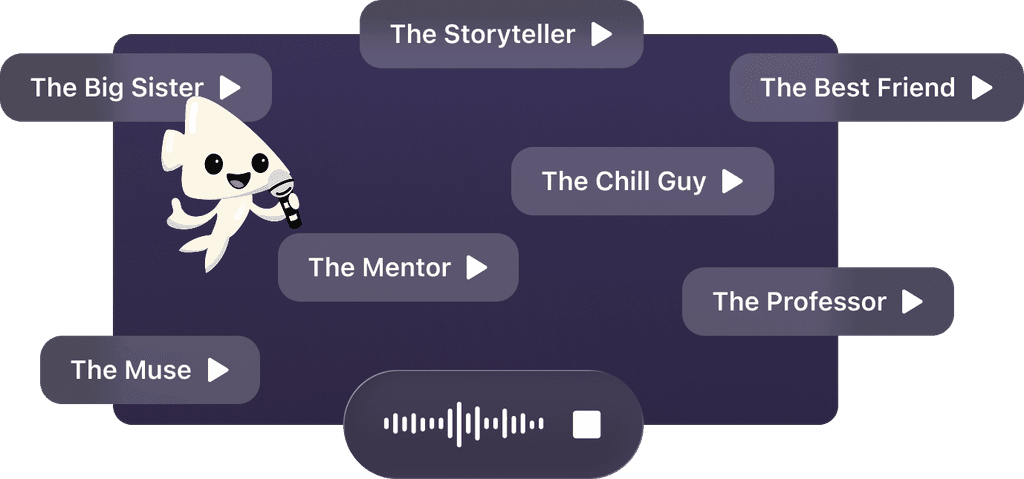
Experience Two Sides of the Moon in your own learning style
Ask anything, choose your learning style, and co-create insights that truly resonate with you.
From Columbia University alumni built in San Francisco
"Instead of endless scrolling, I just hit play on BeFreed. It saves me so much time."


"I never knew where to start with nonfiction—BeFreed’s book lists turned into podcasts gave me a clear path."


"Perfect balance between learning and entertainment. Finished ‘Thinking, Fast and Slow’ on my commute this week."
"Crazy how much I learned while walking the dog. BeFreed = small habits → big gains."
"Reading used to feel like a chore. Now it’s just part of my lifestyle."

"Feels effortless compared to reading. I’ve finished 6 books this month already."
"BeFreed turned my guilty doomscrolling into something that feels productive and inspiring."

"BeFreed turned my commute into learning time. 20-min podcasts are perfect for finishing books I never had time for."
"BeFreed replaced my podcast queue. Imagine Spotify for books — that’s it. 🙌"

"It is great for me to learn something from the book without reading it."
"The themed book list podcasts help me connect ideas across authors—like a guided audio journey."
"Makes me feel smarter every time before going to work"
From Columbia University alumni built in San Francisco
"Instead of endless scrolling, I just hit play on BeFreed. It saves me so much time."
"I never knew where to start with nonfiction—BeFreed’s book lists turned into podcasts gave me a clear path."
"Perfect balance between learning and entertainment. Finished ‘Thinking, Fast and Slow’ on my commute this week."
"Crazy how much I learned while walking the dog. BeFreed = small habits → big gains."
"Reading used to feel like a chore. Now it’s just part of my lifestyle."
"Feels effortless compared to reading. I’ve finished 6 books this month already."
"BeFreed turned my guilty doomscrolling into something that feels productive and inspiring."
"BeFreed turned my commute into learning time. 20-min podcasts are perfect for finishing books I never had time for."
"BeFreed replaced my podcast queue. Imagine Spotify for books — that’s it. 🙌"
"It is great for me to learn something from the book without reading it."
"The themed book list podcasts help me connect ideas across authors—like a guided audio journey."
"Makes me feel smarter every time before going to work"
"Instead of endless scrolling, I just hit play on BeFreed. It saves me so much time."
"I never knew where to start with nonfiction—BeFreed’s book lists turned into podcasts gave me a clear path."
"Perfect balance between learning and entertainment. Finished ‘Thinking, Fast and Slow’ on my commute this week."
"Crazy how much I learned while walking the dog. BeFreed = small habits → big gains."
"Reading used to feel like a chore. Now it’s just part of my lifestyle."
"Feels effortless compared to reading. I’ve finished 6 books this month already."
"BeFreed turned my guilty doomscrolling into something that feels productive and inspiring."
"BeFreed turned my commute into learning time. 20-min podcasts are perfect for finishing books I never had time for."
"BeFreed replaced my podcast queue. Imagine Spotify for books — that’s it. 🙌"
"It is great for me to learn something from the book without reading it."
"The themed book list podcasts help me connect ideas across authors—like a guided audio journey."
"Makes me feel smarter every time before going to work"
"Instead of endless scrolling, I just hit play on BeFreed. It saves me so much time."
"I never knew where to start with nonfiction—BeFreed’s book lists turned into podcasts gave me a clear path."
"Perfect balance between learning and entertainment. Finished ‘Thinking, Fast and Slow’ on my commute this week."
"Crazy how much I learned while walking the dog. BeFreed = small habits → big gains."
"Reading used to feel like a chore. Now it’s just part of my lifestyle."
"Feels effortless compared to reading. I’ve finished 6 books this month already."
"BeFreed turned my guilty doomscrolling into something that feels productive and inspiring."
"BeFreed turned my commute into learning time. 20-min podcasts are perfect for finishing books I never had time for."
"BeFreed replaced my podcast queue. Imagine Spotify for books — that’s it. 🙌"
"It is great for me to learn something from the book without reading it."
"The themed book list podcasts help me connect ideas across authors—like a guided audio journey."
"Makes me feel smarter every time before going to work"

Download Summary of Two Sides of the Moon
Get the Two Sides of the Moon summary as a free PDF or EPUB. Print it or read offline anytime.


