Capitolo 1
Work as Sacred Calling: Rediscovering Purpose in Our Daily Labor
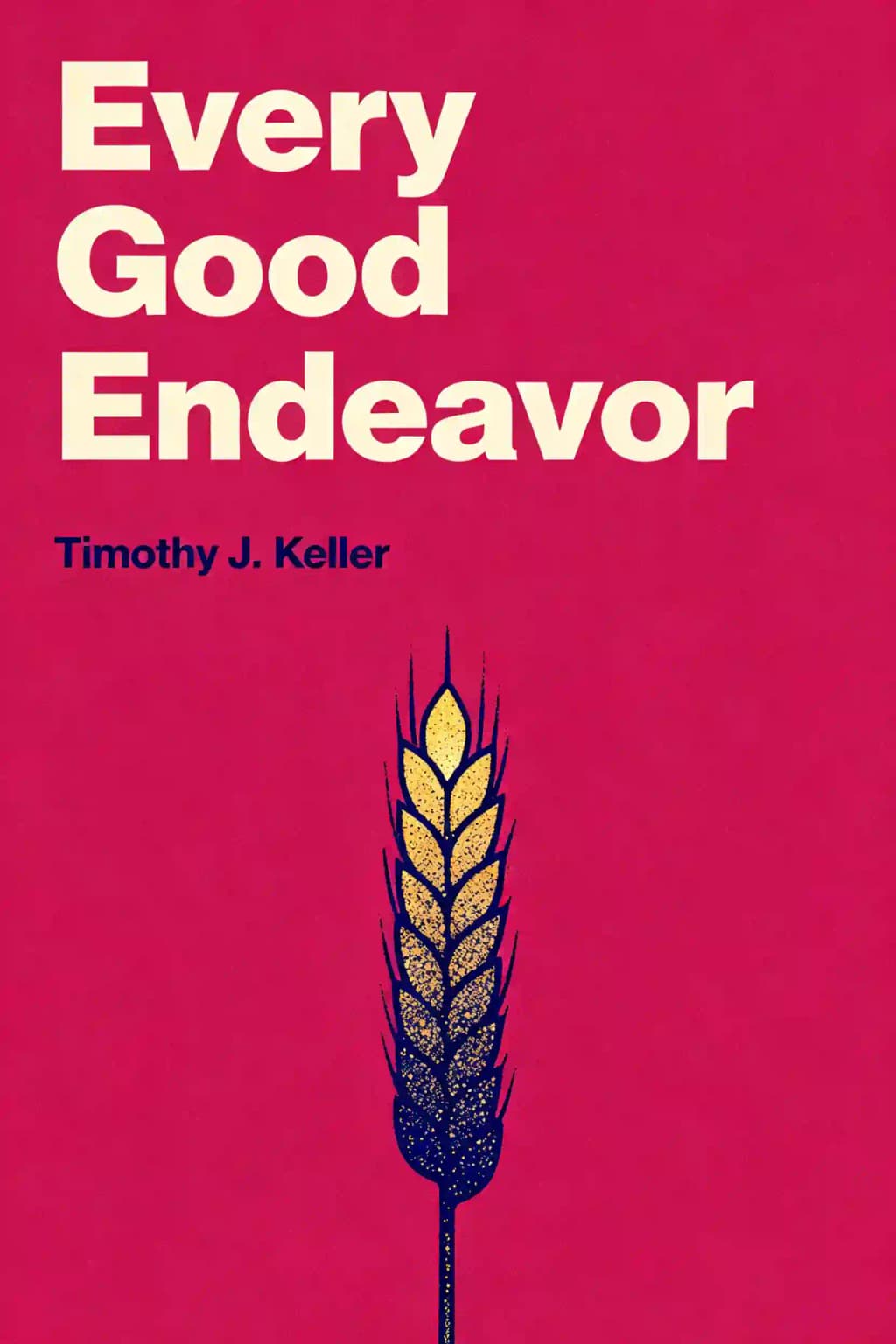
When was the last time you felt truly fulfilled by your work? For millions, the answer is a dispiriting "never." In a culture where 70% of workers report feeling disengaged from their jobs, Timothy Keller's "Every Good Endeavor" arrives as a revolutionary perspective on the meaning of our daily labor. This isn't just another career advice book-it's a profound theological exploration that has captivated readers across religious and secular divides since its 2012 publication. Oprah Winfrey once highlighted it as a book that "changed how I see my work in the world," while tech executives in Silicon Valley have formed reading groups around its principles. The book's cultural impact extends beyond individual readers to organizations rethinking their entire approach to business ethics and employee fulfillment. Drawing from Keller's experience as founder of the influential Redeemer Presbyterian Church in Manhattan-where he ministered to thousands of professionals navigating the intense demands of New York careers-this work bridges ancient wisdom and modern workplace challenges with remarkable clarity and depth.
Capitolo 2
The Divine Design of Work
Work isn't a necessary evil but part of God's original design for humanity, present even in paradise before sin entered the world. Genesis uniquely depicts God himself as a worker who creates the cosmos and then delights in his creation, declaring it "very good." Unlike other ancient creation stories that portrayed paradise as free from labor, the Bible shows work as integral to human purpose and fulfillment.
God works in three ways: creating, providing, and commissioning humans to continue his work. He places humans in Eden "to work it and keep it," revealing that we were designed to be productive. Work isn't punishment but rather meets a fundamental human need as essential as food or rest. Without meaningful work, we experience "significant inner loss and emptiness."
Work gives us purpose by making us useful to others and helping us discover our distinct abilities and identities. As Dorothy Sayers wrote, work "is not, primarily, a thing one does to live, but the thing one lives to do." This explains why those cut off from meaningful work often experience profound emptiness. Consider the Beldings' company in Philadelphia that provides employment for developmentally disabled adults who desperately "want to participate in the work-a-day world." Their experience confirms that work fulfills something deep in the human spirit.
Yet God's own pattern of resting after creation shows that work, while essential, isn't everything. Making work the ultimate purpose of life creates an idol that rivals God. True freedom comes not from avoiding all constraints but from living according to our design as workers who also need rest and contemplation. Like fish designed for water or planes built to follow aerodynamic laws, humans are designed to work-but also to rest and worship.
The biblical pattern is six days of work and one of rest, not the reverse. This balance honors our created purpose while preventing work from becoming all-consuming. Without regular rest for worship and contemplation, we cannot experience true meaning in our lives. As Josef Pieper argues, leisure isn't merely absence of work but an attitude that allows us to contemplate and enjoy things for their inherent value rather than utility.
Capitolo 3
The Dignity of All Work
While ancient Greeks considered manual labor beneath the truly human life of contemplation, Genesis reveals that work of all kinds reflects God's creative nature in us. Aristotle viewed unemployment as a prerequisite for a worthwhile life, considering physical labor demeaning. This philosophy created a hierarchy where mental work was noble and manual labor shameful, justifying slavery as necessary for elites to pursue higher thought.
These attitudes persist today in our division between prestigious "knowledge classes" and lower-status service work, leading many to avoid jobs they consider beneath them despite being well-suited for those roles. Yet the biblical view stands in stark contrast: work reflects our dignity as divine image-bearers, with humans uniquely given a job description to "rule" as God's representatives.
That God entered the world as a carpenter rather than a philosopher-king reveals the dignity of all work. Even supposedly menial tasks like doorkeeping or housecleaning are essential for human flourishing and reflect the image of God when done with excellence. Mike, a dedicated doorman in New York, exemplifies this dignity by knowing residents' schedules and needs, creating a welcoming atmosphere that transforms the building into a true home.
Christianity affirms the goodness of the material world, unlike Greek thought which saw physical existence as a prison. The Bible presents death as an enemy, not a friend, because creation is "brilliant and beautiful" and destined for eternal existence. This means all work that cultivates the material world has dignity, with "secular" work having no less nobility than "sacred" ministry. When businesses produce things that enhance community welfare, "they are engaged in work that matters to God."
Capitolo 4
Cultivating Creation Through Our Work
The biblical cultural mandate to "fill the earth and subdue it" isn't about exploiting nature, but stewarding it as God's image-bearers. Just as God formed the formless and filled the empty in creation, we are called to continue this work-not by conquering the world as an enemy, but by cultivating it like gardeners who draw out its potential.
God's command to "fill the earth" means more than just procreation-it means building human society and civilization. The instruction to "rule" and "subdue" creation isn't a license for exploitation, but a call to stewardship. Even before the fall, God designed the world to need work-to require cultivation to bring forth its potential.
As God's image-bearers, we continue His pattern of work by cultivating creation's potential. We aren't meant to be mere park rangers preserving nature untouched, nor should we pave over it. Instead, we're gardeners who actively rearrange creation to make it fruitful and beautiful. This creative, assertive pattern applies to all work-farming, music, teaching, cleaning, technology, art-whenever we bring order from chaos or elaborate creation beyond its original state.
Entrepreneur James Tufenkian exemplifies this in creating award-winning fruit preserves in Armenia, transforming seasonal waste into "beautiful things of enduring value." Similarly, Catherine, a physics professor, shapes her laboratory culture by playing classical music, modeling balanced work habits, and bringing her children to work occasionally-showing that family isn't an interruption and research is part of a mother's life.
Many ministers fail to see business as culture-making and creation-cultivating, assuming entrepreneurs care only about profit without regard for the common good. Yet Richard Mouw once compared God to an investment banker who leveraged resources to create new life, suggesting that entrepreneurs who invest their resources to meet human needs are doing God-like work. This biblical understanding gives meaning to both ambitious and commonplace work, as all work carries the dignity of being patterned after God's own work.
Capitolo 5
Work as Service to Others
Paul teaches that our work is not just about self-fulfillment but about serving others through God's calling and assignment. Christians should view their jobs as divine appointments rather than mere career paths. In 1 Corinthians 7:17, Paul uses religiously significant words-"called" and "assigned"-to describe ordinary work, suggesting God equips people with talents for various kinds of work to build up human community, just as he equips Christians with spiritual gifts.
This transforms our approach to career choices from "What will make me the most money and status?" to "How can I best serve others with my abilities?" This service-oriented approach actually provides more sustainable motivation for excellence than self-advancement. Jill Lamar exemplified this by leaving a lucrative banking career to pursue publishing, where she could better use her gifts to serve others by discovering new writers and bringing good stories to readers.
Martin Luther revolutionized the concept of vocation by challenging the medieval church's view that only religious work qualified as God's calling. Luther argued that all Christians are equally called to their work, whether as priests or farmers. He described ordinary occupations as the "masks of God," through which God cares for humanity. Just as God strengthens a city's gates through lawmakers and police, and provides daily bread through farmers, bakers and truck drivers, God works through our vocations to distribute his gifts.
Luther's discovery that salvation comes through faith alone transformed Christian understanding of work. This revelation freed believers from seeing religious work as superior to ordinary labor and from seeking self-worth through career success. The gospel liberates us from proving ourselves through work, allowing us to serve God and neighbors through any occupation.
One primary way to love others through work is the "ministry of competence." As Sayers notes, the church should tell carpenters that religion demands they make good tables. Captain David Cronin exemplified this when his competence saved lives after United Airlines Flight 811 suffered catastrophic damage. This competence is how we "touch God in the world"-it's not merely a means to wealth but a basic value of Christian work.
Capitolo 6
The Brokenness of Work in a Fallen World
Everyone experiences work in a broken world filled with sickness, death, injustice and chaos. The Bible attributes this to sin-humanity's rebellion against God and resulting alienation from him. Adam and Eve's fall into sin unraveled the fabric of the entire world, particularly affecting our work. While God designed work to be a glorious use of our gifts and resources to prosper the world, it is now also cursed.
Sin affects not just personal life but also our work, which becomes "painful toil." Though work itself isn't the curse, it now lies under the curse of sin. The "thorns and thistles" represent how all human labor is marked by frustration and lack of fulfillment. Work becomes fruitless when we envision more than we can accomplish due to our limitations and environmental resistance. We experience pain, conflict, envy, and fatigue. We may never get opportunities to do work we want, or may not perform at the level we desire.
While previous generations were grateful for any work that helped their families survive, today's young people insist work must be fulfilling, perfectly matched to their talents, and "do something amazing for the world"-perhaps a more utopian view than the Bible suggests. Yet this doesn't mean we've chosen wrongly when we can't realize our highest aspirations. Salieri was right to long for greatness while still contributing music we have today.
Christians possess a profound consolation through their hope in God's redemptive story that enables them to work wholeheartedly without ultimate discouragement. We accept that our work in this fallen world will always fall short, just as we sinners "fall short of the glory of God" (Romans 3:23), because we understand our present work isn't the final word. This hope resonates in the Christmas carol that proclaims Christ "comes to make his blessings flow far as the curse is found"-a promise that the effects of sin on our work will eventually be reversed.
Capitolo 7
The Meaninglessness of Work Without God
The book of Ecclesiastes provides one of the most poignant expressions of work's potential meaninglessness through its narrator Qoheleth ("the Teacher" or "the Philosopher"). This character seeks fulfillment "under the sun"-life considered apart from any greater reality. After exploring meaning through learning and pleasure, the Philosopher attempts his third "life project"-seeking fulfillment through achievement, hard work, wealth and influence.
Yet he concludes that work alone cannot deliver a meaningful life: "So I hated life, because the work that is done under the sun was grievous to me. All of it is meaningless, a chasing after the wind." Even when we accomplish lasting achievements, they ultimately come to nothing, as we must leave them to others who may undo our work. History eventually wipes away all our accomplishments-even civilization itself will be ground to dust.
Work "under the sun" is meaningless because it doesn't last, robbing us of hope for the future. It also alienates us from God and others, stealing present joy. Like Salieri in "Amadeus" who became bitter when God didn't grant him Mozart's genius, we experience not just disappointment but heartbreak when we make work our salvation. "What do people get for all the toil and anxious striving with which they labor under the sun? All their days their work is grief and pain; even at night their minds do not rest."
Ironically, having more power to choose our work can lead to greater dissatisfaction. Many college students limit their career options to what boosts their self-image: high-paying jobs, nonprofit work that directly addresses social needs, or "cool" tech startups. Without a broader understanding that all work has dignity and serves the human community as "the hands and fingers of God," they overlook countless meaningful vocations.
Despite the pointlessness of work in a fallen world, Qoheleth offers glimpses of hope: "There is nothing better for a person than to enjoy their work, because that is their lot." Finding satisfaction in our toil is "the gift of God." We need "one handful of quietness"-a middle path between the "empty handful" of idleness and the "two handfuls" that come from excessive toil.
Capitolo 8
How Work Reveals Our Idols
When work becomes the primary source of our identity and meaning, it transforms from being a way to steward creation and serve others into a means of distinguishing ourselves and proving our worth. As Ecclesiastes 4:4 observes, "I saw that all labor and achievement spring from man's envy of his neighbor."
David, a successful CEO who just sold his company for a million-dollar payout, refuses to honor his contract to stay with the company for another year despite the board's pleas. His drive for success stems from childhood poverty and a vow to provide differently for his own family. The biblical concept of idolatry extends far beyond primitive figurine worship-it means taking anything in creation and loving, serving, or deriving meaning from it more than from God.
Martin Luther defined idolatry as looking to created things for what only God can provide. Even non-religious people serve "gods"-ideologies or abilities they believe justify their existence. Idols are not just personal distortions-they create social and cultural trouble when embraced collectively. Every culture offers answers to life's big questions about meaning and purpose, promoting certain ideals as holy and unassailable-these are truly idols in the biblical sense.
Western history reveals three dominant cultural idol systems: traditional, modern, and postmodern-each influencing our workplaces in distinct ways through the values they elevate to ultimate importance. Traditional cultures find meaning through faithfulness to roles and duties within community-elevating family, race and nation to dangerous heights. Modern Western societies replaced religion, tribe and tradition with reason, empiricism and individual freedom as ultimate values. Postmodern thought emerged as a cynical response to claims of inevitable human advancement, making idols of technology, uncertainty, and market forces.
To work faithfully, Christians must discern these idols in their professions, affirming beneficial aspects while offsetting distortions. The story of Esther provides a case study on self-interest, power and vocation. Despite moral compromises that put her in the Persian palace, God still worked through Esther. When Jews throughout the empire faced extermination, Mordecai challenged her: "Who knows but that you have come to your royal position for such a time as this?"
Esther faced genuine danger in approaching the king unbidden-it could cost her life, not just her job. Mordecai's powerful response reveals the paradox of palace life: if Esther risks losing the palace, she might lose everything, but if she doesn't take that risk, she will certainly lose everything. This applies directly to our vocational lives. Unless we use our credentials, connections and resources to serve those outside "the palace," our positions become prisons that own us.
Capitolo 9
The Gospel's Transformation of Work
The Christian gospel provides resources for more satisfying and faithful work through four key elements: an alternative story line for understanding human life and work, a rich conception of work as partnering with God in caring for the world, a sensitive moral compass with ethical guidelines for decision-making, and transformed motives and inner power that sustain us through difficulties.
Unlike other worldviews that identify some part of creation as the problem and another part as the solution, Christianity uniquely understands humanity's nature, problem, and salvation as fundamentally relational. We were made for relationship with God, lost it through sin, and can be restored through God's grace. As philosopher Al Wolters notes, non-Christian worldviews invariably "demonize" some aspect of creation as evil (like the body, economic forces, or technology) while "idolizing" another as salvation.
The Christian story offers a more coherent explanation: the whole world was originally good (creation), the whole world is fallen (sin), and the whole world will be redeemed (restoration). This gospel perspective affects everything, including our work, as demonstrated by Bill Kurtz, who applied this worldview to transform inner-city education by creating a school culture of accountability, community, and hope that has led to remarkable success.
The gospel worldview profoundly influences business by countering the idols of money and power. While corporate profits and individual compensation are appropriate when stewarded wisely, they should not become one's identity or salvation. Christians in business understand "You are not your own; you were bought at a price" and are freed to honor God and serve the common good.
While the gospel provides Christians with a distinct worldview for their labor, this doesn't mean non-Christians cannot do good work. God is both Creator and Provider-our work mirrors His creative activity when we create culture conforming to His will, but also participates in His providence when we serve others' needs. Since all humans are made in God's image, everyone can participate in God's providential care through their work.
Christianity provides a unique basis for human rights through the doctrine that every person bears God's image, giving them inviolable dignity regardless of race, class, gender, or moral character. In workplace settings, this means resisting the market pressure to reduce people to economic resources.
Many people are driven by unhealthy motivations beneath their work-what could be called "the work beneath the work." Some seek self-worth through productivity and success, burning themselves out, while others see work merely as a means to a paycheck, making it a pointless grind. When Jesus called his disciples, he transformed their relationship to their work, giving them identity and significance beyond their profession.
When Jesus's passion for you fully dawns on your heart, it generates passion for your unique work in the world. His sacrifice frees you from needing self-worth through being richer, cooler, or more powerful. Instead of working from acedia's false passion born of selfishness, you work from true passion born of selflessness. As God's adopted child, you already have affirmation. Being justified, you have nothing to prove. Saved through a dying sacrifice, you're free to be a living one.
Work and rest have a symbiotic relationship. Rest replenishes our bodies and minds while giving perspective on our work. But at a deeper level, experiencing "gospel-rest" in our hearts frees us from earning salvation through work, creating a reservoir of refreshment that continually rejuvenates us. When your heart hopes in Christ, you can work with a free heart, accepting whatever level of success God gives because he called you to it, knowing your deepest desires will ultimately be fulfilled in the new creation.
Capitolo 10
A Practical Vision for Faith and Work
Redeemer Presbyterian Church has focused on vocational discipleship for nearly a decade, helping its congregation integrate faith and work while living as "resident aliens" in a city that's only 3% Christian. Their approach is shaped by Jeremiah's letter to the exiles in Babylon, which reminds believers that God sovereignly places them where he wants them to be, and calls them to "seek the peace and prosperity" of the city because "if it prospers, you too will prosper."
In 2002, Redeemer established the Center for Faith & Work (CFW) as one of its five primary ministry areas. Early surveys revealed startling statistics: only 6% had shared faith at work, 55% prayed about work, and few recognized how their work contributed to society. The center developed programs including Vocation Groups that meet monthly, led by volunteers committed to helping professionals in their field explore the challenges and opportunities of their work through a gospel lens.
The Gotham Fellowship is an intensive nine-month theological and leadership development program for young professionals across all vocations. Fellows study original theological sources like Augustine, Calvin, and Luther to develop frameworks and spiritual practices applicable to real workplace situations. Redeemer's Entrepreneurship Initiative supports new ventures through a Business Plan Competition that encourages early-stage entrepreneurs to think theologically about their businesses.
With 15-20% of Redeemer's congregation working in the arts, the church has developed specific ministries to engage artists who often feel misunderstood by traditional churches, particularly when their work isn't explicitly Christian. The Arts Ministries help artists explore the theology of art and culture while providing opportunities for creative collaboration and work-sharing.
Redeemer intentionally keeps its faith and work ministry integrated within the church rather than spinning it off as a separate organization. This approach reflects their conviction that vocational life is essential to being fully human in a biblical sense. The church believes work is often the crucible where God reveals and refines a person's idols, and the workplace is where the church touches the broader world through its members' faithful presence.
Even smaller churches can develop contextually appropriate faith-work integration through vocation groups or book studies that help congregants navigate vocational challenges. As John Coltrane captured in his album notes: "This album is a humble offering to Him... May He help and strengthen all men in every good endeavor."