Capitolo 1
Why Your IQ Isn't Enough
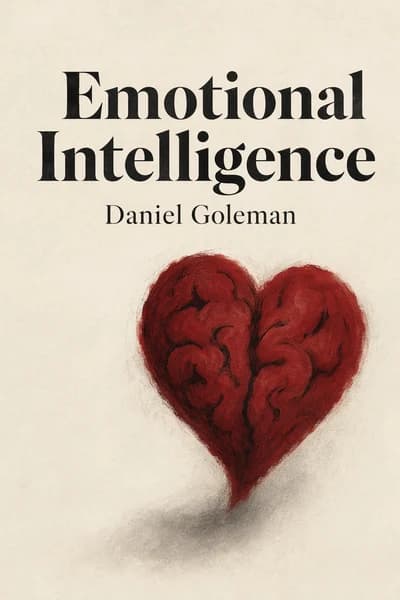
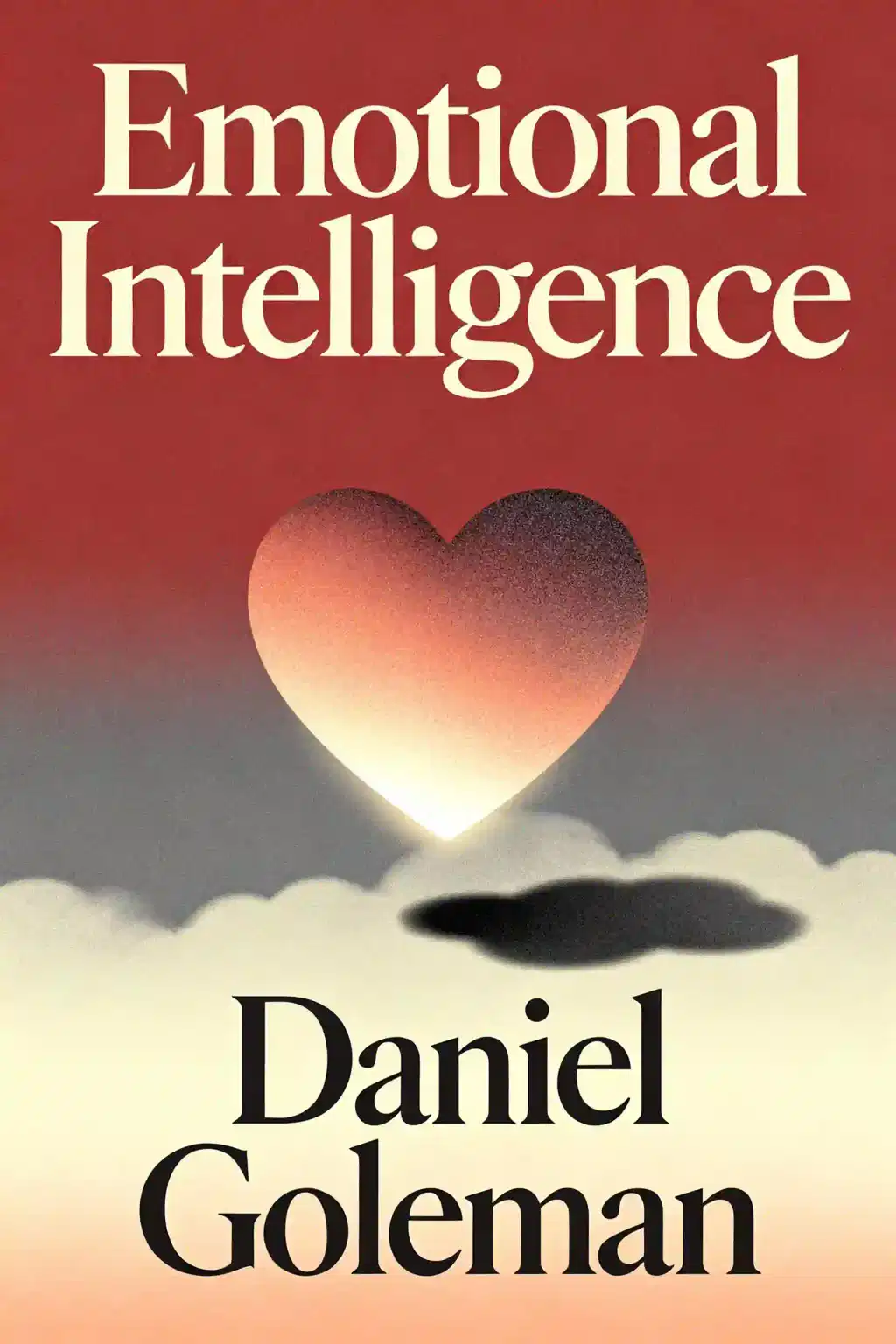
Ever wonder why the valedictorian doesn't always become the CEO? Daniel Goleman's groundbreaking bestseller - which spent over 18 months on the New York Times bestseller list and has been translated into 40+ languages - reveals the missing piece: emotional intelligence. While IQ gets you hired, EQ determines how far you'll rise.
Imagine recognizing the subtle facial cues that signal your presentation is bombing, or instinctively knowing how to defuse tension in a heated negotiation. These aren't soft skills - they're career-defining superpowers.
Goleman, a Harvard-trained psychologist and Pulitzer nominee, masterfully weaves neuroscience with practical applications, showing why emotionally intelligent people consistently outperform their intellectually gifted peers in business, relationships, and leadership.
The book that literally changed how companies hire and promote offers a revolutionary framework for understanding your emotional landscape. From managing impulses to reading rooms, these skills can be developed at any age - transforming not just your career trajectory but every relationship in your life.
Capitolo 2
Beyond IQ: The Intelligence That Matters Most
For decades, we've been fixated on IQ as the supreme measure of human potential. But consider the story of Jason H., a brilliant student with a stratospheric IQ who ended up unemployed, alienated, and adrift while his academically average peers thrived in careers and relationships. His story challenges our assumptions about what truly determines success in life.
Howard Gardner's theory of multiple intelligences began this paradigm shift, suggesting that traditional IQ measures only a narrow band of human capability. Building on this foundation, Goleman proposes that emotional intelligence encompasses five crucial domains: knowing one's emotions, managing emotions, motivating oneself, recognizing emotions in others, and handling relationships. These skills, rather than academic prowess alone, often determine who thrives and who struggles.
The evidence is compelling. George Vaillant's study of Harvard graduates found that the students with the highest test scores weren't particularly more successful in their careers, happiness, or relationships than their peers. Similarly, a thirty-year longitudinal study of 450 boys from Somerville, Massachusetts revealed that IQ had little relation to life outcomes compared to factors like the ability to handle frustration, control emotions, and get along with others.
What makes emotional intelligence so powerful? Unlike IQ, which remains relatively stable throughout life, emotional intelligence can be cultivated and strengthened. It's not fixed at birth or by early childhood experiences. We can grow our emotional awareness, develop better self-regulation, and enhance our social skills throughout our lives.
Think about the implications: a child struggling with math might still develop the emotional resilience and interpersonal skills that lead to success. A brilliant but emotionally tone-deaf executive might learn to read the emotional currents in a room and become a more effective leader. The person prone to anxiety might develop strategies to calm their emotional storms.
This isn't just feel-good psychology - it's backed by neurological research showing that emotional habits can be rewired through conscious effort and practice. Our emotional brain is remarkably plastic, capable of forming new neural pathways throughout our lives. The question isn't whether we can change our emotional patterns, but whether we're willing to put in the work to do so.
Capitolo 3
Self-Awareness: The Foundation of Emotional Intelligence
Imagine being caught in a sudden turbulent flight. Some passengers grip their armrests in terror, hyperaware of every bump and drop. Others bury themselves in magazines, trying to block out their fear. Still others remain genuinely calm, their bodies showing minimal stress response. These different reactions illustrate varying levels of emotional self-awareness - the cornerstone of emotional intelligence.
Self-awareness means recognizing our emotions as they arise and understanding their impact on our thoughts and behavior. It's the difference between being swept away by anger and thinking, "I'm feeling angry right now because I felt disrespected." This slight pause - this moment of recognition - creates space for choice rather than automatic reaction.
Consider Gary, a man described as emotionally color-blind. When asked how he feels, he appears genuinely confused, unable to distinguish between anxiety, anger, or sadness. This condition, called alexithymia, represents an extreme lack of emotional self-awareness. Gary's emotional illiteracy leaves him unable to navigate the subtleties of relationships or make decisions that align with his deeper values.
At the other end of the spectrum are individuals with heightened emotional awareness who can detect the faintest emotional signals within themselves. They notice the first flickers of irritation before full-blown anger emerges or recognize subtle anxiety before it escalates to panic. This awareness gives them a crucial advantage - the ability to manage emotions before they become overwhelming.
Self-awareness operates at multiple levels. There's the awareness of the emotion itself ("I'm feeling disappointed"), awareness of its triggers ("This happened because my expectations weren't met"), and meta-awareness - our attitude toward the emotion ("It's okay to feel disappointed sometimes"). Each level deepens our emotional intelligence.
Interestingly, self-awareness isn't just psychological - it has neurological correlates. The right prefrontal cortex appears to hold representations of our emotional states, serving as a kind of internal emotional monitor. People with damage to this area often show reduced emotional self-awareness.
How can we cultivate greater self-awareness? Mindfulness practices offer one pathway, training us to observe our thoughts and feelings without immediate judgment or reaction. Simply asking "What am I feeling right now?" throughout the day can strengthen this muscle. Journaling about emotional experiences helps identify patterns and triggers. And feedback from trusted others can illuminate blind spots in our emotional self-perception.
Self-awareness isn't just navel-gazing - it's practical and powerful. Research shows that people with greater emotional self-awareness make better decisions, have more satisfying relationships, and recover more quickly from negative emotional states. It's the foundation upon which all other emotional skills are built.
Capitolo 4
Emotional Self-Regulation: Mastering the Inner Storm
We all know the feeling of being overtaken by emotion - the surge of anger that makes us say things we later regret, the anxiety that paralyzes us before an important presentation, the sadness that colors everything gray for days. These emotional storms can derail our best intentions and sabotage our goals. But emotional intelligence offers strategies to weather these storms and even harness their energy.
Anger provides a perfect case study in emotional regulation. When provocation occurs, anger builds rapidly, flooding our bodies with stress hormones and narrowing our mental focus. In this state, even minor irritations can trigger disproportionate reactions. As Redford Williams discovered in his research, the key to managing anger isn't suppression but intervention at the right moment.
The most effective approach is to interrupt the anger cycle early by reframing the situation. When we receive new information that changes our perception of a provocative event, anger can dissipate quickly. For instance, learning that someone who cut you off in traffic was rushing to the hospital with a medical emergency transforms rage into compassion. This cognitive reappraisal strategy works best before anger reaches its peak intensity.
When reframing isn't possible, cooling-down techniques become essential. Physical separation from the triggering situation, combined with distraction and relaxation techniques, allows physiological arousal to subside. Contrary to popular belief, "venting" anger through aggressive actions often intensifies rather than releases the emotion. As studies show, punching a pillow doesn't reduce anger - it reinforces the neural pathways associated with aggressive responses.
Anxiety management follows similar principles but requires different tactics. Chronic worriers get trapped in thought loops that never reach resolution. The antidote involves recognizing worry patterns early, using relaxation techniques to reduce physical tension, and challenging catastrophic thinking with realistic assessment. For instance, asking "What's the worst that could actually happen?" and "How likely is that outcome?" helps break the worry cycle.
Depression presents yet another regulatory challenge. While temporary sadness serves an important reflective function, persistent depression creates a paralyzing inertia. Cognitive therapy techniques help by identifying and challenging the negative thoughts that fuel depression. Simple actions also prove powerful - exercise, small accomplishments, helping others, and social connection all activate neural circuits that counteract depressive patterns.
The neural basis for emotional regulation lies primarily in connections between the prefrontal cortex and the amygdala. The prefrontal cortex can inhibit amygdala activity, essentially putting the brakes on emotional reactions. Strengthening this neural pathway through consistent practice creates lasting improvements in emotional regulation.
Remember that the goal isn't to eliminate emotions but to manage their expression and impact. Emotions contain valuable information and energy that, when properly channeled, enhance rather than undermine our effectiveness and well-being.
Capitolo 5
Motivation: Harnessing Emotions for Achievement
The ability to persist in the face of setbacks, maintain focus despite distractions, and delay gratification for long-term goals doesn't just happen - it's powered by emotional intelligence. This aspect of EQ might be the most directly linked to achievement and success in any field.
The famous "marshmallow test" conducted by psychologist Walter Mischel illustrates this perfectly. Four-year-olds were offered a choice: eat one marshmallow now or wait fifteen minutes and receive two marshmallows. The researchers then followed these children for years. The results were striking - those who could delay gratification at age four were later more socially competent, personally effective, self-assertive, and better able to cope with life's frustrations. Even more remarkably, they scored an average of 210 points higher on their SATs than the children who couldn't wait.
What's happening here? The ability to resist impulse and regulate emotion forms the foundation for any accomplishment that requires sustained effort. Whether it's completing medical school, building a business, or mastering a musical instrument, emotional self-regulation enables the persistence necessary for achievement.
Hope and optimism play crucial roles in this motivational aspect of emotional intelligence. Martin Seligman's research shows that optimists interpret setbacks as temporary, specific, and external ("I didn't prepare enough for this test") rather than permanent, pervasive, and personal ("I'm just not smart enough"). This explanatory style helps them bounce back from failure and persist where others give up.
Consider the case of insurance salespeople studied by Seligman. Optimists sold 37% more insurance in their first two years than pessimists. When faced with rejection - a constant in sales - optimists viewed it as a challenge to improve their approach rather than as evidence of personal inadequacy.
The concept of "flow," described by psychologist Mihaly Csikszentmihalyi, represents the ultimate in emotional intelligence applied to achievement. Flow is that state of complete absorption in a challenging but manageable task, where time seems to disappear and performance reaches optimal levels. Athletes call it "being in the zone." Musicians experience it when they're completely one with their instrument. Flow occurs when attention is completely ordered and focused, neither anxious about difficulty nor bored by lack of challenge.
What's remarkable about flow is its efficiency - the brain operates with minimal metabolic activity while achieving maximum performance. Emotions are not just contained but positively channeled in service of the task. Flow represents emotions working for us rather than against us.
Developing this motivational dimension of emotional intelligence involves cultivating optimism, setting challenging but achievable goals, practicing delayed gratification, and finding activities that naturally induce flow states. It's about making emotions allies rather than obstacles in the pursuit of meaningful achievement.
Capitolo 6
Empathy: The Heart of Social Intelligence
Empathy - the ability to sense and understand another person's feelings - forms the foundation of social intelligence. It's what allows us to connect deeply with others, navigate complex social situations, and respond appropriately to the emotional needs around us.
The capacity for empathy begins remarkably early in life. Even newborns cry in response to the sound of another baby's distress - a primitive form of emotional contagion. By age one, children begin to recognize that others' emotional states differ from their own. By age two, they attempt to comfort others in distress. This developmental progression suggests that empathy has deep evolutionary roots as a mechanism for social cohesion.
Empathy develops through attunement - the delicate emotional dance between parent and child. When parents consistently respond to a child's emotional signals with appropriate matching responses, the child learns that emotions are communicative and connective. Researchers can observe this attunement in the micro-synchrony between a mother's movements and her baby's attention, creating what psychologist Daniel Stern calls "emotional resonance."
The absence of this attunement can have profound consequences. Children whose emotional expressions are consistently ignored or punished learn to suppress those emotions, potentially leading to alexithymia - the inability to recognize and name one's own feelings. At the extreme end, severe emotional neglect or abuse can contribute to conditions like antisocial personality disorder, marked by a profound lack of empathy.
Neurologically, empathy appears linked to specific brain circuits. The right hemisphere plays a particularly important role in reading nonverbal emotional cues like facial expressions, tone of voice, and gestures. Mirror neurons - cells that fire both when we perform an action and when we observe someone else performing that action - may provide a neural basis for emotional resonance.
Empathy isn't just about feeling what others feel - it's about understanding those feelings in context. This cognitive dimension of empathy allows us to take another's perspective while maintaining our separate identity. It's what enables a therapist to understand a client's distress without becoming overwhelmed by it, or a negotiator to see an issue from multiple perspectives.
The practical applications of empathy are vast. In healthcare, empathetic doctors have patients who recover faster and follow treatment plans more consistently. In business, empathetic leaders create psychological safety that fosters innovation and loyalty. In personal relationships, empathy creates the foundation for intimacy and trust.
Empathy can be cultivated through practices like active listening, where we focus completely on understanding rather than formulating our response; perspective-taking exercises that challenge us to see situations through others' eyes; and exposure to diverse life experiences that expand our emotional vocabulary and understanding.
Perhaps most profoundly, empathy forms the basis for morality. When we can truly feel the impact of our actions on others, ethical behavior becomes not just a matter of following rules but of honoring our innate connection to other human beings.
Capitolo 7
Social Skills: Artfully Handling Relationships
The culmination of emotional intelligence lies in our ability to navigate social interactions effectively - to build rapport, resolve conflicts, collaborate productively, and inspire others. These social skills represent emotional intelligence in action.
At the heart of social competence lies emotional expressiveness - the ability to convey our feelings appropriately across different contexts. Every culture has "display rules" governing which emotions can be shown, to whom, and when. In Japan, for instance, negative emotions are rarely displayed in public settings, while in Mediterranean cultures, emotional expressiveness is more valued. Mastering these cultural and contextual nuances allows for authentic self-expression while maintaining social harmony.
Emotions are contagious, spreading from person to person like a subtle form of social influence. Research by Ellen Hatfield shows that we unconsciously mimic others' facial expressions, postures, and vocal patterns, gradually synchronizing our emotional states. This emotional contagion explains why a single person's mood can transform a group's atmosphere. Emotionally intelligent individuals understand this dynamic and can use it constructively - calming tense situations or energizing flat ones.
Conflict resolution represents another critical social skill. People with high emotional intelligence can address disagreements directly without escalating tensions. They separate the person from the problem, focus on interests rather than positions, and generate options for mutual gain - principles identified by negotiation experts Roger Fisher and William Ury. Most importantly, they manage their own emotional reactions during conflict, preventing the amygdala hijackings that derail productive discussion.
Leadership particularly demands social emotional intelligence. Effective leaders create resonance rather than dissonance, aligning people toward shared goals through inspiration rather than coercion. They recognize emotional undercurrents in groups and address unspoken concerns. They provide clear, constructive feedback that motivates rather than demoralizes. And they build teams that leverage diverse strengths while fostering psychological safety.
The art of persuasion also hinges on emotional intelligence. As Aristotle recognized over two millennia ago, effective persuasion combines logos (logical argument), pathos (emotional appeal), and ethos (credibility of the speaker). Emotionally intelligent persuaders understand their audience's values, concerns, and emotional needs, framing messages accordingly.
Social skills can be developed through deliberate practice. Role-playing difficult conversations, seeking feedback on interpersonal effectiveness, observing skilled communicators, and gradually expanding one's comfort zone in social situations all build these capabilities. Unlike technical skills that can be mastered through solitary study, social skills require interactive learning and real-world application.
Importantly, social skills must be built upon the foundation of other emotional intelligence components. Without self-awareness, self-regulation, motivation, and empathy, social techniques become manipulative rather than authentic. True social intelligence isn't about learning tricks to influence others - it's about creating genuine connections based on mutual understanding and respect.
Capitolo 8
Emotional Intelligence in Intimate Relationships
The rising divorce rates of recent decades tell a story not just of changing social norms but of emotional disconnection. As Goleman explores, marriages often fail not because couples stop loving each other, but because they lack the emotional intelligence to navigate inevitable conflicts and maintain intimacy through life's challenges.
Men and women typically enter relationships with different emotional strengths and vulnerabilities, shaped by gendered socialization from early childhood. Girls generally develop greater verbal fluency for emotions and more practice discussing feelings, while boys often learn to minimize emotional vulnerability. These differences create predictable fault lines in heterosexual relationships, with women typically seeking more emotional connection and men often retreating when emotional intensity rises.
John Gottman's groundbreaking research on marital interaction identified specific patterns that predict divorce with over 90% accuracy. The most toxic pattern involves criticism that attacks character rather than specific behaviors ("You're so selfish" versus "I felt hurt when you made plans without checking with me"). This pattern escalates to contempt - conveyed through subtle facial expressions like eye-rolling or sneering - which Gottman calls "sulfuric acid for relationships." Defensiveness and stonewalling (emotional withdrawal) complete what he terms the "Four Horsemen" that predict relationship doom.
Physiological measurements reveal fascinating gender differences in relationship conflict. Men typically experience greater physiological arousal during arguments, with elevated heart rates and stress hormones that can trigger the "fight-or-flight" response. This physiological flooding makes constructive discussion nearly impossible and often leads men to emotionally withdraw - precisely when their partners most want engagement. Understanding this pattern helps couples develop strategies like taking timeouts when discussions become too heated.
Cognitive distortions also undermine relationships. Aaron Beck identified how automatic thoughts - like "She doesn't respect me" or "He doesn't care about my feelings" - create emotional reactions that seem justified but may be based on misinterpretations. These toxic thoughts create a self-reinforcing cycle where partners see what they expect to see, filtering their partner's behavior through an increasingly negative lens.
The good news? Emotionally intelligent couples develop "repair attempts" - verbal and non-verbal signals that de-escalate tension before it spirals out of control. Something as simple as appropriate humor, a gentle touch, or saying "Let me try again" can prevent minor disagreements from becoming relationship-threatening battles.
Specific emotional intelligence skills prove crucial for relationship success:
• Self-awareness about emotional triggers and patterns
• Self-regulation to prevent emotional flooding
• Empathic listening that validates a partner's feelings
• Expressing needs clearly without blame or criticism
• Accepting influence from each other rather than rigidly maintaining positions
• Finding win-win solutions to seemingly intractable problems
Couples who master these skills don't avoid conflict - they transform it into an opportunity for greater understanding and intimacy. Their disagreements become what Gottman calls "the good fight" - discussions that ultimately strengthen rather than weaken their bond.
Capitolo 9
The Business Case for Emotional Intelligence
When Goleman published "Emotional Intelligence" in 1995, many business leaders dismissed emotional factors as irrelevant to the bottom line. Today, emotional intelligence has become a cornerstone of leadership development in organizations worldwide. What changed? The recognition that in a knowledge economy, how people work together matters as much as their technical expertise.
Research consistently shows that IQ and technical skills are merely "threshold capabilities" for executive positions - necessary but insufficient for outstanding performance. What distinguishes star performers from average ones at senior levels is almost entirely a matter of emotional intelligence competencies.
Consider the case of a brilliant but abrasive executive who consistently alienates team members despite his technical brilliance. His lack of empathy and self-regulation creates a toxic work environment that drives away talent and stifles innovation. Contrast this with a leader who combines solid technical knowledge with exceptional emotional intelligence - someone who reads the emotional currents in a room, addresses concerns before they become crises, and inspires rather than intimidates. The difference in team performance and business results can be dramatic.
Specific emotional intelligence competencies prove particularly valuable in business contexts:
The art of constructive criticism exemplifies emotional intelligence in action. Effective feedback focuses on specific behaviors rather than personality, offers solutions rather than just identifying problems, and considers the recipient's emotional state and receptivity. When delivered with empathy and clarity, such feedback motivates improvement rather than defensiveness.
Managing diversity requires sophisticated emotional intelligence. Beyond compliance with anti-discrimination policies, truly inclusive leadership involves recognizing unconscious biases, creating psychological safety for different perspectives, and leveraging diverse viewpoints for better decision-making. Leaders with high emotional intelligence can navigate cultural differences and turn potential conflicts into creative advantages.
Group intelligence emerges when teams have high collective emotional intelligence. Such teams demonstrate better collaborative problem-solving, more creative solutions, and greater resilience during setbacks. The emotional tone set by leaders profoundly influences this group dynamic - a phenomenon Goleman later termed "emotional contagion from the top."
Change management particularly demands emotional intelligence. Organizational changes trigger emotional responses - fear, uncertainty, resistance - that logical arguments alone cannot address. Leaders who acknowledge these emotional realities and provide both rational direction and emotional reassurance navigate change more successfully.
The business costs of emotional intelligence deficits are substantial: increased turnover, reduced productivity, missed opportunities for innovation, and damaged customer relationships. Conversely, organizations that develop emotional intelligence capabilities report measurable improvements in employee engagement, customer satisfaction, and financial performance.
Perhaps most significantly, emotional intelligence creates sustainable competitive advantage because it cannot be easily replicated or automated. While technical knowledge becomes obsolete and can be outsourced, the human capabilities of emotional intelligence remain essential for leadership, innovation, and customer connection in an increasingly complex business environment.
Here's the condensed version, maintaining the key insights while reducing length:
Capitolo 10
Mind-Body Connection: Emotions and Health
Recent research has challenged the traditional Western separation of mind and body, revealing deep connections between emotional states and physical health through the field of psychoneuroimmunology.
Robert Ader's pivotal discovery showed that the immune system can learn through classical conditioning, demonstrating that it doesn't operate independently from the brain. David Felten later identified the physical mechanism: nerve fibers connecting directly to immune organs, allowing brain signals to influence immune cells. Stress hormones like cortisol and adrenaline interact with white blood cells, explaining how emotional states affect disease resistance.
Specific emotional states have distinct health impacts:
Anger and hostility particularly affect cardiovascular health, with studies showing that anger episodes can trigger reduced blood flow to the heart and arrhythmias. Chronic hostility significantly increases heart attack risk and early mortality.
Anxiety maintains elevated stress hormone levels, compromising immune function and worsening conditions like asthma and irritable bowel syndrome. Even short-term stress increases susceptibility to infections.
Depression has the most significant health impact, complicating recovery from serious illnesses and leading to poorer medical outcomes through reduced treatment adherence, altered immune function, and disrupted nervous system activity.
Conversely, positive emotions offer protective effects. Optimism correlates with faster surgical recovery, better immune function, and lower cardiovascular disease rates. While not a cure, positive thinking significantly influences recovery rates and coping abilities.
These findings have important healthcare implications. Emotional support isn't just compassionate care-it's medically necessary. Interventions like stress management and cognitive therapy show measurable effects on health outcomes. Emotional intelligence benefits both healthcare providers and patients, improving communication, treatment adherence, and overall health management.
Capitolo 11
Emotional Education: Preparing Children for Life
As troubling statistics on youth violence, suicide, and substance abuse mounted in the 1990s, Goleman recognized these problems as symptoms of a deeper issue - widespread deficits in emotional intelligence. Rather than addressing each crisis separately with targeted interventions, he advocated for comprehensive emotional education as a preventive approach.
The case for emotional literacy programs in schools rests on compelling evidence. Children with poor emotional skills face higher risks across multiple domains - from academic failure and social rejection to depression and violence. Conversely, children who develop emotional intelligence show greater resilience against these problems, even when facing significant risk factors like poverty or family dysfunction.
Specific emotional skills prove particularly protective:
Self-awareness helps children recognize their emotional states and understand how emotions influence their behavior. Children who can accurately identify their feelings are less likely to act out impulsively or misinterpret social situations. This awareness creates the crucial pause between feeling and action that allows for choice rather than automatic reaction.
Emotional regulation skills enable children to manage difficult feelings constructively. Programs teaching these skills show impressive results in reducing aggressive behavior. Children learn techniques like self-calming, cognitive reframing, and problem-solving that provide alternatives to fighting or withdrawal when faced with frustration or conflict.
Social perception skills - reading emotional cues in others - protect against social rejection. "Friendship coaching" programs help socially isolated children interpret facial expressions, tone of voice, and body language more accurately, reducing the misperceptions that often lead to inappropriate responses and peer rejection.
Optimistic thinking styles shield against depression. Children taught to challenge catastrophic interpretations and recognize temporary setbacks as specific rather than global problems show significantly lower rates of depression, even when followed for years after the intervention.
Goleman highlights several pioneering programs that integrate these skills into education:
The Self Science curriculum at Nueva Learning Center provides a model for emotional literacy education. Through activities like the "Cooperation Squares" game, students learn teamwork and communication skills. Regular class meetings address "concerns of the day," giving students practice in expressing feelings appropriately and resolving conflicts. Rather than treating emotional learning as separate from academic subjects, the approach weaves these skills throughout the school day.
The PATHS (Promoting Alternative Thinking Strategies) curriculum demonstrates how emotional literacy can be taught systematically across grade levels. Starting with basic emotional vocabulary and progressing to complex social problem-solving, PATHS shows measurable improvements in children's behavior and academic performance.
The Resolving Conflict Creatively Program, implemented in New York City schools, focuses specifically on violence prevention through emotional intelligence skills. By teaching empathy, anger management, and negotiation techniques, the program achieved significant reductions in aggressive behavior and improvements in classroom climate.
What makes these programs effective is their comprehensive, developmentally appropriate approach. Rather than one-time workshops, they provide ongoing skill development integrated into the school environment. They engage not just children but teachers and parents, creating consistency across contexts. And they recognize that emotional intelligence, like academic learning, develops through practice and reinforcement over time.
The implications extend beyond individual well-being to societal health. As Goleman argues, emotional literacy education represents an investment in creating citizens capable of civil discourse, ethical decision-making, and democratic participation - skills increasingly crucial in our complex, interconnected world.
Capitolo 12
The Lifelong Journey of Emotional Growth
Throughout "Emotional Intelligence," Goleman emphasizes a profoundly hopeful message: while our emotional patterns may be deeply ingrained, they are not immutable. The brain's plasticity - its ability to form new neural connections throughout life - means that emotional intelligence can be developed at any age through conscious effort and practice.
This perspective challenges deterministic views about temperament and personality. Jerome Kagan's research on innate temperamental differences shows that some children are born with a more reactive amygdala, predisposing them to timidity and anxiety. Yet longitudinal studies reveal that many highly reactive infants do not grow into anxious adults. The difference? Early experiences and learned emotional skills that help "tame the overexcitable amygdala."
Similarly, childhood trauma creates powerful emotional conditioning that can persist into adulthood. The neural mechanisms of post-traumatic stress disorder (PTSD) involve hyperactivation of the amygdala and altered stress hormone regulation. Yet therapeutic approaches demonstrate that even these deeply embedded patterns can be modified through emotional relearning - creating new associations that gradually diminish the power of traumatic memories.
The process of developing emotional intelligence continues throughout adulthood. Psychotherapy represents one structured approach to this development, helping individuals recognize maladaptive emotional patterns and create healthier alternatives. But growth also occurs through relationships, challenging life experiences, mindfulness practices, and deliberate skill development.
Certain windows of opportunity appear particularly important for emotional learning. Early childhood provides the foundation for basic emotional security and regulation. The school years offer crucial opportunities to develop social skills and empathy. Adolescence, with its neurological restructuring and identity formation, presents another significant period for emotional growth. Yet even in later adulthood, emotional intelligence can continue to develop as life experiences provide opportunities for deeper self-understanding and wisdom.
The journey toward emotional intelligence involves several key processes:
Developing greater awareness of emotional states as they arise, learning to recognize the physical sensations, thoughts, and action tendencies that characterize different emotions.
Building a richer emotional vocabulary that allows for nuanced expression of feelings rather than crude categories of "good" or "bad."
Recognizing patterns in emotional triggers and reactions, understanding how current responses often reflect past experiences and learning.
Practicing new responses to emotional challenges, gradually rewiring neural pathways through consistent application of more adaptive strategies.
Integrating emotional wisdom into a coherent sense of self and purpose, using emotions as valuable information rather than disruptive forces.
This journey isn't about suppressing emotions or achieving some idealized state of perpetual calm. Rather, it's about developing a harmonious relationship between emotion and reason - allowing each to inform the other in service of a meaningful, connected life.
As Goleman concludes, emotional intelligence represents not just a set of skills but a way of being that honors our full humanity. In a world increasingly characterized by technological advancement but emotional disconnection, cultivating these capacities may be our most important task - both individually and collectively.