Capitolo 1
Unlocking the Power Within: The Science of Emotional Intelligence
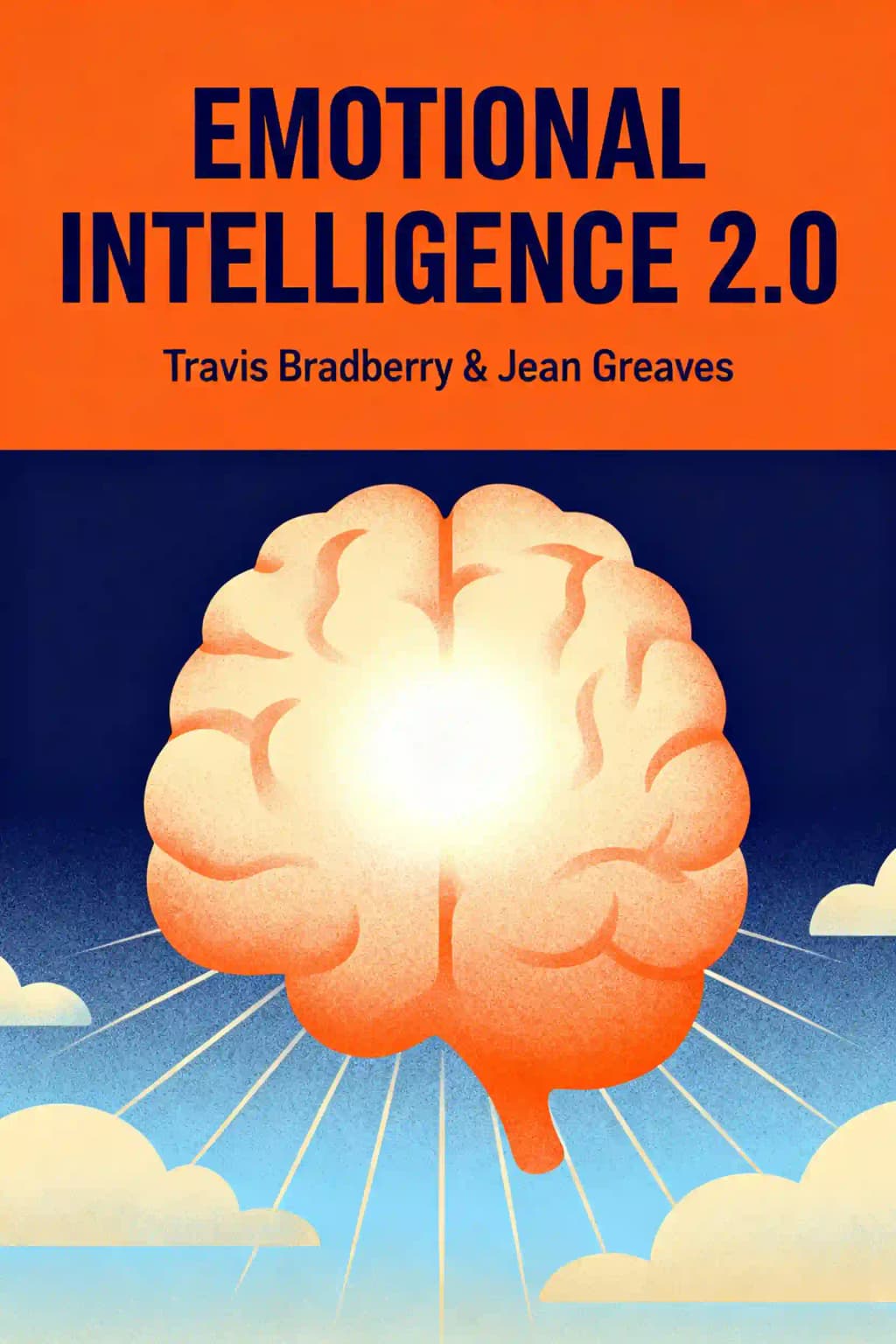
Have you ever wondered why some people seem to navigate life's challenges with remarkable ease while others struggle despite similar intelligence and experience? The answer lies not in IQ but in EQ-emotional intelligence. In "Emotional Intelligence 2.0," Travis Bradberry reveals the science behind this crucial skill set that accounts for 58% of performance in all job types. This isn't just another self-help theory; it's backed by research testing over 500,000 people worldwide. The book has garnered praise from luminaries like the Dalai Lama and Stephen R. Covey, and has become required reading at companies like Amazon and Google. What makes this approach revolutionary is its practical framework: unlike IQ, which remains fixed, or personality, which stays relatively stable, emotional intelligence can be developed and improved at any age. As Daniel Goleman, who popularized the concept, notes, "What distinguishes star performers from average ones is emotional intelligence." Let's explore how mastering this essential skill can transform your relationships, career, and life satisfaction.
Capitolo 2
The Emotional Brain: Why We Feel Before We Think
Imagine paddling on a surfboard when suddenly a great white shark appears beneath you. This terrifying scenario happened to Butch Connor, who initially froze with fear before eventually calming himself enough to paddle safely to shore. His experience perfectly illustrates the battle between emotion and logic that we all face daily-though usually with less dramatic stakes.
Our brains are wired to process experiences emotionally before rational thinking engages. Everything we experience travels through the limbic system (our emotional center) before reaching the rational frontal lobe, which explains why we feel before we think. This neurological pathway forms the physical basis of emotional intelligence.
The implications of this wiring are profound. Research has revealed that people with average IQs outperform those with high IQs 70% of the time, identifying emotional intelligence as the critical factor beyond raw intelligence. While education and technical skills might get you in the door, it's your EQ that determines how far you'll go.
Emotional intelligence isn't about suppressing emotions but understanding and managing them effectively. When emotions control your behavior and you react without thinking, you experience an "emotional hijacking"-like Butch's temporary paralysis during the shark encounter. Though our first reaction is always emotional (we can't control this), we can control our subsequent thoughts and responses if we're aware of our emotions.
"Trigger events" produce prolonged emotional reactions shaped by our personal history. As your EQ improves, you'll recognize your triggers and develop productive responses that become habitual. This skill becomes particularly valuable during stress, when over 70% of people struggle with emotional control.
The good news? Unlike IQ, which is largely fixed from birth, emotional intelligence is flexible and can be developed with practice. The neural connections between your rational and emotional brain centers function like traffic on a city street-the more you exercise your EQ skills, the smoother this traffic flows.
Capitolo 3
The Four Pillars: Understanding Emotional Intelligence Skills
Emotional intelligence comprises four distinct skills that pair under two primary competencies: personal and social. Personal competence includes self-awareness and self-management-focusing on you individually rather than your interactions. Social competence consists of social awareness and relationship management-understanding others and improving relationship quality.
Self-awareness forms the foundation of emotional intelligence. It's your ability to accurately perceive your emotions in the moment and understand your tendencies across situations. People with high self-awareness clearly understand their strengths, motivations, and triggers. When you have self-awareness, you aren't afraid of emotional "mistakes"-they provide valuable information about what to do differently.
Dave, a regional service manager with exceptional self-awareness, sets clear long-term goals without sacrificing them for short-term gains. Colleagues describe him as "up-front" without playing "mind games," carefully diagnosing situations before making changes, and managing his emotions rather than letting them manage him.
In contrast, those lacking self-awareness, like marketing manager Tina, project their stress onto others, coming across as defensive or aggressive without realizing it. Her colleagues note she needs to "better understand how her behavior affects others' work and emotional stress" and "recognize her triggers" to respond more effectively.
Self-management builds on self-awareness as the ability to use emotional awareness to stay flexible and positively direct your behavior. It's more than just resisting explosive reactions-it means managing your tendencies over time and applying emotional skills across various situations. The greatest challenge lies in putting momentary needs on hold to pursue larger, more important goals.
Healthcare administrator Lane exemplifies strong self-management, maintaining patience and understanding during emotionally-charged meetings. She handles difficult situations like employee terminations with sensitivity while remaining direct. In contrast, IT consultant Jason responds to stress "too quickly, sharply, or disjointedly," causing coworkers to react "in disbelief" to his communication style.
Social awareness forms the foundation of social competence-the ability to accurately detect emotions in others and understand their perspectives. It requires stopping your internal monologue to truly listen and observe. Like an anthropologist studying subjects in their natural habitat, you must watch people's emotions unfold while remaining an active participant in the interaction.
Pharmaceutical sales manager Alfonso demonstrates exceptional social awareness, possessing a rare talent for reading emotions and building relationships with almost anyone. He adjusts to different situations and shows genuine understanding of his representatives' frustrations. Those lacking this skill, like attorney Craig, fail to listen effectively or consider others' perspectives, evident in his dismissive body language.
Relationship management builds upon the other three skills to create successful interactions. It's your ability to use emotional understanding to communicate clearly and handle conflicts effectively. While frequency creates relationships from mere interactions, quality and depth matter most. This skill becomes particularly important during stress, providing the tools to navigate workplace conflicts constructively rather than avoiding problems or exploding in anger.
Capitolo 4
Mastering Self-Awareness: The Foundation of Emotional Intelligence
Self-awareness means truly knowing yourself beyond surface-level preferences. Since emotional reactions occur before conscious responses, understanding your full emotional range is essential for self-management. Unacknowledged emotions tend to resurface unexpectedly, causing mounting damage until addressed.
Start by quitting the habit of treating feelings as good or bad. When you suspend judgment and simply experience emotions, you allow them to run their course and disappear naturally. Labeling emotions only adds more feelings on top, preventing resolution. Instead, notice emotions as they arise without categorizing them, recognizing that each feeling exists to teach you something important.
Next, observe the ripple effects your emotions create. When a manager loses control and berates an employee publicly, the entire team feels the effect-creating fear that stifles initiative and risk-taking. What might seem like a momentary outburst can damage productivity long-term. Understanding your emotional ripple effects helps you consciously choose which ripples you want to create.
The greatest obstacle to self-awareness is avoiding the discomfort of seeing yourself truthfully. Rather than avoiding uncomfortable feelings, move toward them, into them, and through them. Even mild discomfort like boredom or confusion offers growth opportunities when acknowledged. After leaning into discomfort a few times, you'll find it's not devastating and actually brings rewards.
Learn to feel your emotions physically. Since mind and body are connected, understanding your physical reactions helps identify emotions as they happen. Practice by closing your eyes and noticing your heart rate, breathing pace, and muscle tension. Then recall emotionally charged events and observe how your body responds differently to each. This training helps you recognize physical signs of emotions before you're mentally aware of them.
Identify your emotional triggers-specific people and situations that provoke strong reactions. Don't think generally-pinpoint exactly what pushes your buttons and dig deeper to understand why these particular triggers affect you so strongly. This knowledge creates the foundation for managing your reactions effectively.
Journaling about your emotions creates a valuable record of triggers and responses. Within a month, patterns emerge-which emotions deflate you, which energize you, and which are hardest to tolerate. Beyond clarifying self-perception, writing makes these patterns easier to remember and creates a reference for increasing self-awareness.
Finally, don't be fooled by moods-whether good or bad. When a negative mood takes over, it casts a dark cloud over everything. Similarly, good moods can lead to impulsive decisions that ignore potential consequences. Stay aware of your moods and how they influence your perceptions and decisions.
Capitolo 5
Self-Management: Directing Your Emotional Energy
Self-management builds on self-awareness, allowing you to use your emotional understanding to stay flexible and positively direct your behavior. It's your ability to act-or not act-based on what serves you best long-term, even when emotions pull you in another direction.
Start with your breathing. Most people breathe in short, shallow breaths that don't fully engage the diaphragm, limiting oxygen supply to the brain-which needs 20% of your body's oxygen. When oxygen is limited, your brain prioritizes basic survival functions over complex ones like thinking and mood regulation. The solution is simple yet powerful: take slow, deep breaths through your nose until your stomach swells outward, then exhale completely through your mouth. This technique immediately floods your brain with oxygen, creating a calmer state with clearer thinking.
When your emotional and rational minds are at war, create a simple two-column list. On the left, write what your emotions are telling you to do; on the right, what your reason suggests. Then ask yourself: Where are emotions clouding your judgment, and where is reason ignoring important emotional cues? This exercise prevents emotions from leading you blindly while ensuring you don't ignore feelings by trying to operate like an emotionless robot.
Leverage social accountability by making your goals public. When you clearly tell others what you intend to accomplish, their awareness creates an incredible sense of accountability. Select people who will actually monitor your progress and hold you accountable-you might even give them power to reward or punish you, like the university professor who pays colleagues $100 whenever he misses research deadlines.
The kindergarten strategy of counting to ten remains profoundly effective for adult self-control. When emotions run hot, stop yourself by taking a deep breath and counting. The counting and breathing relax you and prevent rash action long enough to regain composure and develop a clearer perspective. This simple pause breaks the cycle of snappy comebacks that often escalate into emotional hijackings.
For bigger decisions, sleep on it. As Tolstoy wrote in War and Peace, time and patience are the two strongest warriors. When faced with uncomfortable or anxiety-producing decisions, we often act hastily just to alleviate internal turmoil. But giving yourself that extra day, week, or month brings clarity and perspective to your thoughts.
Your self-talk profoundly influences your emotional state. With roughly 50,000 thoughts daily, each triggering chemical reactions in your brain, this inner voice constantly evaluates, congratulates, and reprimands you-regulating your emotional flow. Combat negative self-talk by turning "I always" or "I never" into "just this time" or "sometimes," replacing judgmental statements like "I'm an idiot" with factual ones like "I made a mistake."
Use visualization to practice emotional management. Your brain struggles to distinguish between what you see and what you visualize-MRI scans of people watching sunsets are virtually identical to those visualizing them. Before bed, close your eyes and immerse yourself in challenging situations, focusing on details that make control difficult. Then picture yourself responding ideally-calming nerves during presentations or handling difficult people without losing composure.
Finally, prioritize quality sleep and regular mental recharging. Taking time for physical activity gives your brain an important break-the most significant recharge beyond sleep. Activities like yoga, massage, gardening, or walking release brain chemicals like serotonin and endorphins that keep you happy and alert while strengthening areas responsible for decision-making and rational thinking.
Capitolo 6
Social Awareness: Reading the Room and the People In It
Social awareness means looking outward to understand others rather than inward to understand yourself. It's about recognizing emotions in others, whether observing from afar or during conversation, by picking up on body language, facial expressions, and what lies beneath the surface.
Start with the simple practice of greeting people by name. Names are essential to identity, and people feel valued when theirs is remembered and used. If you struggle with remembering names, practice saying "Hello, [name]" each time you meet someone, and use their name at least twice during conversation. For unusual names, ask the person to spell it so you can visualize it.
Become an expert reader of body language-posture, eye movements, gestures, and facial expressions. Do a head-to-toe assessment: start with the eyes, which communicate more than any other body part (maintained contact suggests trustworthiness; shifty eyes may indicate deception); check if smiles are authentic (look for crinkled skin at eye corners); then observe shoulders, torso and limbs for tension or relaxation.
Practice the art of timing by focusing on asking the right questions at the right time with the right frame of mind-always considering your audience. Asking a work question when someone is emotionally venting about personal problems shows poor timing and self-focus. Instead, acknowledge their emotional state before gently transitioning to your topic.
Develop a "back-pocket question"-your conversational lifesaver for awkward silences or stalled interactions. When you're getting one-word answers or experiencing uncomfortable pauses, pulling out a prepared open-ended question can revitalize the exchange. Choose topics that require explanation but avoid sensitive subjects like politics or religion.
Clear away mental clutter that hampers social awareness. Two major culprits are the constant internal dialogue running in your head and the habit of formulating responses while others are still speaking. Practice waiting until someone completely finishes before responding. When you catch yourself planning your reply instead of listening, stop and refocus on the speaker's face and words.
Learn to live in the moment. Children excel at this-when a child is being Superman, nothing else exists. Adults, however, constantly worry about the past and stress about the future, making it impossible to focus on what's happening right now. Social awareness demands presence. When you're at the gym, be fully at the gym; when in a meeting, be completely present in that meeting.
Take regular 15-minute observation tours of your workplace to improve your social awareness. Walk around noticing things you've never seen before: people's workspace arrangements, when different colleagues move around the office, who seeks interaction versus who stays isolated. On separate tours, focus specifically on moods-both individual and collective.
Practice stepping into others' shoes. Like actors who embody characters for a living, this practice helps gain perspective, deepen understanding, improve communication, and identify problems before they escalate. Ask yourself questions that begin with "If I were this person..." When someone is put on the spot in a meeting, set aside your own beliefs and tendencies and use your history with them to understand how they might respond.
Finally, learn to catch the mood of the room. There are two approaches: First, rely on gut instincts-emotions are contagious, spreading until there's a collective mood you can feel. When entering a room, scan for energy levels, how people arrange themselves, and their animation levels. Second, bring along a socially aware "guide" willing to show you the ropes. Shadow them, listen to what they sense, and ask what clues revealed the mood.
Capitolo 7
Relationship Management: Building Meaningful Connections
Relationship management builds upon self-awareness, self-management, and social awareness to create successful interactions. It's your ability to use emotional understanding to communicate clearly and handle conflicts effectively. Since you're half of any relationship, you bear half the responsibility for deepening these connections.
Start by being open and curious. Being open means sharing information about yourself strategically, which reduces misinterpretation. When others know your background (like military service explaining punctuality preferences), they better understand your behaviors. Being curious means showing genuine interest in others with an inquisitive, non-judgmental tone.
Enhance your natural communication style by first identifying what it actually is-whether direct, chatty, intense, or controlled. List both its upsides (what people appreciate) and downsides (what causes confusion or problems). Select three strengths to leverage more often and three weaknesses to improve or eliminate.
Avoid giving mixed signals in communication. When your words contradict your tone, facial expressions, or body language, people trust what they see over what they hear. To avoid this, use self-awareness to identify your emotions and self-management to decide which feelings to express and how. If expressing an emotion isn't appropriate in the moment, either put it on hold until later or acknowledge the disconnect.
Remember the little things that pack a punch-simple expressions like "please," "thank you," and "I'm sorry" have become rare yet powerful relationship tools. Most workers report never being thanked for their contributions despite agreeing these small acknowledgments boost morale.
Take feedback well by first using self-awareness to recognize your natural reactions when surprised. Then employ self-management to choose a more productive response. Consider the feedback source's perspective and relevance. Use social awareness to truly listen, ask clarifying questions, and request examples. Thank the person regardless of whether you agree-giving feedback takes almost as much grace as receiving it.
Build trust through consistent actions over time. Trust requires open communication, willingness to share, consistency in words and actions, and reliability in following through on commitments. To build it, use self-awareness and self-management to take the first step by sharing something about yourself-not everything at once, but enough to show vulnerability.
Only get mad on purpose. As Aristotle noted, anyone can become angry, but being angry "with the right person, to the right degree, at the right time, for the right purpose, and in the right way" is the challenge. Anger serves a purpose when managed properly-like the football coach who uses stern feedback at halftime to refocus his team.
When offering feedback, make it direct and constructive. Start with self-awareness to identify your feelings about giving feedback, then use self-management to address any discomfort that might prevent you from delivering necessary information. Social awareness helps you consider how the recipient needs to hear your message. Remember that feedback is a relationship-building opportunity that addresses problems, not people, and should always include both opinions and solutions for change.
When conversations break down into disagreements or circular arguments, offer a "fix-it" statement to repair the interaction. Fix-it statements feel like fresh air-they're neutral in tone, find common ground, and can be as simple as acknowledging "This is hard" or asking how someone feels. With practice, you'll repair conversations before they become irreparably damaged.
Capitolo 8
The Global EQ Landscape: Surprising Patterns and Trends
Research reveals fascinating patterns in emotional intelligence across gender, leadership levels, generations, and cultures. While women historically outperformed men in most EQ skills, the gap has narrowed. Men and women remain equally self-aware, but men have caught up in emotional self-management due to shifting social norms that now encourage men to acknowledge their emotions. This evolution benefits male leaders tremendously-70% of male leaders ranking in the top 15% in decision-making also score highest in emotional intelligence.
Perhaps most surprisingly, corporate executives often lag behind in emotional intelligence. EQ scores rise from entry-level positions to middle management, but then decline sharply for directors and above, with CEOs scoring lowest of all workplace positions. This paradox emerges because too many leaders are promoted for technical knowledge or tenure rather than people skills, and once at the top, they interact less with staff. Yet executives with the highest EQ consistently outperform their peers, confirming that emotional intelligence matters more to job performance than any other leadership skill.
Generationally, self-management increases steadily with age, with each decade showing improvement over the previous one. As Baby Boomers retire, they take with them superior self-management skills-creating a concerning leadership gap. The good news: younger generations can accelerate their emotional development through conscious effort rather than waiting decades for experience to teach them.
Culturally, TalentSmart's research with 3,000 Chinese executives revealed a surprising advantage: Chinese executives scored 15 points higher than American counterparts in self-management and relationship management. This disciplined approach to emotions represents China's secret weapon for economic success. Chinese executives make business personal, regularly scheduling dinner meetings with staff to discuss business trends, career aspirations, and family matters.
Capitolo 9
The Ongoing Journey: Maintaining Emotional Intelligence
The steady five-year rise in EQ skills documented by TalentSmart is encouraging, but the unexpected dip during the 2008 recession serves as a stern warning that emotional intelligence can be both learned and unlearned. Like physical fitness or playing an instrument, EQ skills require consistent practice to maintain.
Without conscious effort to practice these skills, tough circumstances will eventually overpower you, causing you to slide back into old habits. When this happens, you risk losing the higher pay, stronger relationships, and better decisions you've come to enjoy. That's precisely why reviewing these skill development strategies at least once a year is recommended.
The connection between your rational and emotional brain centers functions like traffic on a city street-the more you exercise your EQ skills, the smoother this traffic flows. Neuroplasticity allows your brain to develop new neural connections, much like muscles developing through weight training. When you practice new emotional responses, these pathways strengthen, eventually replacing old habits.
Studies show EQ changes can last more than six years after adoption. The key is consistent practice, patience, and realistic expectations-aim for progress, not perfection. As you develop your emotional intelligence skills, you'll find yourself making better decisions, building stronger relationships, and experiencing greater success in all areas of life. The journey of emotional intelligence is ongoing, but the rewards make every step worthwhile.