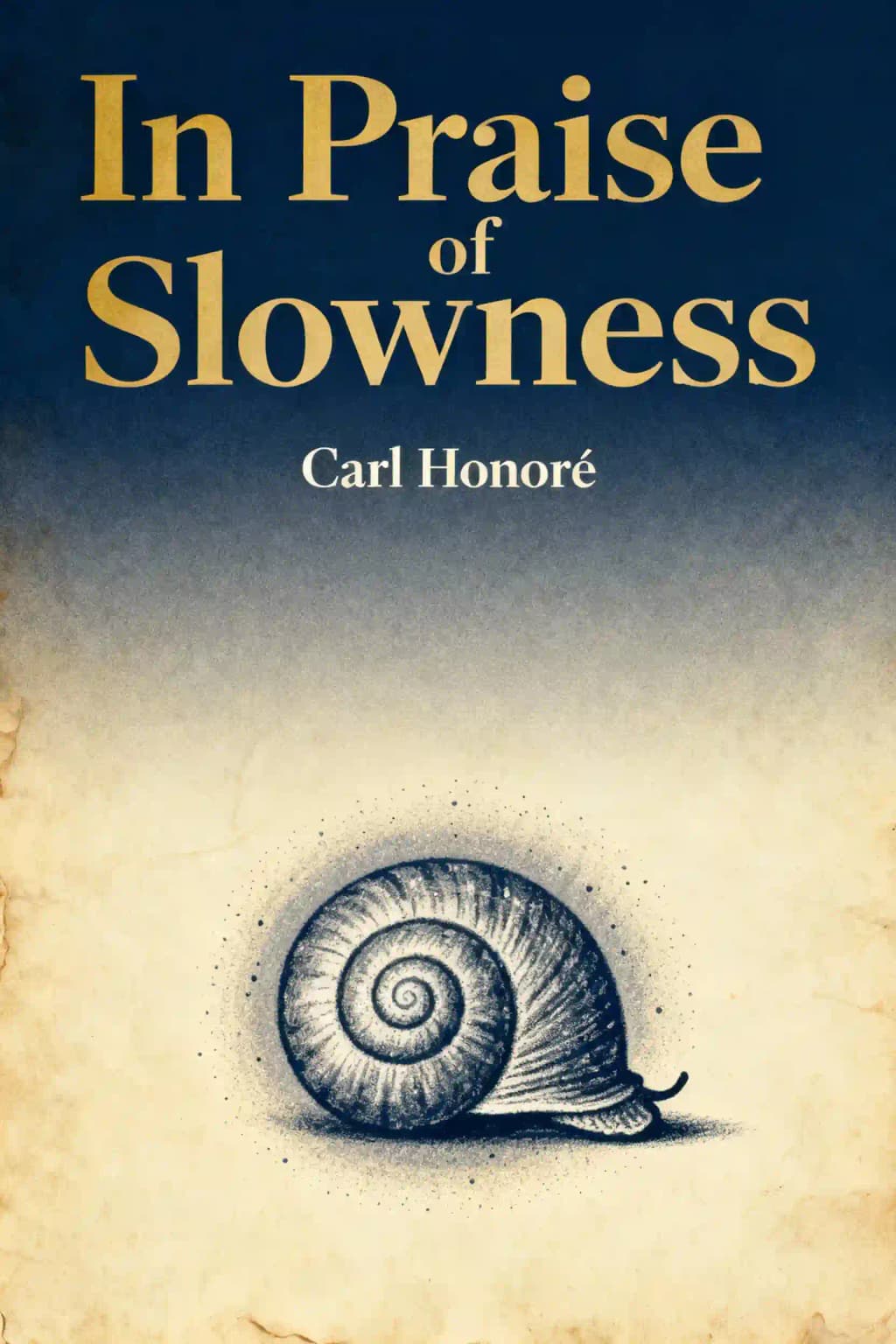
In Praise of Slowness
Challenging the Cult of Speed
Overview of In Praise of Slowness
In a world obsessed with speed, "In Praise of Slowness" challenges our hurried existence. This manifesto sparked the global Slow Movement, influencing everything from food to parenting. What if Gandhi was right - could slowing down actually make you more productive and fulfilled?

Key Themes in In Praise of Slowness
- slow movement
- time sickness
- work-life balance
- intentional living
- cultural acceleration
Quotes from In Praise of Slowness
"There is more to life than increasing its speed."
"We are moving from a world in which the big eat the small to one in which the fast eat the slow."
"Being Slow means controlling the rhythms of your own life."
"Slow is beautiful."
"Most people have not even thought about why they are going so fast."
Characters in In Praise of Slowness
- Carl HonoréAuthor and journalist who investigates slowness
- Carlo PetriniFounder of the Slow Food movement
- Mark KingwellPhilosophy professor at the University of Toronto
- Jurgen AdamTeacher and activist for the Slow movement
- Klaus SchwabFounder of the World Economic Forum
About the Author
About the Author of In Praise of Slowness
Carl Honoré, bestselling author of In Praise of Slowness: Challenging the Cult of Speed, is a globally recognized advocate for the Slow Movement and a pioneer in exploring societal relationships with time and productivity. A Canadian journalist born in Scotland, Honoré draws from his international reporting experience across Europe and South America, including work with street children in Brazil, to inform his critiques of modern culture’s obsession with speed. His books, such as Under Pressure (on hyper-parenting) and The Slow Fix (problem-solving), blend social commentary, psychology, and self-help, reflecting his expertise in balancing efficiency with well-being.
Honoré’s insights have been featured in the Economist, NPR, and TED Talks, establishing him as a leading voice on sustainable living. His works, translated into over 30 languages, challenge readers to rethink productivity, parenting, and aging, with In Praise of Slowness becoming a manifesto for the global Slow Movement. He resides in London, where he continues to write and speak on creating meaningful, balanced lives in a fast-paced world.
Download Summary of In Praise of Slowness
Get the In Praise of Slowness summary as a free PDF or EPUB. Print it or read offline anytime.
FAQs About This Book
In Praise of Slowness explores the global "Slow Movement," advocating for a balanced approach to time in a fast-paced world. Carl Honoré critiques society’s obsession with speed, highlighting how slowing down enhances health, relationships, and productivity. The book covers themes like "time sickness," slow food, work, and parenting, emphasizing quality over quantity without rejecting technology or efficiency.
This book is ideal for overwhelmed professionals, burnout sufferers, parents, and anyone seeking mindfulness in modern life. It resonates with readers interested in work-life balance, productivity without burnout, or reconnecting with deeper values. Honoré’s insights also appeal to leaders aiming to foster calmer, more creative workplaces.
Key ideas include:
- Slow Philosophy: Balancing speed with intentional slowness, not lethargy.
- Time Sickness: The stress of chronic rushing and its health impacts.
- The Slow Paradox: Slowing down often yields faster, better results.
- Slow Movement Branches: Slow food, cities, work, and parenting.
Honoré clarifies that Slow isn’t opposing speed but resisting its tyranny. He celebrates technology and efficiency when balanced with pauses for reflection, connection, and joy. The goal is to choose the right tempo for each task, avoiding the "cult of speed" that erodes well-being.
- “Slow is calm, careful, receptive…making real connections”
- “Spending more time with friends and family costs nothing”
- “The Slow Fix” (later a book title): Solving problems thoroughly, not hastily
Honoré suggests practical steps:
- Work: Schedule downtime, avoid multitasking, set boundaries.
- Food: Cook mindfully; embrace slow food principles.
- Parenting: Prioritize unstructured play over overscheduling.
- Technology: Unplug regularly to recharge.
Some argue the Slow Movement is a privilege for those with flexible schedules. Others misinterpret it as laziness, though Honoré stresses it’s about intentional pacing, not rejection of progress. Critics also note the book focuses more on diagnosis than step-by-step solutions.
Honoré expands on Slow concepts in Under Pressure (slow parenting) and The Slow Fix (problem-solving). His TED talks and podcast further explore balancing speed with slowness in tech-driven eras, making In Praise of Slowness the foundational text for his philosophy.
Yes. With rising burnout rates, AI acceleration, and digital overload, the book’s call for mindful pacing remains urgent. Its principles align with trends like quiet quitting, digital detoxes, and the 4-day workweek, proving its timeless relevance.
The Slow Movement is a global cultural shift toward deceleration and mindfulness across sectors like food, work, and urban design. It emphasizes doing things at the right speed—prioritizing depth, sustainability, and joy over mere efficiency.
Time sickness refers to chronic stress from feeling trapped by the clock. Symptoms include rushing unnecessarily, irritability, and guilt over slowing down. Honoré traces it to industrialization and digital culture, offering Slow practices as remedies.
Yes. Honoré highlights companies that boost creativity and loyalty by reducing haste, encouraging breaks, and fostering deep work. Examples include meeting-free days, email curfews, and “slow leadership” focusing on long-term goals over short-term gains.