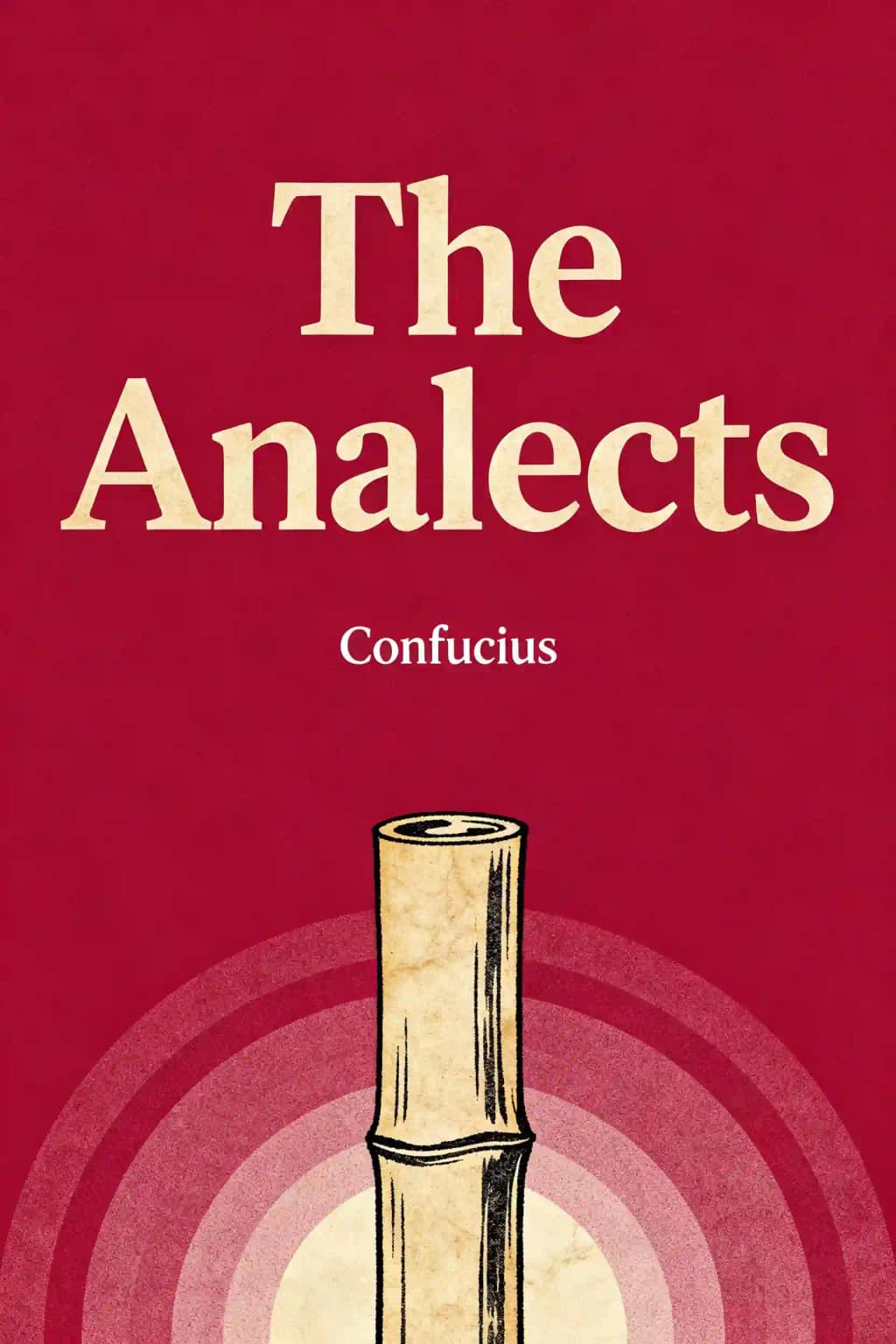
Analects
Overview of Analects
Ancient wisdom that shaped East Asia for millennia, "The Analects" captures Confucius's timeless teachings on virtue, leadership, and human relationships. What philosophical text influenced governments, education systems, and ethical frameworks worldwide yet fits in just 500 powerful assertions?

Key Themes in Analects
- filial piety
- virtuous leadership
- moral self-cultivation
- social harmony
- ritual propriety
Quotes from Analects
To learn, and then to practice opportunely what one has learnt — does not this bring satisfaction?
By nature, men are nearly alike; by practice, they get to be wide apart.
To see what is right and not to do it is want of courage, or of principle.
When you know a thing, to hold that you know it; and when you do not know a thing, to allow that you do not know it – this is knowledge.
Do not impose on others what you yourself do not want.
Characters in Analects
- ConfuciusChina's most influential teacher and philosopher
- ZigongA resourceful disciple of Confucius
- ZiluA brave but impetuous disciple of Confucius
- Yan HuiA morally exemplary disciple of Confucius
- Duke of ZhouA historical ruler who was Confucius's ideal
About the Author
About the Author of Analects
Kong Qiu (Confucius, 551–479 BCE) was the revered Chinese philosopher and founder of Confucianism. He authored the timeless classic The Analects, a cornerstone of Eastern ethical and political thought. Born in Lu (modern Shandong province) to an impoverished aristocratic family, Confucius rose from humble beginnings as a bookkeeper and educator to become ancient China’s most influential thinker.
His teachings, compiled in The Analects, explore ethics, governance, and social harmony through dialogues on virtues like ren (benevolence) and li (propriety). These teachings have shaped East Asian cultural and political frameworks for millennia.
A pioneering advocate of merit-based governance, Confucius emphasized moral self-cultivation, familial duty, and the role of education in societal progress. His philosophy became the Han dynasty’s official ideology and later evolved into Neo-Confucianism, deeply influencing China’s civil service exams and scholarly traditions.
The Analects remains a pillar of classical literature, its aphorisms cited in contexts from leadership training to intercultural dialogue. Translated into over 40 languages, the text has inspired global philosophical discourse and is frequently studied alongside Confucius’s other foundational works in the Five Classics.
Download Summary of Analects
Get the Analects summary as a free PDF or EPUB. Print it or read offline anytime.
FAQs About This Book
The Analects is a compilation of sayings and ideas from Confucius and his disciples, focusing on ethics, governance, and personal virtue. It emphasizes moral principles like ren (benevolence), li (ritual propriety), and filial piety, advocating for ethical leadership and social harmony. Structured as fragmented dialogues, it offers insights into Confucius’s teachings on education, self-cultivation, and the responsibilities of rulers.
This text is essential for students of philosophy, East Asian history, or ethics, as well as leaders seeking insights into moral governance. It’s also valuable for readers interested in classical Chinese literature or foundational texts that shaped Confucianism. Its fragmented structure suits those comfortable with aphoristic wisdom rather than systematic arguments.
Yes, as one of history’s most influential philosophical works, it provides timeless guidance on ethics, leadership, and social relationships. Its teachings on humility, compassion, and moral integrity remain relevant to personal growth and organizational governance. However, readers should expect a non-linear structure and cultural nuances tied to ancient Chinese society.
- Ren (仁): Benevolence or humaneness, the highest virtue guiding ethical behavior.
- Li (禮): Rituals and social norms that maintain harmony.
- Filial Piety: Respect for family and ancestors as the foundation of morality.
- Junzi (君子): The ideal virtuous person who embodies integrity and wisdom.
Confucius argues that rulers must lead by virtue (de) rather than force, stating: “Guide them with virtue and align them with li, and the people will have a sense of shame and fulfill their roles” (2.3). He compares virtuous leadership to the North Star, which commands reverence through stability.
- “When you see a worthy person, aspire to emulate them; when you see an unworthy person, reflect on your own flaws” (4.17).
- “Learning without thought is labor lost; thought without learning is perilous” (2.15).
- “Do not impose on others what you yourself do not desire” (12.2).
Confucius promoted education for all social classes, believing it cultivates moral character and societal harmony. He emphasized lifelong learning, self-reflection, and the practical application of knowledge. His own journey—from “setting his heart on learning at 15” to achieving wisdom by 70—exemplifies this ideal.
Li refers to ceremonial practices and social etiquette that foster respect and order. Confucius viewed rituals as tools to express ren and maintain hierarchical harmony, from family interactions to state affairs. Proper conduct in rituals, he argued, prevents chaos and strengthens communal bonds.
The text stresses aligning actions with ethical principles, even in adversity. For example, Confucius warns against pursuing wealth or status through immoral means: “If attained by not following the dao, do not dwell in them” (4.5). Integrity involves balancing self-interest with social duty.
Critics note its fragmented structure, which lacks systematic philosophy, and its idealized view of feudal hierarchy. Modern readers may challenge its emphasis on unquestioning filial piety or gender roles. Others argue its focus on moral elites overlooks structural inequities.
While both are classical Chinese texts, The Analects prioritizes social ethics and active moral cultivation, whereas the Tao Te Ching advocates for spontaneity and alignment with nature’s flow (wu wei). Confucius emphasizes ritual and education, while Lao Tzu critiques artificial social constructs.
Its teachings on ethical leadership, empathy, and lifelong learning resonate in modern contexts like corporate governance and interpersonal relationships. Concepts like ren and li offer frameworks for addressing cultural diversity and ethical decision-making in a globalized world.