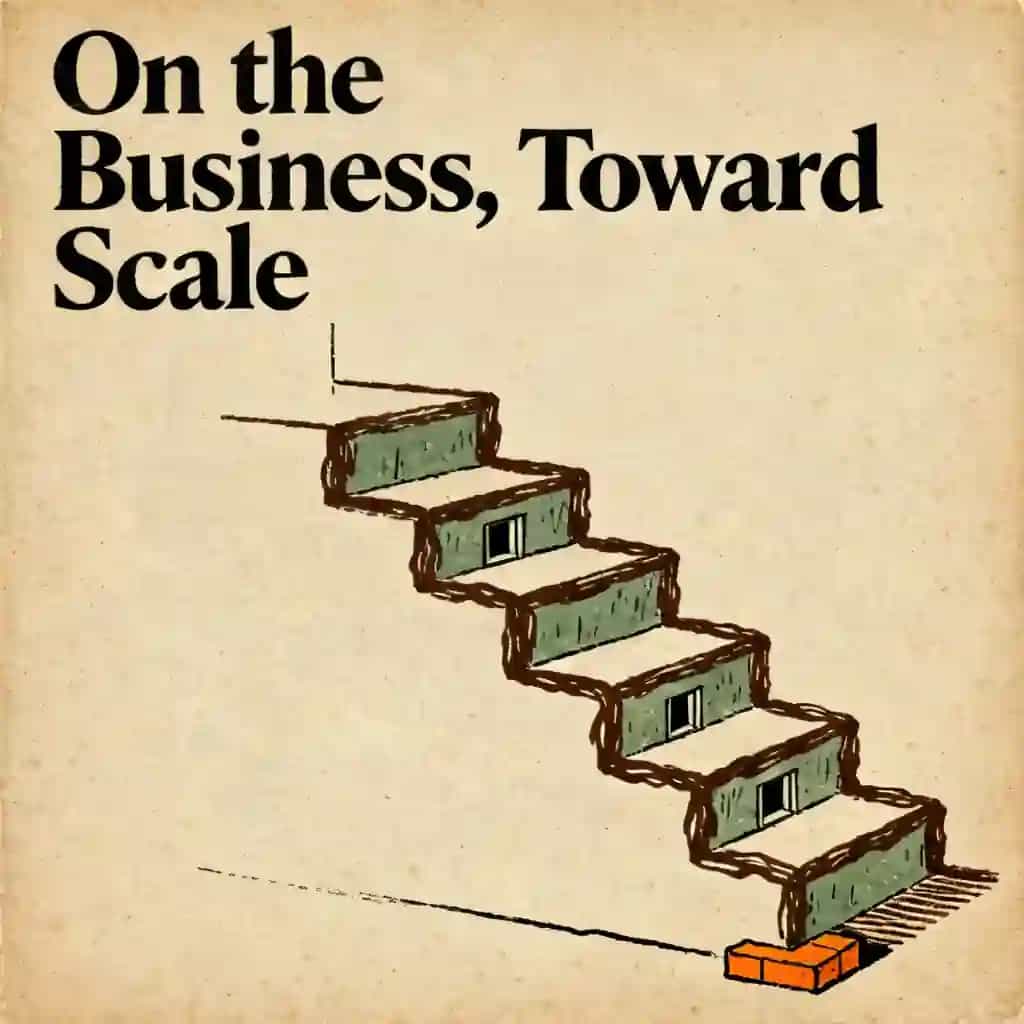
Struggling to scale your business beyond the founder's trap? "Do Scale" by Les McKeown - trusted by Microsoft, Harvard, and the US Army - reveals the seven-stage growth roadmap that transformed Native Shoes and countless others from startup chaos to sustainable success.
Les McKeown, author of Do Scale and founder of Predictable Success, is a globally recognized authority on organizational growth and scalable business strategies. A serial entrepreneur who launched over 40 companies—from tech startups to manufacturing ventures—McKeown combines decades of hands-on experience with frameworks honed through advising Fortune 500 firms like Microsoft, T-Mobile, and American Express. His expertise in aligning leadership teams with sustainable growth principles stems from pioneering one of the world’s first multinational business incubators and creating the European Union’s award-winning Entrepreneurship Program.
McKeown’s Wall Street Journal and USA Today bestselling book Predictable Success established his seven-stage business lifecycle model, while The Synergist expanded on team dynamics for scalable outcomes. A frequent commentator featured on CNN, BBC, and in The New York Times, McKeown’s methodologies are implemented by institutions ranging from Harvard University to the Canadian Defense Department. His work has guided thousands of organizations through inflection points, with frameworks translated into multiple languages and embedded in executive education programs worldwide. Predictable Success remains a cornerstone text for leaders navigating complex growth challenges.
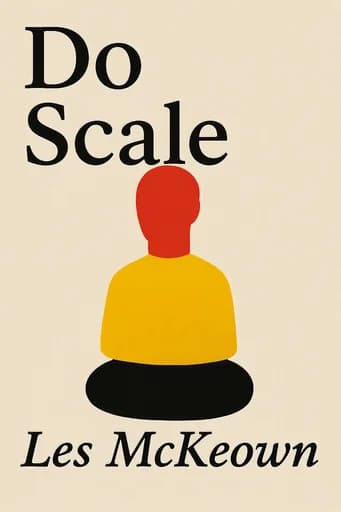
Do Scale by Les McKeown provides a roadmap for scaling businesses sustainably, distinguishing scaling from ordinary growth or short-term "flipping." The book offers practical strategies to navigate challenges like leadership adaptation, decision-making frameworks, and team development. It emphasizes building systems for long-term success, with insights drawn from McKeown’s 25+ years of experience launching 42 companies and advising startups.
Founders, entrepreneurs, and business leaders aiming to transition from startup survival to scalable growth will benefit most. It’s also valuable for executives in nonprofits or established firms seeking sustainable expansion. McKeown’s advice resonates with those struggling to delegate, systematize decision-making, or overcome the "Founder’s Trap" during growth phases.
Yes—readers praise its actionable frameworks, clarity on scaling myths, and relatable examples. One reviewer noted it helped them "validate feelings [they] couldn’t articulate" about leadership transitions. The book balances theory with tools like HQTBDM (High-Quality Timely Business Decision-Making), making it a practical manual for avoiding common scaling pitfalls.
McKeown defines scaling as strategic, sustainable expansion focused on increasing market share and operational resilience. Unlike organic growth, scaling requires intentional systems for decision-making, team development, and founder mindset shifts. He contrasts it with "flipping" (short-term profit-focused exits) and emphasizes scalability as a path to long-term organizational impact.
The Founder’s Trap refers to a leader’s inability to delegate or evolve their role as the business grows. McKeown argues founders often cling to early-stage habits (e.g., micromanaging, relying on gut instincts), which stifles scalability. Solutions include adopting data-driven decisions, empowering teams, and redefining the founder’s responsibilities.
McKeown outlines four stages:
Each stage demands distinct leadership strategies, with scaling requiring formalized processes and decentralized decision-making.
The book introduces HQTBDM (High-Quality Timely Business Decision-Making), a framework to streamline choices as organizations grow. It emphasizes delegating decisions to the lowest competent level, using data over intuition, and creating accountability structures. This approach reduces bottlenecks and aligns teams with scaling goals.
McKeown critiques the "Golden Gut" myth—the belief that a founder’s instincts alone should drive decisions. He argues scaling requires replacing intuition with data-driven processes and collaborative input. This shift helps avoid biases and ensures decisions align with long-term scalability.
McKeown advocates for hiring "versatile specialists" who balance expertise with adaptability. He stresses developing clear role definitions, fostering ownership mindsets, and implementing feedback loops. The book also highlights the importance of leaders mentoring successors to sustain growth.
Some readers note the book focuses heavily on founder-led businesses, with fewer examples for corporate teams. Others mention the HQTBDM framework’s acronym-heavy language can feel jargon-driven. However, most praise its practicality, calling it a "must-read for second-stage entrepreneurs."
Unlike generic growth guides, Do Scale specifically targets the transition from startup to scalable enterprise. It complements Eric Ries’ The Lean Startup (which focuses on early stages) and adds depth to scaling strategies glossed over in books like Traction by Gino Wickman.
With remote work and AI reshaping scalability, McKeown’s emphasis on adaptable systems and decentralized decision-making remains timely. The book’s principles help leaders navigate hybrid teams, automation integration, and global market shifts—making it a resilient guide for modern scaling challenges.
Senti il libro attraverso la voce dell'autore
Trasforma la conoscenza in spunti coinvolgenti e ricchi di esempi
Cattura le idee chiave in un lampo per un apprendimento veloce
Goditi il libro in modo divertente e coinvolgente
Scaling requires a singular focus.
Flipping aims to maximize market share in the shortest possible time.
Approximately 80% of startups fail.
Scaling, by contrast, means creating systems that allow for dramatic expansion.
Before committing to scaling, you must honestly assess whether maximizing market share is truly your primary goal.
Scomponi le idee chiave di Do Scale in punti facili da capire per comprendere come i team innovativi creano, collaborano e crescono.
Distilla Do Scale in rapidi promemoria che evidenziano i principi chiave di franchezza, lavoro di squadra e resilienza creativa.

Vivi Do Scale attraverso narrazioni vivide che trasformano le lezioni di innovazione in momenti che ricorderai e applicherai.
Chiedi qualsiasi cosa, scegli la voce e co-crea spunti che risuonino davvero con te.

Creato da alumni della Columbia University a San Francisco
"Instead of endless scrolling, I just hit play on BeFreed. It saves me so much time."
"I never knew where to start with nonfiction—BeFreed’s book lists turned into podcasts gave me a clear path."
"Perfect balance between learning and entertainment. Finished ‘Thinking, Fast and Slow’ on my commute this week."
"Crazy how much I learned while walking the dog. BeFreed = small habits → big gains."
"Reading used to feel like a chore. Now it’s just part of my lifestyle."
"Feels effortless compared to reading. I’ve finished 6 books this month already."
"BeFreed turned my guilty doomscrolling into something that feels productive and inspiring."
"BeFreed turned my commute into learning time. 20-min podcasts are perfect for finishing books I never had time for."
"BeFreed replaced my podcast queue. Imagine Spotify for books — that’s it. 🙌"
"It is great for me to learn something from the book without reading it."
"The themed book list podcasts help me connect ideas across authors—like a guided audio journey."
"Makes me feel smarter every time before going to work"
Creato da alumni della Columbia University a San Francisco

Ottieni il riassunto di Do Scale in formato PDF o EPUB gratuito. Stampalo o leggilo offline quando vuoi.
Ever wondered why some businesses seem to effortlessly expand while others hit a growth ceiling? The journey from startup to scale isn't about working harder-it's about working differently. Scaling means creating systems that allow for dramatic expansion without proportional increases in resources. It's the difference between adding customers one by one and building a machine that multiplies your impact while maintaining quality. The most common misconception? Confusing ordinary growth with true scaling. While growth means getting bigger linearly, scaling creates exponential results-that famous "hockey stick" curve investors love. What makes this journey particularly challenging is that the very qualities that fuel early success-improvisation, heroics, and gut decisions-often become the biggest obstacles to scaling. Ready to transform your business from a collection of talented individuals into a system that can grow beyond your personal limitations? Let's explore what it really takes to scale.