Capitolo 1
The Startup Accelerator's Playbook
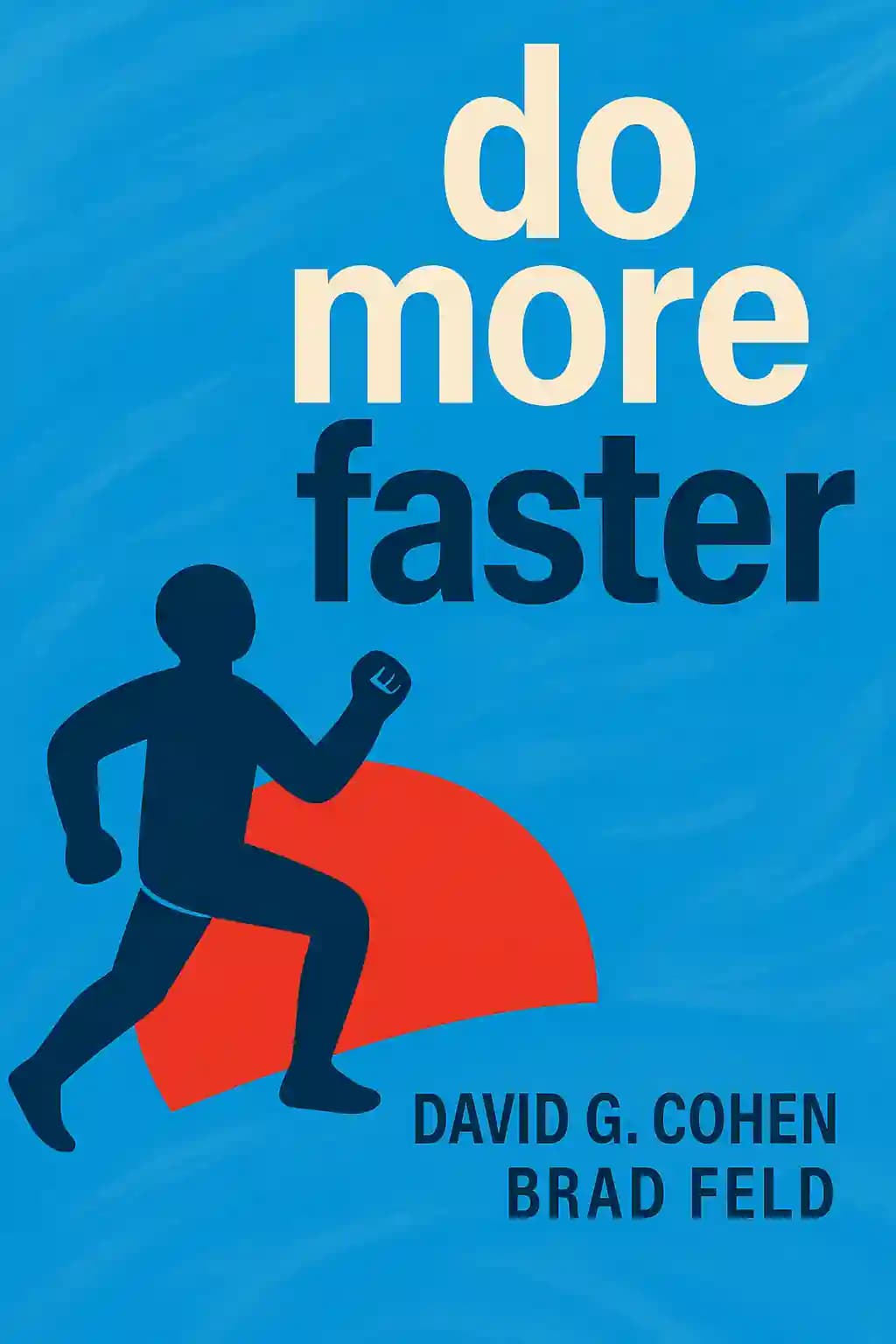
Ever wondered why some startups succeed spectacularly while others flame out? In 2006, David Cohen emailed his friend David Brown about a novel approach to helping entrepreneurs. That email sparked what would become Techstars, now a worldwide network that has funded over 1,700 companies across 30+ countries with an astonishing 80% success rate. Their companies have either become profitable, been acquired by giants like Google and Microsoft, or raised over $7 billion in funding. What's their secret? A mentorship-driven approach that has transformed entrepreneurial communities worldwide. This playbook, endorsed by tech luminaries and successful founders alike, has become required reading for startup founders seeking to beat the overwhelming odds of startup failure.
Capitolo 2
The Myth of the Earth-Shattering Idea
The notion that startups revolve around singular, brilliant ideas is perhaps entrepreneurship's most persistent myth. In reality, successful startups often pivot dramatically from their original concepts. Tim Ferriss, who refuses to sign NDAs from entrepreneurs, argues that ideas without execution are worthless. There's literally no market for ideas-you can't sell them anywhere. They're merely entry tickets to the entrepreneurship game.
This reality plays out repeatedly in the Techstars program. About half their companies end up pursuing substantially different ideas after the program than when they started. Next Big Sound abandoned their original concept after mentors bluntly told them "We love you but your idea sucks" before eventually being acquired by Pandora. Occipital shifted from image compositing software to the successful RedLaser app (later acquired by eBay). DigitalOcean transformed from a standard cloud hosting provider to a developer-focused platform that now hosts millions of applications.
The most successful entrepreneurs understand that others are likely working on similar solutions to the same problems. What matters isn't the initial spark but how quickly you can expose concepts to the real world and adapt. As David Cohen often tells founders: "You can steal ideas, but you can't steal execution."
Instead of chasing theoretical perfection, smart entrepreneurs look for pain points-situations that frustrate you or others-as one of the surest paths to building sustainable businesses. Isaac Saldana created SendGrid after encountering email deliverability problems at his company. What seemed like a trivial issue became weeks of complex troubleshooting, and he discovered thousands of companies faced this same challenge. Testing the market, he found companies readily paid increasing amounts for his solution. SendGrid was born from this specific pain, eventually serving over 150,000 customers including Uber and Spotify.
The willingness to change direction based on data demonstrates entrepreneurial strength, not weakness. The fundamental building blocks entrepreneurs need aren't perfect ideas but rather concepts that can evolve through good feedback and iteration.
Capitolo 3
The Agility Advantage: Moving Faster Than Giants
Startups operate at a severe disadvantage compared to established competitors. They have less money, credibility, customers, and employees. However, they possess one crucial competitive advantage: agility. They can do more faster and learn more faster than larger organizations, often implementing changes in days that would take months in larger companies.
Unlike established companies paralyzed by bureaucracy and fear of mistakes, startups can quickly discard what doesn't work without brand protection concerns. This is precisely why CEOs of major companies fear "a couple of people in a garage"-startups have nothing to lose by trying radical approaches. For instance, when Netflix started, Blockbuster couldn't risk cannibalizing its store revenue with a streaming service, while Netflix had the freedom to experiment with new delivery models.
This agility manifests in several ways. First, startups can make decisions quickly without navigating complex approval chains. When Filtrbox realized their freemium model wasn't optimal, they pivoted immediately to focus on real-time social media monitoring rather than spending months fine-tuning their existing approach. Their inside sales model allowed continuous customer feedback, enabling daily and weekly changes rather than quarterly or annual ones. Similarly, Slack began as a gaming company before pivoting entirely to become a workplace communication platform.
Second, startups can release products before they're perfect, embracing the "minimum viable product" approach. Matt Mullenweg contrasts WordPress's "lost year" between versions 2.0 and 2.1 with Apple's approach of releasing imperfect 1.0 products like the original iPod and iPhone-devices initially criticized but later refined into revolutionary products. Getting products into users' hands, even with flaws, provides the feedback and momentum necessary for success. Dropbox famously launched with a simple video demonstration before building their full product, allowing them to validate market demand.
Third, startups can focus on one thing exceptionally well, avoiding the temptation to compete on multiple fronts. David Cohen warns against "everythingitis"-the fatal startup disease of adding more features than competitors rather than focusing on doing one thing exceptionally well. Instagram, for example, succeeded by focusing solely on photo sharing and filters when other apps were trying to be full social networks. The key is to identify the smallest meaningful problem you can solve better than anyone else, then expand from strength.
Finally, startups can learn from failure without catastrophic consequences, treating setbacks as valuable data points rather than disasters. When Eric Marcoullier found himself miserable as Gnip's CEO, he spontaneously resigned but then realized he could scrap their inflexible tech stack, let go of team members, and rebuild. Within weeks, they were building more features than in the previous six months. Similarly, Airbnb survived multiple near-death experiences, including a complete pivot from targeting conference attendees to becoming a global accommodation marketplace. This ability to pivot quickly and learn from failure gives startups their greatest edge against established competitors.
The agility advantage extends to talent acquisition and culture as well. Startups can attract passionate individuals who value impact over stability, creating nimble teams that can adapt to market changes rapidly. They can also maintain direct communication channels between decision-makers and customers, ensuring quick response to market feedback.
Capitolo 4
Building the Right Team: The Foundation of Success
In the startup world, people aren't just important-they're everything. The first, second, and third priority. As the saying goes, "team, team, team" has replaced real estate's "location, location, location" as the fundamental success factor.
The most successful startups begin with strong founding teams. Mark O'Sullivan learned this lesson when transitioning from solo entrepreneur to appreciating the value of cofounders. Despite initially hesitating to cut his ownership in half, he quickly realized the immense value of partnership during Techstars' demanding program. Cofounders can divide tasks, attend different meetings, and grasp concepts the other might miss. Most importantly, they can reflect together on each day's challenges-something invaluable during the entrepreneurial journey.
However, even strong founding teams face challenges. Dharmesh Shah identifies cofounder conflict as a common cause of startup failure, particularly when key aspects of the relationship remain undefined. Critical questions must be addressed early: how to split equity, how decisions will be made, what happens if a founder leaves, whether founders can be fired, personal goals for the startup, level of commitment from each founder, and financing plans. During every Techstars program, at least one team falls apart due to failure in addressing these issues.
Beyond the founding team, hiring decisions are crucial. Will Herman emphasizes hiring people better than yourself, quoting David Ogilvy: "If each of us hires people who are smaller than we are, we shall become a company of dwarfs. But if each of us hires people who are bigger than we are, we shall become a company of giants." Better team members provide learning opportunities, challenge you to improve, increase team velocity, and expand collective knowledge exponentially.
Equally important is knowing when to let people go. The effort to "fix" a poor fit typically exceeds the time needed to hire someone better. Brad learned this lesson the hard way at Feld Technologies when he delayed firing an employee who clearly didn't fit the company culture. The team's reaction-"Can I have her chair?"-confirmed everyone had been waiting for this decision.
Finally, beyond the core team, great mentors can dramatically accelerate a startup's progress. Finding mentors should be a strategic priority, starting with your existing network and expanding to founders of local companies you respect. The best mentors see potential in you and genuinely want to help you reach it through advice, introductions, and collaborative thinking. True mentorship requires active engagement through consistent, interesting, and thought-provoking communications over time.
Capitolo 5
Customer Obsession: Building What People Actually Want
The most successful startups aren't just building cool technology-they're solving real problems for real customers. This requires an obsessive focus on understanding customer needs and delivering solutions they'll love.
Bill Flagg emphasizes that successful business fundamentally comes down to serving people's needs profitably. At RegOnline, they built their software by continuously responding to customer requests, starting with their very first customer and expanding to 5,000 satisfied users. Getting face-to-face at trade shows, sitting in on demos, and conducting usability testing helped them understand customer needs. Despite entrepreneurial distractions like technology, funding, and hiring, staying focused on listening to customer needs remains the fundamental business purpose.
This customer-centric approach often leads to unexpected discoveries. When Darren Crystal and Alex Welch noticed users of their photo-sharing site were embedding photos on other websites instead of sharing them directly, their first instinct was to stop this unintended behavior. Instead, they wisely studied their analytics and discovered users primarily valued their service as a way to display photos on sites like eBay, LiveJournal, and MySpace. Rather than fighting this trend, they launched Photobucket specifically designed to make this embedding process simple. Users loved it so much they voluntarily donated money to keep the service running.
Niel Robertson captures this philosophy perfectly: "As long as I listen to my customers, I never need to have another original idea." This simple concept-getting customers and then truly listening to them-reverses the common startup approach of trying to persuade customers to try products. Too many startups build what they think customers want rather than what customers actually need.
Implementing this approach requires getting products into customers' hands quickly. Sean Corbett of HaveMyShift launched his shift-trading marketplace within just two weeks of writing the first line of code. His secret? He rode his bicycle to Chicago-area Starbucks locations to directly ask employees and managers what features they needed. Despite concerns about releasing an unpolished product, Sean found that bad experiences don't spread quickly enough to damage growth potential, while fixing user problems quickly can make you a hero.
Ajay Kulkarni and Andy Cheung of Sensobi learned that tech entrepreneurs can't follow the linear model of building a product, charging for it, and waiting for customers. When innovating, nobody knows exactly what the product needs to be-not even customers. Through rapid iteration with early users, they discovered their relationship management app appealed to a much broader professional audience than just the salespeople they initially targeted. The key lesson: have the discipline to release your product with imperfections.
Capitolo 6
Data-Driven Decision Making: Beyond Gut Feelings
In the fog of startup uncertainty, the best entrepreneurs rely on data to guide their decisions while still trusting their instincts when appropriate.
Dave McClure emphasizes that internet businesses have a unique advantage in accessing real-time data and feedback. Success comes from building a culture of measured analytics to determine if you're making users happy and making money. The five key metrics to measure (which spell "AARRR!") are: Acquisition (how users find you), Activation (first experience quality), Retention (return rate), Referral (whether users tell others), and Revenue (monetization). By obsessing over these "Pirate Metrics," startups can determine if their product truly delights users enough that they'll tell everyone they know.
However, Ryan McIntyre offers seemingly contradictory advice: be suspicious of your data while simultaneously measuring everything possible. Early data can mislead-initial success with one customer segment might lead to focusing on what turns out to be only 4% of your potential market. Founders must constantly revisit their metrics, as measuring the wrong things can be worse than measuring nothing at all. Additionally, technology often follows exponential rather than linear growth, making early data points potentially misleading.
Eric Ries argues that revenue alone isn't sufficient for measuring startup progress. He contrasts two companies: Company A with $1 million in revenue but non-scalable, founder-dependent sales processes, versus Company B with only $30,000 revenue but scalable customer acquisition methods and deep understanding of unit economics. Company B, despite lower revenue, has better growth prospects because they've developed a formula for acquiring, qualifying, and selling to customers that can scale beyond the founders. True progress for startups is "validated learning about customers"-understanding profitability per customer, total available market, customer acquisition costs, and how customers respond to products over time.
Brad Feld warns entrepreneurs against mistaking multiple anecdotes for meaningful data. At Techstars, mentors share valuable stories from their experiences, but these can lead to conflicting advice. One mentor might advocate for a vertical market approach based on their success, while another recommends against it based on their failure. These contradictions actually benefit entrepreneurs by forcing deeper thinking about their specific circumstances. In the information hierarchy, anecdotes come before data-entrepreneurs need to collect many anecdotes before they can abstract meaningful patterns.
The best decisions ultimately come from gathering all possible inputs, then trusting both your head and gut. As Andy Smith of DailyBurn demonstrates, this balanced approach led them to focus on building one thing well-a social workout tracking tool-before carefully expanding into nutrition tracking based on user feedback and data.
Capitolo 7
The Fundraising Game: Capital as Fuel, Not Destination
Many entrepreneurs mistakenly view fundraising as a goal rather than a means to an end. In reality, raising capital is just one possible path to building a successful business, and it comes with significant trade-offs.
Brad Feld challenges entrepreneurs who immediately seek venture capital by asking "Why?" He outlines several alternative funding sources: Friends and Family (the most common seed funding source); Angel Investors (including lone angels, super angels, and angel groups); Customers (the most satisfying form of financing through revenue generation); Partners (established companies that might fund collaborative work); and Grants (such as the SBIR program for R&D-intensive companies). Feld's first company, Feld Technologies, started with just $10 and grew through customer revenue, proving that venture capital isn't the only path to success.
David Brown reflects on bootstrapping Pinpoint Technologies in 1993 with David Cohen, highlighting how necessity drove frugality that ultimately benefited their business. Without funding options, they created a prototype with minimal funds and secured a $100,000 customer loan, which spawned a company reaching $40 million in annual sales with 200 employees. The true value wasn't just retaining 100% ownership, but maintaining control to make decisions benefiting customers, employees, and long-term business health.
For those who do pursue investment, Jeff Clavier distills early-stage investment criteria to three essentials: "People, Products, and Markets." As a seed investor, he first evaluates whether the target market is large enough to support substantial growth-reaching $10M+ revenue in three years and $50-100M in five to seven years without requiring total market domination. Second, he examines product traction through existing users or compelling mockups. Most critically, he assesses the founding team for qualities including passion, determination, intelligence, agility, focus, empathy, leadership, and work ethic.
Alex White describes fundraising as uniquely challenging because success depends on numerous variables beyond the entrepreneur's control. He emphasizes that investors need reassurance that founders understand the unknowns and are systematically addressing them. Fundraising requires full-time dedication-Alex rewrote his pitch 100 times and practiced it 500 times before Demo Day, preparing answers for every possible question.
Nicole Glaros observes that Techstars founders who actively engage mentors early in the program have more success raising capital later. She explains the wisdom behind "When you want money, ask for advice" through three principles: First, investors say no 99% of the time and instinctively look for weaknesses when directly approached for funding, but freely offer advice. Second, early engagement allows investors to track your progress and reduce perceived risk over time. Third, "what someone helps write, they will help underwrite"-when mentors feel ownership in your decisions and direction, they become champions willing to invest and encourage others to follow.
Capitolo 8
Legal Foundations: Getting It Right from the Start
While team issues are the top startup killer, undocumented legal and structural matters run a close second. Too many founders postpone these issues, assuming they can handle them later-sometimes they're right, but sometimes it's fatal.
Brad Bernthal explains why forming your company early is critical. Many entrepreneurs don't realize that their business already exists legally as either a sole proprietorship or general partnership by default-forms that don't separate business liabilities from personal ones. Three key reasons to establish proper legal structure early: limit personal exposure, protect your intellectual property, and establish ownership percentages to prevent future disputes.
When starting your company, you have three main corporate structure options: S-Corp (ideal if you're not raising VC or angel money), C-Corp (the best structure if you're planning to raise VC or angel funding), and LLC (similar to S-Corps but with advantages like issuing different security classes). The right choice depends on your financing plans and tax preferences.
Jon Taylor explains why Delaware is the preferred state for incorporation. Delaware offers several advantages: it's generally pro-company, provides flexibility in creating corporate governance terms, enables quick and painless filings, and most importantly, has a well-developed body of corporate law that provides clear guidelines for directors and officers.
Michael Platt addresses the common founder misconception that lawyers are too expensive for early-stage startups. While bootstrapping legal work might seem cost-effective 80% of the time, the other 20% can lead to costly mistakes. To control legal costs while getting quality counsel: choose the right lawyer who has worked with hundreds of startups, discuss budget upfront, develop a collaborative relationship with your lawyer, request "just-in-time" legal work, and resolve key issues before drafting documents.
Brad Feld warns against using unqualified lawyers for startup matters, regardless of personal connections. While experienced startup lawyers understand the unique needs of early-stage companies, non-startup lawyers, often friends or relatives of entrepreneurs, lack fundamental understanding of standard startup practices, making negotiations unnecessarily difficult.
Jon Fox explains that vesting benefits founders, not just investors. Without vesting agreements, if a cofounder leaves, they'd keep all their shares despite no longer contributing. The standard four-year vesting period has become an accepted timeframe to earn founder equity, creating clear rules of engagement that prevent disputes when circumstances change.
Matt Galligan explains why the 83(b) election is one of the most important documents founders will sign. With restricted stock that vests over time, founders face a tax problem: as stock vests and increases in value, they owe taxes on paper gains without having cash to pay them. Filing an 83(b) election within 30 days of receiving stock grants allows founders to pay all taxes upfront when shares are worth almost nothing.
Capitolo 9
Work-Life Harmony: Sustainable Entrepreneurship
While successful entrepreneurs typically demonstrate extraordinary work ethic-working seven days a week from dawn until well past dark-the best founders also understand the importance of disconnecting and unwinding. This balance, which Brad and David call "work-life harmony," makes entrepreneurs stronger and more effective.
Brad Feld shares his personal journey to work-life harmony after 15 years of imbalance that cost him his first marriage and nearly his second. Despite professional success, Brad was constantly exhausted, physically unhealthy, and emotionally absent until his wife Amy delivered an ultimatum. This wake-up call led Brad to develop specific habits that created structure and balance: quarterly week-long vacations completely disconnected from work; monthly "life dinners" to reflect with his wife; segmenting physical spaces between work and home life; practicing presence in the moment; and various forms of meditation including running, reading, and isolation tank sessions.
Amy Batchelor argues that entrepreneurs need regular, complete breaks from work to maintain perspective and sustainability. She describes how she and Brad established a quarterly ritual of disconnecting entirely for one week-no work, calls, email, or devices. These breaks offer both practical and emotional benefits. Preparing for vacation creates productive urgency, while returning brings renewed clarity and enthusiasm. Building a company that can function without you demonstrates good systems and proper delegation. This 8% time commitment (four weeks yearly) delivers disproportionate benefits to entrepreneurs' effectiveness, relationships, and mental health.
Howard Lindzon explains how pursuing your passions can transform work into play. As someone passionate about financial markets, his startups in this space have been genuinely fun. In 2006, he created Wallstrip, a daily three-minute videoblog analyzing trending stocks. Howard believes magical things happen when you invest energy where your passion lies, as entrepreneurs need an edge amid the endless, sometimes tedious work of startups. While it's the hardest he's ever worked, he's having a blast. Howard balances this with his other passion, golf, which provides necessary release and renewed energy.
Andy Smith emphasizes the importance of maintaining physical health while building a startup. Though the Techstars program demands 18-hour workdays for three months straight, this pace isn't sustainable long-term. Andy compares entrepreneurship to both a sprint and marathon, requiring proper preparation. He recommends exercising five days weekly (even just 20 minutes of high-intensity training), eating healthy meals 80% of the time (focusing on fresh foods with recognizable ingredients), sleeping at least seven hours nightly, and taking weekly perspective breaks to consider the bigger picture.
Seth Levine describes how taking business meetings outside traditional office settings can lead to greater productivity and enjoyment. His experiments with out-of-office meetings primarily involve bicycle rides in the Boulder foothills. He found that asking entrepreneurs about their business during rides not only slowed their pace but created the perfect environment to gain perspective on company challenges-insights they couldn't achieve within office walls.
When starting a company, founders naturally immerse themselves completely in the business. However, David Cohen warns that this can't continue indefinitely without harming both personal health and company sustainability. A healthy company should function smoothly even when the founder is absent. Being dispensable doesn't diminish your importance; rather, it indicates you're building the company correctly.