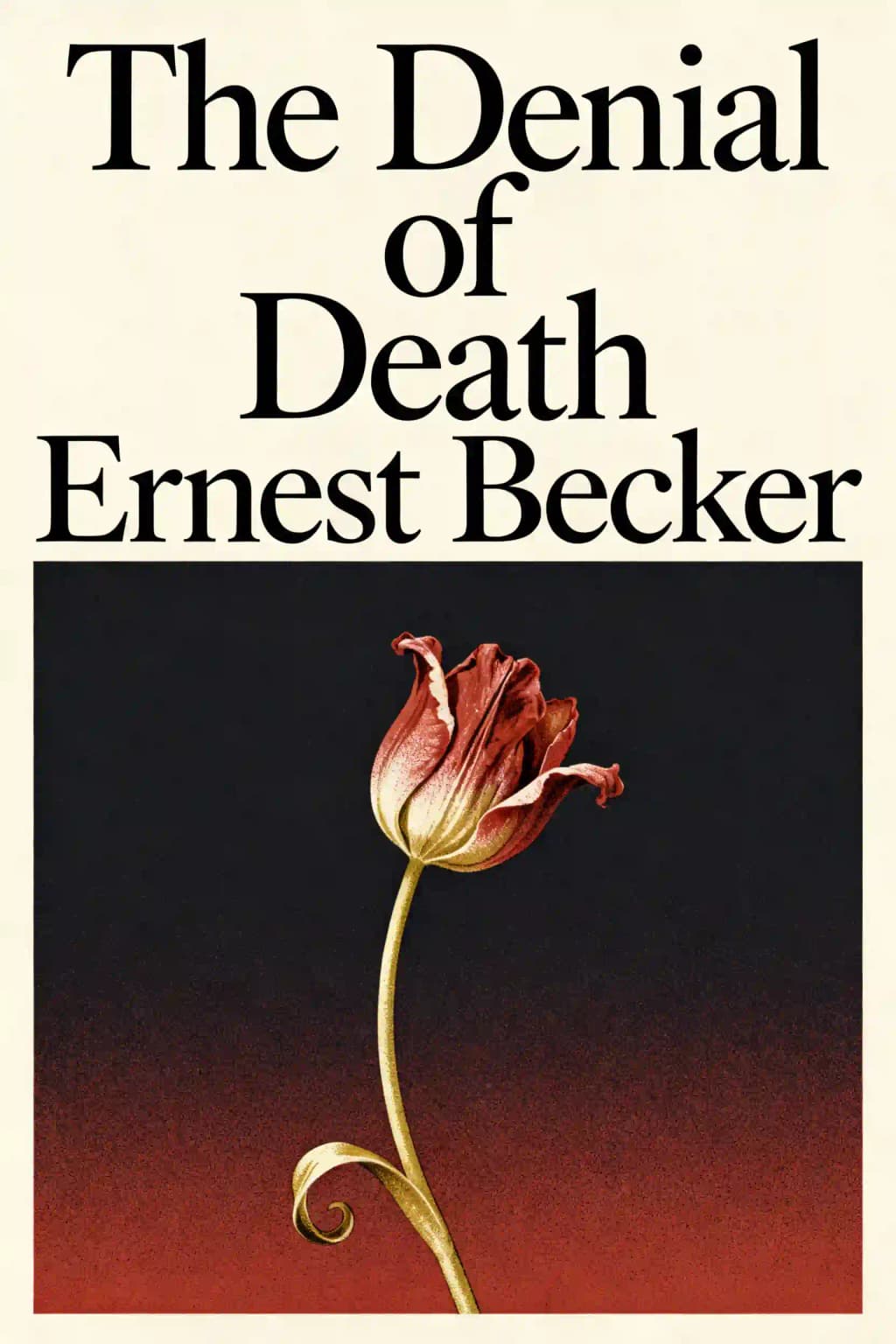
The denial of death
Overview of The denial of death
Pulitzer Prize-winning masterpiece exploring why we deny death. This book inspired Terror Management Theory and captivated minds like Tim Ferriss with its radical proposition: our immortality projects - from religion to achievement - are elaborate shields against our greatest fear. What's your defense mechanism?

Key Themes in The denial of death
- death anxiety
- heroic transcendence
- immortality projects
- terror management
- existential repression
Quotes from The denial of death
We know we'll die, yet we live as if immortal.
Mankind has always held the world to be 'essentially a theatre for heroism.'
Character traits are essentially 'secret psychoses.'
We evade growth because we lack strength to endure life's overwhelming beauty.
Our very self becomes foreign to us.
Characters in The denial of death
- Ernest BeckerAuthor and Pulitzer Prize-winning cultural critic
- Sam KeenAuthor of the book's foreword
About the Author
About the Author of The denial of death
Ernest Becker (1924–1974) was a cultural anthropologist and existential psychologist whose Pulitzer Prize-winning book, The Denial of Death, bridges philosophy, psychology, and sociology. Born in Massachusetts to Jewish immigrants, his worldview was profoundly shaped by his infantry service in World War II, which included the liberation of a Nazi concentration camp. This experience deeply informed his exploration of human mortality and meaning.
Becker was a professor at Syracuse University and Simon Fraser University. His interdisciplinary approach synthesized insights from influential thinkers such as Freud, Kierkegaard, and Otto Rank.
The Denial of Death, a seminal work in existential psychology, examines how humanity’s awareness of mortality drives cultural, religious, and personal quests for symbolic immortality. Becker’s other notable books, including Escape from Evil and The Birth and Death of Meaning, further dissect themes of heroism, societal structures, and the psychological roots of human behavior. Awarded the Pulitzer Prize posthumously in 1974, The Denial of Death remains a cornerstone in existential thought, cited in academic circles and adapted into the documentary Flight from Death. Its enduring relevance is underscored by translations into over 20 languages and its continued influence on contemporary psychology and philosophy.
Download Summary of The denial of death
Get the The denial of death summary as a free PDF or EPUB. Print it or read offline anytime.
FAQs About This Book
The Denial of Death explores humanity’s psychological strategies to suppress the terror of mortality. Becker argues that cultural hero systems, symbolic self-worth, and “character armor” help individuals avoid confronting their vulnerability and inevitable death. The book blends anthropology, psychology, and philosophy to examine how these defenses shape behavior, violence, and societal structures.
This book is ideal for readers interested in existential psychology, philosophy, or anthropology. Psychologists, students of human behavior, and those grappling with questions about mortality and meaning will find its insights profound. However, its academic tone may challenge casual readers.
Yes—it’s a Pulitzer Prize-winning work praised for its groundbreaking analysis of human motivation. While dense, it offers timeless insights into how fear of death influences identity, conflict, and culture. Critics note its heavy reliance on Freudian theory, but its core ideas remain influential.
Key concepts include:
- Mortality terror: Anxiety about death drives human behavior.
- Hero systems: Cultural narratives (religion, fame, legacy) provide symbolic immortality.
- Character armor: Psychological defenses mask vulnerability but limit authentic living.
The “vital lie” refers to the illusions people create to avoid acknowledging their mortality. By clinging to cultural heroism or relationships, individuals pretend life is eternally significant, shielding themselves from existential dread. Becker argues this self-deception is necessary yet limiting.
Self-transcendence involves moving beyond ego-driven heroism to confront mortality directly. By “tasting death” emotionally, individuals can embrace humility and creativity, freeing themselves from rigid defense mechanisms. Becker links this to mystical traditions and psychological growth.
- “Man is literally split in two”: Highlights the tension between physical mortality and symbolic immortality.
- “The irony of man’s condition”: Humans seek heroism but remain “worms and food for worms”.
Becker argues that materialism, nationalism, and dogmatism stem from unaddressed death anxiety. These systems offer false immortality, perpetuating violence and intolerance. The book urges reevaluating societal values to reduce destructive behaviors.
Critics argue its Freudian focus oversimplifies human motivation, and its academic prose alienates general readers. Some question Becker’s dismissal of love as another “heroic project.” Despite this, its interdisciplinary approach remains influential.
In 2025, as AI and longevity science advance, Becker’s ideas resonate in debates about meaning in a tech-driven world. The book’s themes underpin discussions on mental health crises and societal fragmentation linked to existential uncertainty.
Both explore human resilience, but Becker focuses on mortality denial, while Frankl emphasizes purpose. Becker’s analysis is more anthropological; Frankl’s is experiential. They complement each other on finding meaning amid life’s fragility.
Hero systems are cultural frameworks (religion, art, career) that let individuals feel part of something eternal. Becker warns that rigid adherence to these systems fuels intolerance, as people demonize those who threaten their immortality narratives.





