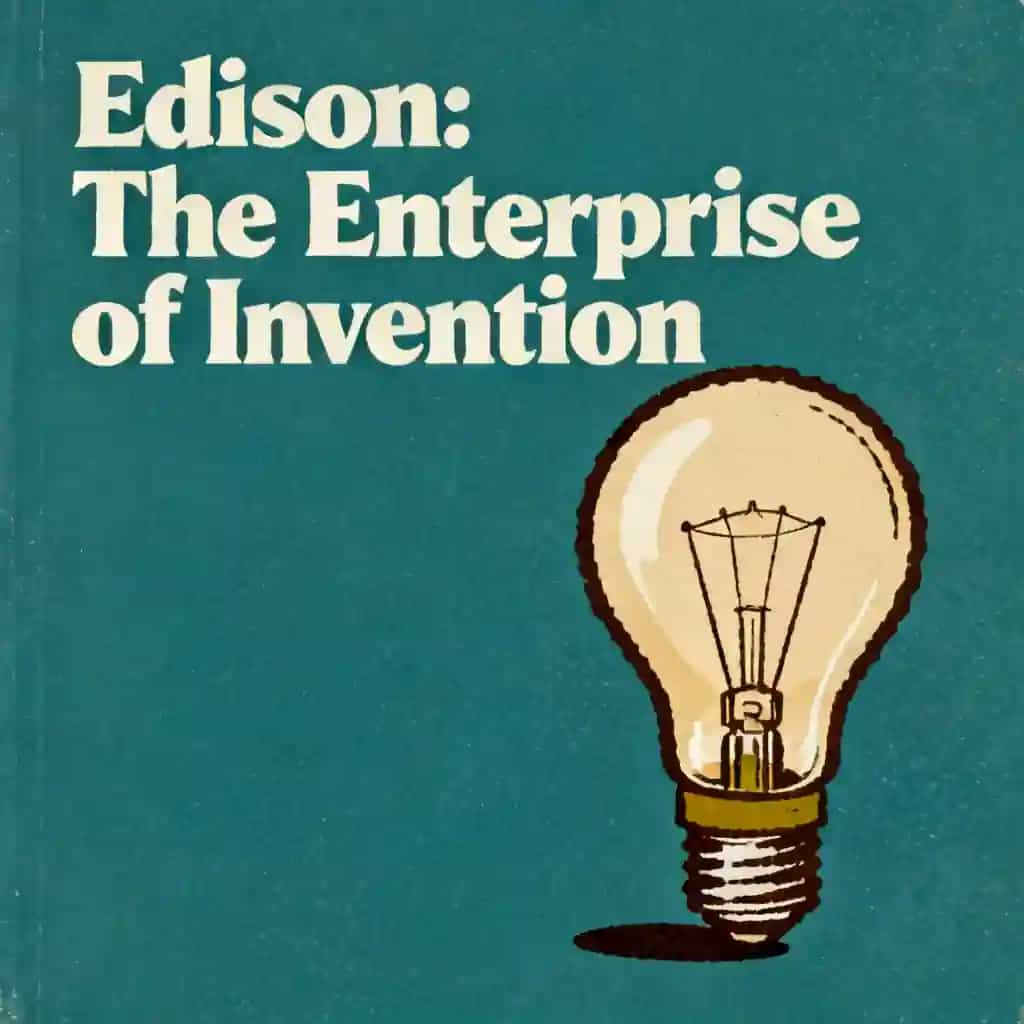
"Edison" by Edmund Morris unveils the complex genius behind 1,093 patents that power our modern world. A Pulitzer Prize finalist that captivated Walter Isaacson, this biography reignites debates about innovation ethics. What dark truths about America's greatest inventor remain hidden in plain sight?
Edmund Morris (1940–2019) was a Pulitzer Prize-winning biographer and author of Edison, specializing in crafting definitive portraits of transformative historical figures. Born in Kenya and educated in South Africa, Morris transitioned from advertising copywriter to master biographer.
He is best known for his acclaimed trilogy on Theodore Roosevelt—The Rise of Theodore Roosevelt (Pulitzer Prize and National Book Award), Theodore Rex, and Colonel Roosevelt—a 2,500-page achievement hailed for blending rigorous scholarship with narrative brilliance. His groundbreaking Dutch: A Memoir of Ronald Reagan, the only biography authorized by a sitting president, redefined presidential historiography through innovative storytelling.
Morris’s works explore themes of leadership, innovation, and legacy, reflecting his meticulous research and literary flair. A trusted voice in historical biography, his final book, Edison, dissects the inventor’s genius, cementing Morris’s reputation for resurrecting complex icons. His Roosevelt trilogy remains essential reading in U.S. history curricula, with The Rise of Theodore Roosevelt enduring as a 20th-century biographical classic.
Bedtime Biography: Edison chronicles Thomas Edison’s journey from a newsboy to America’s most prolific inventor, highlighting his relentless work ethic, curiosity, and impact on modern technology. Edmund Morris delves into Edison’s personal struggles, including his hearing loss, entrepreneurial ventures, and relationships, while emphasizing his 1,093 patents and innovations like the phonograph and electric light.
This book is ideal for history enthusiasts, innovators, and readers fascinated by biographical deep dives. Morris’s narrative appeals to those interested in Edison’s problem-solving mindset, his failures in mining and cement ventures, and how his inventions shaped 20th-century industrialization.
Yes—Morris’s seven years of research, access to Edison’s five-million-page archive, and engaging prose make this a definitive biography. It balances technical insights with humanizing anecdotes, such as Edison’s insomnia-driven work habits and strained family dynamics, offering a nuanced portrait of a complex genius.
Morris employs vivid storytelling, blending meticulous detail with narrative flair. He contextualizes Edison’s inventions within societal shifts, explores his rivalry with Nikola Tesla, and contrasts his obsessive focus with his emotional detachment from loved ones, creating a multidimensional portrayal.
The book highlights Edison’s phonograph, incandescent light bulb, and motion picture camera. It also examines lesser-known projects like his failed iron-ore mining venture and cement innovations, showcasing his iterative approach to problem-solving.
Edison’s progressive deafness, starting in adolescence, sharpened his focus on visual and tactile experimentation. Morris argues this “sensory isolation” fostered deep concentration, enabling breakthroughs like sound recording despite his disability.
Some readers may find Morris’s technical descriptions dense, particularly in sections detailing electrical engineering concepts. Additionally, the book prioritizes Edison’s professional achievements over his personal life, offering limited insight into his marriages and children.
Unlike purely technical accounts, Morris emphasizes Edison’s psychological drive and business acumen. The reverse chronological structure in later chapters distinguishes it from linear biographies, revealing how晚年 health struggles fueled his urgency to innovate.
Edison’s relentless experimentation (“1% inspiration, 99% perspiration”) underscores the value of iterative failure. His ventures into electric power distribution and battery storage also illustrate the importance of scalable infrastructure for technological adoption.
As AI and renewable energy dominate innovation, Edison’s systemic approach to R&D—merging invention with commercialization—offers a blueprint for tackling climate change and tech ethics. His adaptability mirrors today’s startup culture of pivoting amid disruption.
The book acknowledges Edison’s use of stray animals in electrocution experiments to discredit AC power. Morris frames this as part of his ruthless rivalry with George Westinghouse, revealing the dark side of his competitive drive.
Morris relied on the Edison National Historic Park’s five million documents, Rutgers University’s Edison Papers, and contemporaneous news articles. This exhaustive research debunks myths, such as Edison “stealing” ideas, by tracing his patent filings and lab notebooks.
Senti il libro attraverso la voce dell'autore
Trasforma la conoscenza in spunti coinvolgenti e ricchi di esempi
Cattura le idee chiave in un lampo per un apprendimento veloce
Goditi il libro in modo divertente e coinvolgente
My mother was the making of me.
Life is so short, I am going to hustle.
Persistent effort trumped natural talent.
I was never so taken aback in my life.
Edison is the perfect example of how one person's imagination can literally reshape civilization.
Scomponi le idee chiave di Bedtime Biography in punti facili da capire per comprendere come i team innovativi creano, collaborano e crescono.
Distilla Bedtime Biography in rapidi promemoria che evidenziano i principi chiave di franchezza, lavoro di squadra e resilienza creativa.

Vivi Bedtime Biography attraverso narrazioni vivide che trasformano le lezioni di innovazione in momenti che ricorderai e applicherai.
Chiedi qualsiasi cosa, scegli la voce e co-crea spunti che risuonino davvero con te.

Creato da alumni della Columbia University a San Francisco
"Instead of endless scrolling, I just hit play on BeFreed. It saves me so much time."
"I never knew where to start with nonfiction—BeFreed’s book lists turned into podcasts gave me a clear path."
"Perfect balance between learning and entertainment. Finished ‘Thinking, Fast and Slow’ on my commute this week."
"Crazy how much I learned while walking the dog. BeFreed = small habits → big gains."
"Reading used to feel like a chore. Now it’s just part of my lifestyle."
"Feels effortless compared to reading. I’ve finished 6 books this month already."
"BeFreed turned my guilty doomscrolling into something that feels productive and inspiring."
"BeFreed turned my commute into learning time. 20-min podcasts are perfect for finishing books I never had time for."
"BeFreed replaced my podcast queue. Imagine Spotify for books — that’s it. 🙌"
"It is great for me to learn something from the book without reading it."
"The themed book list podcasts help me connect ideas across authors—like a guided audio journey."
"Makes me feel smarter every time before going to work"
Creato da alumni della Columbia University a San Francisco

Ottieni il riassunto di Bedtime Biography in formato PDF o EPUB gratuito. Stampalo o leggilo offline quando vuoi.
In 1879, a scruffy inventor in a New Jersey laboratory carbonized a simple cotton thread, sealed it in a glass bulb, and watched it glow for thirteen hours straight. That moment didn't just birth the light bulb-it announced the arrival of a man who would reshape civilization itself. Thomas Edison wasn't born brilliant. He was kicked out of school after three months, labeled "addled" by a teacher who couldn't grasp his restless curiosity. Yet this supposedly slow child would go on to hold 1,093 patents and create industries that didn't exist before he imagined them. What made Edison extraordinary wasn't genius in the traditional sense-it was something far more accessible and, frankly, more inspiring: an almost superhuman capacity for work married to an unshakeable belief that problems were just puzzles waiting to be solved.