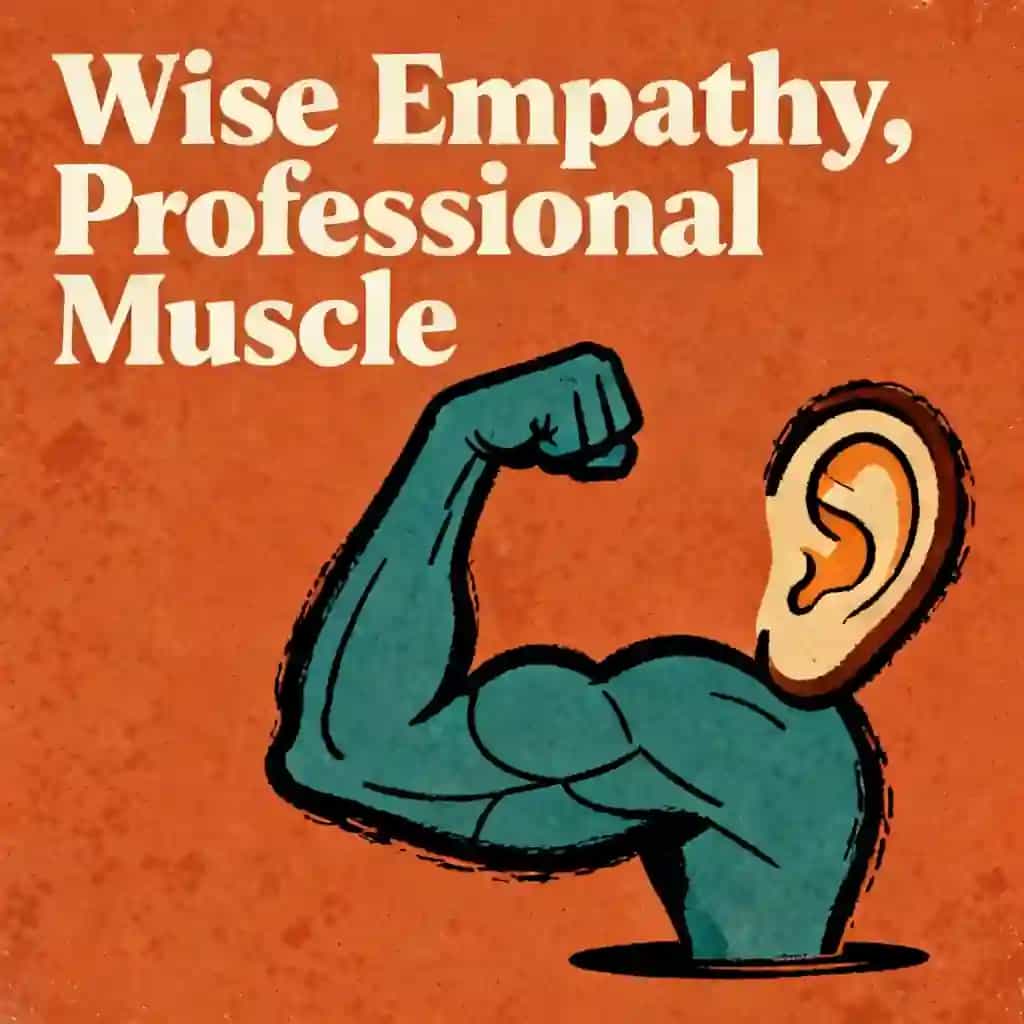
Awakening Compassion at Work
The Quiet Power That Elevates People and Organizations
Panoramica di Awakening Compassion at Work
Discover how compassion transforms workplaces in this groundbreaking guide endorsed by Adam Grant and Tom Rath. What if suffering at work isn't inevitable? Using two decades of research, Worline and Dutton reveal how small compassionate actions dramatically boost innovation, retention, and organizational success.
Temi chiave in Awakening Compassion at Work
- workplace suffering
- organizational empathy
- compassionate leadership
- employee engagement
- human-centered management
Citazioni da Awakening Compassion at Work
Compassion isn't about being 'soft' or lowering standards.
When compassion is called for, your bottom line is at stake.
Compassion transforms routine customer service into meaningful human connection.
Suffering permeates our workplaces, though we rarely acknowledge it.
Personaggi di Awakening Compassion at Work
- Monica C. WorlineAuthor and researcher of workplace compassion
- Jane E. DuttonAuthor and researcher of workplace compassion
- PattyEmployee whose desk was relocated without warning
- LaShondaWorker denied time off following a family death
- AndyEngineering manager who supported a grieving peer
Sull'autore
Sull'autore di Awakening Compassion at Work
Monica C. Worline and Jane E. Dutton, authors of Awakening Compassion at Work: The Quiet Power That Elevates People and Organizations, are pioneering organizational psychology scholars and compassionate leadership experts.
Their book merges rigorous academic research with actionable strategies for fostering empathy in workplace culture, reflecting their decades of collaboration through CompassionLab—the world’s leading research hub on organizational compassion.
Worline is CEO of EnlivenWork and a Stanford University research scientist, combining innovation frameworks with compassionate leadership practices. Dutton is a Distinguished University Professor at the University of Michigan’s Ross School of Business, co-founded the Center for Positive Organizations, and authored 13 books, including How to Be a Positive Leader.
Their work has guided Fortune 500 companies, healthcare systems, and academic institutions, with Awakening Compassion at Work becoming required reading in MBA programs. The book is celebrated as a seminal text in positive organizational scholarship, endorsed by Stanford’s Center for Compassion and global thought leaders like Adam Grant.
Scarica il riassunto di Awakening Compassion at Work
Ottieni il riassunto di Awakening Compassion at Work in formato PDF o EPUB gratuito. Stampalo o leggilo offline quando vuoi.
FAQ su questo libro
Awakening Compassion at Work by Monica C. Worline and Jane E. Dutton explores how cultivating compassion in organizations boosts employee well-being, innovation, and profitability. It presents a 4-step framework (Notice, Interpret, Feel, Act) to address workplace suffering and transform cultures. The book combines research with real-world examples, showing how compassion strengthens teamwork, retention, and resilience.
This book is essential for HR leaders, managers, and executives aiming to build humane, high-performing workplaces. It’s also valuable for employees seeking tools to navigate stress or organizational change. Coaches and change agents will appreciate its evidence-based strategies for fostering psychological safety and connection.
Yes—it’s a groundbreaking guide backed by 20+ years of research from Stanford and University of Michigan experts. Unlike generic leadership advice, it offers actionable steps to systemically embed compassion into workflows, meetings, and policies. Readers gain tools to address burnout while improving operational outcomes.
Core ideas include:
- Compassion as a learnable skill, not innate trait
- Suffering as a hidden cost draining productivity
- Collective capacity—compassion thrives through team rituals, not just individual acts
- The business case linking compassion to innovation and talent retention
The NIFA model guides responses to suffering:
- Notice suffering through active listening
- Interpret it as relevant to work
- Feel empathy without overwhelm
- Act with tailored support (e.g., flexible schedules, mentorship)
Compassionate workplaces see 27% lower turnover and 40% higher engagement (linked to 21% greater profitability). By reducing stress-related absenteeism and fostering collaboration, organizations save costs while accelerating problem-solving.
Leaders model compassion by openly acknowledging struggles and instituting practices like “mental health days” or peer recognition programs. They also redesign systems—e.g., replacing punitive policies with coaching—to make compassion a cultural norm.
The book reframes suffering (e.g., layoffs, conflicts) as critical business challenges rather than personal issues. It provides tools to create “compassionate containers”—meeting structures where teams safely discuss difficulties and co-create solutions.
- Start meetings with emotional check-ins
- Train managers in empathic listening
- Create peer support networks like “compassion buddy” systems
- Use storytelling to normalize vulnerability about work challenges
Unlike tactical guides (e.g., Atomic Habits), this book focuses on systemic cultural change. It complements Brené Brown’s vulnerability research by adding organizational design strategies, making compassion scalable beyond individual relationships.
Some argue compassion initiatives may overburden employees if not paired with structural support. Critics also note the framework requires sustained commitment, which can be challenging in fast-paced industries.
With remote work and AI-driven productivity pressures increasing isolation, the book’s emphasis on human-centered leadership helps organizations combat burnout and retain top talent. Its strategies align with 2025 workplace trends prioritizing empathy in hybrid environments.