The Power of Myth
Overview of The Power of Myth
Discover why George Lucas filmed "The Power of Myth" at Skywalker Ranch. Joseph Campbell's exploration of universal storytelling reveals how ancient myths shape modern heroes, from Star Wars to your own journey toward personal bliss.

Key Themes in The Power of Myth
- hero's journey
- comparative mythology
- universal storytelling archetypes
- transcendental experience
- human connection to nature
Quotes from The Power of Myth
People say that what we're all seeking is a meaning for life. I don't think that's what we're really seeking. I think that what we're seeking is an experience of being alive.
My general formula for my students is 'Follow your bliss.' Find where it is, and don't be afraid to follow it.
A hero is someone who has given his or her life to something bigger than oneself.
Mythology isn't just ancient stories-it's the essential teaching tool for navigating human life under any circumstances.
Characters in The Power of Myth
- Joseph CampbellMythologist and primary subject of the interviews
- Bill MoyersJournalist who interviews Joseph Campbell
- George LucasFilmmaker influenced by Campbell's mythic theories
- Chief SeattleLeader whose letter reflects ecological wisdom
- IndraVedic deity featured in a key mythic case study
About the Author
About the Author of The Power of Myth
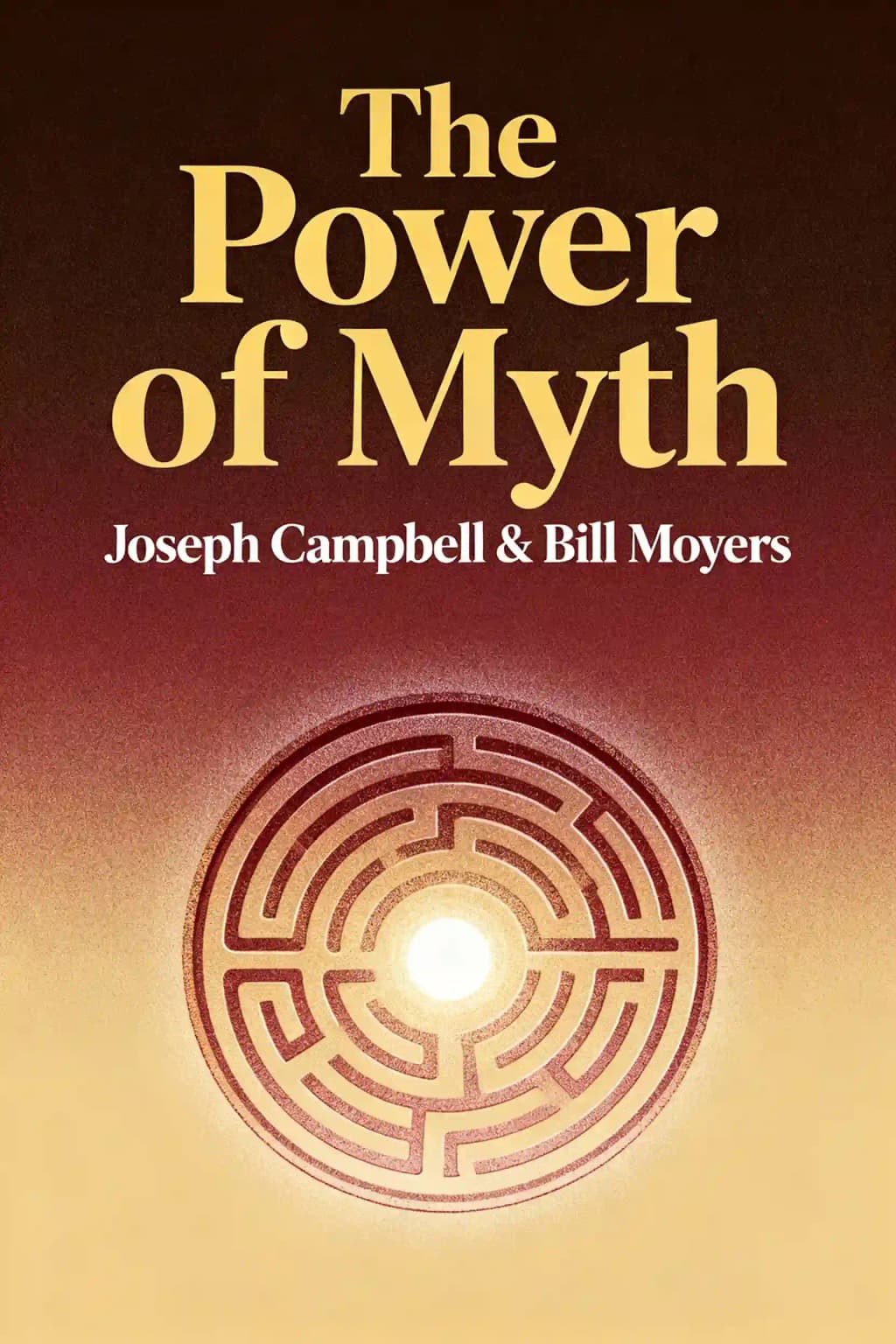
Joseph Campbell (1904–1987) and Bill Moyers co-authored The Power of Myth, a seminal exploration of comparative mythology and its enduring relevance in modern life.
Campbell, a revered mythologist and professor at Sarah Lawrence College, revolutionized the study of universal archetypes through works like The Hero with a Thousand Faces and the four-volume Masks of God series. His lifelong analysis of cultural narratives directly informed the book’s themes—the hero’s journey, sacred symbolism, and mythology’s role in bridging the human and transcendent.
Bill Moyers, an Emmy-winning journalist and former White House Press Secretary, shaped the dialogue through his incisive interviewing style, drawing out Campbell’s insights for a broader audience. Derived from their acclaimed 1988 PBS documentary series, the book merges Campbell’s scholarly depth with Moyers’ journalistic rigor.
Campbell’s influence extended beyond academia, notably inspiring George Lucas’s Star Wars saga. The documentary remains one of PBS’s most-watched series, with the companion book translated into over 20 languages and continually celebrated for bridging ancient wisdom to contemporary questions of meaning and identity.
Download Summary of The Power of Myth
Get the The Power of Myth summary as a free PDF or EPUB. Print it or read offline anytime.
FAQs About This Book
The Power of Myth explores the universal role of myths across cultures, arguing they reveal shared human truths about life, death, and transcendence. Through conversations with Bill Moyers, Campbell analyzes archetypes like the hero’s journey, creation stories, and rituals, linking ancient myths to modern media like Star Wars. The book emphasizes myths as metaphors guiding personal and societal transformation.
This book suits readers interested in mythology, comparative religion, or storytelling’s cultural impact. It’s valuable for writers, psychologists, and anyone exploring life’s existential questions. Campbell’s accessible style appeals to both academics and general audiences seeking insights into how ancient narratives shape modern identity and spirituality.
Yes, it offers timeless insights into humanity’s collective storytelling. Campbell’s interdisciplinary approach connects mythology to psychology, art, and contemporary media, making it relevant for understanding personal growth and societal values. Its exploration of universal themes like sacrifice and transcendence resonates across generations.
Key themes include:
- Universality of myths: Recurring archetypes like the hero’s journey and creation stories
- Myths as metaphors: Interpreting religious symbols as psychological truths
- Modern relevance: Linking ancient rituals to contemporary media and ecological awareness
- Sacrifice and bliss: Embracing life’s transitions through symbolic narratives
The hero’s journey is a universal mythic structure where a protagonist ventures into the unknown, faces trials, and returns transformed. Campbell illustrates this using figures like Jesus, Buddha, and Moses, emphasizing its role in personal growth and cultural cohesion. The framework underpins modern stories like Star Wars, reflecting enduring human aspirations.
Campbell argues modern media, like Star Wars, fulfill mythic roles by addressing existential questions through symbolic storytelling. He highlights parallels between religious rituals and contemporary practices, urging society to embrace new myths promoting global unity and ecological stewardship.
Sacrifice symbolizes compassion and the interconnectedness of life, enabling transcendence. Ancient rituals framed death as necessary for renewal, contrasting with modern fears of mortality. Campbell views sacrifice as a pathway to spiritual awakening, illustrating it through stories of Jesus and tribal rites.
Campbell praises Star Wars for reviving mythic archetypes like the hero’s journey and battling duality (e.g., light vs. dark). It mirrors ancient tales of transformation, demonstrating how modern storytelling preserves universal themes of self-discovery and societal harmony.
- “Follow your bliss”: Pursue authentic passions to align with life’s purpose
- “Myths are public dreams”: Collective stories reflecting subconscious truths
- “The cave you fear to enter holds the treasure you seek”: Growth requires confronting fears
He identifies recurring symbols (e.g., serpents, goddesses) across cultures, rooted in Carl Jung’s collective unconscious. Similar creation stories (e.g., Sumerian and Biblical gardens) suggest shared human experiences, transcending individual traditions.
Campbell laments Western society’s loss of rituals connecting individuals to the divine. He advocates reimagining sacredness through art, nature, or meditation, arguing modernity’s spiritual void fuels societal discontent.
Some scholars argue Campbell oversimplifies cultural differences by focusing on universal archetypes, potentially erasing unique mythic contexts. Others note his idealization of Eastern spirituality and limited discussion of myth’s role in oppressive systems.