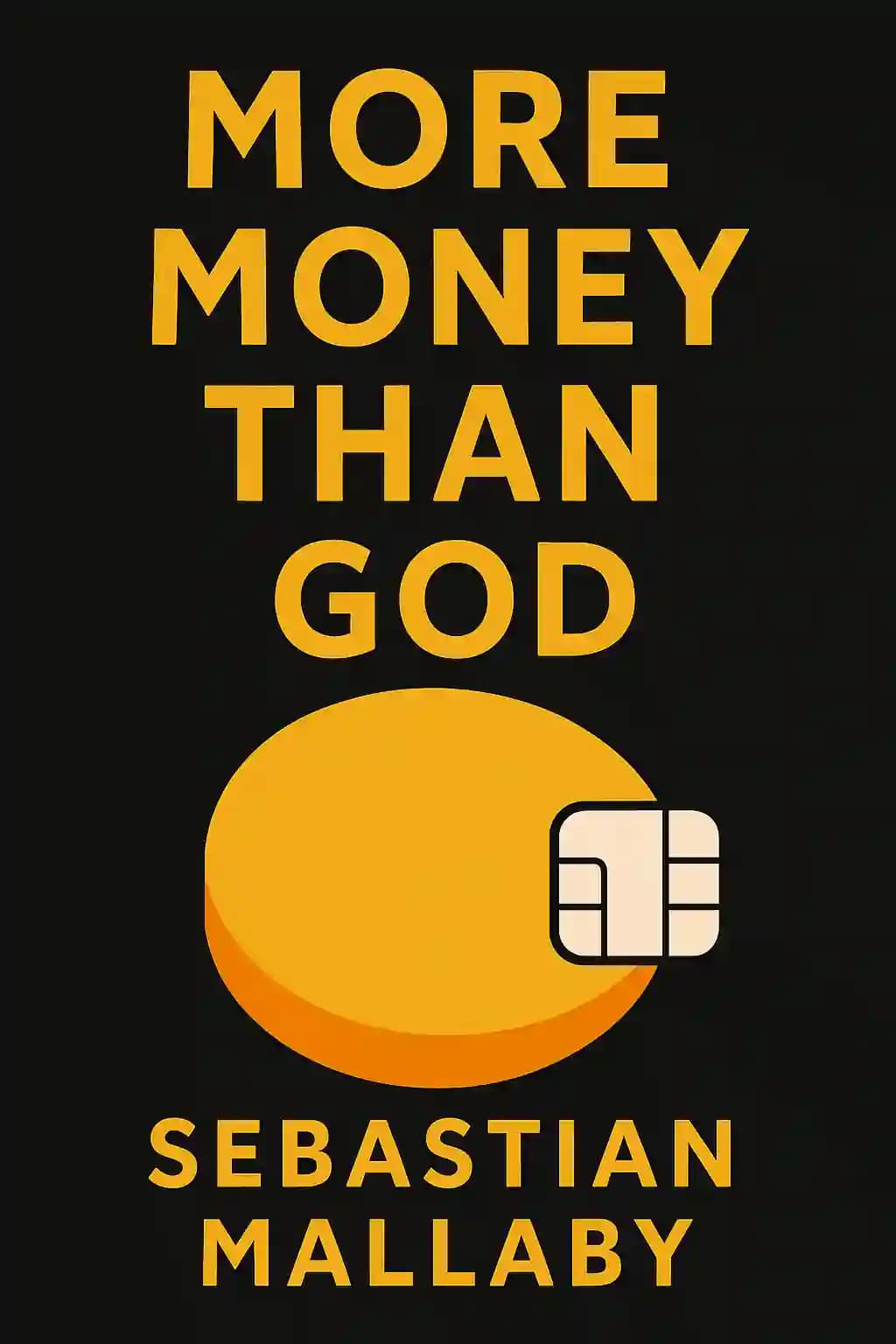
More Money Than God
Hedge Funds and the Making of the New Elite
Overview of More Money Than God
Dive into the secretive world of hedge funds where billionaires gamble billions. Sebastian Mallaby's definitive industry history reveals how financial mavericks like George Soros navigated crises without taxpayer bailouts - a perspective so compelling, Tim Ferriss recommends it to anyone fascinated by high-stakes capitalism.

Key Themes in More Money Than God
- hedge fund history
- alpha and beta
- market contrarianism
- risk management innovation
- financial arbitrage
Quotes from More Money Than God
More money than God, as the saying goes.
Shorting as a 'sucker's game'.
His investment edge had vanished.
Investing became a professional business rather than the province of amateurs.
The go-go era was finished.
Characters in More Money Than God
- Alfred Winslow JonesCreator of the first hedged fund in 1949
- Anna BlockJewish socialite and wife of Alfred Winslow Jones
- Michael SteinhardtProminent hedge fund manager and analyst
- Sebastian MallabyAuthor of the book
About the Author
About the Author of More Money Than God
Sebastian Mallaby, author of More Money Than God: Hedge Funds and the Making of a New Elite, is a Pulitzer Prize-finalist journalist and bestselling authority on global finance.
A senior fellow at the Council on Foreign Relations and former Washington Post columnist, Mallaby combines investigative rigor with deep institutional knowledge of financial markets. His acclaimed book—a definitive history of hedge funds—draws on decades of reporting for outlets like the Economist and Financial Times, where he analyzed Wall Street’s evolving power structures.
Mallaby’s other works include The Man Who Knew, a biography of Alan Greenspan that won the Financial Times/McKinsey Business Book of the Year Award, and The Power Law, a groundbreaking study of venture capital. A graduate of Oxford University, his writing frequently appears in elite publications like the Atlantic and Foreign Affairs.
More Money Than God became a New York Times bestseller and received the 2011 Gerald Loeb Award, cementing its status as essential reading for finance professionals.
Download Summary of More Money Than God
Get the More Money Than God summary as a free PDF or EPUB. Print it or read offline anytime.
FAQs About This Book
More Money Than God chronicles the rise of hedge funds from their origins in 1949 to their pivotal role in modern finance. Sebastian Mallaby combines gripping narratives of iconic investors like George Soros and Julian Robertson with analysis of hedge funds' impact on markets, crises like the 2008 crash, and their potential to stabilize economies. The book argues that these "obsessive, charismatic oddballs" drive financial innovation.
Finance professionals, investors, and anyone interested in economic history will gain insights from this book. It’s ideal for readers seeking to understand hedge funds’ strategies, their role in crises like the 1997 Asian financial collapse, and the psychology of legendary traders. Academics and policymakers will also appreciate Mallaby’s research into market dynamics and regulatory challenges.
Yes. Hailed as a New York Times bestseller and recipient of the Loeb Prize, the book offers a balanced yet critical exploration of hedge funds. Mallaby’s deep research, engaging storytelling, and contrarian argument—that hedge funds could be Wall Street’s salvation—make it essential for understanding modern finance.
Mallaby contends that hedge funds, despite their risks, enhance market efficiency by correcting mispricings and absorbing shocks. He highlights their outperformance during crises (e.g., the 2008 crash) and critiques excessive regulation, arguing that their flexibility and innovation often outpace traditional banks.
Soros emerges as a central figure, exemplified by his 1992 bet against the British pound (“Black Wednesday”), which earned $1 billion. Mallaby details Soros’s theory of reflexivity—how market perceptions shape reality—and his mixed legacy as a philanthropist and speculative force.
Mallaby explains how funds like John Paulson’s capitalized on the subprime mortgage collapse, profiting from short-selling toxic assets. Conversely, he critiques their role in amplifying systemic risk, as seen in the Long-Term Capital Management collapse, but argues they were less culpable than banks.
The book emphasizes adaptability, rigorous research, and contrarian thinking. For example, Paul Tudor Jones predicted the 1987 crash by analyzing historical patterns, while Renaissance Technologies leveraged quantitative models to decode markets. Mallaby warns against herd mentality and overleveraging.
While acknowledging concerns about inequality and opacity, Mallaby counters that hedge funds’ profit-driven incentives align with market stability. He contrasts their transparency with banks’ hidden risks and argues that their speculative bets often expose underlying economic flaws.
Key events include the 1994 bond market crisis, the 1997 Asian financial collapse, and the 2008 subprime meltdown. Mallaby also details lesser-known episodes, like Amaranth Advisors’ 2006 energy trading disaster, to illustrate the perils of unchecked risk-taking.
Mallaby argues that banks’ reliance on leverage and government bailouts contrasts with hedge funds’ self-funded, performance-driven model. He praises funds like Caxton Associates for avoiding taxpayer-funded rescues during crises, unlike "too big to fail" banks.
Mallaby, a Pulitzer Prize finalist and CFR senior fellow, brings decades of financial journalism and deep research. His prior works, like The Man Who Knew (on Alan Greenspan), and access to industry insiders lend authority to his analysis.
The book’s insights into speculative bubbles, algorithmic trading, and regulatory debates resonate amid today’s AI-driven markets and cryptocurrency volatility. Mallaby’s warnings about financial complacency and innovation cycles offer timeless lessons for investors.