Right Kind of Wrong: Why Learning to Fail Can Teach Us to Thrive by Amy Edmondson Summary

Overview of Right Kind of Wrong
Discover why failure is your greatest asset in Harvard professor Amy Edmondson's award-winning "Right Kind of Wrong." Named Financial Times Business Book of 2023, it reveals three types of failures that drive innovation. Daniel Pink calls it essential: "No skill is more important than learning from failure."
- Psychological safety enables teams to admit failures without fear of retaliation
- Intelligent failures accelerate innovation by providing valuable insights in uncharted territories
- Edmondson’s three failure types—basic, complex, and intelligent—guide risk assessment strategies
- High-performing teams balance psychological safety with accountability for optimal decision-making
- Reframe failure as discovery by distinguishing preventable errors from productive experiments
- Prevent basic failures through checklists while embracing intelligent ones for growth
- The 1967 Torrey Canyon spill exemplifies how small oversights cascade into disasters
- Cultivate “no-blame” cultures to surface errors early and fix systemic weaknesses
- Edmondson’s research proves psychological safety boosts learning in hospitals and tech firms
- View failure portfolios as strategic assets rather than liabilities to minimize
- Shift from blame to curiosity when analyzing team mistakes and outcomes
- Intelligent failures require hypothesis-testing in new domains with measurable outcomes
About the Author of Right Kind of Wrong
Amy C. Edmondson, author of Right Kind of Wrong: The Science of Failing Well, is a world-renowned organizational leadership expert and the Novartis Professor of Leadership and Management at Harvard Business School. A pioneering researcher in psychological safety and team dynamics, Edmondson’s work explores how organizations can harness failure as a catalyst for innovation—a theme central to this business and self-help genre book.
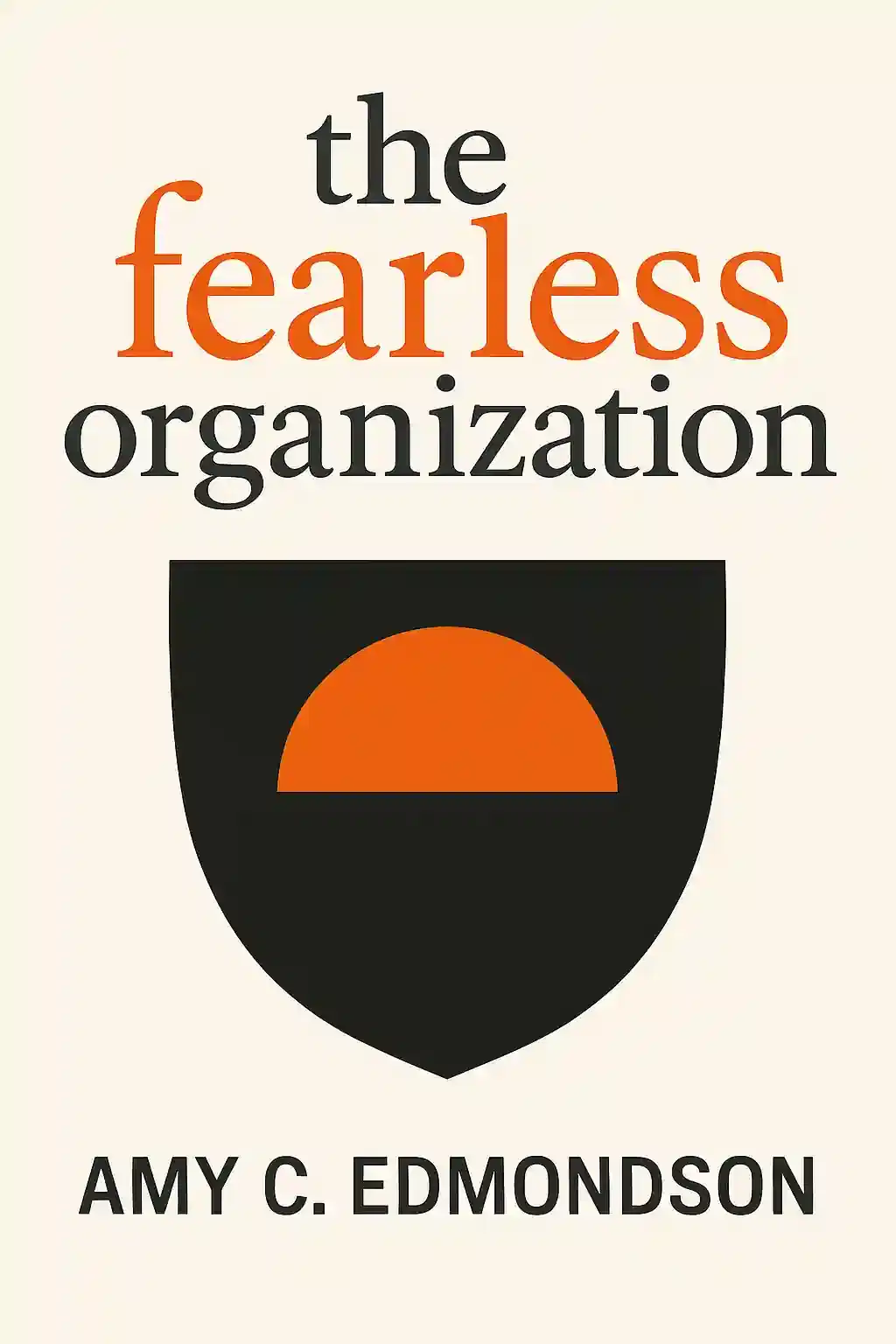
Her insights stem from decades of studying high-performing teams, notably detailed in her bestselling The Fearless Organization: Creating Psychological Safety in the Workplace and Teaming: How Organizations Learn, Innovate, and Compete in the Knowledge Economy, both widely taught in MBA programs.
Edmondson, ranked #1 on Thinkers50’s 2023 list of top management thinkers, frequently shares her research through TED Talks (4M+ views) and podcasts like Harvard Business Review’s IdeaCast. Her frameworks are adopted by Fortune 500 companies and institutions seeking to build resilient, learning-focused cultures. Right Kind of Wrong distills her groundbreaking research into actionable strategies, cementing her reputation as a leading voice in redefining failure’s role in success.
FAQs About Right Kind of Wrong
What is Right Kind of Wrong by Amy Edmondson about?
Right Kind of Wrong explores how to reframe failure as a catalyst for growth, distinguishing between preventable "basic failures," unavoidable "complex failures," and productive "intelligent failures." Amy Edmondson, a Harvard leadership expert, combines research and case studies to teach readers how to embrace uncertainty, learn from mistakes, and build psychological safety in teams. The book emphasizes actionable strategies to fail wisely in careers and organizations.
Who should read Right Kind of Wrong?
Leaders, managers, innovators, and anyone navigating high-stakes environments will benefit from this book. It’s particularly relevant for professionals in tech, healthcare, or education seeking to foster cultures of learning and resilience. Edmondson’s insights also resonate with individuals overcoming setbacks or pursuing creative risks.
Is Right Kind of Wrong worth reading?
Yes—critics praise its blend of academic rigor and accessibility, though some note repetitive sections. Readers gain a structured framework to analyze failures, with tools like the "Failure Spectrum" and "Intelligent Failure Checklist." Endorsements from Adam Grant and Daniel Pink highlight its value for personal and professional growth.
What are the main concepts in Right Kind of Wrong?
Key ideas include:
- Psychological safety: Creating environments where teams can admit mistakes without blame.
- Failure taxonomy: Categorizing failures as basic (preventable), complex (systemic), or intelligent (productive experiments).
- Learning loops: Using reflection and feedback to convert failures into improvements.
How does Right Kind of Wrong define "intelligent failure"?
Intelligent failures occur in novel situations where outcomes are uncertain, involve hypothesis-testing, and produce learnings outweighing costs. Examples include pharmaceutical trials or startups pivoting based on early feedback. Edmondson argues these failures are essential for innovation.
What quotes from Right Kind of Wrong are notable?
- “Failure is not the opposite of success; it’s a stepping stone.”
- “Psychological safety isn’t about being nice—it’s about candor.”
These emphasize embracing vulnerability and honest communication to drive progress.
How does Right Kind of Wrong compare to Edmondson’s The Fearless Organization?
While The Fearless Organization focuses on psychological safety’s role in team performance, Right Kind of Wrong expands the scope to individual and organizational resilience through failure analysis. Both books interconnect but serve distinct purposes: one builds safe environments, the other leverages those environments for growth.
What critiques exist about Right Kind of Wrong?
Some readers find the failure taxonomy overly academic or repetitive if familiar with Carol Dweck’s mindset work. Others note it underemphasizes systemic barriers to failure tolerance in hierarchical organizations.
How can Right Kind of Wrong help with career transitions?
The book provides tools to reframe career setbacks as learning opportunities, advocating for “small bets” (low-risk experiments) to test new paths. Edmondson’s examples, like entrepreneurs iterating on flawed prototypes, demonstrate resilience-building tactics.
Why is Right Kind of Wrong relevant in 2025?
As AI and rapid technological changes increase workplace uncertainty, Edmondson’s strategies for navigating intelligent failures help teams adapt. The book’s emphasis on psychological safety aligns with modern hybrid work challenges, such as fostering trust in dispersed teams.
What are 3 actionable takeaways from Right Kind of Wrong?
- Normalize failure post-mortems to dissect lessons without blame.
- Reward intelligent risks by celebrating hypothesis-driven experiments.
- Scale psychological safety by modeling vulnerability as a leader.
How does Right Kind of Wrong address systemic vs. individual failure?
Edmondson argues complex failures often stem from flawed systems, not individual errors. Solutions require cross-team collaboration and transparent communication to address root causes, such as misaligned incentives or inadequate resources.
Feel the book through the author's voice
Turn knowledge into engaging, example-rich insights
Capture key ideas in a flash for fast learning
Enjoy the book in a fun and engaging way
Key Themes in Right Kind of Wrong
Quotes from Right Kind of Wrong
Not all failures are equal.
Our brains are literally wired against it.
Failure is 'ego threatening, which causes people to tune out.'
Social media exacerbates our reluctance to share failures.
We often bring an execution mindset to learning tasks.
Characters in Right Kind of Wrong
Quick Summary Mode - Read or listen to Right Kind of Wrong Summary in 9 Minutes

Break down key ideas from Right Kind of Wrong into bite-sized takeaways to understand how innovative teams create, collaborate, and grow.

Flash Card Mode - Top 7 Insights from Right Kind of Wrong in a Nutshell

Distill Right Kind of Wrong into rapid-fire memory cues that highlight key principles of candor, teamwork, and creative resilience.

Fun Mode - Right Kind of Wrong Lessons Told Through 19-Min Stories

Experience Right Kind of Wrong through vivid storytelling that turns innovation lessons into moments you'll remember and apply.
Personalize Mode - Read or listen to Right Kind of Wrong Summary in 0 Minutes

Ask anything, pick the voice, and co-create insights that truly resonate with you.

From Columbia University alumni built in San Francisco
"Instead of endless scrolling, I just hit play on BeFreed. It saves me so much time."


"I never knew where to start with nonfiction—BeFreed’s book lists turned into podcasts gave me a clear path."


"Perfect balance between learning and entertainment. Finished ‘Thinking, Fast and Slow’ on my commute this week."
"Crazy how much I learned while walking the dog. BeFreed = small habits → big gains."
"Reading used to feel like a chore. Now it’s just part of my lifestyle."

"Feels effortless compared to reading. I’ve finished 6 books this month already."
"BeFreed turned my guilty doomscrolling into something that feels productive and inspiring."

"BeFreed turned my commute into learning time. 20-min podcasts are perfect for finishing books I never had time for."
"BeFreed replaced my podcast queue. Imagine Spotify for books — that’s it. 🙌"

"It is great for me to learn something from the book without reading it."
"The themed book list podcasts help me connect ideas across authors—like a guided audio journey."
"Makes me feel smarter every time before going to work"
From Columbia University alumni built in San Francisco
"Instead of endless scrolling, I just hit play on BeFreed. It saves me so much time."
"I never knew where to start with nonfiction—BeFreed’s book lists turned into podcasts gave me a clear path."
"Perfect balance between learning and entertainment. Finished ‘Thinking, Fast and Slow’ on my commute this week."
"Crazy how much I learned while walking the dog. BeFreed = small habits → big gains."
"Reading used to feel like a chore. Now it’s just part of my lifestyle."
"Feels effortless compared to reading. I’ve finished 6 books this month already."
"BeFreed turned my guilty doomscrolling into something that feels productive and inspiring."
"BeFreed turned my commute into learning time. 20-min podcasts are perfect for finishing books I never had time for."
"BeFreed replaced my podcast queue. Imagine Spotify for books — that’s it. 🙌"
"It is great for me to learn something from the book without reading it."
"The themed book list podcasts help me connect ideas across authors—like a guided audio journey."
"Makes me feel smarter every time before going to work"
"Instead of endless scrolling, I just hit play on BeFreed. It saves me so much time."
"I never knew where to start with nonfiction—BeFreed’s book lists turned into podcasts gave me a clear path."
"Perfect balance between learning and entertainment. Finished ‘Thinking, Fast and Slow’ on my commute this week."
"Crazy how much I learned while walking the dog. BeFreed = small habits → big gains."
"Reading used to feel like a chore. Now it’s just part of my lifestyle."
"Feels effortless compared to reading. I’ve finished 6 books this month already."
"BeFreed turned my guilty doomscrolling into something that feels productive and inspiring."
"BeFreed turned my commute into learning time. 20-min podcasts are perfect for finishing books I never had time for."
"BeFreed replaced my podcast queue. Imagine Spotify for books — that’s it. 🙌"
"It is great for me to learn something from the book without reading it."
"The themed book list podcasts help me connect ideas across authors—like a guided audio journey."
"Makes me feel smarter every time before going to work"
"Instead of endless scrolling, I just hit play on BeFreed. It saves me so much time."
"I never knew where to start with nonfiction—BeFreed’s book lists turned into podcasts gave me a clear path."
"Perfect balance between learning and entertainment. Finished ‘Thinking, Fast and Slow’ on my commute this week."
"Crazy how much I learned while walking the dog. BeFreed = small habits → big gains."
"Reading used to feel like a chore. Now it’s just part of my lifestyle."
"Feels effortless compared to reading. I’ve finished 6 books this month already."
"BeFreed turned my guilty doomscrolling into something that feels productive and inspiring."
"BeFreed turned my commute into learning time. 20-min podcasts are perfect for finishing books I never had time for."
"BeFreed replaced my podcast queue. Imagine Spotify for books — that’s it. 🙌"
"It is great for me to learn something from the book without reading it."
"The themed book list podcasts help me connect ideas across authors—like a guided audio journey."
"Makes me feel smarter every time before going to work"

Get the Right Kind of Wrong summary as a free PDF or EPUB. Print it or read offline anytime.